INTERNACIONAL
Hungary’s new leader once idolized Orbán — now he’s the man who brought him down

NEWYou can now listen to Fox News articles!
Péter Magyar has gone from political outsider to Hungary’s most powerful politician almost overnight.
The 44-year-old lawyer and former insider in former Prime Minister Viktor Orbán’s ruling party swept to victory in Hungary’s 2026 election, ending Orbán’s 16-year rule and stunning Europe.
«Thank you to every Hungarian at home and around the world!» he wrote on X. «It is an immense honor that you have empowered us to form a government with the most votes ever received, and to work for the next four years for a free, European, functioning, and humane Hungary.»
Here are the key things to know about the man now set to lead Hungary.
TRUMP SAYS HUNGARY’S BORDER STANCE KEEPS CRIME DOWN, SAYS EUROPE ‘FLOODING’ WITH MIGRANTS
Péter Magyar has gone from political outsider to Hungary’s most powerful politician almost overnight. (Photo by Jakub Porzycki/Nur Photo via Getty Images)
He grew up admiring Viktor Orbán
Magyar was born in 1981 in Budapest, Hungary, into a family of lawyers. He was just nine years old when communism collapsed in Hungary and the country held its first democratic elections.
As a child, he idolized Orbán, who at the time was a young anti-Communist activist demanding that Soviet troops leave Hungary. Magyar has said he kept a photo of Orbán on his bedroom wall, Reuters reported.
That early admiration makes his rise all the more remarkable: the boy who once saw Orbán as a hero ultimately became the politician who ended his rule.
He comes from the same political world
Before becoming Orbán’s biggest challenger, Magyar was part of the same Hungarian political establishment.
He spent years inside Orbán’s conservative Fidesz movement and worked in positions connected to the Hungarian state. Because of that background, analysts say Magyar understands the system from the inside.
«He’s an insider,» said Helena Ivanov, an associate research fellow at the Henry Jackson Society (HJS), a London-based foreign policy think tank. «He knows and understands the inside out of the Hungarian political system.»
That insider status, she added, was «exceptionally important» to his success.
VIKTOR ORBÁN CONCEDES DEFEAT AS OPPOSITION LEADER HEADS FOR POTENTIAL SUPERMAJORITY WIN
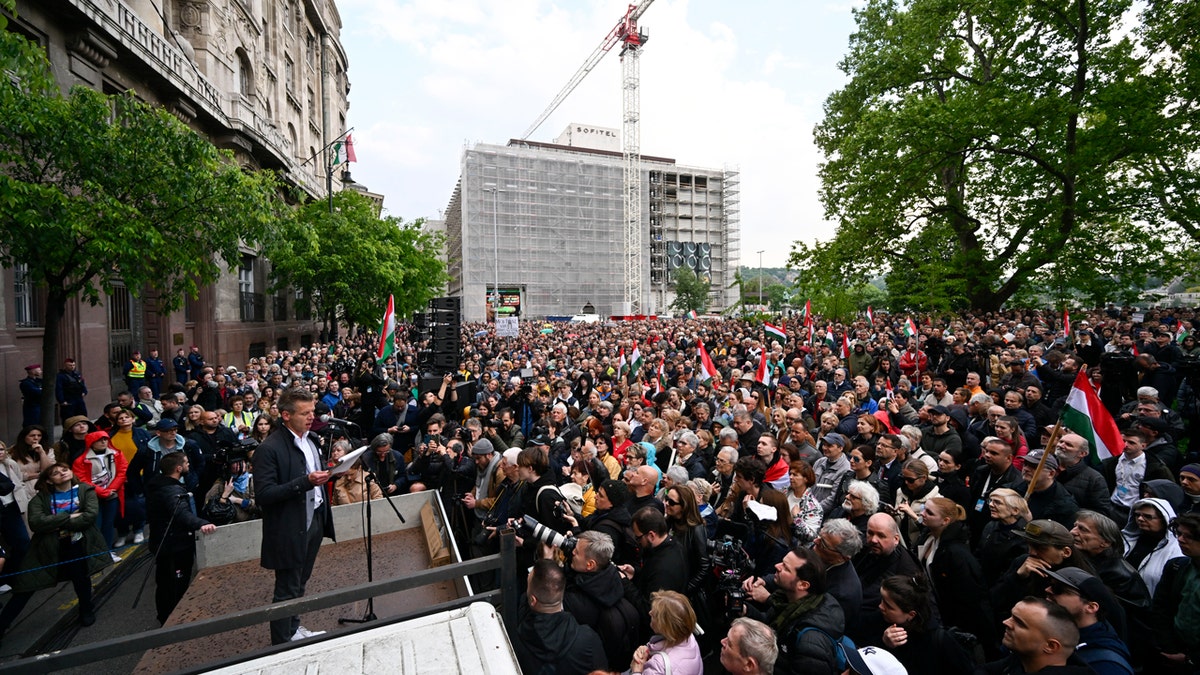
Before becoming Orbán’s biggest challenger, Magyar was part of the same Hungarian political establishment. (Denes Erdos/AP)
He studied law and worked in government
Like many members of Hungary’s political elite, Magyar trained as a lawyer.
After studying law, he entered public service. When his then-wife took a position in Brussels, Magyar joined Hungary’s diplomatic corps and worked on European Union legislation.
After returning to Hungary, he held senior positions at a state-owned bank and later ran Hungary’s student loan agency.
His background gave him experience in both Brussels and the Hungarian bureaucracy, helping him position himself as a bridge between Hungary and the European Union.
His marriage made him part of Orbán’s inner circle
Magyar married Judit Varga in 2006. Varga later became one of Orbán’s most prominent ministers and served as Hungary’s justice minister.
For years, that marriage placed Magyar close to the center of power in Hungary.
The couple had three sons, but their marriage eventually broke down. They divorced in 2023, shortly before Magyar launched his political rebellion.
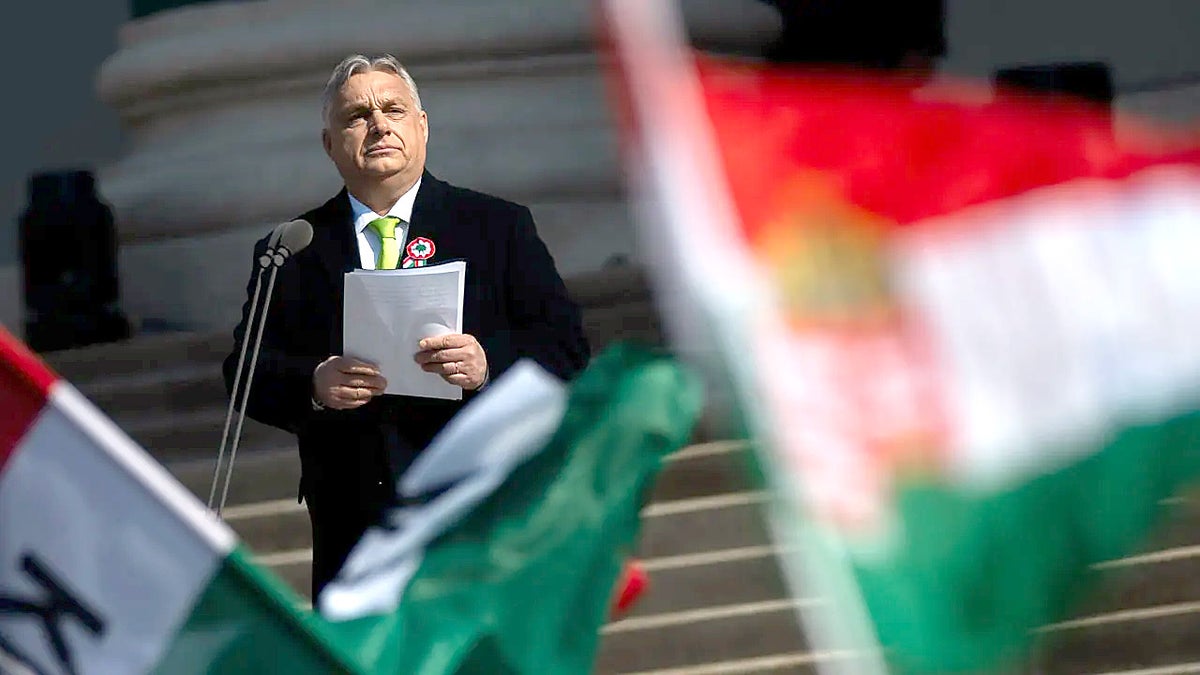
The 44-year-old lawyer and former insider in former Prime Minister Viktor Orbán’s ruling party swept to victory in Hungary’s 2026 election, ending the 16-year rule of Orbán, pictured here, and stunning Europe. (Denes Erdos/The Associated Press )
He broke with Orbán after a major scandal
Magyar’s political transformation began after a scandal that rocked Hungary in 2024.
Varga resigned after public outrage over a pardon linked to a child sexual abuse case. The scandal opened a rare crack in Orbán’s government.
Magyar publicly broke with Fidesz, accusing the government of corruption and propaganda.
For Ivanov, that moment was decisive.
«The key breakdown was the fact that Orbán’s government participated in a cover-up … and that ultimately led him to start his own political campaign,» she said.
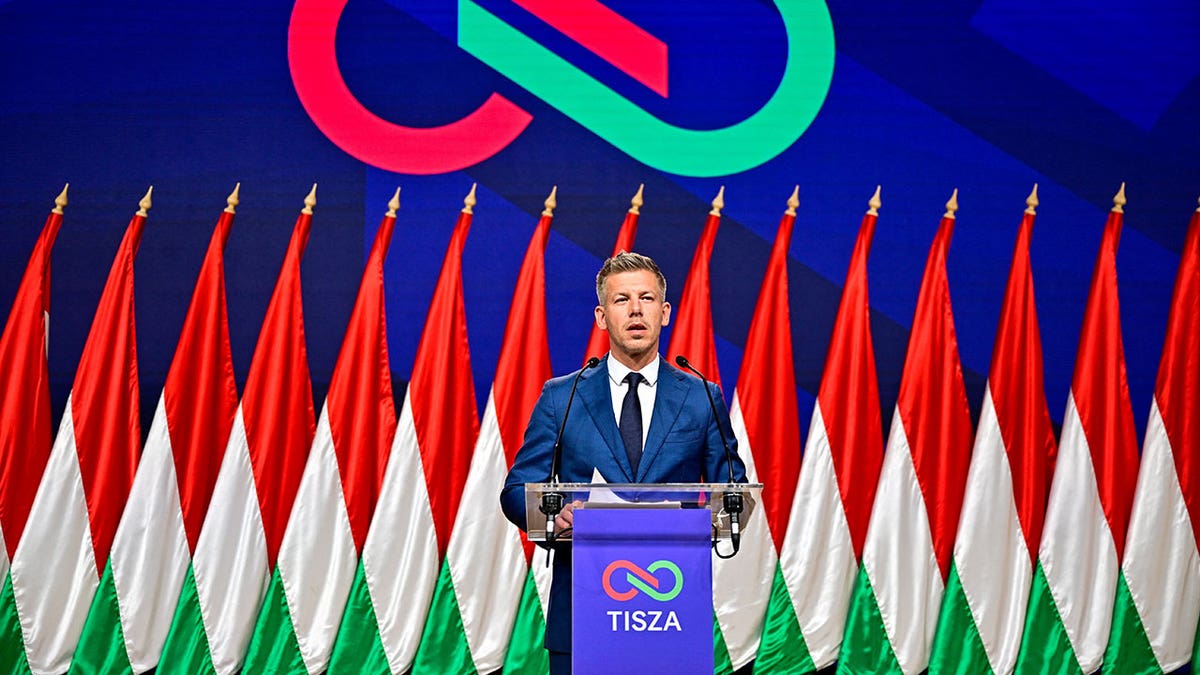
Until 2024, most Hungarians had barely heard of Magyar. Then he gave a high-profile interview and launched a new political movement. (Marton Monus/Reuters)
He became an instant political star
Until 2024, most Hungarians had barely heard of Magyar.
Then he gave a high-profile interview and launched a new political movement. Within months, he transformed himself into the face of Hungary’s opposition.
His Tisza party won 30% in the 2024 European elections, before defeating Fidesz nationally less than two years later.
Ivanov said his rapid rise came down to strategy.
«He was able to capture the hearts and minds of the Hungarian people by focusing … on the internal issues that were their key grievances,» she said.
He is more pro-European than Orbán, but still conservative
Magyar is not a traditional liberal politician.
Like Orbán, he opposes illegal immigration, supports Hungary’s border fence and rejects European Union migrant quotas.
«When it comes to immigration, I’m not really that sure that we’re going to see much of a change,» Ivanov told Fox News Digital. «Magyar so far has made it clear that the fence originally built by Orbán will stay in place. He has said that he is not going to support the EU migration pact.»
«So that’s one thing where we may possibly see some continuity, or at least some overlap, between Magyar and Orbán,» she added. «But … bringing the country back to a stable democracy is one of the key priorities that Magyar has.»
But unlike Orbán, he has pledged to rebuild ties with the European Union and unlock frozen EU funds.
VP VANCE TO MEET WITH VIKTOR ORBÁN IN HUNGARY DAYS AHEAD OF FOREIGN NATION’S ELECTIONS
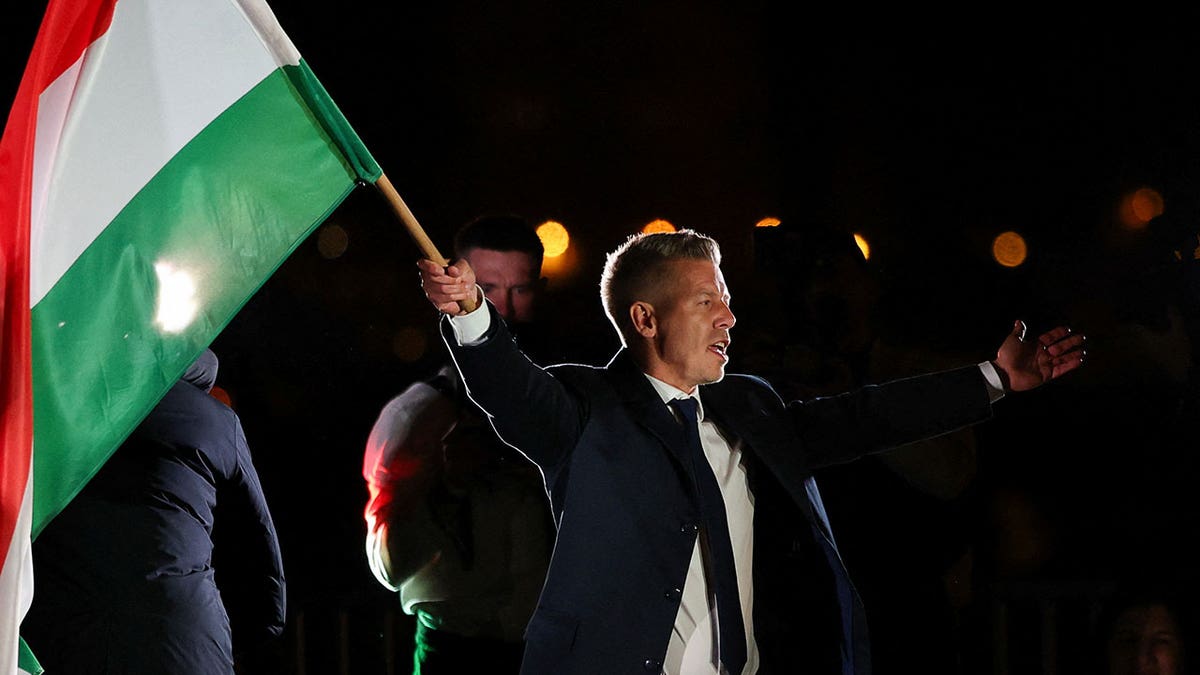
Magyar describes himself as religious and often emphasizes family life. (Leonhard Foeger/Reuters)
Ivanov said the shift could be significant, especially after years of deteriorating relations with Brussels.
«He has promised to rebuild the relationship between the European Union and Hungary,» she said.
Still, she cautioned that tensions may remain, particularly over Russia and Ukraine policy.
Religion and family are central to his image
Magyar describes himself as religious and often emphasizes family life.
He has said he enjoys cooking and playing soccer with his sons.
That image has helped him appeal to conservative voters who were disillusioned with Orbán but not ready to support a left-wing alternative.
He won by campaigning differently
Magyar built his victory through a grassroots campaign. He focused on corruption, cost of living and frustration after 16 years under one leader.
Because Orbán’s allies controlled much of Hungary’s media, he relied heavily on social media, rural outreach and direct voter engagement.
Ivanov said that approach was not just strategic, but necessary.
«The control that Orbán had over the media meant Magyar had to directly engage with the people,» she said.
Ivanov noted that Magyar did not appear on state television for 18 months. His first appearance came only after his victory, during what she described as «a very heated conversation» in which he accused Hungarian state media of carrying out «North Korean-style propaganda» under Orbán.
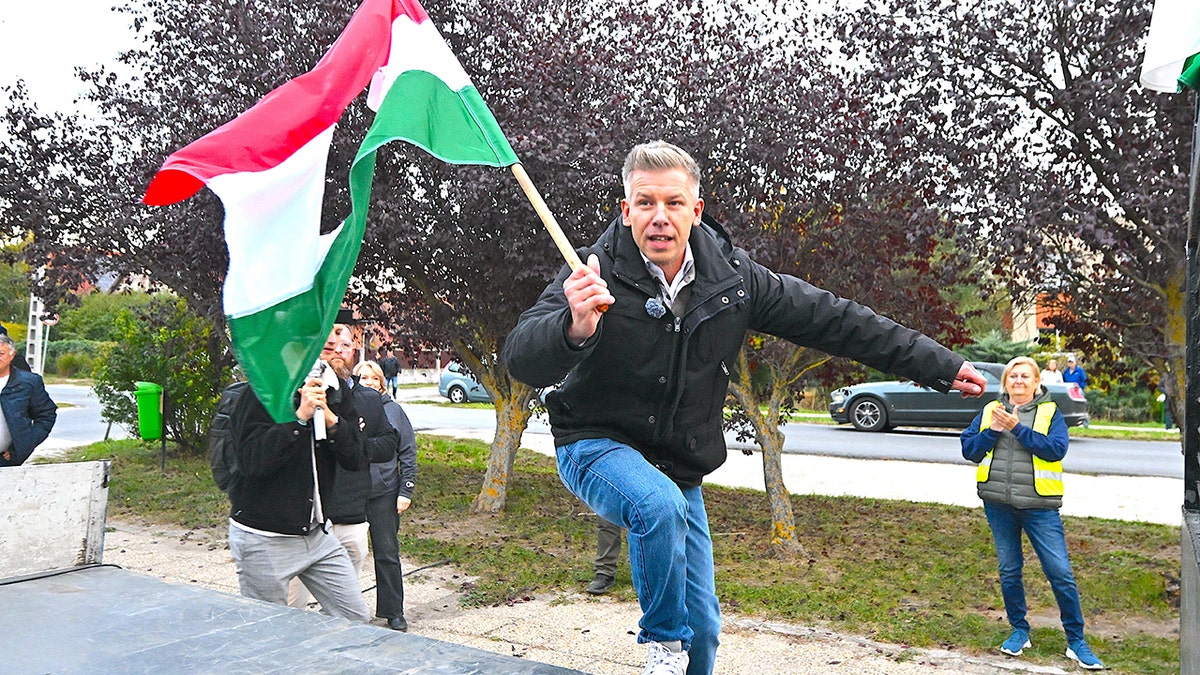
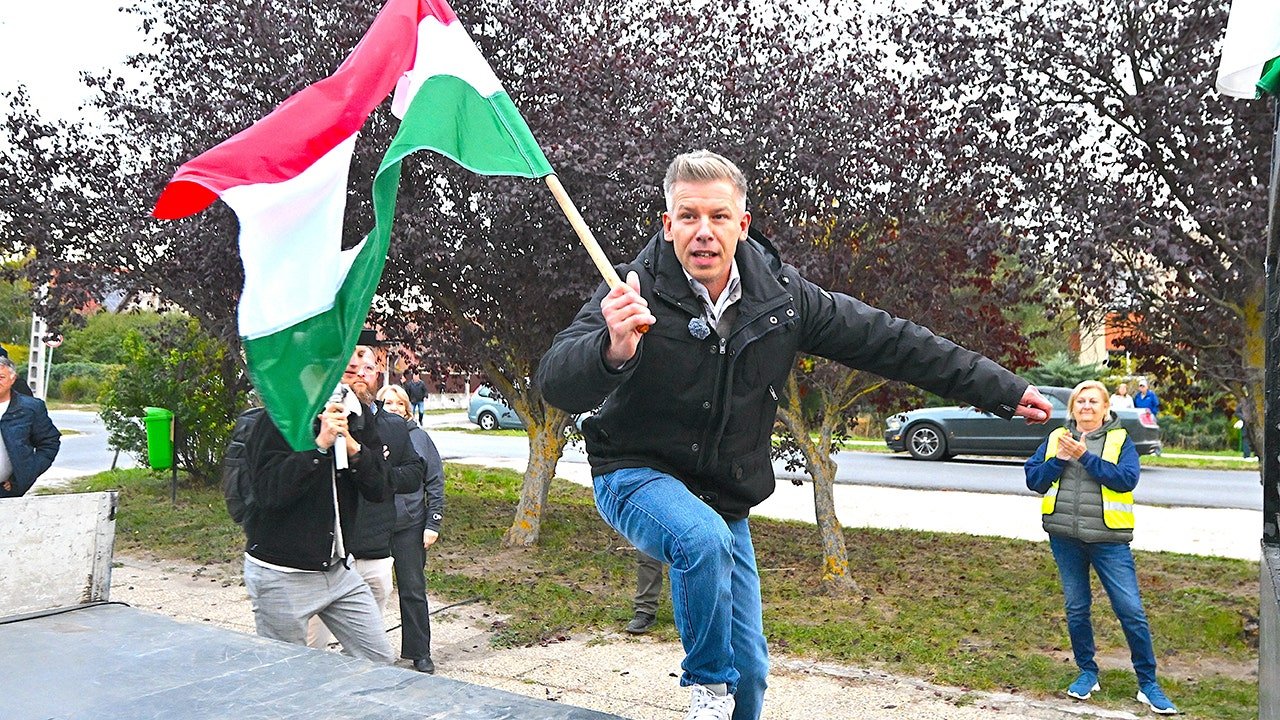
Péter Magyar, leader of the TISZA party, arrives with a national flag for a rally in Tarnok, Hungary, Oct. 20, 2025. Magyar was elected prime minister in a landslide victory on April 12, 2026. (Attila Kisbenedek/AFP via Getty images)
Now, after years as an insider and barely two years as an opposition figure, Magyar is preparing to take power.
Magyar has already signaled that he intends to move quickly against officials tied to the old system.
In a post on X on Wednesday, he said he had arrived at the presidential palace to meet Hungarian President Tamás Sulyok.
«Tamás Sulyok is unworthy of representing the unity of the Hungarian nation,» Magyar wrote. «He is unfit to serve as the guardian of legality. He is not fit to serve as a moral authority or a role model.»
«Following the formation of the new government, Tamás Sulyok must leave office immediately.»
CLICK HERE TO DOWNLOAD THE FOX NEWS APP
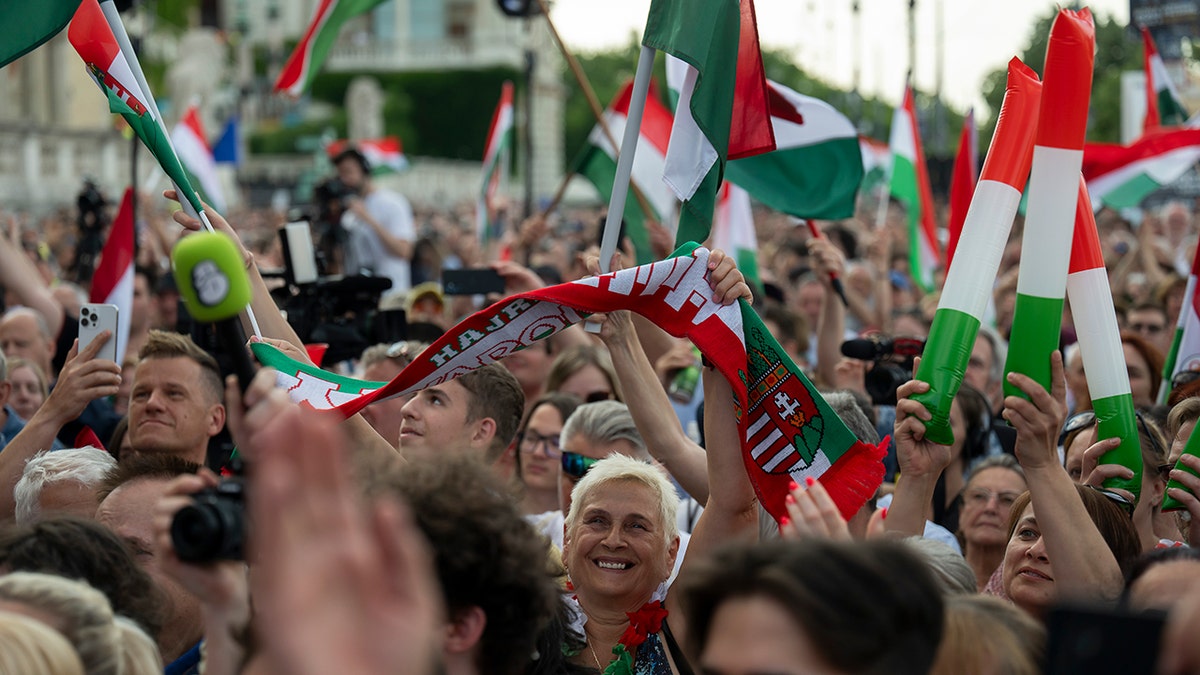
As a child, Magyar idolized Orbán, who at the time was a young anti-Communist activist demanding that Soviet troops leave Hungary. (Denes Erdos/The Associated Press )
Ivanov called the result «a huge victory for democracy,» but said that reversing years of institutional control «is not going to be an easy process … likely a years-long process.»
Reuters contributed to this report.
hungary, politics, elections, corruption, foreign policy, europe









INTERNACIONAL
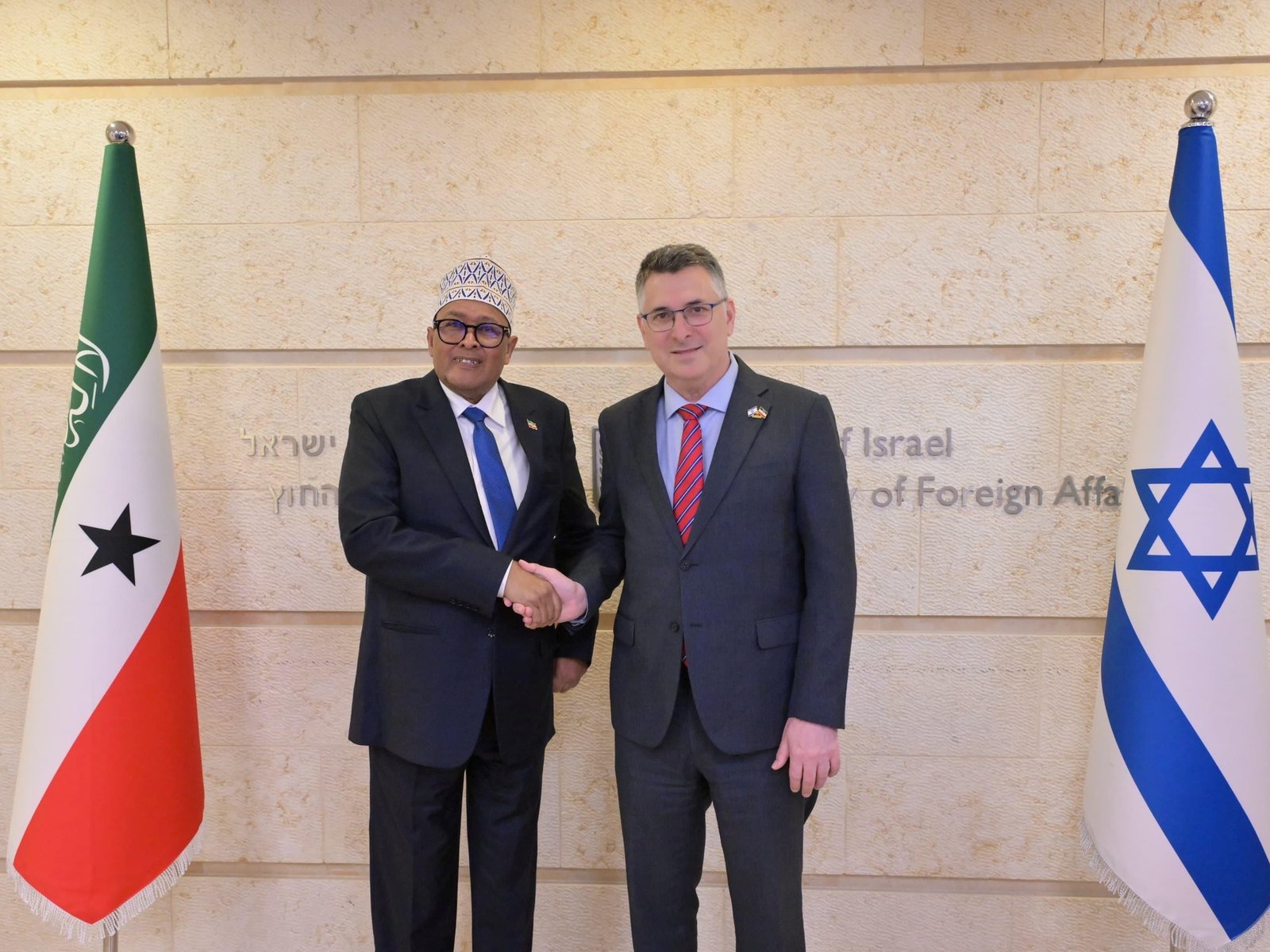
Somalilandia, el país que sólo reconoce Israel, inauguró su primera embajada en Jerusalén

INTERNACIONAL
US won’t move troops despite ‘signed’ Iran deal, as doubts linger over Tehran’s next move
Iran deal could be ‘deadly’ for Israel, former Israeli ambassador argues
Former Israeli Ambassador Michael Oren discusses the Iran deal, warning its specific details could be «deadly» for Israel’s security. Oren notes the deal fails to address key goals like eliminating Iran’s nuclear program, ballistic missile system, and state-sponsored terror. He expresses «great concern» that the nuclear stockpile and control of the Strait of Hormuz remain unanswered questions.
NEWYou can now listen to Fox News articles!
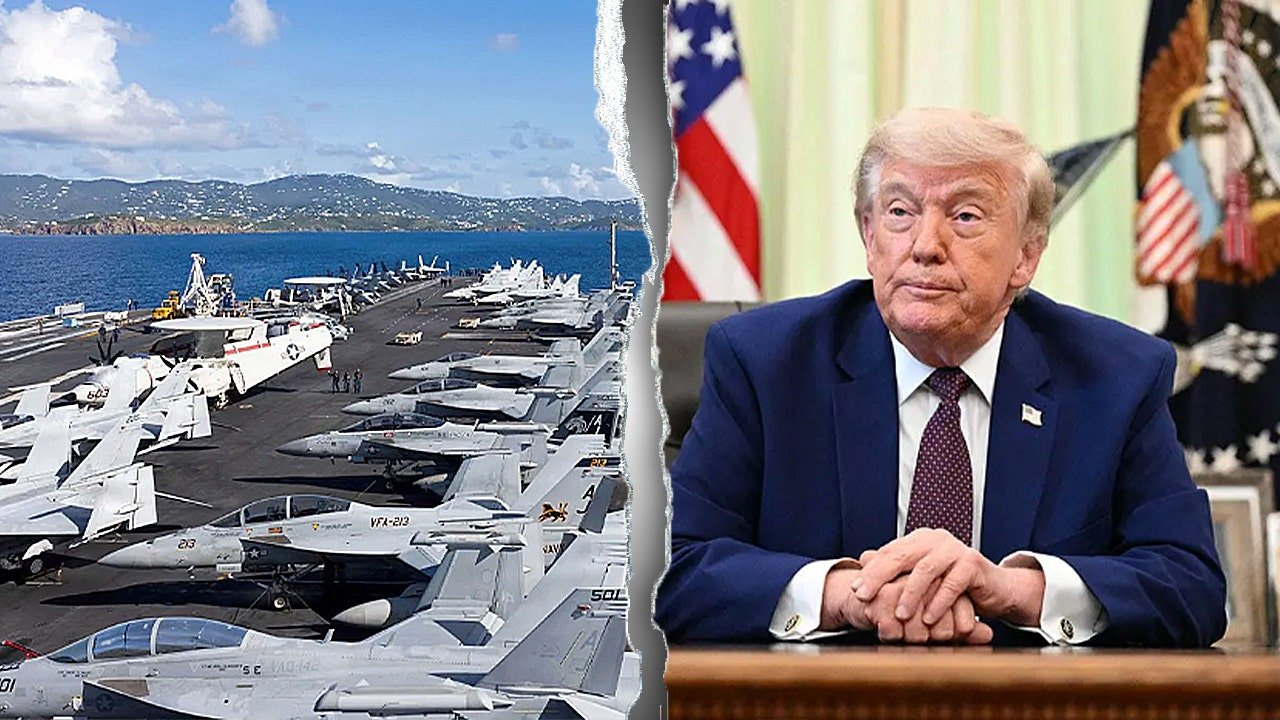
The Trump administration will keep its military buildup in the Middle East in place despite signing a new agreement with Iran, underscoring Washington’s continued distrust of Iran as the two sides enter a 60-day negotiating period.
«The plan is to keep the current force posture during the 60-day negotiations,» a senior U.S. official told reporters on a call Monday. «We hope to draw them down, but we’re not doing that yet.»
«The agreement contemplates the reduction of military forces in the region upon the agreement of a final deal,» the official added.
Officials said President Donald Trump, Vice President JD Vance and Iranian Parliament Speaker Mohammad Bagher Ghalibaf already have signed the memorandum, and that the details of the agreement will be released publicly within the next 24 to 48 hours. A formal signing ceremony is expected later in the week.
The Trump administration will keep its military buildup in the Middle East in place despite signing a new agreement with Iran, underscoring Washington’s continued distrust of Tehran as the two sides enter a 60-day negotiating period. (Mandel Ngan/AFP)
BUILT FOR WEEKS OF WAR: INSIDE THE FIREPOWER THE US HAS POSITIONED IN THE MIDDLE EAST
The decision means the Pentagon will maintain a military posture that recently included roughly 50,000 troops deployed across the Middle East, one of the largest U.S. force concentrations in the region in more than two decades. Publicly available fleet tracking data indicate at least two carrier strike groups remain in the U.S. Central Command area of responsibility.
Officials repeatedly stressed that any sanctions relief, asset releases or future concessions would be tied to verification and Iranian performance, not promises alone, with one senior official acknowledging the two sides remain in the early stages of «building trust.»
That lack of trust was evident in the administration’s description of the agreement, which differs in key respects from accounts published by Iranian officials and state-linked media.
VANCE SAYS TRUMP ADMINISTRATION’S KEY OBJECTIVES HAVE BEEN REACHED IN US-IRAN DEAL
White House officials insisted Monday that no frozen Iranian assets have been released and said any sanctions relief would be conditioned on Iranian performance during the upcoming negotiations.
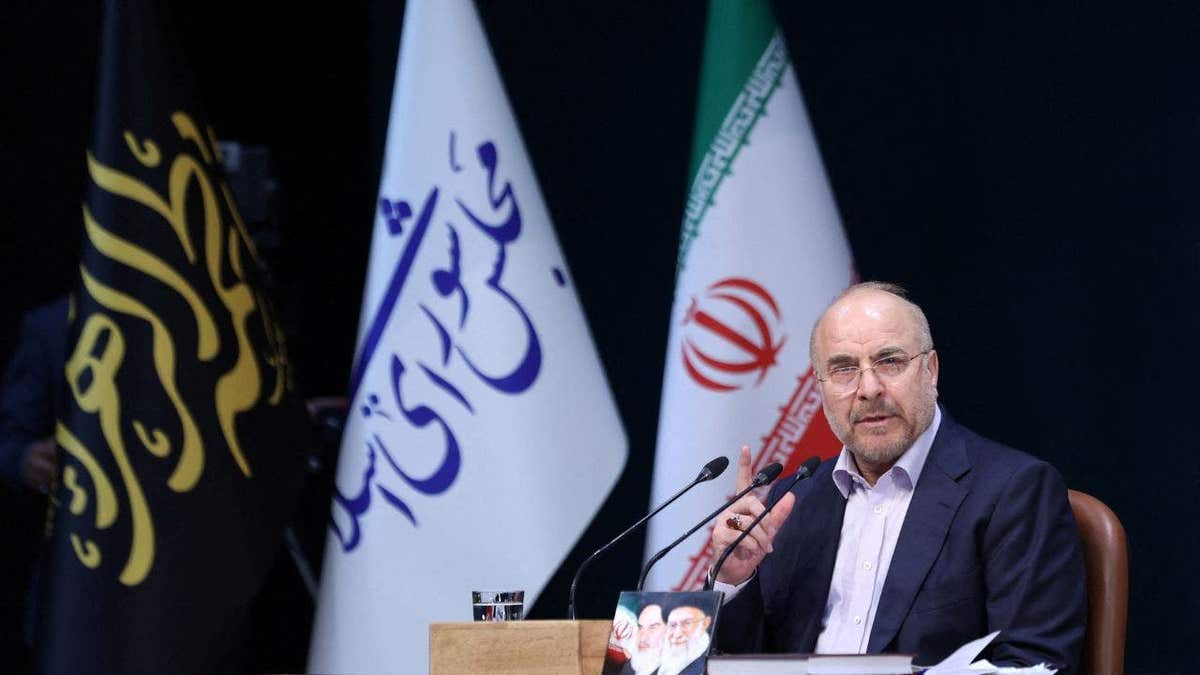
Officials said President Donald Trump, Vice President JD Vance and Iranian Parliament Speaker Mohammad Bagher Ghalibaf, pictured above, have already signed the memorandum with Iran. (Majid Asgaripour/WANA (West Asia News Agency) via REUTERS)
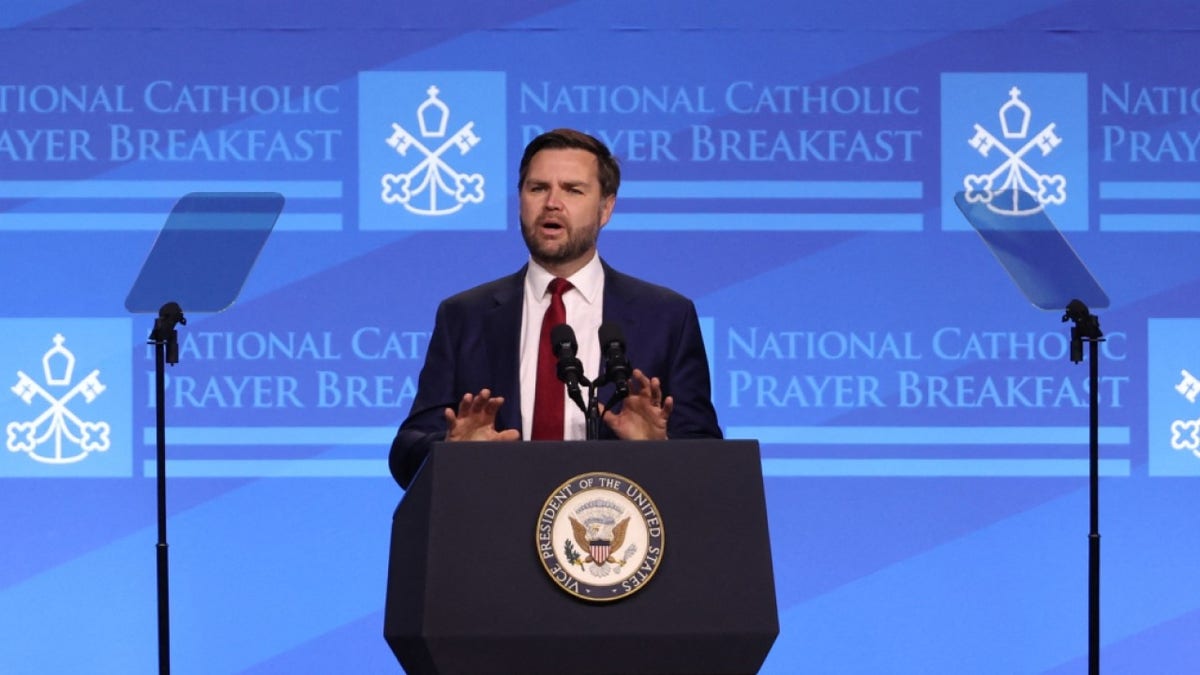
Officials said President Donald Trump, Vice President JD Vance and Iranian Parliament Speaker Mohammad Bagher Ghalibaf have already signed the memorandum. (Ting Shen/AFP via Getty Images)
«The very simple fact is, $0 of unfrozen assets have been released by the United States or any other country,» one official said.
Iranian officials and state-linked media, meanwhile, have described the framework as paving the way for the release of roughly $24 billion in frozen Iranian funds and broader economic relief during the negotiation period.
White House officials disputed reports that any funds have already been released and repeatedly emphasized that future economic concessions would be earned through compliance rather than granted upfront.
IRAN’S REGIME SPINS NUCLEAR AND STRAIT OF HORMUZ DEAL WITH TRUMP AS VICTORY OVER US, ISRAEL
«We’ll do some small gestures of that in the beginning, if they make some small gestures to us,» an official said.
While Trump has portrayed the agreement as a potential turning point in U.S.–Iran relations, the memorandum itself is narrower in scope. The framework extends the ceasefire, establishes a 60-day negotiating window and seeks to reopen the Strait of Hormuz, the strategic waterway through which roughly one-fifth of the world’s oil and liquefied natural gas shipments normally pass.
The reopening of the Strait may prove to be the agreement’s most immediate and economically significant effect. White House officials said the memorandum provides for the opening of the waterway and the lifting of the naval blockade, though they cautioned that commercial shipping could take days or weeks to return to normal levels as mines are cleared and shipping companies regain confidence in the route.
Officials also said the agreement requires the Strait to remain open toll-free during the 60-day negotiating period. The administration expects shipping traffic to increase significantly over the coming days, easing pressure on global energy markets.
The deal, officials said, creates a framework under which Iran could eventually receive sanctions relief and broader access to the global economy in exchange for verifiable steps to ensure it does not rebuild its nuclear program and curbs support for terrorism and regional instability.
CLICK HERE TO DOWNLOAD THE FOX NEWS APP
«If they’re willing to behave like a normal country, then we’re willing to treat them like a normal country,» one official said.
The prospect of renewed traffic through the Strait has already reverberated through global markets. Oil prices fell following news of the agreement as traders bet that one of the world’s most important energy choke points could soon return to normal operations.
war with iran, middle east foreign policy, pentagon, treaties, iran, sanctions
INTERNACIONAL
Medio Oriente: el acuerdo presenta más dudas que certezas y deja para más adelante la cuestión nuclear iraní
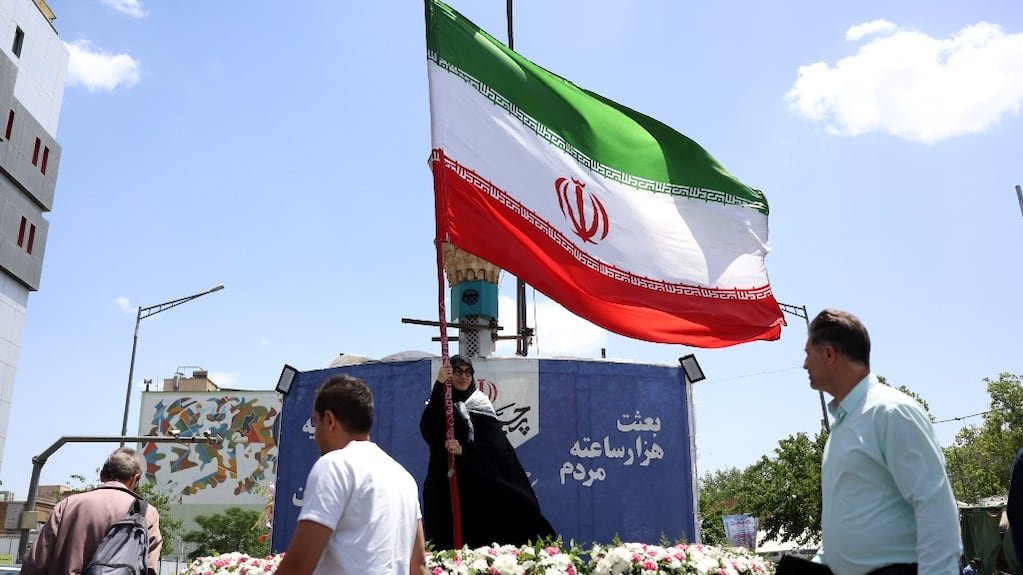
Irán y Estados Unidos acordaron un memorando de entendimiento para poner fin a la guerra y reabrir el estratégico estrecho de Ormuz que se firmará el viernes en Suiza, pero aún quedan en el aire varias cuestiones y muchas discrepancias entre las partes.
El acuerdo preliminar deja para más adelante la espinosa cuestión del programa nuclear iraní, que se discutirá en los 60 días siguientes a la firma del acuerdo.
El contenido no se hizo público y las filtraciones citadas por medios iraníes y estadounidenses muestran grandes divergencias en el texto.
Cuáles son las cuestiones pendientes
El anuncio de un acuerdo significó un alivio para la región, aunque dejó a Israel en una posición difícil. Analistas consideran que fue el gran perdedor en esta guerra, más allá de los inobjetables triunfos militares de la coalición estadounidense-israelí.
Estas son las cuestiones principales pendientes entre los dos rivales:
- El estrecho de Ormuz. Irán levantará el bloqueo que impuso en el estrecho de Ormuz tras el inicio de la guerra el 28 de febrero, mientras que Estados Unidos suspenderá el cerco a buques y puertos iraníes que estableció como respuesta a Teherán tras la firma del acuerdo en Ginebra.
Pero Teherán insiste en que cobrará unas tasas por el paso por el que transitaba el 20 % del petróleo mundial antes del comienzo de la guerra.
El portavoz del Ministerio de Exteriores iraní, Ismail Bagaei, reiteró este lunes que Teherán cobrará unas tasas por servicios de seguridad y medioambiente, aunque no especificó la cantidad.
Desde Estados Unidos se asegura que esto no es así. El propio presidente estadounidense, Donald Trump, aseguró a periodistas que el acuerdo con Irán garantiza un Ormuz “libre de peajes de forma permanente”, según el diario The New York Times. Un buque portacontenedores anclado, con un pequeño bote de motor en primer plano, en el estrecho de Ormuz frente a Bandar Abbas, Irán, el sábado 2 de mayo de 2026. (Amirhosein Khorgooi/ISNA vía AP)
- Fondos iraníes congelados en el extranjero e indemnizaciones. Teherán asegura que recibirá 12.000 millones de dólares de su propiedad bloqueados por Washington en bancos extranjeros antes del inicio de las conversaciones nucleares que seguirán a la firma del acuerdo, según la agencia Mehr, que dice tener el texto. Y antes del fin del plazo de 60 días para cerrar un acuerdo nuclear recibirá otros 12.000 millones de dólares.
Teherán también insiste en el pago de indemnizaciones por los daños causados por la guerra en suelo iraní, según dijo Bagaei, que no ofreció más detalles.
Mehr asegura que Estados Unidos y sus aliados presentarán un plan para la reconstrucción del país persa por valor de 300.000 millones de dólares.
Desde Estados Unidos se asegura que todo esto no es cierto y que Irán irá recibiendo parte de los fondos bloqueados conforme vaya cumpliendo con sus compromisos adquiridos en el acuerdo.
Leé también: Condenaron a cuatro años de cárcel al hijo de la princesa de Noruega por dos casos de violación y maltrato
- Sanciones a la venta del petróleo. Las sanciones estadounidenses e internacionales prohíben la venta y compra de petróleo a Irán, que vende en el mercado negro sus productos petroquímicos, sobre todo a China.
Bagaei aseguró que, como parte del memorando de entendimiento, “estas restricciones deberán desaparecer e Irán tendrá que poder vender petróleo, productos petroquímicos y derivados del petróleo sin ningún obstáculo ni problema”.
Estados Unidos no confirmó este extremo y países europeos como Alemania, Francia, Reino Unido e Italia se mostraron hoy dispuestos a levantar sanciones a Irán “en respuesta a medidas claras y verificables por parte de Irán en relación con su programa nuclear”, algo muy lejos de lo planteado por Teherán.
- Programa nuclear. Irán insiste en que en el memorando de entendimiento que se firmará el viernes se comprometerá a “no fabricar armas nucleares”, según Mehr, algo que ha reiterado el país en numerosas ocasiones.
El resto de la cuestión nuclear será tratado en los siguientes 60 días a la firma, según Teherán, que no dio más información al respecto. Un iraní sostiene una bandera nacional y un retrato del líder supremo, Mojtaba Jamenei, en una calle de Teherán (Foto: Majid Asgaripour/WANA (West Asia News Agency) via REUTERS)
Trump, por su parte, aseguró que el país persa suspenderá el enriquecimiento de uranio por entre 15 y 20 años, y que además “nunca” enriquecerá a niveles que pueda usarse para fines nucleares.
Además, la República Islámica diluirá los 440 kilogramos de uranio enriquecido al 60 % en su posesión.
- Líbano. El canciller iraní, Abás Araqchí, insistió este lunes en “la necesidad de un cese total de la agresión” de Israel contra el Líbano para que se cierre el acuerdo con Estados Unidos.
Para Teherán se trata de una “línea roja”, pero no está claro que Trump pueda garantizar que Israel no vuelva a atacar al país árabe.
(Con información de EFE)
Irán, Donald Trump, Israel

Como en Qatar: Las camisetas que usará la Selección Argentina en fase de grupos del Mundial 2026

Los Jaimitos de Videomatch volvieron en Infobae Mundial: la canción que le dedicaron a Tinelli, Messi y Pergolini

Los suicidios triplican los homicidios en Argentina: la advertencia de un psiquiatra ante la cifra récord

Cuándo bajarán los precios de la nafta en la Argentina tras el anuncio de acuerdo entre Estados Unidos e Irán

Somalilandia, el país que sólo reconoce Israel, inauguró su primera embajada en Jerusalén

Bielsa autocrítico: «No conseguimos la versión que somos capaces»

Jan De Nul defendió el proceso de licitación de la Hidrovía con una carta a las principales entidades vinculadas a la vía navegable

Diputados de la Coalición Cívica denunciaron penalmente a Manuel Adorni por presuntas irregularidades en sus declaraciones juradas

La polémica por las criptomonedas de Adorni: cómo funciona la trazabilidad y qué puede revelar una billetera

Gripe aviar: la Argentina vuelve a exportar carne de pollo a Chile y Perú tras superar los controles sanitarios

 ECONOMIA3 días ago
Jan De Nul defendió el proceso de licitación de la Hidrovía con una carta a las principales entidades vinculadas a la vía navegable
- POLITICA2 días ago
La polémica por las criptomonedas de Adorni: cómo funciona la trazabilidad y qué puede revelar una billetera
- POLITICA2 días ago
Tras las explicaciones de Adorni, el PRO y la UCR se distancian del oficialismo y cruje el apoyo legislativo