INTERNACIONAL
Federal judge blocks Indiana ban on student ID for voting

NEWYou can now listen to Fox News articles!
A federal judge this week blocked Indiana from enforcing a law that bars college-issued student identification cards from being used for voting, ruling that the measure likely violates the constitutional rights of students and young voters.
U.S. District Judge Richard Young granted a preliminary injunction on Tuesday against Senate Bill 10, a 2025 law that removed student IDs from Indiana’s list of acceptable voter identification even though such cards had been accepted for nearly two decades if they included a voter’s name, photograph, expiration date and were issued by the state or federal government.
«Plaintiffs have shown that they are likely to succeed on their claim that SB 10 imposes unconstitutional burdens on students and young voters in violation of the First and Fourteenth Amendments,» Young, appointed by former President Bill Clinton, wrote in a 34-page order. «They have also established irreparable harm and satisfied the remaining requirements for a preliminary injunction.»
Indiana Attorney General Todd Rokita’s office said Wednesday it intends to appeal, arguing that the state’s voter ID law should not be weakened by court-ordered exceptions.
GOP GOVERNORS, AGS BACK TRUMP SAVE ACT PUSH, WARN SYSTEM GIVES ‘UNDUE INFLUENCE’ TO STATES WITH ILLEGAL ALIENS
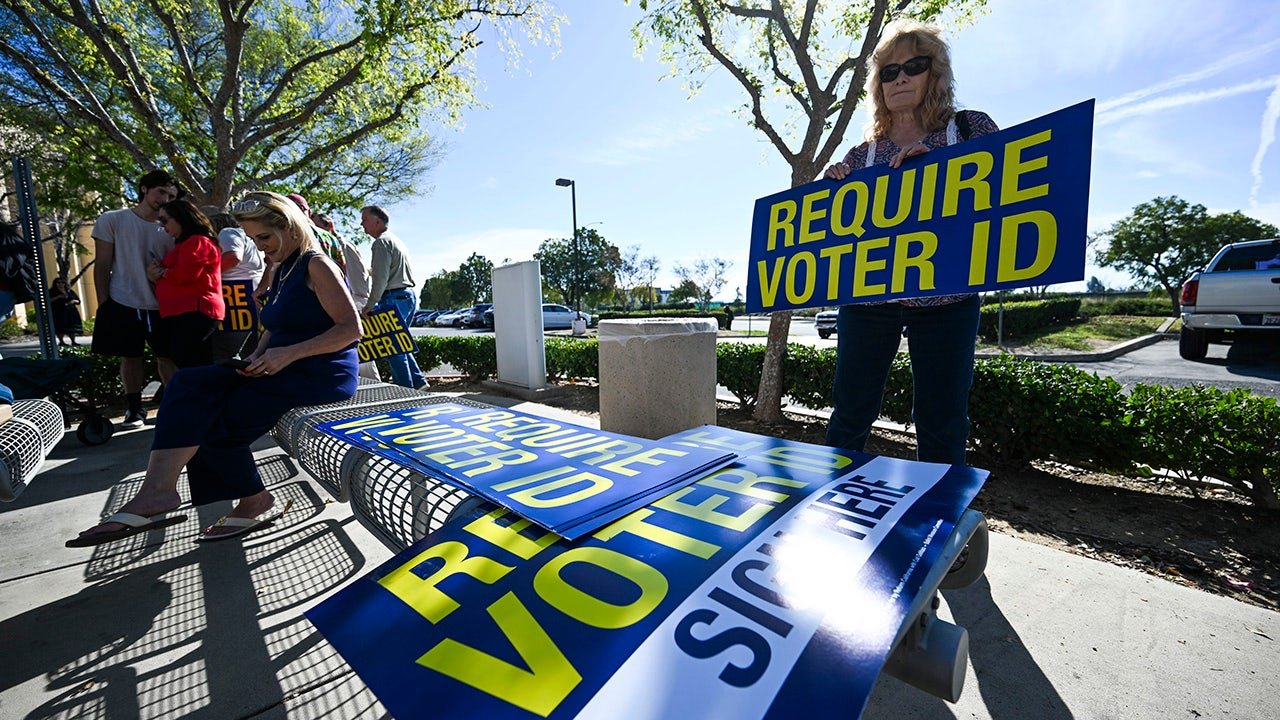
Riverside, California – March 02:A volunteer picks up «Require Voter ID» sign at the press conference at the Riverside County Registrar of Voters on Monday, March 2, 2026, as GOP lawmakers gather in support of placing a voter ID measure on the November ballot. (Photo by Anjali Sharif-Paul/MediaNews Group/The Sun via Getty Images) (Anjali Sharif-Paul/MediaNews Group/The Sun via Getty Images)
«Indiana’s voter ID law is critical to election security and integrity,» the office told the Indiana Capital Chronicle in a statement. «Courts shouldn’t be watering the law down by doling out special exemptions to some students and faculty. We’ll keep fighting to uphold commonsense election rules.»
Notably, out of state college students might be registered in another state, perhaps a nexus for the state’s requiring a state or federal-issued ID.
Still, Young concluded that rejecting student IDs for voters «is probably unconstitutional.»
FLORIDA, MISSISSIPPI JOIN WAVE OF STATES TIGHTENING VOTER CITIZENSHIP RULES
«While it’s true that an injunction would override a democratically adopted law, Indiana has no valid interest in enforcing ‘a statute that is probably unconstitutional,’» Young wrote.
The ruling is a setback for Republican state lawmakers who approved SB 10 last year after arguing that student IDs were not issued with the same rigor as Indiana driver’s licenses and state identification cards. Young found the state’s position undercut by the fact that Indiana still allows other non-driver forms of identification — including military, Veterans Administration and tribal IDs — many of which, he wrote, are «less uniform than student IDs.»
«By eliminating student IDs as an acceptable form of identification, Defendants selectively excluded a form of identification that otherwise complies with the neutral criteria established by Indiana’s voter ID law and that has been accepted as a form of voter identification for nearly two decades,» Young wrote.
CONSERVATIVE GROUP LAUNCHES $5M AD BLITZ PRESSURING SENATE ON VOTER ID AS GOP EYES SAVE AMERICA ACT PUSH
The judge said he did not need to decide, at this stage, a separate claim that the law intentionally discriminates on the basis of age in violation of the Twenty-Sixth Amendment.
The lawsuit was filed in May 2025 by Count US IN, Women4Change Indiana and Indiana University student Josh Montagne, who had used his IU-issued student ID to vote three times but said he lacked another form of qualifying identification after the law took effect.
Young’s order described student IDs as a long-standing, widely used tool for voting on Indiana campuses. The opinion cited evidence that nearly 200,000 students attend Indiana public universities whose IDs previously qualified under the voter ID law, and noted a Monroe County election supervisor’s estimate that about two-thirds of voters at an on-campus Indiana University polling place used student IDs in the 2024 general election.
DAVID MARCUS: SENATE GOP SHOULD TAKE FETTERMAN’S DEAL ON VOTER ID
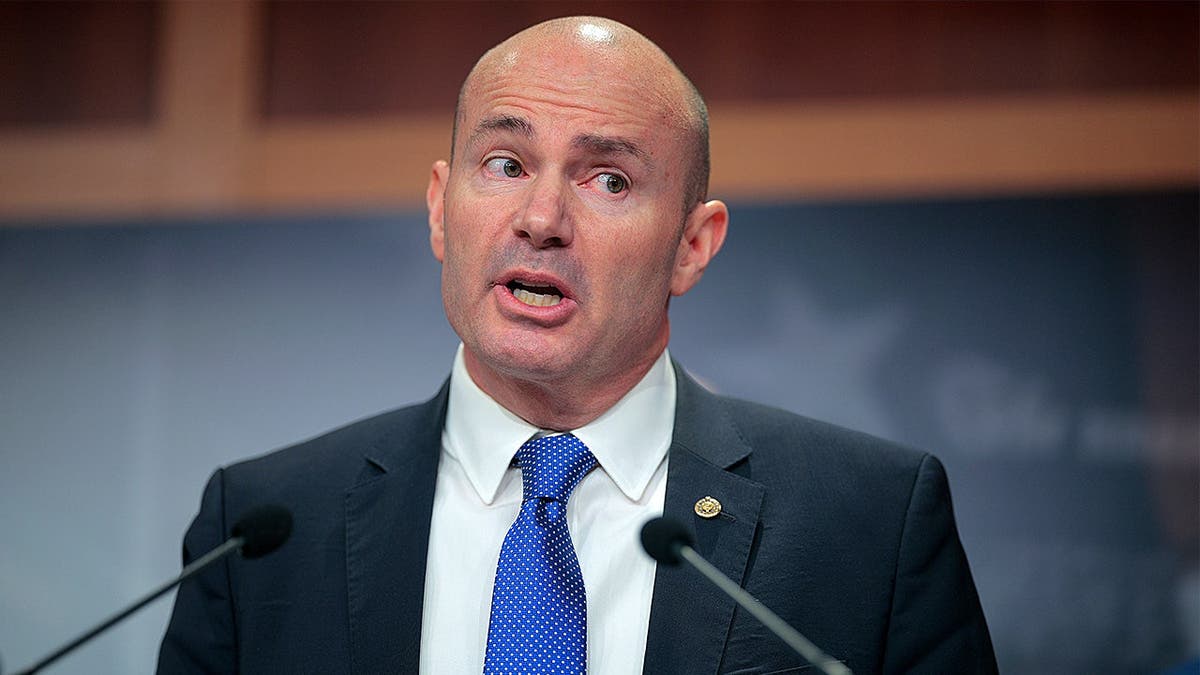
Sen. Mike Lee, R-Utah, spoke during a news conference about the SAVE America Act at the U.S. Capitol on March 19, 2026, in Washington, D.C. (Chip Somodevilla/Getty Images)
The judge estimated that the actual number of students affected by the ban was likely about 40,000, though he noted the plaintiffs’ expert had produced higher estimates. He said the record showed the law falls hardest on college students and younger voters because they are less likely than the general electorate to possess Indiana driver’s licenses or state IDs and often face added hurdles in getting alternative documentation.
Young rejected the state’s argument that the public interest in election integrity justified the change, writing that Indiana had produced no evidence that student IDs had been used in voter fraud or that they had caused meaningful problems for election administration.
TRUMP-BACKED VOTER ID BILL FACES GOP RESISTANCE AS TILLIS VOWS TO STOP IT
«To eliminate the ID that students and young voters are far more likely to rely on, Defendants must better document the unique problems student IDs raise,» Young wrote. «On this record, SB 10 looks more like a solution in search of a problem.»
The court also concluded that blocking the law weeks before Indiana’s May 4 primary would not create the kind of disruption federal courts are warned to avoid close to an election. Young said the injunction would mainly restore a practice Indiana had followed for years and would require only minor updates to election materials and training.
CLICK HERE TO DOWNLOAD THE FOX NEWS APP
Because the case is at the preliminary injunction stage, the ruling does not permanently strike down the law. But it means student IDs that otherwise satisfy Indiana’s voter ID requirements can be used in the upcoming elections while the lawsuit moves forward.
first amendment elections, in court, indiana, law, federal judges






INTERNACIONAL
Los bloqueos por el alza de combustibles dejan seis agentes heridos y varios arrestos en Guatemala
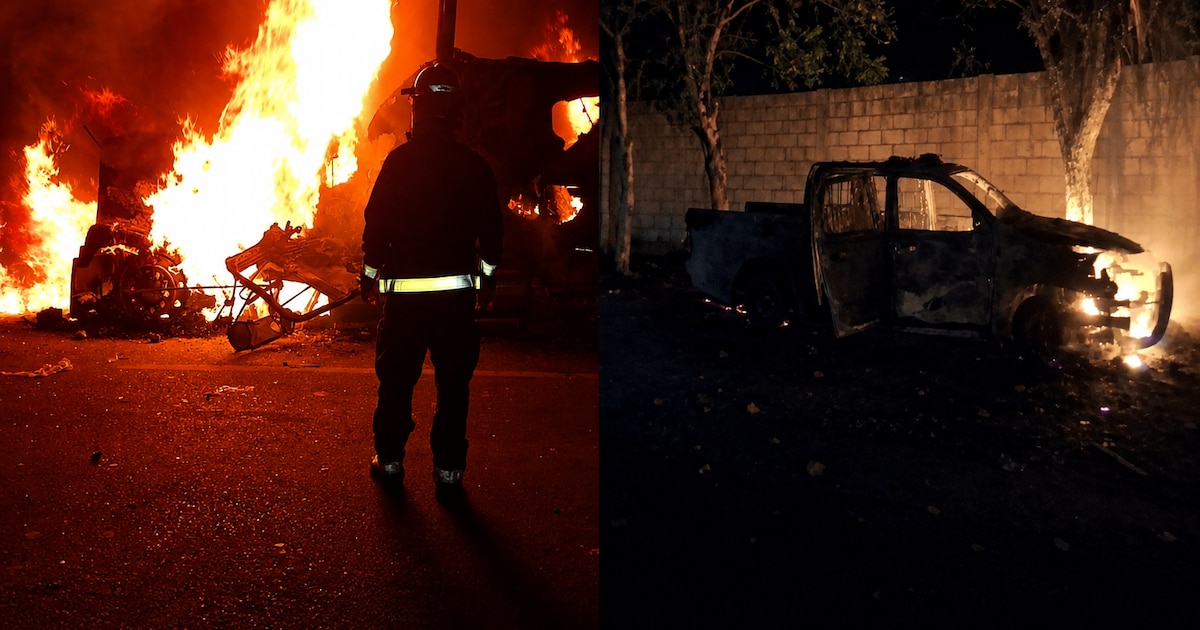
La Policía Nacional Civil (PNC) confirmó que seis agentes resultaron heridos durante el desalojo de un bloqueo el viernes 11 de septiembre, en el kilómetro 168 de la ruta a Cuyotenango, Suchitepéquez, en una jornada de protestas contra el aumento de los combustibles que también dejó vehículos incendiados en Zacapa y cortes en varios departamentos de Guatemala.
Un cierre continuaba activo el sábado 12 de septiembre a las 06:45 en el kilómetro 225 de la ruta departamental QUE-03, en la aldea Santo Domingo, Colomba Costa Cuca. El bloqueo había comenzado cuatro minutos antes, afectaba ambos sentidos de circulación y era el único punto cerrado en el reporte matutino de la Dirección General de Protección y Seguridad Vial (Provial); las demás rutas figuraban habilitadas.
El policía Ronal Gavino Morales Chávez sufrió un disparo en el estómago y fue trasladado en helicóptero a un centro asistencial de la Ciudad de Guatemala, después de ser estabilizado en el Instituto Guatemalteco de Seguridad Social de Mazatenango. Los otros cinco efectivos padecieron lesiones por explosiones de morteros, el impacto de una piedra en el cráneo y golpes en distintas partes del cuerpo.
La corporación indicó que sus Fuerzas Antidisturbios despejaron más del 90% de los puntos bloqueados en el país. El despliegue respondió a una orden de la Corte de Constitucionalidad para liberar las rutas con apoyo del Ministerio de Gobernación y el Ejército.
Dos focos de conflicto en Zacapa y Villa Nueva
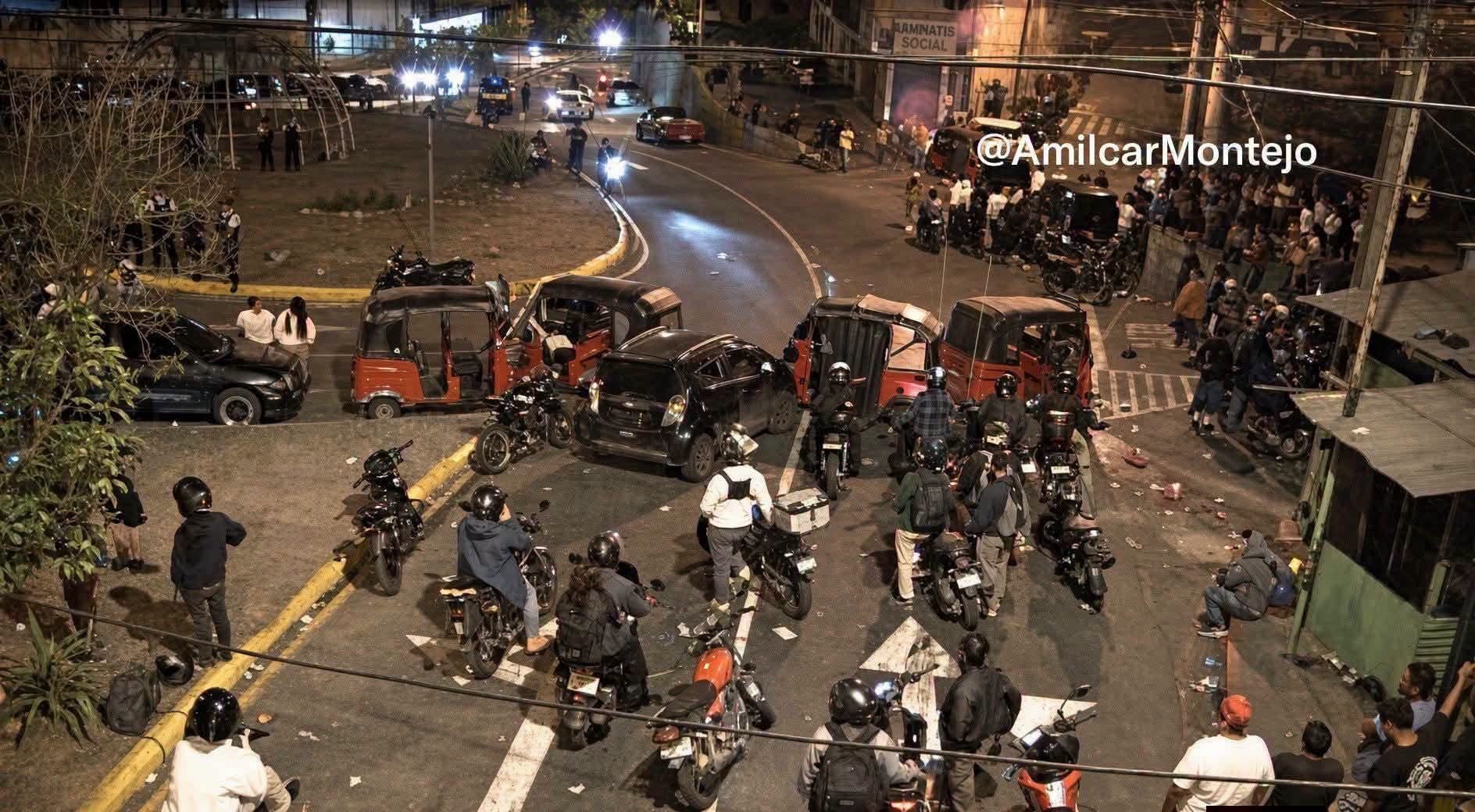
Los incidentes persistían al cierre de la jornada en sectores de Zacapa y Villa Nueva, donde la PNC afirmó haber detectado la presencia de pandillas y estructuras del crimen organizado dentro de las manifestaciones. La institución acusó a esos grupos de usar a mujeres, adultos mayores y niños como escudos humanos.
La fuerza de seguridad solicitó la intervención de la Procuraduría de los Derechos Humanos y de la Procuraduría General de la Nación para proteger las garantías de los menores y las mujeres presentes en las zonas de conflicto. También pidió a los habitantes de los lugares donde continuaban los enfrentamientos que permanecieran en sus hogares mientras avanzaba el operativo.
“Atentar contra la paz en presencia de la niñez guatemalteca es un acto criminal que no quedará impune”, advirtió la policía. La institución requirió denuncias anónimas sobre actividades delictivas, instigación o presencia de personas infiltradas.
La PNC señaló que, con base en el artículo 257 del Código Procesal Penal, detendría en flagrancia a quienes obstruyeran las vías. Los vehículos y camiones utilizados deliberadamente para bloquear carreteras serían puestos a disposición de los tribunales para su comiso.
“Los promotores e instigadores de estos ataques violentos están debidamente perfilados e individualizados y enfrentarán todo el peso de la ley”, sostuvo la corporación.
Durante el operativo en Cuyotenango, las autoridades detuvieron a Armando Constancia Martínez, a quien le decomisaron piedras, hondas, morteros y otros objetos presuntamente utilizados para agredir a los agentes. El arresto se sumó a cuatro capturas previas por disturbios en San Miguel Petapa y Suchitepéquez.
En la zona cinco de Mixco, sobre la calzada San Juan, agentes de la comisaría 16 arrestaron a Juan “N”, de 44 años, y Joseline “N”, de 29, cuando arrojaban objetos contundentes contra policías que buscaban despejar la cuarta avenida.
Otros dos hombres fueron capturados en el kilómetro 19,5 de la ruta al Pacífico. William “N”, de 33 años, y Hugo “N”, de 28, estaban en un bloqueo que reunía a 150 personas, donde también se registró el lanzamiento de piedras contra los efectivos de seguridad.
La presencia policial fue reforzada en la colonia Bethania, el Anillo Periférico, Villa Nueva, la ruta al Atlántico y los sectores de Río Hondo y Zacapa, que concentraron algunos de los cierres más prolongados.
Camiones incendiados y reclamo de estado de excepción
La Cámara Guatemalteca de Transporte de Carga condenó los hechos de violencia, vandalismo y destrucción registrados durante las protestas, con especial referencia a la quema de vehículos y camiones de transporte pesado en la aldea Santa Cruz, en el kilómetro 124 de Zacapa.
“El derecho a manifestar nunca puede convertirse en una licencia para delinquir”, expresó la organización. El gremio sostuvo que ninguna causa justifica la destrucción de propiedad privada, las agresiones contra trabajadores ni la interrupción forzada de las principales vías de comunicación.
La cámara exigió al Gobierno de Guatemala el restablecimiento inmediato del orden y de la libre circulación en la carretera CA-9 y en todos los sectores afectados por bloqueos violentos. También reclamó al Ministerio Público una persecución penal inmediata contra los responsables materiales e intelectuales de la destrucción, los incendios de vehículos y las amenazas contra transportistas.
“Solicitamos respetuosamente, pero con absoluta firmeza”, al presidente que evalúe declarar un estado de excepción en los municipios donde la violencia haya superado la capacidad ordinaria de las autoridades, planteó el gremio.
Las movilizaciones surgieron después de que el Congreso de la República aprobara, con trámite de urgencia nacional, un decreto que establece precios máximos de referencia para el diésel y las gasolinas, además de un fondo de compensación para los importadores. Diversos sectores del transporte consideran insuficiente la medida frente al aumento de los combustibles registrado en los últimos meses.
Policía Nacional Civil,detención,seguridad pública
INTERNACIONAL
Blue state governor’s pardon of convicted felon torpedos a major Supreme Court immigration fight
Judge called out for releasing MS-13 murder suspect in California
DHS general counsel James Percival warns of an ‘epidemic of judicial activism’ after a federal judge in California orders the release of an MS-13 murder suspect. Percival argues that individuals wanted for murder must remain in immigration detention during removal proceedings.
NEWYou can now listen to Fox News articles!
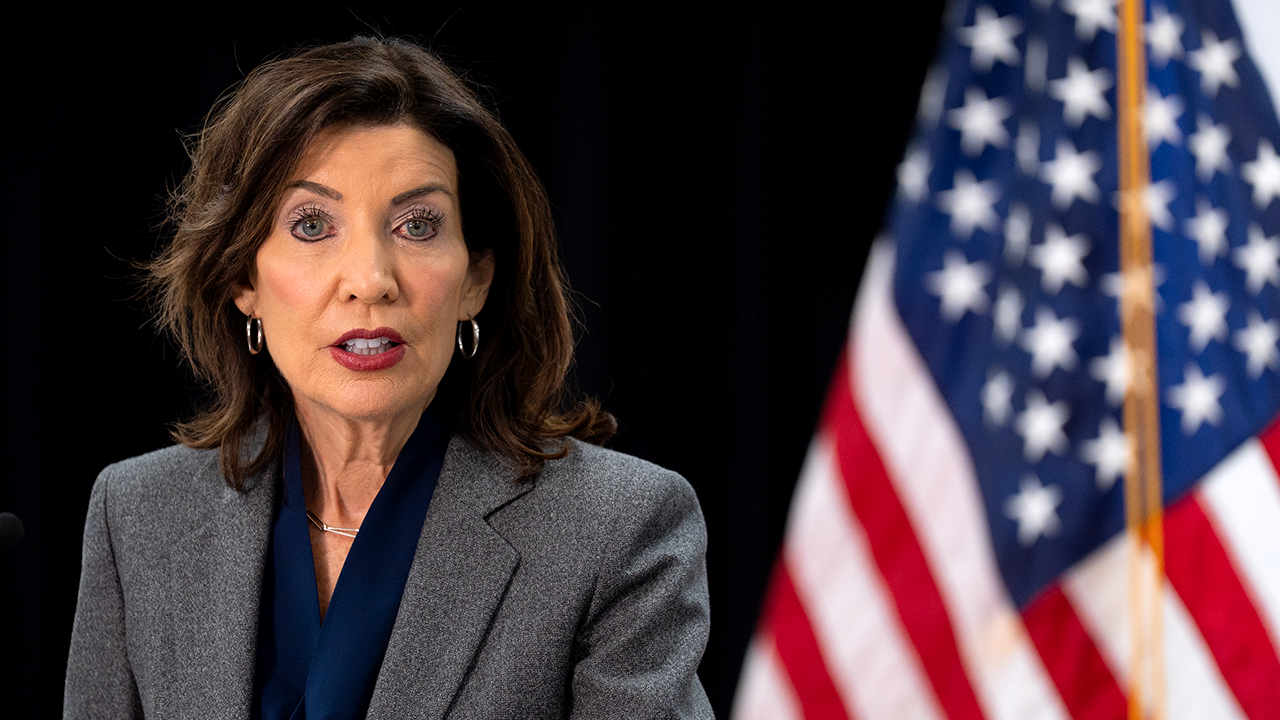
The Supreme Court will no longer hear an oral argument for a case centered on bond rights for noncitizens detained for lengthy periods, ruling the case moot after New York Democratic Gov. Kathy Hochul pardoned a lawfully present Dominican citizen, who pleaded guilty to second-degree assault.
Hochul pardoned Keisy Guerrero Mariano, who is identified in court documents as «Keisy GM,» in late August, effectively killing the Trump administration’s appeal to the Supreme Court arguing that noncitizens, including those with green card status, do not have a legal right to a bond hearing for a prolonged detention if they have committed crimes that are grounds for mandatory deportation.
Hochul, who is staunchly opposed to President Donald Trump’s immigration enforcement crackdown, issued the pardon for Mariano just as the brief was due.
FEDERAL APPEALS COURT COMPARES TRUMP MIGRANT DETENTION POLICY TO JAPANESE AMERICAN INTERNMENT
FILE – New York Democratic Gov. Kathy Hochul pardoned Keisy Guerrero Mariano in late August. (Adam Gray/Bloomberg via Getty Images)
Solicitor General John Sauer agreed Friday that Genalo v. Black is now moot, but said the Trump administration will seek an «alternative vehicle» to challenge the Second Circuit’s 2024 ruling that prolonged immigration detention can trigger a constitutional right to a bond hearing.
Sauer said the administration intends to find another case through which the Supreme Court can resolve the issue during its 2026-27 term.
The lawsuit centered on the challenges of plaintiffs Carol Williams Black, a Jamaican national with lawful standing, and Mariano — both convicted criminals detained by ICE.
APPEALS COURT BLOCKS TRUMP ADMIN FROM HOLDING MIGRANTS WITHOUT BOND FOR OVER 90 DAYS
Mariano was first arrested by Immigration and Customs Enforcement officers in 2020 over a 2015 second-degree assault conviction for which he served time, making him eligible for deportation.
He spent nearly two years in ICE detention, but was released in 2022 due to a nationwide injunction that required the release of detainees because of COVID-19 health risks.
Prior to his release, Judge John P. Cronan of the U.S. District Court for the Southern District of New York denied Mariano’s habeas corpus request in November 2021.
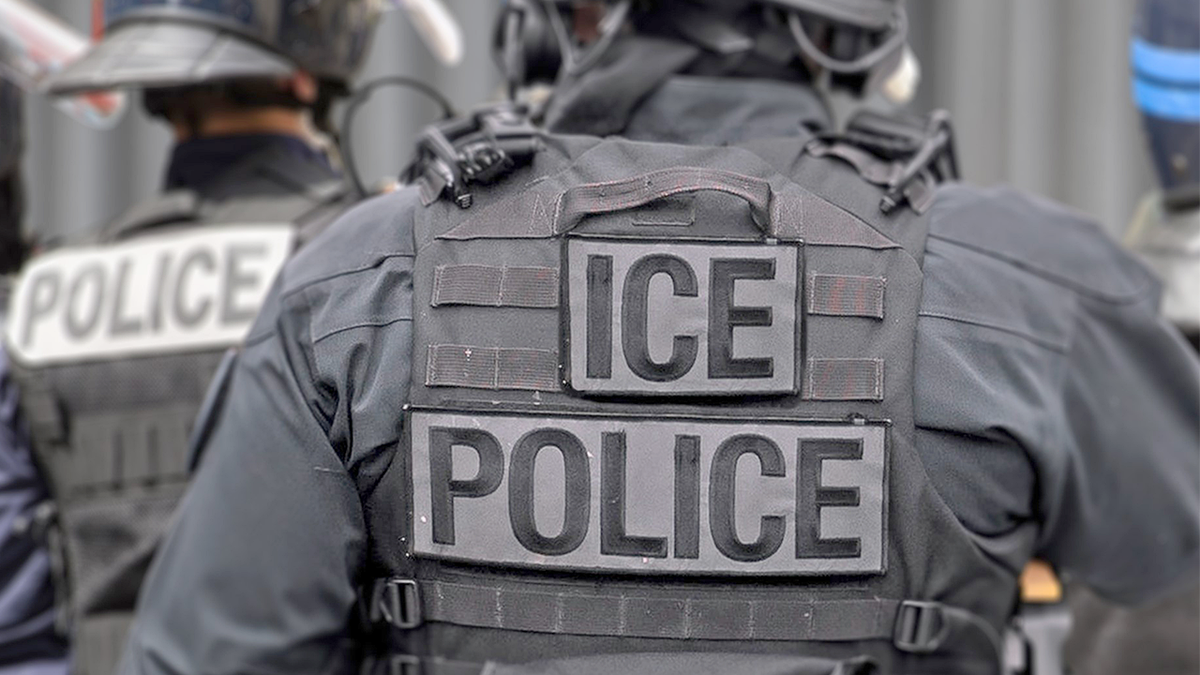
FILE – Mariano was released in 2022 after spending nearly two years in ICE detention. (Getty Images)
But in May 2024, the Second Circuit overruled Cronan’s decision, ruling that the government must grant noncitizens a bond hearing once detention becomes «unreasonably long.» Failure to do so, the court ruled, would violate the Fifth Amendment’s due process clause.
The case was appealed to the Supreme Court, which agreed to hear the case June 15; however, the high court ruled Black’s case moot because he had left the United States and filed a court declaration that he would not be returning to the country.
Black was convicted in New York in 2000 of sexually abusing a minor under the age of 11.
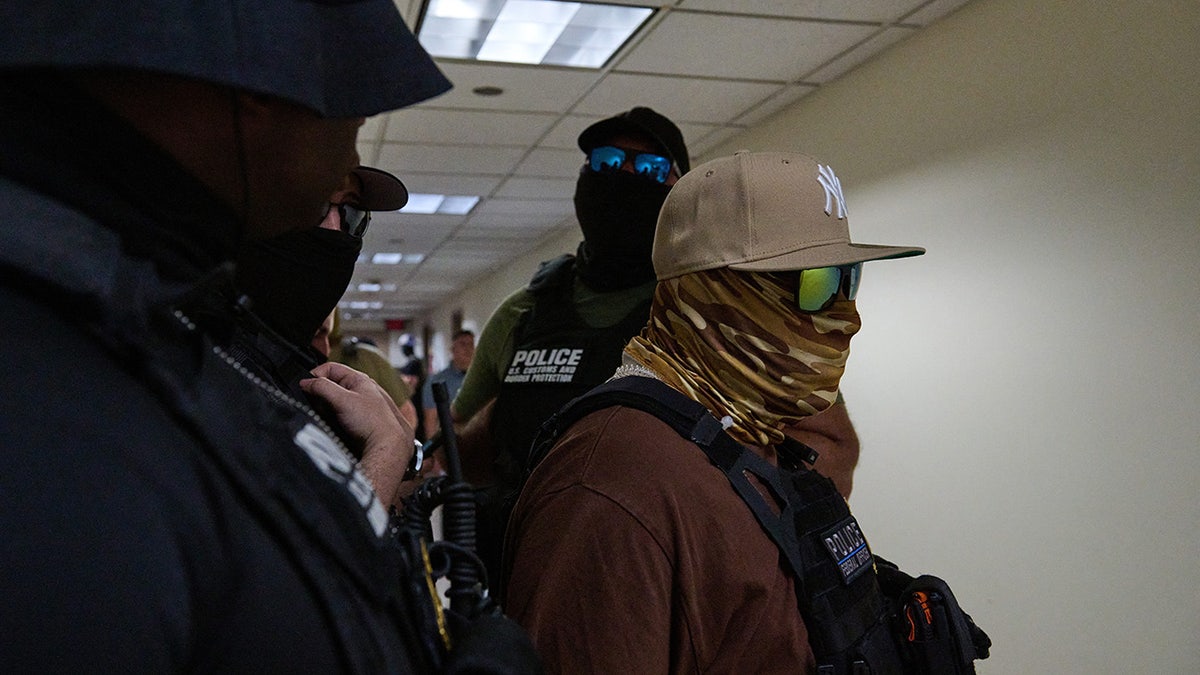
FILE – Following an appeal, the Second Circuit ruled the government must grant noncitizens a bond hearing once detention becomes «unreasonably long.» (Dominic Gwinn/Middle East Images/AFP via Getty Images)
DHS BLASTS MINNESOTA BOARD FOR UNANIMOUSLY PARDONING ILLEGAL IMMIGRANT CONVICTED OF 3 ASSAULTS
Hochul’s decision to issue a pardon to Mariano has garnered fierce criticism from legal experts.
«Pretty wild to fully pardon an aggravated felon to (1) stop the felon from getting deported and (2) stop the Supreme Court from ruling on an issue. (Especially as this litigation has been going on for years),» Eric Wessan, Iowa’s solicitor general, posted on X.
He praised Sauer’s decision to fight back on the Second Circuit’s ruling.
«I wonder how many non-American felons Governors like Hochul will choose to fully pardon and free to avoid them facing consequences for their actions,» Wessan added.
Fox News Digital reached out to Hochul’s office for comment.
kathy hochul, immigrant rights, judiciary, latino, deportation, supreme court
INTERNACIONAL
Abdul El-Sayed touts ‘whole a–’ medical credentials while defending sex changes for children
NEWYou can now listen to Fox News articles!
Michigan Democratic U.S. Senate candidate Abdul El-Sayed said the government should not restrict sex changes, arguing that «whole a–» doctors like himself should be allowed to make their own determinations for patients’ treatment plans.
The remarks came during El-Sayed’s Friday rally held at Michigan State University, during which the former Detroit Health Department head responded to a student’s question about protecting sex changes. Since launching his campaign, El-Sayed has flaunted that he is a «physician» and, if elected, he would be the first doctor to serve as a Democratic senator in 50 years. However, Fox News Digital previously reported El-Sayed has never held a medical license in Michigan or New York.
«I went to a whole a– medical school, everybody I graduated with also went to whole a– medical school,» El-Sayed said. «And then… they went to whole a– residency. Right? And some of them went to whole a– fellowship. They took whole a– exams to provide whole a– healthcare.»
DEM SENATE HOPEFUL’S ‘PHYSICIAN’ CAMPAIGN PITCH UNDER FIRE AFTER LICENSE RECORDS REVEAL KEY GAPS
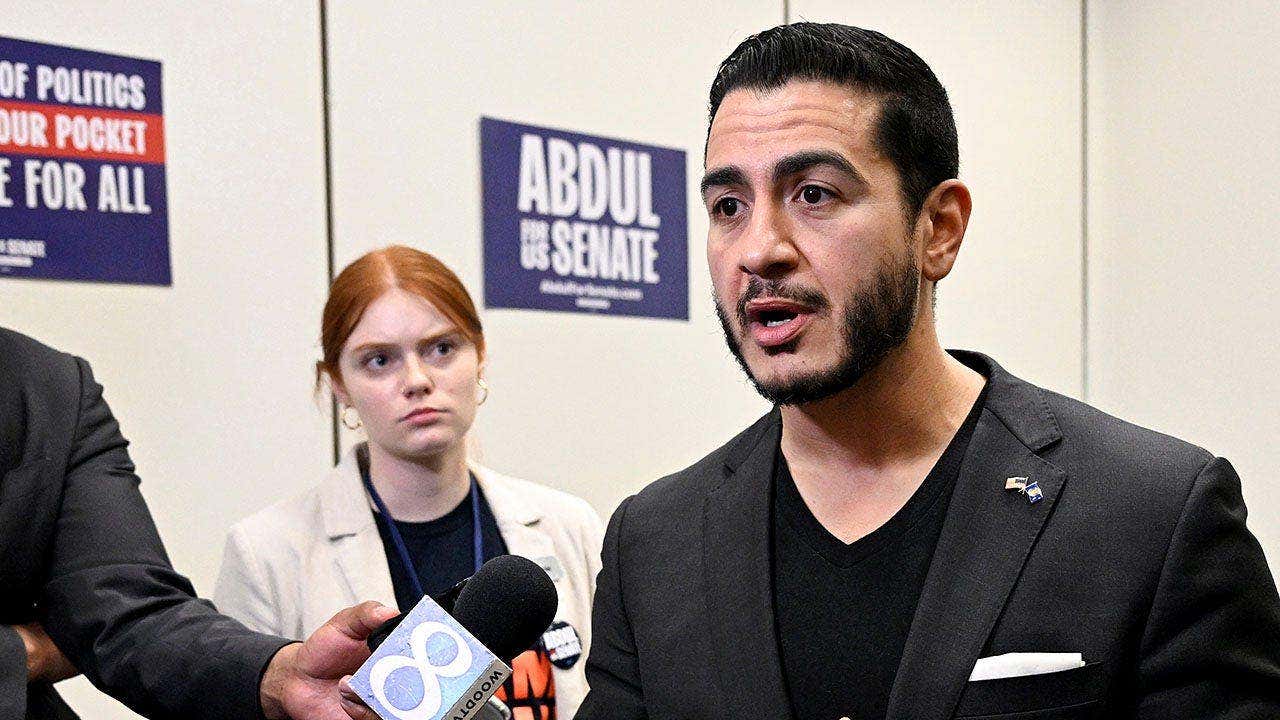
Abdul El-Sayed answers a question during a press conference at the Michigan Democratic Party State Endorsement Convention in Detroit on April 19, 2026. El-Sayed has never held a medical license in Michigan or New York. (Jose Juarez/AP Photo)
«They are the experts that a patient wants to see when they seek care,» El-Sayed continued. «And the decision about what healthcare is necessary ought to be held between a patient — and or their parents if they’re under the age of 18 — and their doctor. That’s it.»
The remarks come as the Trump administration has made major strides in restricting minors’ access to «sex-rejecting» procedures, which include hormone therapy and surgeries.
Earlier this week, the Justice Department announced that Mount Sinai had joined other hospitals, like Texas Children’s Hospital, the Cleveland Clinic Foundation and Connecticut Children’s Hospital, to halt sex change procedures for children after reaching an agreement with the Trump administration.
MEDICAID ENDS FUNDING FOR CHILD SEX-CHANGE PROCEDURES AS TRUMP ADMIN SLAMS ‘EXPERIMENTAL’ TREATMENTS
El-Sayed has made the promise of «Medicare-for-all» — government-run healthcare — as the major selling point of his campaign; he said that even though the government will be covering the bill, it needs to stay out of the doctor’s decisions about a patient’s treatment plan.
«I don’t think the government gets to have a say about what healthcare is provided in what circumstances and why,» El-Sayed said. «And to me, that is the standard on which we decide how we make healthcare decisions.»
THE MEDICARE FOR ALL TRADE-OFFS SOCIALISTS AREN’T TALKING ABOUT, ACCORDING TO EXPERTS
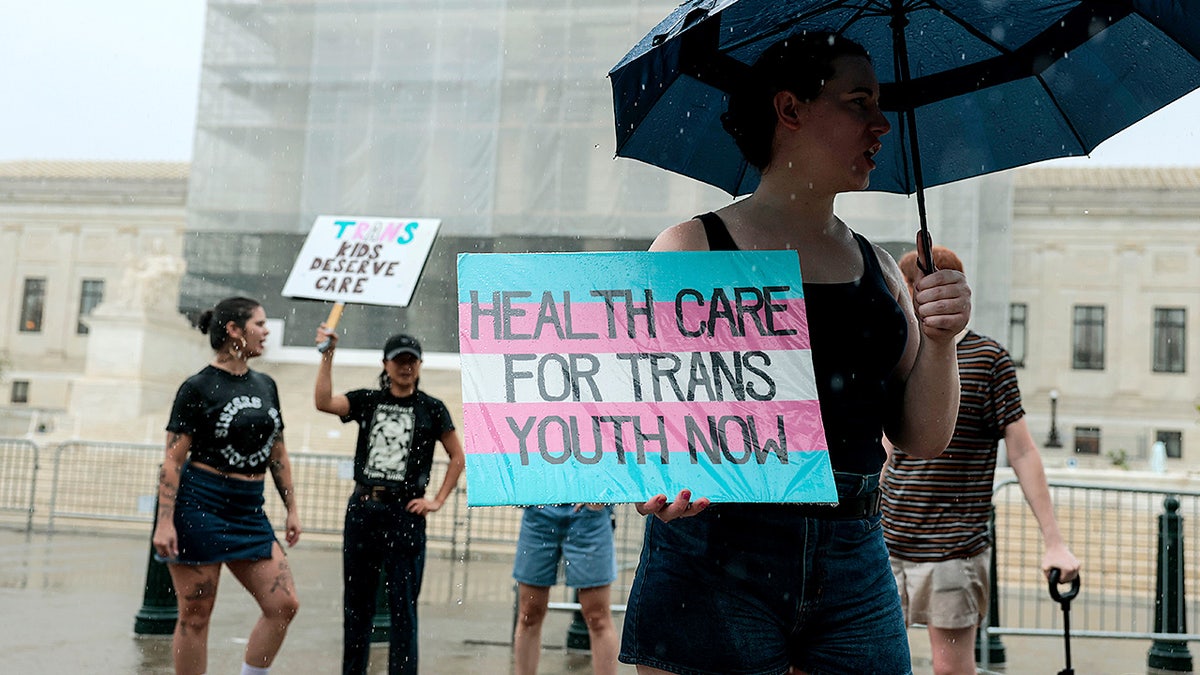
A protester holds a sign in support of sex changes for transgender children outside the U.S. Supreme Court in Washington, D.C., on June 18, 2025. (Anna Moneymaker/Getty Images)
«Not what the government says you can or can’t do, but what a patient and/or their parent, if they’re under 18, and their provider to decide. That’s the most important thing,» El-Sayed continued. «And there’s a lot of disinformation about us, what we’re talking about, when we talk about reproductive rights and when we’re talking about healthcare for the trans folks. But, in the end, the place where the rubber meets the rope is in that clinical room between a patient and a provider, and that to me is the center we should engage on.»
El-Sayed argued that Republicans agree with his belief that treatment decisions should be between a patient and their doctor, pointing to the Right to Try Act, which allows terminally ill patients to try experimental drug treatments that aren’t yet approved by the Food and Drug Administration after they have exhausted all other treatment options.
«Because conservatives fought for a very long time for this legislation called ‘Right to Try’ legislation, which is the idea that the government couldn’t tell you [that] you couldn’t have a certain medication,» El-Sayed said.
TRUMP ADMINISTRATION PROBE COULD UPEND WIDELY USED TRANSGENDER YOUTH TREATMENT GUIDELINES
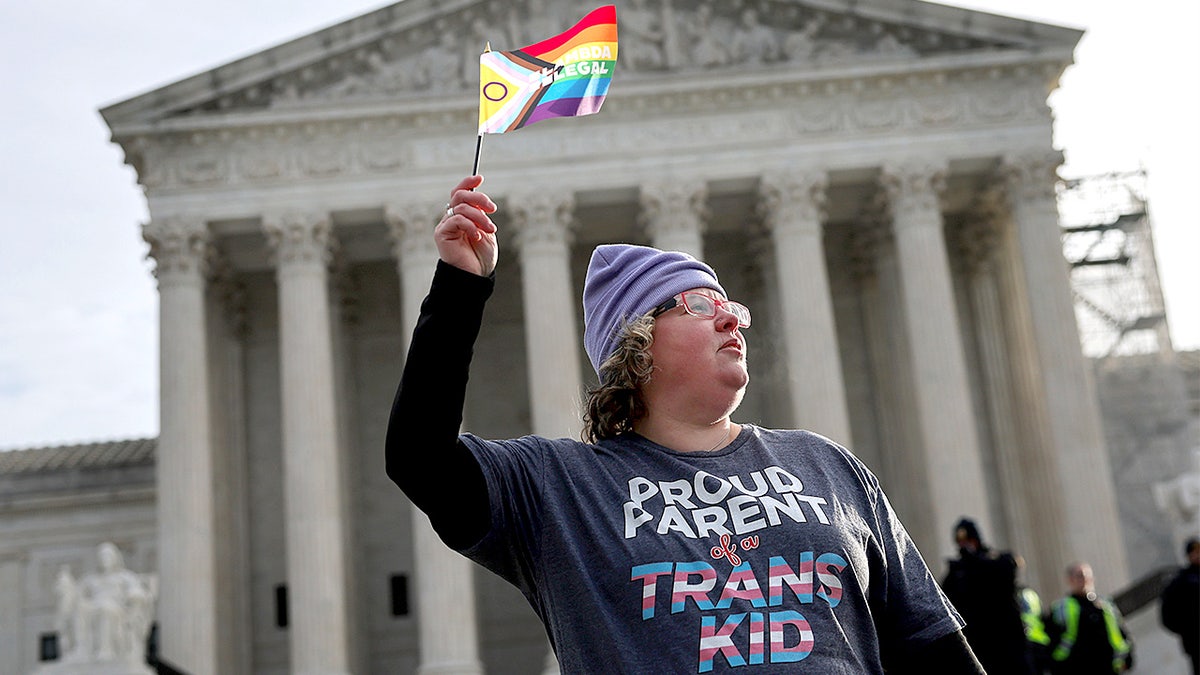
A transgender rights supporter takes part in a rally outside the U.S. Supreme Court as the justices hear arguments in a case on transgender health rights in Washington, D.C., on Dec. 4, 2024. (Kevin Dietsch/Getty Images)
«So they agree that the decision about healthcare ought to be between the person and their provider. That’s it. So let’s use that standard, and keep to that standard, and make sure the government doesn’t have the ability to tell you what you can or cannot do with your own life,» El-Sayed said.
However, the research on the efficacy of treating individuals with gender dysphoria by allowing them to change sexes with «cross-sex» hormones and puberty blockers is limited.
The World Professional Association for Transgender Health, whose guidelines are used by leading medical associations like the American Academy of Peditatrics, is currently facing a lawsuit from the Federal Trade Commission stemming from allegations that its guidelines misled parents about the «medical consensus and medical necessity, as well as the safety and effectiveness» of sex change procedures.
The FTC has accused WPATH of failing to disclose the side effects associated with some procedures, such as patients experiencing incontinence, erectile pain, mood disturbances, pelvic pain and vaginal pain stemming from «cross-sex» hormones.
Meanwhile, countries that have socialized medicine have put restrictions in place for minors seeking sex changes. In England, the National Health Service put a pause on «cross-sex» hormones for 16- and 17-year-olds in March after finding research was «really weak» to support it.
The country already had a ban in place restricting children under 16 years old from taking sex-change hormones.
El-Sayed’s office did not immediately respond to Fox News Digital’s request for comment regarding his medical credentials.
politics, health, health care, abdul el sayed, health care executive

El elogio del director de Alpine a Franco Colapinto por su trabajo “brillante” en la clasificación del Gran Premio de España de Fórmula 1

La trama detrás de la decisión de Javier Milei de no viajar a Londres en plena tensión por las Islas Malvinas

Los bloqueos por el alza de combustibles dejan seis agentes heridos y varios arrestos en Guatemala

Qué ver en Netflix: la miniserie de 5 episodios que conquistó al mundo y suma millones de reproducciones

La ola de migración interna que anticipa el Gobierno y el plan de una provincia que podría duplicar su población

Blue state governor’s pardon of convicted felon torpedos a major Supreme Court immigration fight

El día que Owen Wilson se emocionó por el abrazo que le dio Lionel Messi tras un partido

La desafiante aventura de Carolina Baldini en moto por Europa: desde Edinburgo a Liverpool en dos ruedas

Berni se diferenció de Kicillof en la aplicación de la baja de la edad de imputabilidad

Cuánto cuesta comprar una pick up en la Argentina y cuáles son los modelos más baratos en septiembre

 POLITICA1 día ago
“¿Dónde está Kicillof?”: Patricia Bullrich cruzó al gobernador por la inseguridad en la Provincia
- POLITICA3 días ago
La intendenta de José C. Paz criticó a Kicillof por la inseguridad tras el crimen de un joven de 23 años
- ECONOMIA2 días ago
Así es la primera pickup compacta nacional: diseño, cuándo empezará a venderse y el novedoso sistema híbrido que tendrá