INTERNACIONAL
UK’s elite soldier unit faces exodus over ‘lawfare’ fears — warning sign for US military?


My heart breaks for these soldiers: Navy SEAL
Ret. Navy SEAL Jason Redman says there are a ‘lot of players’ in the Middle East who could be responsible for the ambush of two U.S. soldiers and one civilian interpreter on ‘Fox Report.’
NEWYou can now listen to Fox News articles!
Britain’s elite Special Air Service (SAS) is facing a growing exodus as soldiers resign over fears they could face years of legal scrutiny for actions taken on the battlefield, according to a report in The Telegraph.
Several sources told the British newspaper that members of 22 SAS, the British Army’s most elite regiment, have applied for premature release amid anger over investigations into alleged war crimes in Afghanistan, Syria and Northern Ireland.
The debate is not confined to Britain.
American troops could face similar concerns if political leaders fail to distinguish between legitimate investigations and politically motivated campaigns, according to John Spencer, executive director of the Urban Warfare Institute.
SIX DEMOCRATS URGE MILITARY MEMBERS TO ‘REFUSE ILLEGAL ORDERS’ IN VIRAL VIDEO; HEGSETH RESPONDS
«I welcome timely investigations of allegations of violations,» Spencer told Fox News Digital, «but want our leaders to protect all our forces, special or not, from agenda or politicized ‘witch hunts.’»
Australian Cpl. Ben Roberts-Smith attends a Victoria Cross and George Cross Association Reunion Service at St. Martin-in-the-Fields Church on May 30, 2012, in London. (Max Mumby/Indigo/Getty Images)
In Australia, the case of Victoria Cross recipient Ben Roberts-Smith has become a rallying point for veterans who fear elite soldiers could face years of legal battles after serving in combat.
Roberts-Smith, Australia’s most decorated living soldier, has denied allegations that he committed war crimes in Afghanistan. Earlier in April, Australian authorities charged him with five counts of murder related to his service in Afghanistan.
To many British veterans, the Australian case reinforces fears that the same trend could spread across other Western militaries, including the United States.
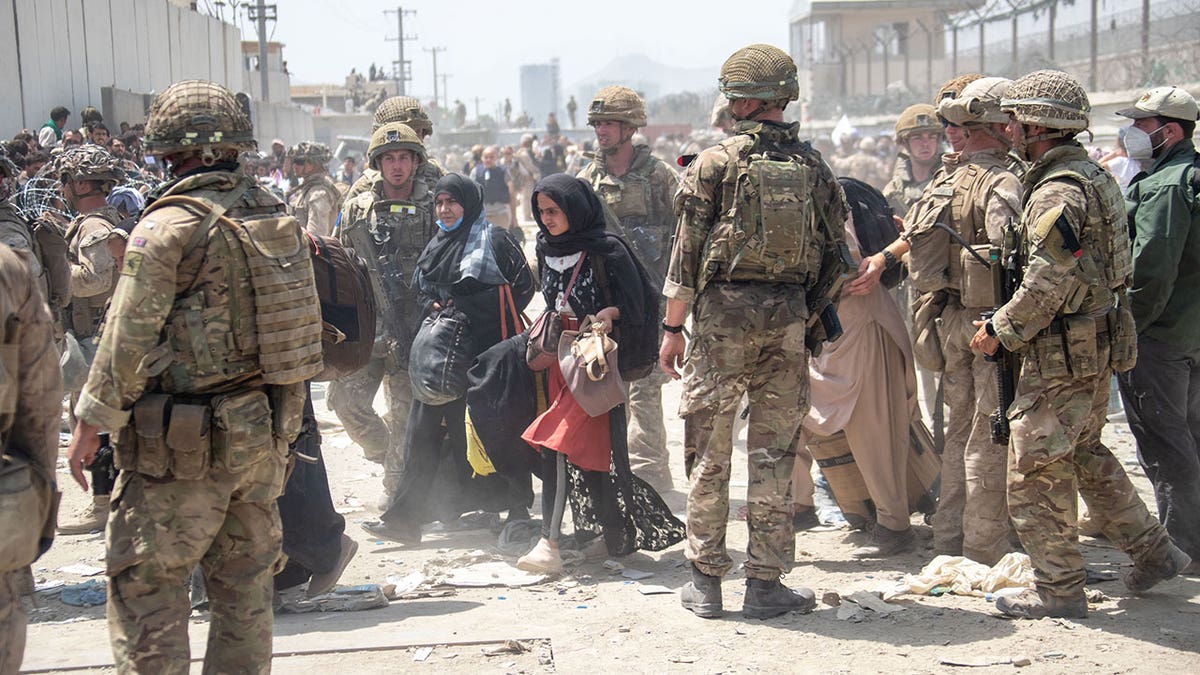
British armed forces work with the U.S. military to evacuate eligible civilians and their families on Aug. 21, 2021, in Kabul, Afghanistan. (MoD Crown Copyright/Getty Images)
At least two SAS squadrons have been affected, with several current and former members describing the losses as a «threat to national security.» The paper did not publish the precise number of departures for security reasons.
The resignations come as Prime Minister Keir Starmer’s government faces criticism over both defense spending and the treatment of veterans.
Britain’s armed forces have faced mounting scrutiny over their size and readiness in recent years. But the U.K. government says it is reversing that trend, reporting that total armed forces strength stood at 182,050 personnel as of Jan. 1, 2026, including 136,960 regular troops, an increase from the previous year.
The government also has pledged what it calls the largest sustained rise in defense spending since the Cold War, with military spending set to reach 2.6% of GDP by 2027, backed by an additional £5 billion this financial year and £270 billion in defense investment over the course of the current Parliament. Britain also has said it aims to raise defense spending to 3% of GDP by the end of the next Parliament.
Former and current soldiers said they believe Britain’s legal system has turned against troops who were sent to fight on behalf of the government.
«If a soldier discharges their weapon, they are almost certainly going to get a knock at their door one day,» George Simm, a former regimental sergeant major of 22 SAS, told The Telegraph. «It feels like a betrayal and a break in the trust.»
RETIRED GENERAL BLASTS DEMOCRATIC LAWMAKERS’ ‘IRRESPONSIBLE’ VIDEO URGING TROOPS TO REFUSE ‘ILLEGAL’ ORDERS

Britain’s elite Special Air Service (SAS) is facing a growing exodus as soldiers resign over fears they could face years of legal scrutiny for actions taken on the battlefield, according to a report in The Telegraph. (Omar Sobhani/Reuters)
The controversy centers on ongoing investigations into British special forces operations.
A total of 242 special forces troops, including 120 still serving, are currently involved in legal inquiries costing roughly £1 million per month. Those inquiries involve operations in Afghanistan, Northern Ireland and Syria.
Critics say those investigations have created a culture in which soldiers fear that decisions made in combat would later lead to prosecution.
Andrew Fox, a former British Army officer and senior fellow at the Henry Jackson Society, a London-based think tank, told Fox News Digital the relationship between soldiers and the government has been badly damaged.
«Soldiering contains a pact between the government and those they employ to use lethal force,» Fox said. «Soldiers will take human life within the rules set for them by international law, and in return, their governments should support them.
«This has been inverted, and international law has been weaponized and exploited by our enemies to persecute our soldiers. All too often, governments are coming down on the side of those enemies, not our troops.»
Fox said it was understandable that some soldiers would no longer want to serve.
«Of course, law breaking should be punished, but we are seeing a breakdown in trust between governments and their armed forces when politicians allow troops to be hounded through the courts unjustly,» he said.
Spencer said professional militaries depend on maintaining public trust through a strong internal justice system.
«A professional military holds the trust of its society because it lives by a strict ethical code, its laws, and its rules,» Spencer told Fox News Digital. «That trust is what gives soldiers the unique authority to use lethal force in the worst conditions a human being can face.»
Spencer said allegations of wrongdoing should be investigated quickly and fairly.
«We need investigations that move quickly and fairly on any credible allegation,» he said. «If there’s real evidence of wrongdoing under the law of armed conflict or the rules of engagement, then both the military and society must act on it. That’s how you keep the trust alive.»
PRINCE HARRY FIRES BACK AT TRUMP OVER NATO CRITICISM: ‘I LOST FRIENDS’ IN AFGHANISTAN

American troops could face similar concerns if political leaders fail to distinguish between legitimate investigations and politically motivated campaigns, according to John Spencer, executive director of the Urban Warfare Institute. (Matt Cardy/Getty Images)
At the same time, Spencer warned that some legal campaigns risk crossing the line into what troops perceive as politically motivated «witch hunts.»
«I’ve seen too many human rights lawyers blur the line between basic human rights and the actual law of armed conflict,» Spencer said. «They don’t always understand the application of the use of force in context or the split-second chaos of combat. When that turns into what troops call witch hunts, it eats away at morale and readiness.»
Spencer said governments have a responsibility both to investigate credible accusations and to protect troops from what he called agenda-driven campaigns.
«It’s also the duty of the government to shield the military from agenda-driven witch hunts,» he said. «A rigorous military justice system and honest self-policing are essential for an ethical force. Without them, the profession loses the very trust that lets it do its job.»
Britain’s Ministry of Defense spokesperson told Fox News digital that, «While it is a long-standing policy of successive governments to not comment on U.K. Special Forces, we are immensely proud of all our Armed Forces and their extraordinary contribution to keeping the U.K. safe at home and abroad.»
«We are committed to ensuring that the legal framework governing our Armed Forces reflects the practical realities of military operations — and that those who served with honor are properly protected,» he added, «Where the U.K. undertakes military action, it complies fully with U.K. and international law. We are clear that upholding those standards does not prevent our Armed Forces from conducting effective operations.»
Former British military chiefs warned in an open letter to Starmer in late 2025 that soldiers increasingly believe they must worry about «not only the enemy in front of them but the lawyer behind them.»
CLICK HERE TO DOWNLOAD THE FOX NEWS APP

To many British veterans, the Australian case reinforces fears that the same trend could spread across other Western militaries, including the United States. (Guvendemir/Getty Iamges )
«Make no mistake,» the retired generals wrote, «our closest allies are watching uneasily, and our enemies will be rubbing their hands.»
national security, army, armed forces, investigations, veterans, united kingdom








INTERNACIONAL
Pese a las advertencias de Trump, el gobierno iraní aseguró que administrará el estrecho de Ormuz

El gobierno de Irán salió al cruce de las declaraciones de Donald Trump sobre el estrecho de Ormuz y dejó en claro que no piensa ceder el control de esa estratégica vía marítima, clave para el comercio mundial de petróleo.
El lunes por la noche, el jefe negociador iraní, Mohamad Baqer Qalibaf, sostuvo que la administración del paso “nunca volverá a ser lo que era antes de la guerra” y remarcó que será Irán quien lo gestione, aunque respetará las normas internacionales.
“Todos deben saber que la administración del estrecho de Ormuz nunca volverá a ser lo que era antes de la guerra”, afirmó Qalibaf, citado por la agencia estatal IRNA.
En esa misma línea, el funcionario agregó: “Por supuesto, se respetarán las normas internacionales, pero Irán administrará el estrecho de Ormuz”.
Las palabras de Qalibaf llegaron horas después de que Trump asegurara desde la Casa Blanca que Estados Unidos mantiene el control total del estrecho y que cuenta con una armada capaz de imponer un bloqueo si fuera necesario.
“Tenemos el control total del estrecho; contamos con una armada capaz de imponer un bloqueo”, había asegurado el mandatario, en un mensaje directo a Teherán. El negociador iraní, Mohamad Baqer Qalibaf, dijo que Irán seguirá administrando el estrecho de Ormuz. (Foto: REUTERS/Amr Abdallah Dalsh).
Negociaciones en marcha y advertencias cruzadas
El cruce de declaraciones se dio en medio de las negociaciones entre ambos países para alcanzar un acuerdo más amplio sobre seguridad regional y el programa nuclear iraní.
Tras la firma de un memorando de entendimiento que abrió una tregua temporal, Washington y Teherán tienen un plazo de 60 días para avanzar en temas clave.
Qalibaf participó el lunes en Suiza de la primera ronda de conversaciones con representantes estadounidenses y destacó los logros obtenidos.
“Desde mi punto de vista, este viaje ha dado lugar a grandes logros, especialmente en lo que respecta a las discusiones sobre el estrecho, las relacionadas con Líbano, la cuestión de las exenciones petroleras y el tema del desbloqueo de los activos congelados, que es uno de los avances que estamos logrando”, expresó en un video publicado en la red social Telegram.
Leé también: Nueva crisis política en el Reino Unido: la renuncia del premier Keir Starmer desata la carrera por la sucesión
El funcionario iraní aclaró que las negociaciones recién comienzan y que “debemos continuar con nuestros esfuerzos”.
Por su parte, Trump lanzó una advertencia sobre el cumplimiento de los compromisos asumidos por Teherán. “Si Irán no cumple con el acuerdo o no se comporta como debe, haré lo que tenga que hacer”, afirmó ante periodistas.
Además, el presidente estadounidense insistió en que espera avances en materia de supervisión nuclear y aseguró que Irán aceptará inspecciones amplias para garantizar lo que describió como “honestidad nuclear”.
Disputa por los fondos desbloqueados y el rol de Israel
Otro punto de tensión surgió en torno a los fondos iraníes desbloqueados tras el entendimiento bilateral. Trump afirmó que esos recursos terminarán destinados a la compra de productos estadounidenses: “Todo ese dinero volverá en forma de compras de alimentos que necesitan desesperadamente”, sostuvo.
Sin embargo, desde Teherán rechazaron esa interpretación. El gobernador del Banco Central de Irán, Abdolnaser Hemmati, aclaró que el memorando vigente no obliga a Irán a adquirir productos agrícolas estadounidenses y que los recursos podrán utilizarse para otros bienes autorizados por el régimen de sanciones.
En paralelo, Qalibaf acusó a Israel de intentar obstaculizar las conversaciones. Según el funcionario, el gobierno israelí “se encuentra ferozmente opuesto a este proceso de negociación, al que ve como una amenaza para su propia existencia y busca sabotearlo”.
Teherán también insiste en que Líbano debe formar parte del acuerdo destinado a poner fin al conflicto regional, mientras continúan las negociaciones entre representantes iraníes y estadounidenses.
Irán, Estados Unidos, Medio Oriente
NEWYou can now listen to Fox News articles!
In what’s being hailed as a major win for the Trump administration against Chinese domination of the rare earth minerals market, the U.S. has supported an American company, Virtus Minerals, in developing two major mines producing cobalt and copper in the Democratic Republic of the Congo (DRC).
This is claimed to be the first U.S. rare earth minerals acquisition in the African nation since President Trump announced the Washington Accord last December.
Historically, China has been the heavy lifter of these metals. The Strategic Studies Institute reported that 80% of the world’s cobalt is produced in the DRC — and 80% of that is controlled by China. Cobalt, used in a wide range of applications, from electric cars and mobile phones to military jets, is on the U.S. government’s list of critical minerals. Copper, also on the list, has traditional uses such as piping for plumbing, but is also needed in electronics and the automotive industry.
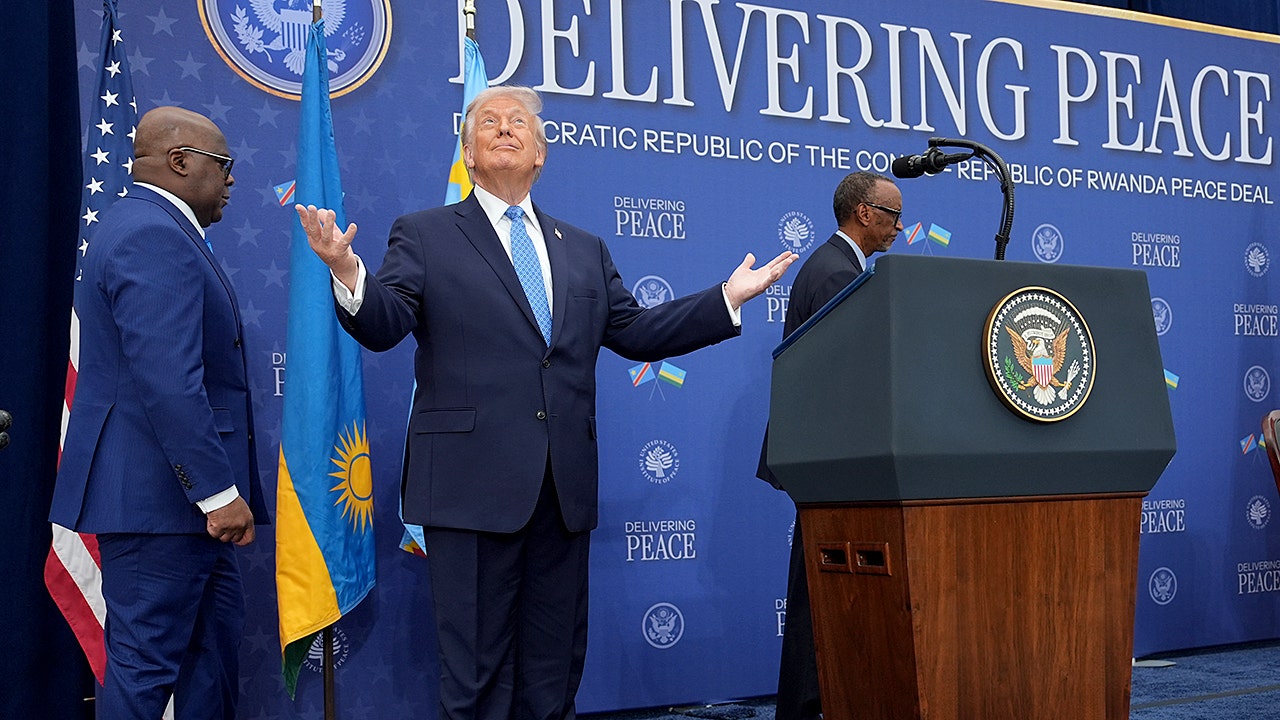
President Donald Trump attends a signing ceremony with Rwanda’s President Paul Kagame and Democratic Republic of Congo President Felix-Antoine Tshisekedi at the Donald J. Trump Institute of Peace in Washington on Dec. 4, 2025. (Evan Vucci/AP)
During December’s signing at the White House, Trump made clear the administration’s fight to curb Chinese domination of minerals and help American mining companies make a major impact in the DRC. «A great day for Africa, a great day for the world,» Trump said. The accord also aims to bring an end to fighting between the DRC and Rwandan-backed forces, although the Rwandan-supported M23 rebel group have continued their hostile infiltration in the Eastern DRC.
American mining company Virtus is, with U.S. support, claiming to be «the first U.S.-owned operator back in the DRC in more than a decade», with its investment in Chemaf, a local cobalt and copper producer with two mining operations, one, Étoile, in Lubumbashi and Mutoshi, in Kolwezi. Together it’s planned the mines will produce a combined 75,000 tonnes of copper, and 20,000 tonnes of cobalt a year. The processing plants are currently under development and will come online next year.

Virtus Minerals CEO and Chamaf Chairman. Phillip Braun, the Chargé d’Affaires U.S. Embassy Kinshasa Ian J. McCary, and Chemaf Managing Director Sooryanarayanan Prabhakaran cutting the ribbon of the new mine. (Virtus Minerals / Chemaf)
The minerals will ultimately be exported to the west through the Lobito Corridor to a port in Angola. Lobito is the rail route the U.S. has backed with a $5 billion investment commitment, with, according to a Virtus statement, «the aim of obtaining a secure, auditable copper and cobalt supply chain for the U.S. and its allies.»
THE WEST STILL DOESN’T GRASP THE DANGER OF CHINA’S RARE EARTH ENDGAME
Frans Cronje, president of the Washington-based Yorktown Foundation for Freedom, says the Virtus projects are significant because they show the administration is seriously trying to change the balance in a minerals battle with China.
He told Fox News Digital, «This development signals a more assertive United States effort to compete with China for access to Africa’s critical mineral base, particularly in the Democratic Republic of Congo, where cobalt and copper are strategically vital to global energy and defense supply chains.»
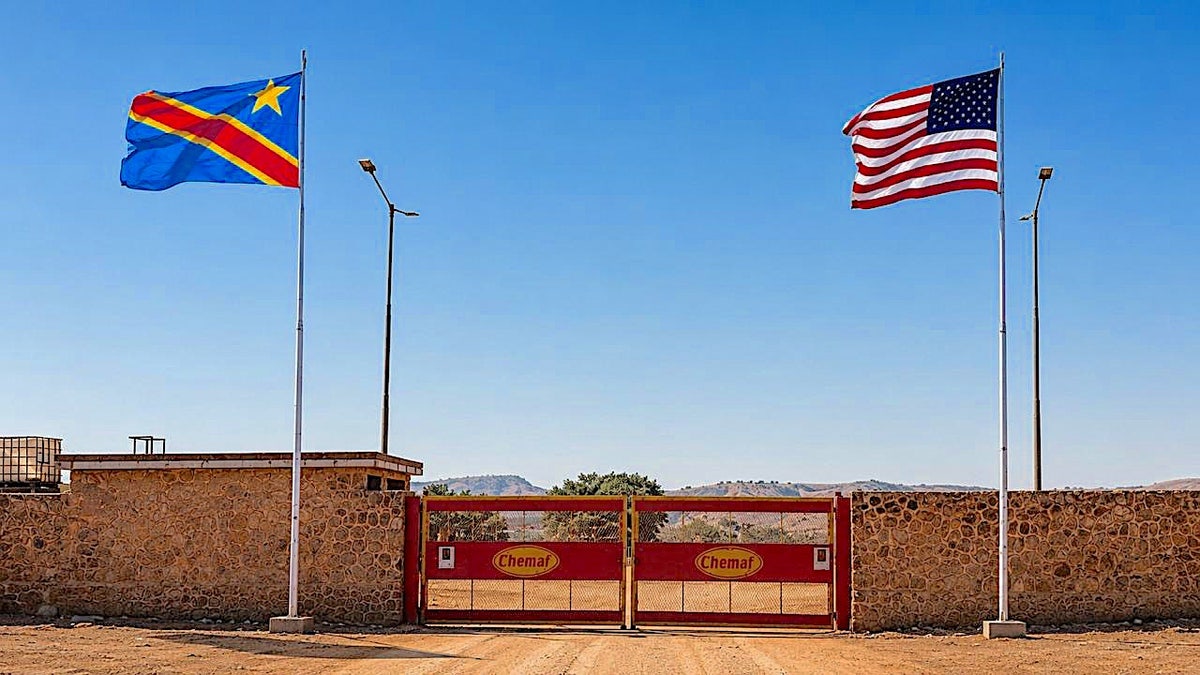
The U.S. and DRC flags fly outside Chemaf’s site in Kolwezi, Democratic Republic of the Congo. (Virtus Minerals / Chemaf)
Cronje added, «China has built deep structural dominance across much of Africa’s resource sector over the past two decades, but U.S.-backed initiatives such as this suggest a shift towards more direct engagement, rather than relying on Chinese-controlled supply routes. This matters because Africa’s vast resource endowment, combined with its geostrategic position along key Atlantic and Indian Ocean corridors, makes it central to future global economic and security competition.»
A State Department spokesperson told Fox News Digital, «President Trump and Secretary Rubio remain firmly committed to supporting U.S. companies that seek to do business in the DRC.»
AFRICAN WAR-TORN NATION INVOKES TRUMP ‘GOLDEN AGE’ FOR MINERALS DEAL IN EXCHANGE FOR BOOTING VIOLENT REBELS

Chemaf’s site in Kolwezi, Democratic Republic of the Congo. (Virtus Minerals / Chemaf)
«The United States government fully supports the efforts of Virtus Minerals,» the spokesperson continued. «This acquisition serves as an initial flagship U.S. investment in the DRC, and sends a clear signal that the U.S. private sector interest is real and will catalyze further investment in alignment with the U.S.-DRC Strategic Partnership Agreement, which positions the DRC to play an integral role in the Trump Administration’s global efforts to secure critical mineral supply chains.»
The spokesperson added, «increased U.S. investment will create quality jobs for American and Congolese workers, foster skills development and support local communities that have long been exploited by the opaque systems constructed and perpetuated by adversarial foreign actors who have controlled the DRC’s critical minerals sector.»
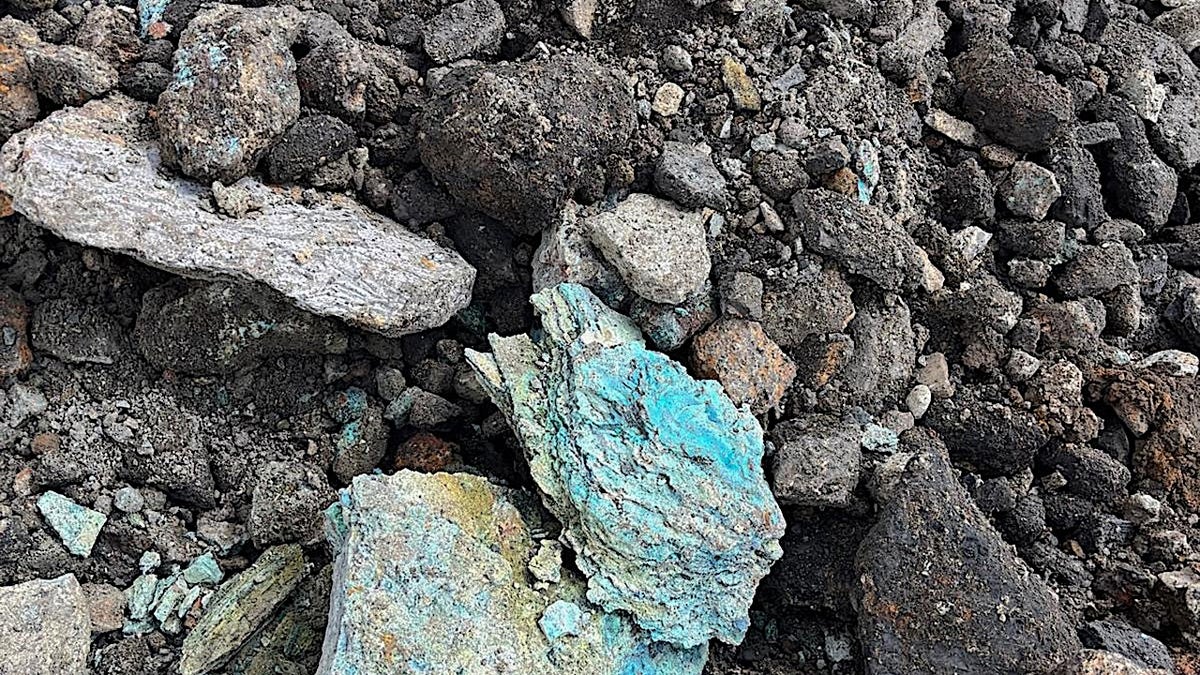
Cobalt and Copper mined from Chemaf’s Etoile site in Lubumbashi, DRC. (Virtus Minerals / Chemaf)
Virtus holds 56 mining licenses in total in the DRC. Phillip Braun, Virtus Minerals CEO and Chemaf chairman, told Fox News Digital, «our first goal is to bring the Étoile and Mutoshi plants up to full production. From there, we will explore everything Chemaf’s 56 mining permits have to offer — copper, cobalt and other metals like tungsten.»
«None of this would be possible,» Braun added, «without the strong partnership now growing between the United States and the DRC, and the support of leaders in both countries who saw what was possible. We look forward to bringing our two nations closer by building a steady, trusted supply of the minerals we depend on and supporting other American companies that want to invest in the DRC any way we can.»
CLICK HERE TO DOWNLOAD THE FOX NEWS APP
«A more active U.S. presence in these supply chains,» Cronje continued, «would mark a significant rebalancing of influence on the continent, with implications not only for resource access but for broader geopolitical alignment in regions that are becoming increasingly contested.»
Fox News Digital reached out to the DRC government for comment, but did not receive a response.
africa, administration, conflicts, donald trump
INTERNACIONAL
A tale of two parties: Trump, Mamdani put political clout on the line as four states hold primaries
NYC’s socialist uprising: Mamdani’s RADICAL political SHAKE-UP
Stuart Varney highlights New York Mayor Zohran Mamdani’s aggressive campaign to establish New York as America’s socialist hub. Mamdani supports three far-left House candidates, including Daria Alisa who proposes policies like free child care, free college, and abolishing ICE. Varney suggests Mamdani, at 34, is vying to become the new socialist leader, succeeding Bernie Sanders.
NEWYou can now listen to Fox News articles!
New York City Mayor Zohran Mamdani and President Donald Trump are not on the ballot, but their sway over the Democratic and Republican parties will be tested Tuesday as New York, Maryland, Utah, and South Carolina hold primary elections and runoffs.
Trump, seemingly aiming to hedge his bets, made an 11th hour endorsement ahead of the South Carolina GOP gubernatorial runoff and is now backing both candidates in the showdown to succeed term-limited Republican Gov. Henry McMaster.
Meanwhile, Mamdani is testing the limits of political power as he takes on the party establishment one year after sending political shock waves across the country with his New York City Democratic primary victory en route to winning election as mayor of the nation’s most populous city.
The 34-year-old socialist mayor is backing a slate of candidates in the primary, including a trio of left-wing congressional contenders who are taking on the Democratic Party’s old guard.
DEMOCRACY ’26: STAY UP TO DATE WITH THE FOX NEWS ELECTION HUB
New York City Mayor Zohran Mamdani, second from right, and progressive champion Sen. Bernie Sanders of Vermont, center, headline a rally for a slate of far-left congressional candidates at a Get Out The Vote rally in New York City on June 18, 2026, days ahead of the New York State primary. (Adam Gray/Bloomberg via Getty Images)
At the top of this list is political organizer Darializa Avila Chevalier, the Mamdani-backed primary challenger taking on Rep. Adriano Espaillat, the Congressional Hispanic Caucus chair, in New York’s 13th U.S. House District, which covers the northern third of Manhattan and a sliver of the Bronx. Chevalier, 32, says a victory on Tuesday could be the «domino» that falls and builds a «socialist power» nationwide.
The 71-year-old Espaillat, who has been in Congress for a decade, is supported by a slew of party leaders, including New York Gov. Kathy Hochul.
The mayor is also backing former New York City Comptroller Brad Lander, who ran against Mamdani last year in the crowded primary field but became one of his biggest backers. Lander is challenging incumbent Democratic Rep. Dan Goldman in the 10th Congressional District, which includes Lower Manhattan and parts of Brooklyn. Goldman’s supporters include former House Speaker Nancy Pelosi.
And in New York’s 7th, which covers parts of Brooklyn and Queens, Mamdani’endorsed state Assembly Member Claire Valdez, who is battling Brooklyn Borough President Antonio Reynoso, who is backed by retiring Rep. Nydia Velazquez.
Along with the mayor, Valdez and Avila Chevalier are also members of the Democratic Socialists of America.
Valdez has said voters are looking for Democratic candidates with moral clarity on Israel, and the three congressional primary races have focused in part on anti-Israel sentiment, with Mamdani recently referring to AIPAC, a top pro-Israel lobbying group, as «monsters.»
«This is the team. This is our year. It’s up to all of us to get them over the finish line,» Mamdani emphasized in a social media post ahead of a rally last week with the three candidates and Sen. Bernie Sanders of Vermont, the longtime progressive champion and two-time Democratic presidential nominee runner-up.
And at the rally, Mamdani emphasized that the Democratic Party «must change.»
‘FULL-BLOWN BATTLE’ BREWING IN DEM PARTY AS MAMDANI-STYLE CANDIDATES RISE IN KEY RACES
It’s a risky bet for the mayor, which could end with Mamdani being crowned a kingmaker, or weakening his political powers.
The socialist has been a darling of the far left for a year and a half. But six months into his tenure as New York City mayor, he can also count former critics within the Democratic Party, including Hochul, as allies. And he’s even earned praise from Trump.
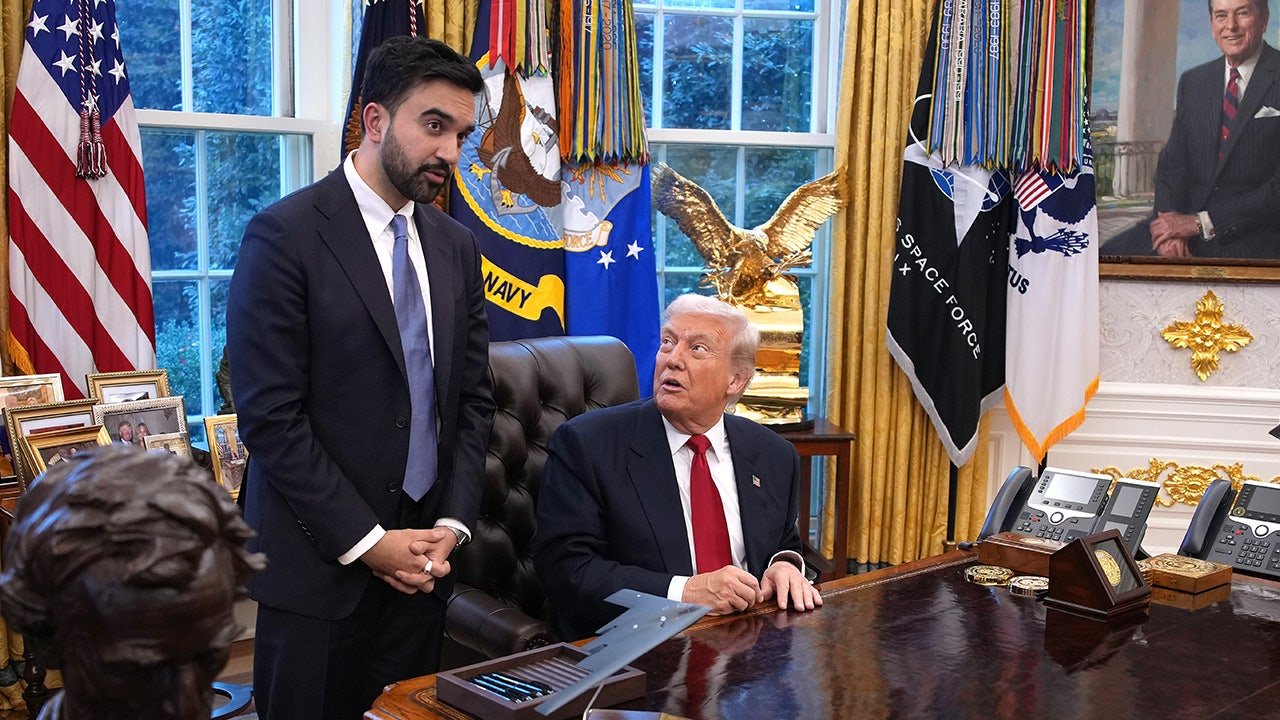
Trump last year repeatedly claimed Mamdani was a «communist lunatic,» but during an Oval Office meeting in November that grabbed plenty of national attention, the president lauded Mamdani as a «very rational person» who would do a «really good job.»
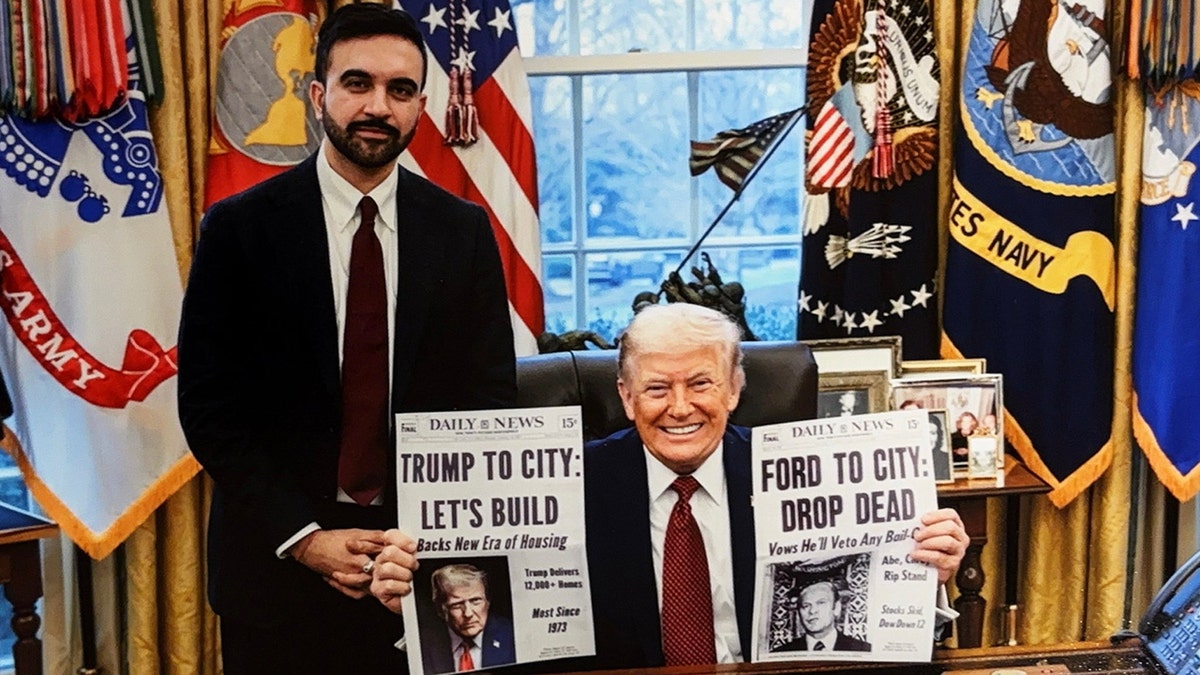
New York City Mayor Zohran Mamdani meets with President Trump at the White House in Washington, D.C., on Feb. 26, 2026. (Mayor Zohran Kwame Mamdani via X)
Longtime Democratic strategist Joe Caiazzo told Fox News Digital, «It’s crystal clear that Mamdani understands power and how to leverage it.»
«He remains incredibly popular, and it appears he also understands that may not always be the case. That’s why I think you see him flexing his political muscle now. It’s smart politics,» added Caiazzo, a veteran of the 2016 and 2020 Sanders presidential campaigns.
The candidates Mamdani’s backing, including some running for state legislative offices, are mostly showcasing the mayor’s platform of focusing on affordability in a city with one of the nation’s highest costs of living.
Mamdani’s support for the trio of congressional candidates, along with Thursday’s rally with Sanders, gives Republicans, who have long cast the mayor as a radical, more ammunition to use him as a cudgel as they work to hold their razor-thin House majority in this year’s midterm elections.
«Zohran Mamdani’s socialist brand is as toxic as it comes,» National Republican Congressional Committee National Press Secretary Mike Marinella told Fox News Digital.
«And during a time when Democrats don’t have a leader or a message, he’s exactly the kind of bogeyman we can use against Democrats to truly show who is leading their party and the crazy policies they all support.»
In South Carolina, Trump on Friday took to social media to say that he was supporting longtime state Attorney General Alan Wilson as well as Lt. Gov. Pamela Evette in the battle for the GOP gubernatorial nomination.
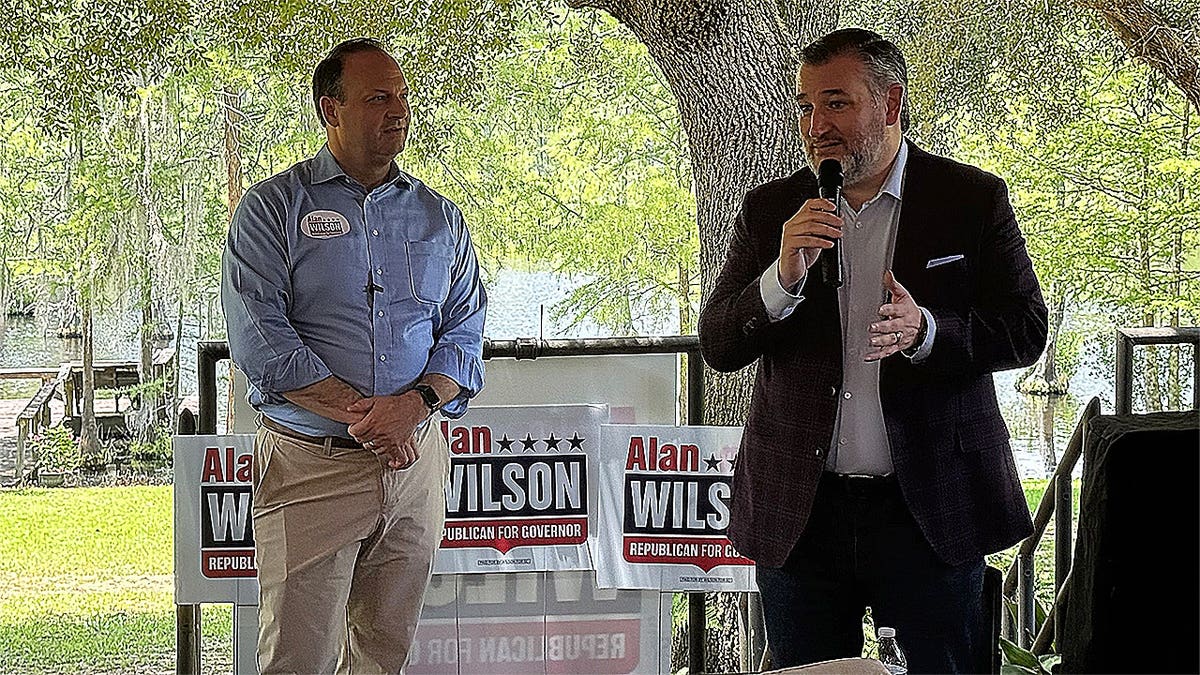
South Carolina Attorney General Alan Wilson, left, a Republican gubernatorial candidate, campaigns with GOP Sen. Ted Cruz of Texas, on June 22, 2026 in Sumter, South Carolina (Paul Steinhauser/Fox News)
«I can’t hurt one of them by only Endorsing the other, so, therefore, I am going to Endorse, for Governor of South Carolina, both Pam Evette and Alan Wilson!» Trump wrote, adding: «With either one you can’t go wrong.»
The endorsement of Wilson appeared to be a move by Trump to cover his bases, because Trump was already backing Evette, who is also supported by McMaster, a longtime top ally of the president.
The South Carolina runoff had been viewed as the latest test of Trump’s immense grip over the GOP and the power of his endorsements in Republican nominating contests.
And his decision to back both Evette and Wilson wasn’t the first time he’s made dual endorsements in the same Republican race. Most famously, Trump endorsed «ERIC» in the 2022 GOP Senate primary in Missouri, where the two major candidates were Eric Schmitt and Eric Greitens. Both candidates claimed the endorsement, with Schmitt ultimately winning the nomination.
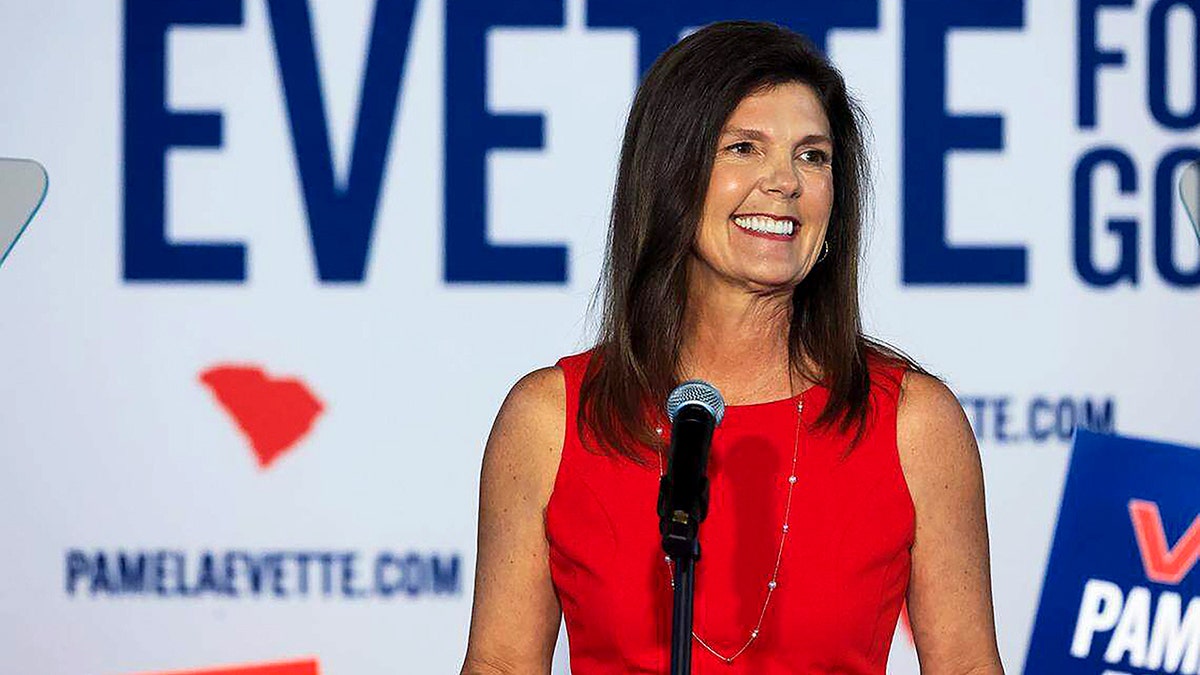
South Carolina Lt. Gov. Pamela Evette announces her bid for the Republican nomination for governor at The Smokestack at Judson Mill in South Carolina on July 14, 2025. (Joshua Boucher/The State/Tribune News Service/Getty Images)
In South Carolina, Trump endorsed Evette late last month, a week and a half before the gubernatorial primary.
Evette finished on top of a crowded field of contenders in the primary election, with Wilson second. The field also included Reps. Nancy Mace and Ralph Norman, and multimillionaire businessman Rom Reddy. Since no candidate won a majority of the vote, as the top two finishers, Evette and Wilson advanced to the June 23 runoff.
Mace and Norman endorsed Wilson after failing to advance to the runoff. And Wilson was also backed — and joined on the campaign trail on the eve of the runoff by Sen. Ted Cruz, the conservative firebrand from Texas.
Mace, reacting to Trump’s endorsement of both Evette and Wilson, wrote on social media, «LMAO,» which is a common abbreviation for the phrase «laughing my a– off.»
The runoff between Evette and Wilson turned combustible, and in last week’s final debate, both candidates launched personal attacks and accused each other of lying and misrepresenting their records.
Wilson worked to contrast his tenure as attorney general with what he’s argued is Evette’s largely ceremonial role as lieutenant governor. And he has spotlighted his experience as a combat veteran, prosecutor, and the state’s top law enforcement official.
Evette showcased herself as an outsider and a Trump-endorsed businesswoman, while casting Wilson as a career politician.
The power of the president’s endorsement is also on the line in upstate New York, in the race to succeed retiring Republican Rep. Elise Stefanik.
Trump is backing first-time candidate Anthony Constantino, a businessman and former boxer, who is facing off against Robert Smullen, a retired Marine Corps colonel and New York assemblyman who has the backing of the state party.
Also on the primary ballot
Incumbent Rep. Jerry Nadler’s decision to retire left his Manhattan district open for the first time since he was elected in 1992. Notable Democratic candidates in this crowded field include New York Assembly members Alex Bores and Micah Lasher, the late President John F. Kennedy’s grandson Jack Schlossberg, and former conservative lawyer and onetime anti-Trump Republican George Conway. Nadler endorsed Lasher — a former congressional staffer.
Meanwhile, five Democrats are facing off in the primary in New York’s 17th Congressional District, in New York City’s northern suburbs and exurbs, with the winner facing off against GOP Rep. Mike Lawler in a key general election race that is one of a couple dozen that will decide if Republicans hold their razor-thin House majority.
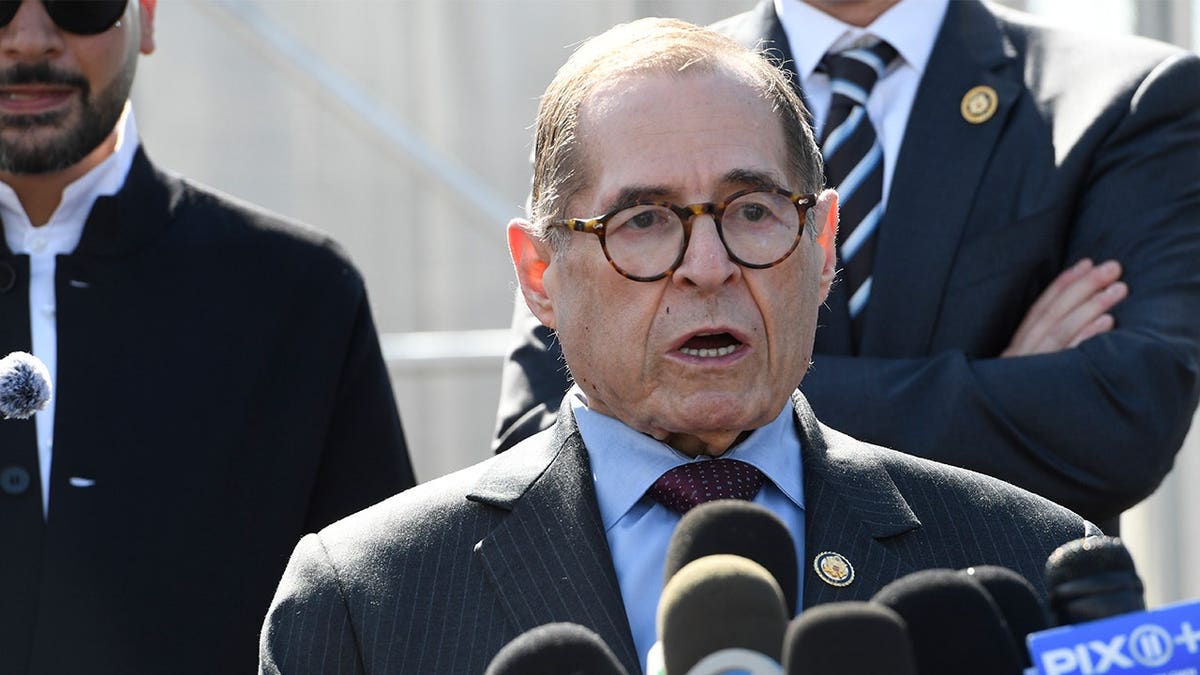
Rep. Jerrold Nadler, D-N.Y., stands outside the Delaney Hall Detention Center in Newark, New Jersey. (Rashid Umar Abbasi for Fox News Digital.)
CLICK HERE TO DOWNLOAD THE FOX NEWS APP
In Utah, voters will nominate candidates for Congress using a new map that created a Democratic-friendly district in Salt Lake City, which upended reelection plans of the state’s all-Republican delegation.
And in Maryland, Democratic Gov. Wes Moore faces a longshot primary challenger as he runs for re-election amid speculation that he also has his eye on a potential 2028 presidential campaign.
Fox News’ Sally Persons and the Associated Press contributed to this report
gubernatorial, democrats elections, midterm elections, primary results, zohran mamdani, donald trump, republicans elections

El Gobierno insiste con que «sobran dólares» pero el mercado cree que se frena el viento de cola

Daniela Celis protagonizó fotos inspirada en Kim Kardashian y la acusaron de excederse con los retoques

El oficialismo despliega una contraofensiva en el Congreso para frenar los pedidos de interpelación contra Manuel Adorni

La Tartan Army invade Miami: la previa escocesa antes del duelo ante Brasil por el Mundial 2026

Pese a las advertencias de Trump, el gobierno iraní aseguró que administrará el estrecho de Ormuz

Trump gets major win against China in African rare earth minerals race

LA DOBLE VARA ZURDA: Militantes K prefieren el pasado dictatorial y los excesos de Maradona antes que el éxito limpio de Messi

Preocupación en el oficialismo por el impacto digital del caso Adorni y la insuficiencia del “efecto Mundial”

Difundieron videos en los que Jésica Cirio aparece junto a miles de dólares

Qué dijo Jesica Cirio tras la difusión de los videos donde se ven fajos con millones de dólares en la casa de Martín Insaurralde

 POLITICA2 días ago
LA DOBLE VARA ZURDA: Militantes K prefieren el pasado dictatorial y los excesos de Maradona antes que el éxito limpio de Messi
- POLITICA2 días ago
Preocupación en el oficialismo por el impacto digital del caso Adorni y la insuficiencia del “efecto Mundial”
- POLITICA3 días ago
Difundieron videos en los que Jésica Cirio aparece junto a miles de dólares