INTERNACIONAL
Trump aims to reset war powers clock with controversial bid to bypass Congress

NEWYou can now listen to Fox News articles!
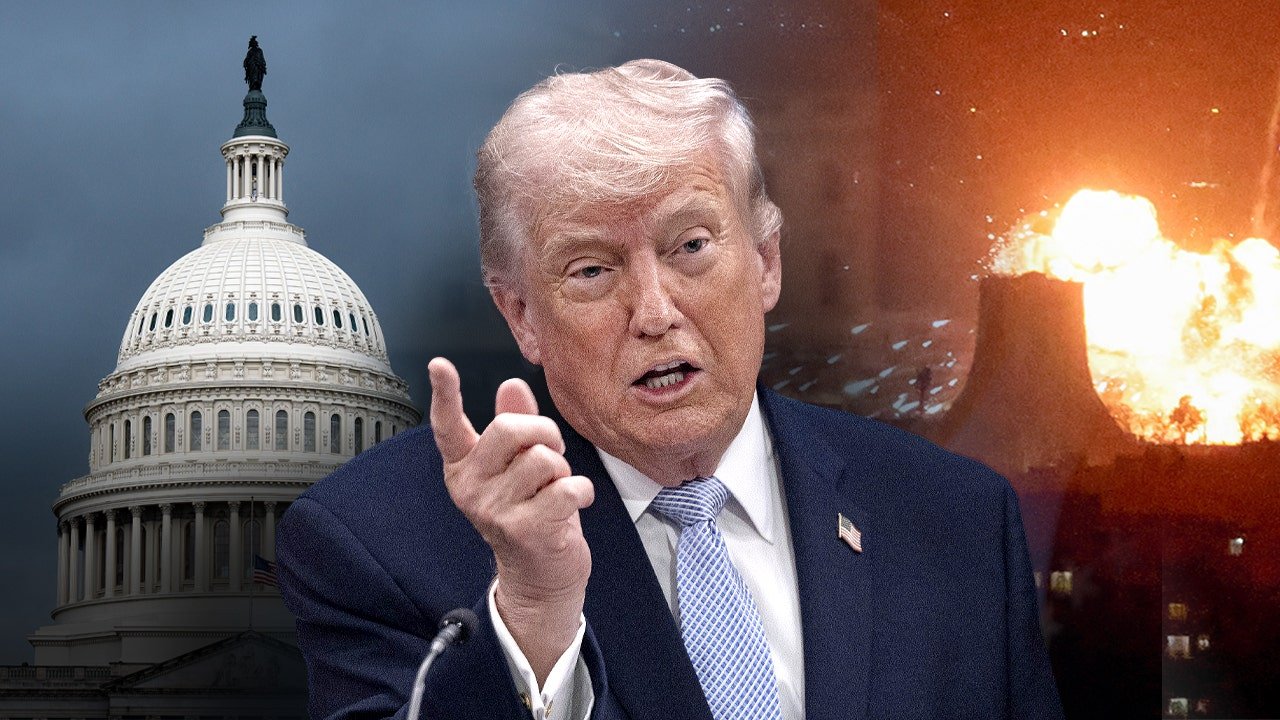
President Donald Trump informed Congress Friday that a ceasefire with Iran has ended hostilities and reset the clock on congressional war powers limits, but legal experts say ongoing military operations complicate that claim.
«For War Powers Resolution purposes, the hostilities that began on Saturday, February 28 have terminated,» a senior administration official told Fox News Digital.
«Both parties agreed to a 2-week ceasefire on Tuesday, April 7 that has since been extended,» the official went on. «There has been no exchange of fire between U.S. Armed Forces and Iran since Tuesday, April 7.»
The White House formally notified Congress in a letter Friday under the War Powers Resolution that it considers hostilities to have ended following the ceasefire.
LIVE UPDATES: IRAN THREATENS ‘LONG AND PAINFUL STRIKES’ ON US POSITIONS AS TRUMP FACES WAR POWERS DEADLINE
U.S. Marines aboard USS New Orleans (LPD 18) stand watch in the Arabian Sea during naval blockade operations against Iran. As of today, 44 commercial vessels have been directed to turn around or return to port, according to U.S. Central Command. (U.S. Central Command)
«Despite the success of United States operations against the Iranian regime and continued efforts to secure a lasting peace, the threat posed by Iran and its proxy forces remains significant. Accordingly, the Department of War continues to update its force posture in the AOR in select areas to counter Iranian proxy forces’ threats and to protect the United States and its allies and partners,» Trump wrote in a letter to Congress Friday.
«As the situation evolves, I will continue to update the Congress on noteworthy changes in the United States Armed Forces presence, consistent with the War Powers Resolution.»
For decades, presidents of both parties have pushed the limits of the War Powers Resolution, seeking flexibility to conduct military operations without being hindered by a congressional vote.
The law requires the president to end the use of U.S. forces within 60 days of entering hostilities unless Congress authorizes the operation, with a limited extension allowed for withdrawal.
The more than two-month conflict has exposed sharply different interpretations of the law and whether the White House must seek congressional approval. Bombing ceased on April 7, but U.S. forces continue enforcing a naval blockade in the Strait of Hormuz — an operation widely considered an act of war.
«A ceasefire does not automatically suspend the War Powers 60-day clock,» said John Bellinger, who served as legal adviser to the State Department and National Security Council under President George W. Bush.

The U.S. military has been enforcing a naval blockade in the Strait of Hormuz, even during the ceasefire. (U.S. Central Command)
He pointed to the continued presence of U.S. warships and thousands of troops enforcing a blockade in the Strait of Hormuz, arguing American forces «are clearly still conducting military operations and are in potential danger.»
U.S. forces have continued boarding and seizing vessels suspected of violating the blockade, at times using force to disable ships before Marines conduct inspections.
Stephen Pomper, policy chief at the International Crisis Group and a former senior National Security Council official, was more direct.
«I don’t think it’s a very credible interpretation. It’s certainly not based on the text of the statute,» Pomper said.
«There’s still an enormous American deployment. There’s an active blockade, which is an act of war.»
Trump is far from the first president to test the limits of the War Powers resolution, experts noted.
During the late 1980s «Tanker War» with Iran, the George H.W. Bush administration argued that individual naval engagements did not amount to sustained hostilities. In 1999, the Clinton administration maintained that congressional funding for the Kosovo campaign effectively constituted authorization.
More recently, the Obama administration argued that U.S. involvement in Libya did not rise to the level of «hostilities» under the War Powers Resolution, even as American forces supported air operations. The Biden administration made similar arguments in defending certain U.S. deployments tied to Yemen.
«We have seen Republican and Democratic administrations alike bypass the act in creative ways,» Nicholas Creel, Associate Prof. of Business Law at Georgia College and State University told Fox News Digital.
PELOSI’S WAR POWERS FLIP-FLOP EXPOSED IN RESURFACED OBAMA-ERA CLIP CONTRADICTS TRUMP CRITICISM ON IRAN
Congress has periodically challenged similar interpretations in past conflicts but has rarely forced a withdrawal of U.S. forces. Courts have also largely stayed out of War Powers disputes, leaving presidents with significant latitude to define the scope of hostilities.
If Congress does not act, the administration could continue operations without new authorization.
CLICK HERE TO DOWNLOAD THE FOX NEWS APP
«It’s really up to Congress, and as often as not, Congress doesn’t want to push back,» Pomper said.
Matt Zierler, an international relations professor at Michigan State University, told Fox News Digital that Congress likely does not have the «real will» to fully execute the War Powers Act because other powers, such as passing appropriation bills that would restrict defense spending, would be more effective. Even so, Zierler said sequestration measures could come at a political loss.
«It’s a big political loss, potentially for Congress, if they start cutting off funding,» Zierler said, suggesting that the president could claim the cut in funds by Congress is hurting troops and national security.
«It is a political or symbolic game, but it’s not necessarily something that most members of Congress want to play, because, you know, they don’t have all the intelligence,» Zierler said. «They don’t know what’s going on, and it can get really messy.»
Asked about the 60-day clock on Thursday, Senate Armed Services Committee Chairman Roger Wicker, R-Miss., told reporters: «I have not spent a great deal of time worrying about that.»
wars, conflicts, congress, armed forces, war with iran, politics












Concebido como un espacio seguro para el diálogo, la formación y el compromiso de avanzar hacia una sociedad más consciente, responsable y cercana a quienes han sufrido abuso, Panamá será sede, del 8 al 11 de julio, del congreso internacional de las personas sordas.
En el país hay 11,323 personas con deficiencia auditiva, según la Segunda Encuesta Nacional de Discapacidad, realizada en el primer trimestre de 2024, después de 18 años sin tener información actualizada.
Solo en 2025 el Instituto Panameño de Habilitación Especial (IPHE) atendió a 18,319 estudiantes con esta condición.
La discapacidad auditiva se define como la pérdida o anormalidad de la función anatómica y/o fisiológica del sistema auditivo, y tiene su consecuencia inmediata en una discapacidad para oír, lo que implica un déficit en el acceso al lenguaje oral.
Se informó que el congreso busca ofrecer un espacio de escucha y reflexión sobre la realidad que viven las personas sordas víctimas de abuso.

De igual manera, tiene como finalidad fortalecer la formación en materia de prevención, protección de menores y adultos vulnerables, y promoción de entornos seguros dentro de nuestras comunidades eclesiales, dijo monseñor José Domingo Ulloa Mendieta, arzobispo de Panamá, presidente de la Conferencia Episcopal Panameña y segundo vicepresidente del CELAM.
La convención reunirá a especialistas internacionales, agentes pastorales y personas sordas de diversos países de América, con el propósito de sensibilizar sobre los desafíos particulares que enfrenta esta población y promover una cultura de cuidado, respeto, inclusión y protección.
El “Abuso sexual en la Iglesia: su historia y realidad actual. Como se relaciona y afecta a la comunidad sorda”; “El caso Próvolo: ejemplo de modelo interdisciplinario para responder al desafío del abuso en la comunidad sorda en Argentina”; “Perspectiva global: cómo la Iglesia comenzó a escuchar las voces de quienes han sido abusados”, serán algunos de los temas a tratar durante la actividad.
El encuentro es organizado por la Iniciativa de los Jóvenes Católicos Sordos de América (DCYIA, por sus sus siglas en inglés), en colaboración con la Pontificia Comisión para la Protección del Menor, de la Santa Sede; el Centro de Investigación y Formación Interdisciplinar para la Protección del Menor, el Consejo Episcopal Latinoamericano y Caribeño (CELAM) y la Arquidiócesis de Panamá.
En Panamá la Ley N°1 del 28 de enero de 1992 protege a las personas con discapacidad auditiva y reconoce la lengua de señas como la lengua natural del discapacitado auditivo profundo.

Esta es una herramienta fundamental de inclusión, y la norma reafirma la importancia de promover una cultura institucional basada en el respeto, la accesibilidad y la equiparación de oportunidades.
Ratificada por Panama, la Convención Internacional sobre los Derechos de las Personas con Discapacidad establece en su artículo 21 el derecho a la libertad de expresión y acceso a la información, incluyendo el uso de la lengua de señas como medio de comunicación.
En esa línea, la política nacional de discapacidad de Panamá promueve la eliminación de barreras comunicativas y la plena participación de las personas sordas en todos los ámbitos de la sociedad, de acuerdo con el IPHE.
La Organización Mundial de la Salud (OMS) indica que a nivel mundial más de 1.500 millones de personas presentan algún grado de pérdida auditiva, de las cuales aproximadamente 430 millones tienen pérdida auditiva de moderada a grave en el oído con mejor audición.
En América, alrededor de 217 millones de personas viven con pérdida auditiva, cifra que se espera aumente a 322 millones para 2050. Las estimaciones de la OMS proyectan que 700 millones necesitarán atención otológica y servicios de rehabilitación si no se toman medidas preventivas.
hombre,mujer,niña,audífono,familia,discapacidad auditiva
INTERNACIONAL
EXCLUSIVE: Meet the man Israel chose to be its first-ever ambassador to the Christian world
NEWYou can now listen to Fox News articles!
JERUSALEM, Israel: In a move being praised by many Christian leaders, the government of Prime Minister Benjamin Netanyahu recently announced the appointment of a new position of envoy to the Christian world — with the goal of better and smoother relations with the Christian world.
In an exclusive interview in Jerusalem, Ambassador George Deek told Fox News Digital the importance the Netanyahu government has put on his position.
«We see the ethnic cleansing of the region from its Christians, who have been diminished from 20% of the population of the Middle East to less than 2% of the population today,» Deek said. «All those places that used to have thriving Christian communities today have been reduced to nothing.»
CHRISTIAN LEADERS HOLD EMERGENCY SUMMIT IN JERUSALEM TO CONFRONT GLOBAL RISE IN ANTISEMITISM
Ambassador George Deek is Israel’s first envoy to the Christian world. (Yoav Dudkevich/TPS-IL)
Israel counts 300 churches, double the number in 1948, while its Christian population has grown from 34,000 in 1948 to more than 180,000 today.
Deek said of his role. «My hope is to also be able to build strong bridges between the State of Israel and Christian leaders… by telling a fuller story of the State of Israel, which I think is missed in most of the narratives we hear today in the world,» he said.
According to Israel’s Central Bureau of Statistics, as of December 2025, Israel’s Christian population stood at approximately 184,200, representing 1.9% of the country’s total population. The community grew by 0.7% over the previous year.
Deek, who served for six years as Israel’s ambassador to Azerbaijan before assuming his current role, said most people know Israel only through its Jewish identity and are unaware of the complexity and diversity of Israeli society.
Deek said the decision announced by the Foreign Ministry in April to appoint him to the role stems from three factors: first, the special connection between Christians and the land of Israel as the birthplace of Christianity.
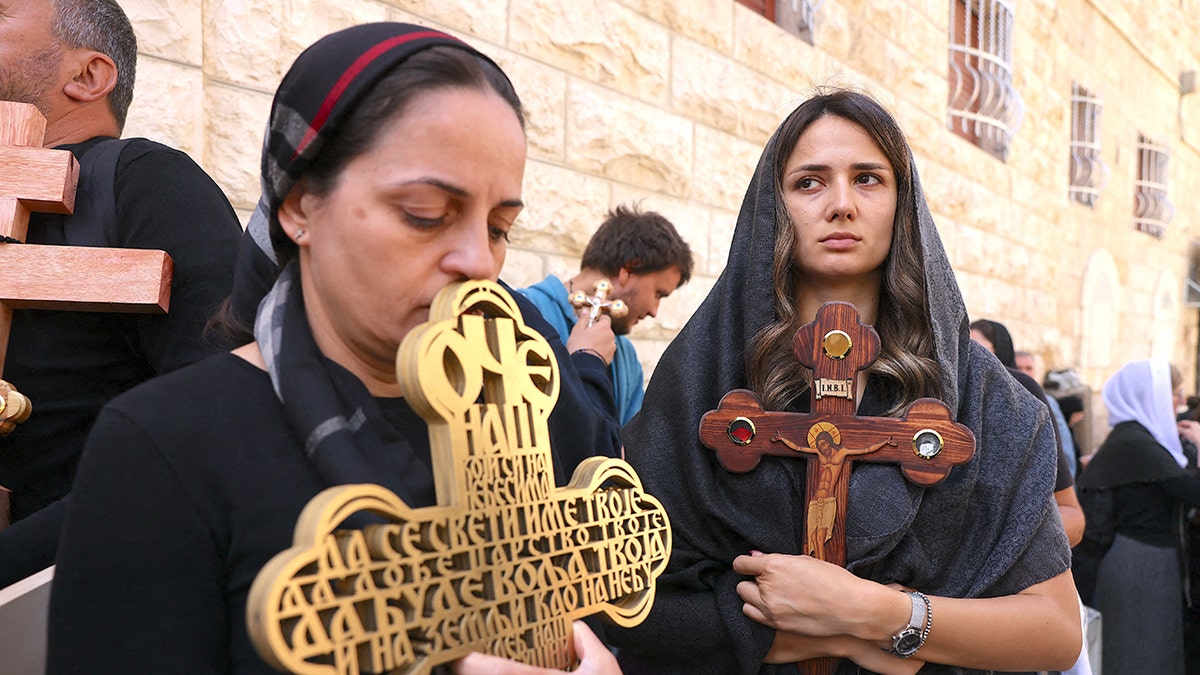
Christian pilgrims carrying wooden crosses walk through Jerusalem’s Old City toward the Church of the Holy Sepulchre during the Orthodox Good Friday procession on May 3, 2024. (Ahamd Gharabli/AFP via Getty Images)
Second is the deep historical bond reflected in the churches of the Holy Land and in Christians and Jews living under shared biblical values, from which they derive societal principles including democracy, individualism, and freedom of conscience and thought.
Third is the importance Israel places on relations with people of all denominations and religions.
CHRISTMAS RETURNS TO HOLY LAND CITIES AS BETHLEHEM’S CHRISTIAN POPULATION DWINDLES, NAZARETH REMAINS STRONG
«It has a special relationship with the Christian people abroad and the Christian community in Israel, which is the only Christian community in the entire Middle East that is actually growing in numbers and basically thriving as part of Israeli society,» Deek said.
«As the only nation to appoint a special envoy to the Christian world, Israel has indicated its deep appreciation for Christian support and its long-term interest in guarding Christian-Jewish relations. This is especially vital in this time of resurgent antisemitism spreading like wildfire in the poorly regulated digital sphere,» International Christian Embassy Jerusalem (ICEJ) ‘s President Dr. Jürgen Bühler told Fox News Digital.
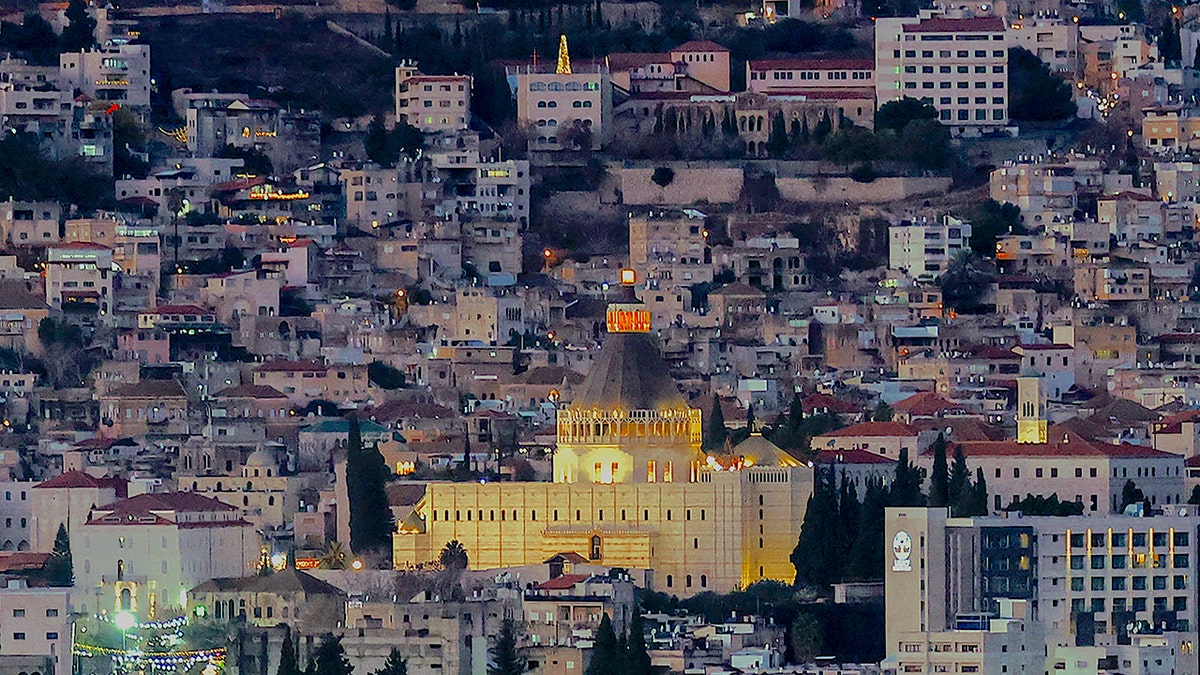
Israel’s northern city of Nazareth and its Catholic Basilica of the Annunciation on Dec. 18, 2021. (Ahmad Gharabli/AFP via Getty Images)
The organization has operated from Jerusalem for 46 years and maintains branch offices and representatives in 95 countries, with a presence spanning approximately 185 nations worldwide.
It recently organized an emergency summit on antisemitism that brought together more than 200 theologians, pastors and ministry leaders from over 30 countries in person, alongside approximately 3,000 participants attending online.
CHRISTIAN PASTORS, INFLUENCERS JOIN 1,000-STRONG ISRAEL MISSION BACKING JEWISH STATE, FIGHTING ANTISEMITISM
He says Israel has the potential to serve as both an inspiration and a partner across the region and beyond, helping ensure that people can practice their faith freely and remain in the lands of their forefathers.

The annual Christmas parade in Nazareth, Israel on Dec. 24, 2025. (Eitan Elhadez-Barak/TPS-IL)
Still, Deek noted that in recent months there have been several isolated incidents involving attacks on Christian symbols and, in one case, an assault on a Christian nun.
«More than anything, this was an attack on the values on which this country is established—values of tolerance and acceptance — where no one has the right to attack anyone or use violence against anyone for any reason whatsoever, especially not attack a symbol of Christianity, Islam or Judaism,» he said.
DISPUTED FIRE BY ANCIENT CHURCH IN HOLY LAND SPARKS DIPLOMATIC, RELIGIOUS FALLOUT
«That is absolutely unacceptable and that is why the leadership of the State of Israel, from the prime minister to the foreign minister and others, have all condemned it unequivocally and unanimously,» he added.
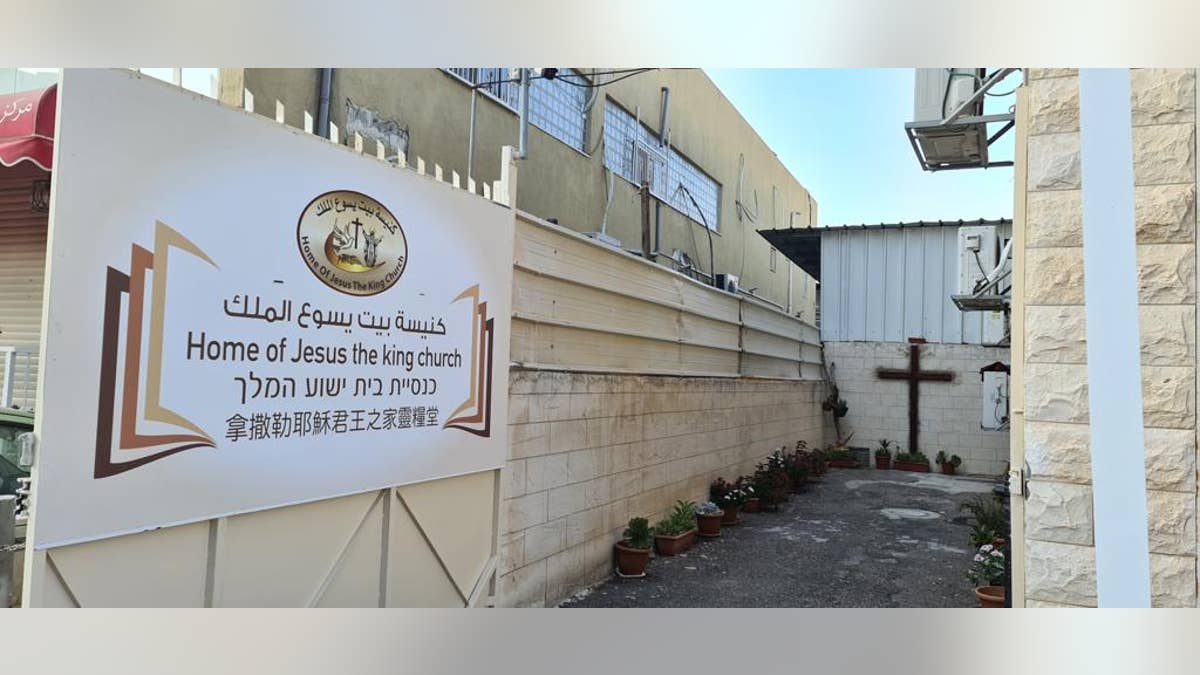
The pastor of the Home of Jesus the King church in Nazareth says one of the biggest challenges facing Israel’s Christian community is a low birth rate. (Pastor Saleem Shalash)
The Israeli soldier who desecrated a cross in southern Lebanon is in prison, as is the individual who pushed a nun to the ground and attacked her in Jerusalem. These cases, Deek said, demonstrate that the State of Israel takes such incidents very seriously and fully enforces the law.
Amid a surge in antisemitic incidents in Europe and elsewhere following the Hamas-led Oct. 7 massacre, Deek said hate that begins with Jews never ends with Jews, and that the same hate that drove out Jews from Arab countries in the 20th century has over the past two decades been directed against other minorities in the region.
TURKEY DEPORTS PEACEFUL CHRISTIANS UNDER GUISE OF ‘NATIONAL SECURITY’ CLAIMS WATCHDOG
«We see it even with Hamas pushing out the Christian population there, which has completely disappeared from Gaza,» he added.
Within this environment, Israel is the only place where such minorities have been able to live safely and practice their faith without fear. In fact, they do not merely survive in the State of Israel, they thrive, Deek said.
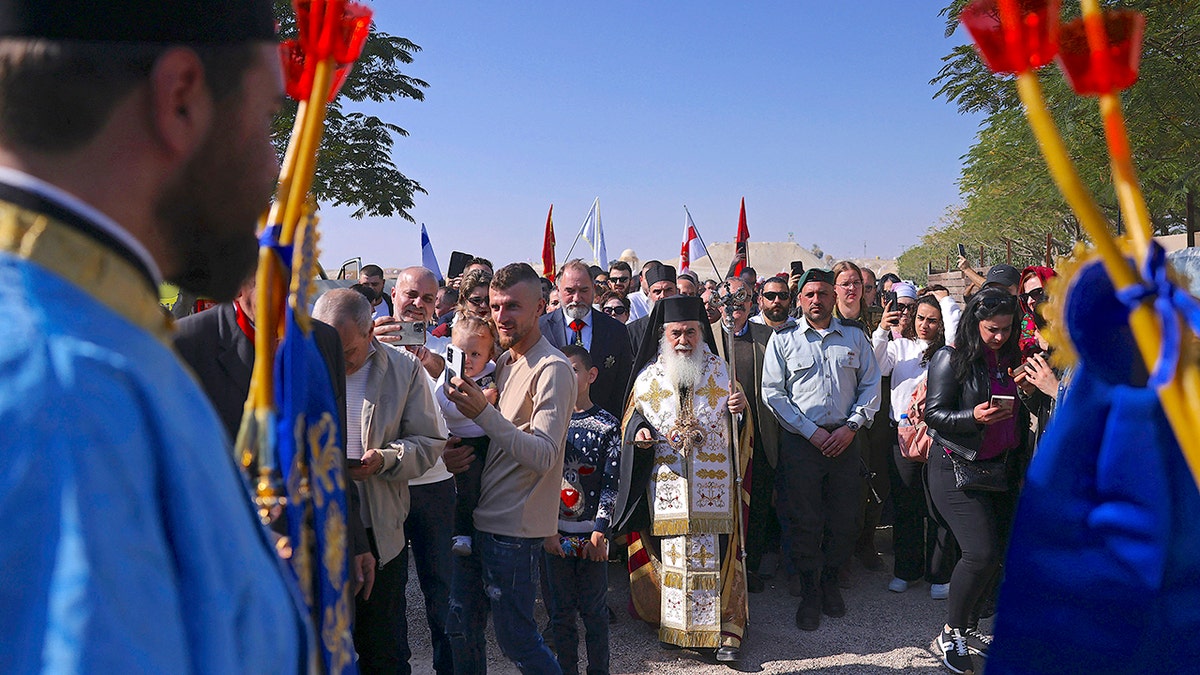
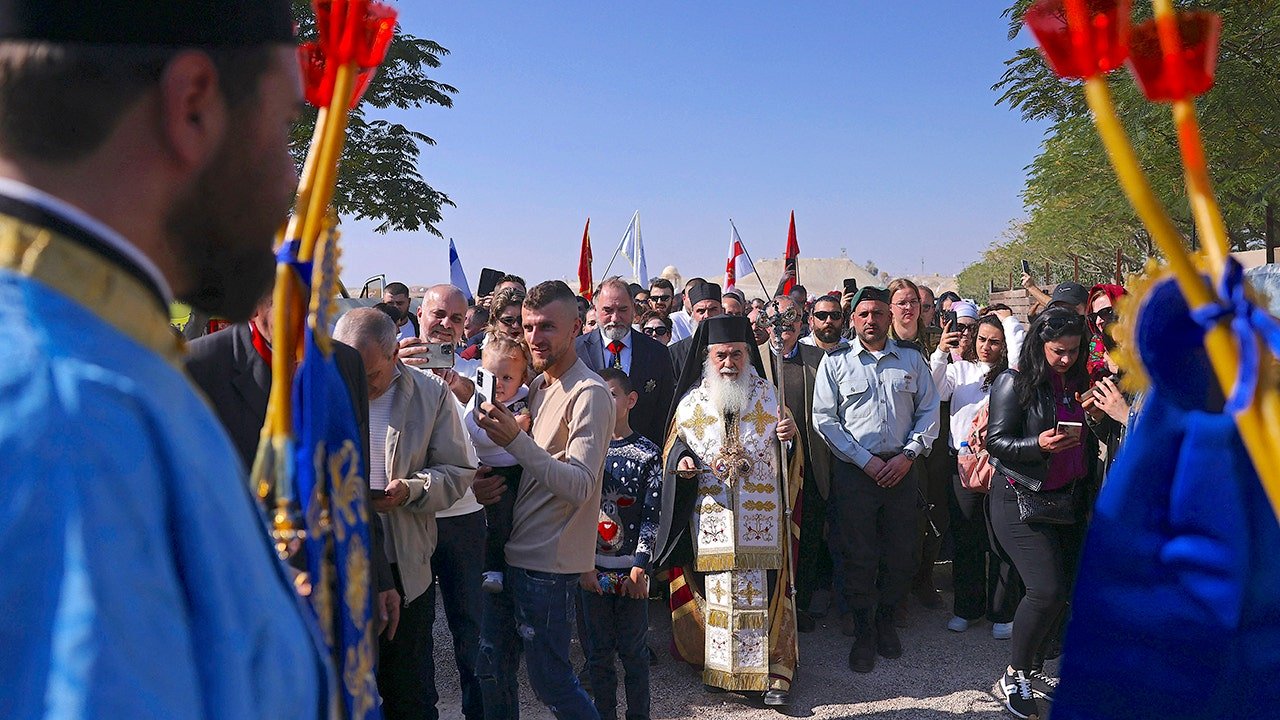
The Greek Orthodox Patriarch of Jerusalem, Theophilos III, leads a ceremony as part of the Orthodox Feast of the Epiphany at the Qasr al-Yahud baptismal site near Jericho on Jan. 18, 2025. (Hazem Bader/AFP Via Getty Images)
He nevertheless pointed to a well-oiled campaign by forces on the woke left and right, along with extremist Islamist groups, that are manipulating the Christian faith and promoting claims of what he says is the so-called mistreatment of Christians in Israel.
«I see it as a personal mission to bring as many Christians as possible to visit the land of Israel, not as a political campaign…. I want them to come here to connect to their Bible. I want them to connect to their Scripture, I want them to connect to the roots of their values by simply going to those places,» Deek said.
CLICK HERE TO DOWNLOAD THE FOX NEWS APP
«And, under the protection of Israel as the guardian of the holy sites of Christianity… to reconnect to these values and to remember that these are the biblical values that connect Jews, Christians and all the people of the book in this world,» he added.
israel, christianity religion, benjamin netanyahu, middle east, anti semitism
INTERNACIONAL
Trump’s Iran gamble divides GOP hawks and ‘America First’ conservatives over what victory looks like
NEWYou can now listen to Fox News articles!
President Donald Trump may have united Republicans behind military action against Iran, but his push to formalize peace is proving far more divisive.
As details of a memorandum of understanding emerge, GOP hawks are questioning whether the administration gave up too much, while Trump allies argue the president achieved a historic objective that crippled Iran’s military capabilities without dragging the U.S. into another prolonged war.
The disagreement is about more than Iran. It has exposed a growing divide inside the GOP over what Trump’s «America First» foreign policy should look like in practice — and what victory should mean once a military campaign ends.
At its core, the debate centers on competing visions of American power. One camp views military success as leverage to extract maximum concessions from adversaries and secure lasting strategic gains. The other sees it as a tool to neutralize threats and end conflicts before they become another Iraq or Afghanistan. Trump’s Iran agreement has forced those competing philosophies into a rare public collision.
That divide is already playing out among some of the party’s most prominent national security voices.
TOP SENATE REPUBLICAN RIPS INTO TRUMP’S IRAN DEAL, SAYS $300 BILLION MAKES OBAMA DEAL LOOK LIKE ‘A PITTANCE’
The administration’s memorandum of understanding with Tehran has exposed a divide among Republicans over what constitutes victory after the military campaign against Iran. (Anna Moneymaker/Getty Images)
The deal’s fiercest Republican critics argue Trump is giving away leverage at the very moment Iran is most vulnerable. Sen. Bill Cassidy, R-La., has blasted the agreement on X as the «worst foreign policy blunder in decades,» while Senate Armed Services Committee Chairman Sen. Roger Wicker, R-Miss., has warned it appears «out of step» with the goals of the military campaign.
Sen. Ted Cruz, R-Texas, has questioned the concessions offered to Tehran and former U.N. Ambassador and former South Carolina Gov. Nikki Haley has criticized proposals that could help rebuild Iran.
Former Vice President Mike Pence has gone even further, calling the agreement a potential «lifeline» for the regime and warning it «smacks of appeasement.»
VANCE SAYS ‘UNITED STATES WINS EITHER WAY’ AS HE DEFENDS TRUMP’S IRAN DEAL AGAINST GOP SKEPTICS
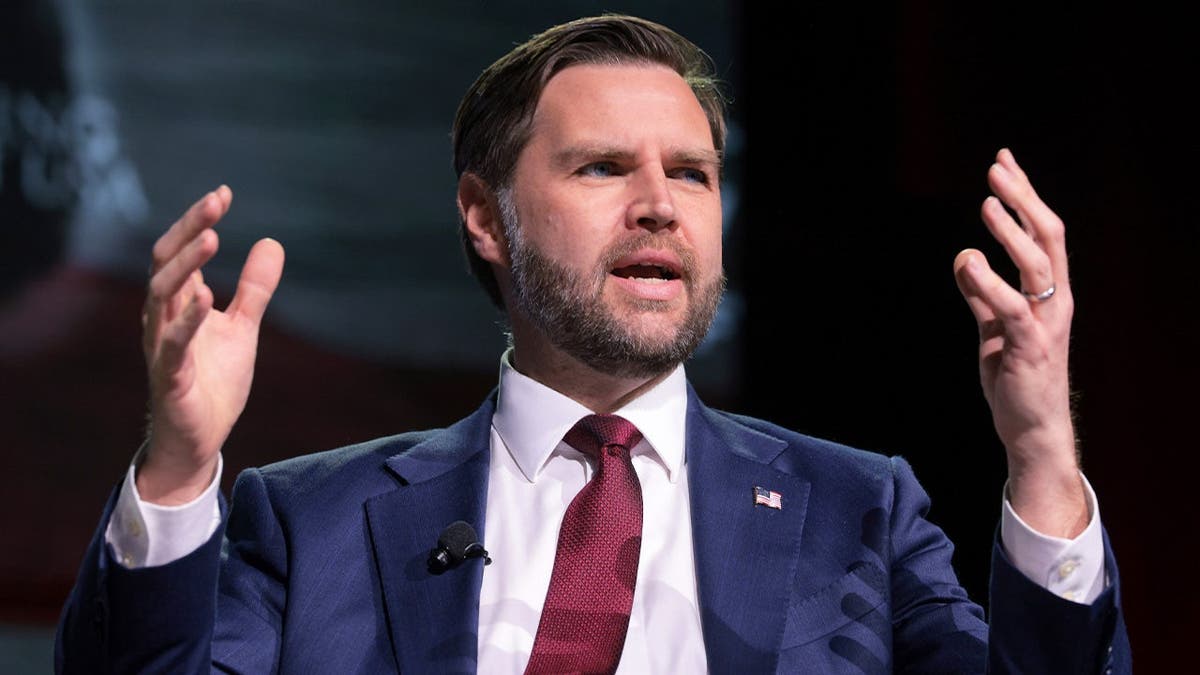
Vice President JD Vance has defended Trump’s Iran agreement as the culmination of a successful military campaign that brought Tehran to the negotiating table from a position of weakness. (Chip Somodevilla/Getty Images)
Trump’s allies, however, argue critics are overlooking the sweeping military campaign that preceded the agreement.
Vice President JD Vance and other administration officials contend the president achieved his core objective after U.S. and allied forces struck key Iranian military and nuclear sites, eliminated senior commanders and inflicted significant damage on Tehran’s military infrastructure. Supporters say those operations crippled Iran’s ability to project power, restored deterrence and ultimately brought the regime to the negotiating table without requiring a large-scale deployment of American ground troops.
They argue victory is defined by achieving U.S. objectives and ending the conflict on favorable terms — not by risking another prolonged war in the Middle East.
The clash highlights a foreign policy debate that has been simmering inside the Republican Party for years.
NEW SATELLITE IMAGES SHOW FIRES, NAVAL BASE DAMAGE ACROSS IRAN AFTER US-ISRAELI STRIKES
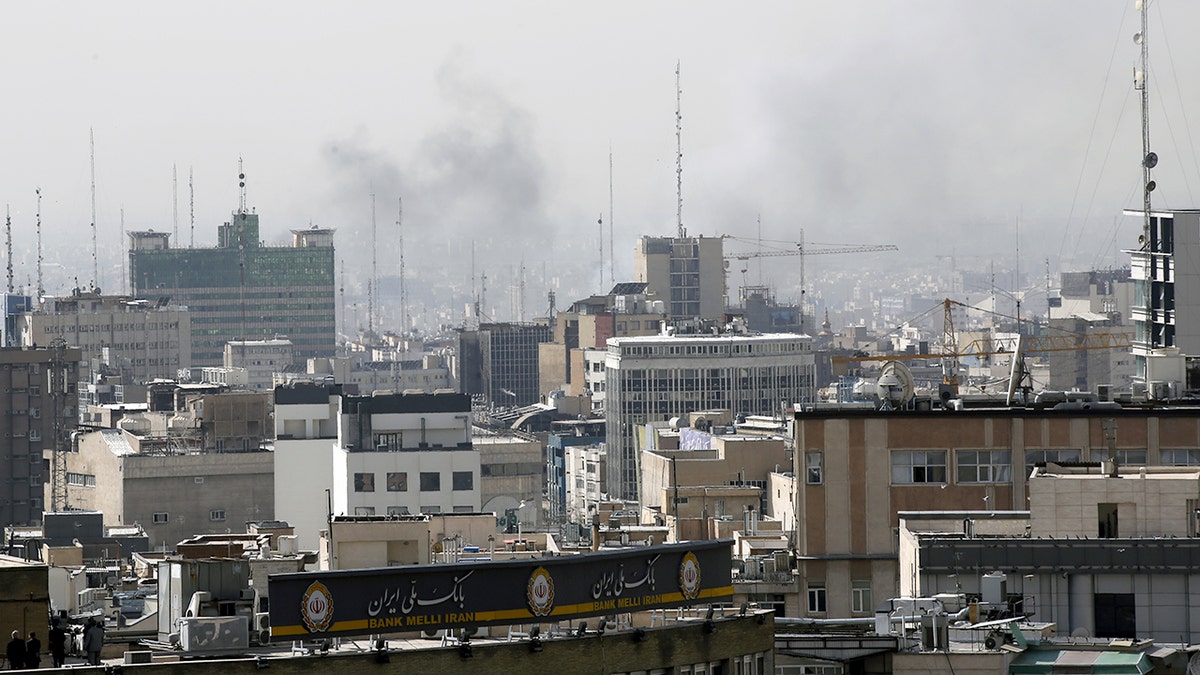
Supporters argue the agreement locks in military gains, while critics contend it gives Tehran too much after suffering major setbacks. (Fatemeh Bahrami/Getty Images)
While Republicans have largely rallied around Trump’s use of military force against Iran, the disagreement over what comes next reflects a deeper tension inside the party.
For traditional hawks, military victories create opportunities to reshape adversaries and secure lasting concessions. For many America First conservatives, the objective is narrower: neutralize threats, avoid nation-building and keep U.S. troops out of prolonged conflicts.
CLICK HERE TO DOWNLOAD THE FOX NEWS APP
As lawmakers and conservative leaders continue debating the memorandum of understanding’s merits, the fight may ultimately be less about the details of the Iran deal than about the future direction of Republican foreign policy — and what victory should mean in the Middle East.
war with iran, national security, donald trump, foreign policy, republicans, politics

Qué dice el comunicado completo: las palabras de Jesica Cirio luego de que publicaran los videos en los que se ven bolsas de dólares

Panamá será sede del congreso internacional para personas con deficiencia auditiva

Nelson Deossa se aleja de River Plate y su destino sería el Vasco da Gama de Brasil

Juan Manuel Olmos: “Si nos organizamos y hacemos una competencia de ideas y de programas, en el ’27 vuelve a ganar el peronismo”

EXCLUSIVE: Meet the man Israel chose to be its first-ever ambassador to the Christian world

Milei le respondió a Harari en la polémica por la regulación de la IA: miedos, políticos robot y el juicio final de Terminator

Patricia Bullrich: “El Presidente considera que Adorni dio una explicación razonable”

El lapidario posteo de Javier Milei contra Florencia Peña por la fake news sobre la muerte del papá de Messi

Decomisan un helicóptero producto del lavado de las coimas de Odebrecht

Papelón y escándalo: anularon un sorteo de viviendas en PBA porque se olvidaron de incluir una bolilla

 POLITICA3 días ago
El lapidario posteo de Javier Milei contra Florencia Peña por la fake news sobre la muerte del papá de Messi
- POLITICA21 horas ago
Difundieron videos en los que Jésica Cirio aparece junto a miles de dólares
- POLITICA3 días ago
Ramiro Marra le pidió a Milei la renuncia de Adorni en una carta abierta