INTERNACIONAL
Elizabeth Warren’s Bezos Met Gala jab backfires as critics mercilessly drag ‘un-American’ lawmaker

NEWYou can now listen to Fox News articles!
Sen. Elizabeth Warren, D-Mass., drew intense criticism on Monday after she claimed on X that Amazon founder Jeff Bezos should pay more in taxes in response to him sponsoring the Met Gala, with conservatives questioning the senator’s record and accusing her of misrepresenting facts.
«The answer to everything, up to and apparently including bankrupting an airline at the cost of something like 15,000 jobs and the entire concept of budget airfare, is ‘Jeff Bezos has a lot of money though,’» venture capitalist and media founder Mike Solana wrote in response to Warren’s post.
Solana was referring to the recent demise of Spirit Airlines. Conservative commentators claim Spirit could have been saved if Warren hadn’t pushed to block JetBlue’s acquisition of the budget carrier on anti-trust grounds in 2024.
«If Jeff Bezos can drop $10 million to sponsor the Met Gala, he can afford to pay his fair share in taxes,» Warren said on Monday, sparking the glut of pushback from social media users.
WASHINGTON POST ARGUES THERE’S ‘LITTLE TO GAIN BY RAISING TAXES ON THE RICH,’ RATES ALREADY HIGH ENOUGH
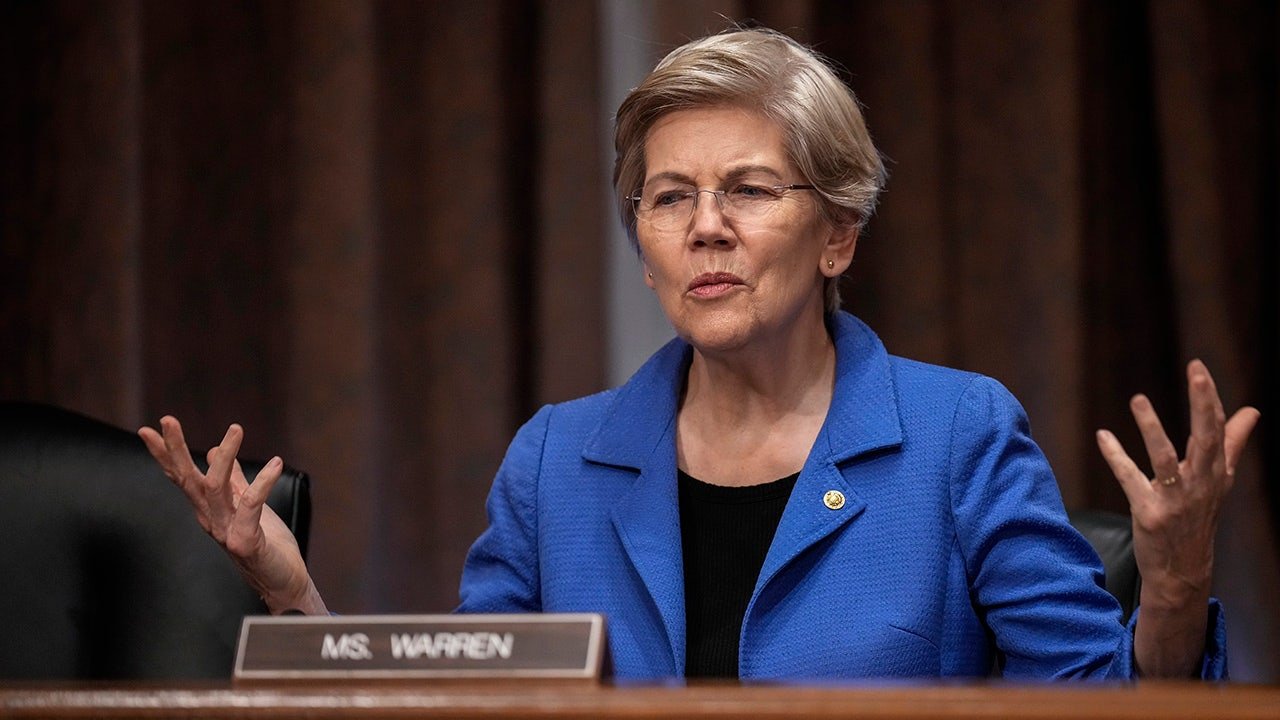
Sen. Elizabeth Warren, D-Mass., questions Treasury Secretary Janet Yellen during a Senate Finance Committee hearing on Capitol Hill in Washington on March 16, 2023. (Jacquelyn Martin/AP)
Following news that Bezos had cut an eight-figure check to fund the Met Gala, liberals in the entertainment industry such as Mark Ruffalo and Taraji P. Henson joined Warren in criticizing Amazon and Bezos for their allegedly unethical business practices. Protesters appeared outside the gala on Monday holding signs criticizing Bezos. One demonstrator was detained for trying to break into the event.
Warren’s message backfired online, as commenters pointed to the demise of Spirit Airlines and took issue with her tax policies across the years.
«Jeff Bezos employs over 1.5 million people at Amazon,» X user Gina Milan wrote. «You’re responsible for 17,000 workers losing their jobs and for blocking the merger that ultimately killed Spirit Airlines.»
Spirit put downward pressure on prices at other airlines and its folding could lead to an increase in overall travel prices, industry analysts told USA Today. Estimated job losses stemming from Spirit’s shuttering include approximately 15,000 direct employees and an additional 2,000 indirect employees.
«This myth just won’t die,» Reason Magazine reporter Billy Binion posted, responding to Warren’s assertion that Bezos isn’t paying enough in taxes. «In 2024 alone, it’s estimated Jeff Bezos paid almost $3 billion in taxes. Painting rich people as tax avoiders plays great on social media, but it’s not reality. The U.S. has the most progressive tax system in the developed world.»
Forbes estimates that Bezos paid $2.7 billion in taxes in 2024 after he sold $13.6 billion worth of Amazon stock. He reduced his tax burden that year by donating $2.5 billion in Amazon shares to charity over the three prior years. Bezos paid nearly $1 billion in taxes between 2014 and 2018, according to a ProPublica analysis of tax documents.
To minimize tax burdens, billionaires like Bezos often take out loans secured against their massive stock holdings to acquire spending money, according to securities filings reviewed by ProPublica. Since the IRS doesn’t consider loans income, this setup gives the wealthy access to cash without having to pay income taxes.
FROM ‘JUMP ON A BUS’ TO TAX CRACKDOWNS: BLUE STATES CHASE WEALTHY RESIDENTS FLEEING TO RED HAVENS
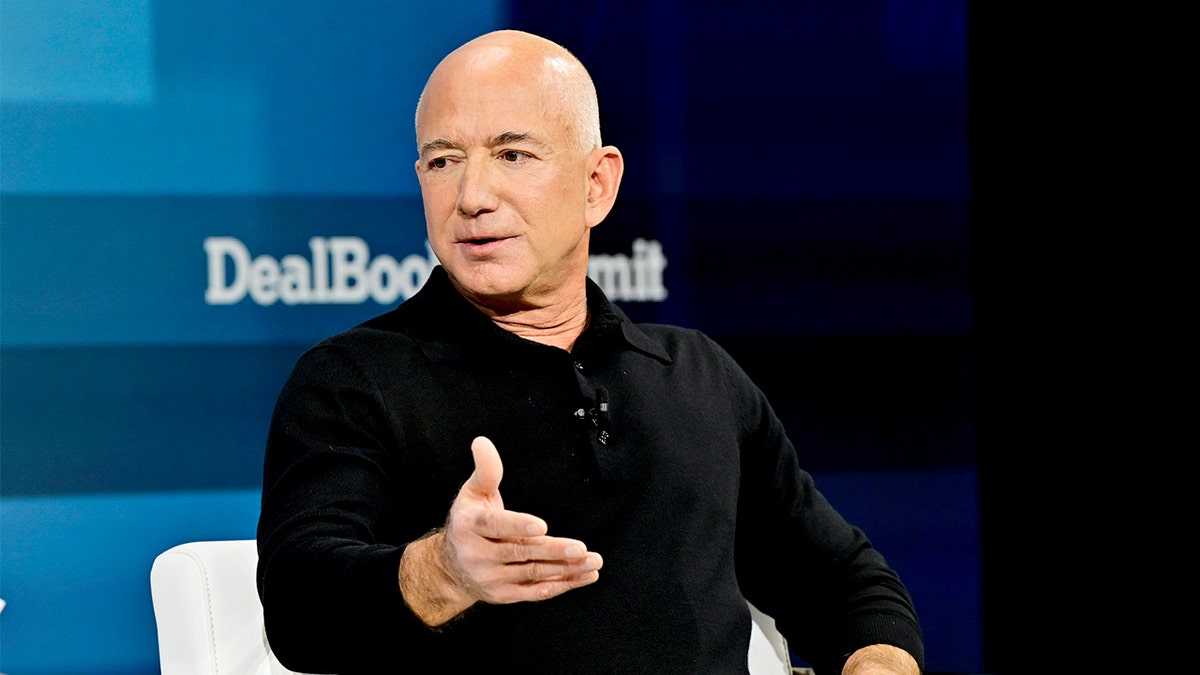
Billionaire Jeff Bezos attends the DealBook Summit. Critics on social media have accused Bezos of allowing the Washington Post to suffer amid hundreds of staff layoffs. (Eugene Gologursky/Getty Images for The New York Times)
Some on social media pushed Warren for specifics on how she plans to make Bezos pay his «fair share.»
«What’s his fair share?» Sen. Mike Lee, R-Utah, asked Warren. «What tax rate?»
Warren has proposed a wealth tax, charging households with net worths above $1 billion an annual tax worth 6% of their total wealth. Under Warren’s proposal, households with net worths between $50 million and $1 billion would be subject to a similar 2% tax.
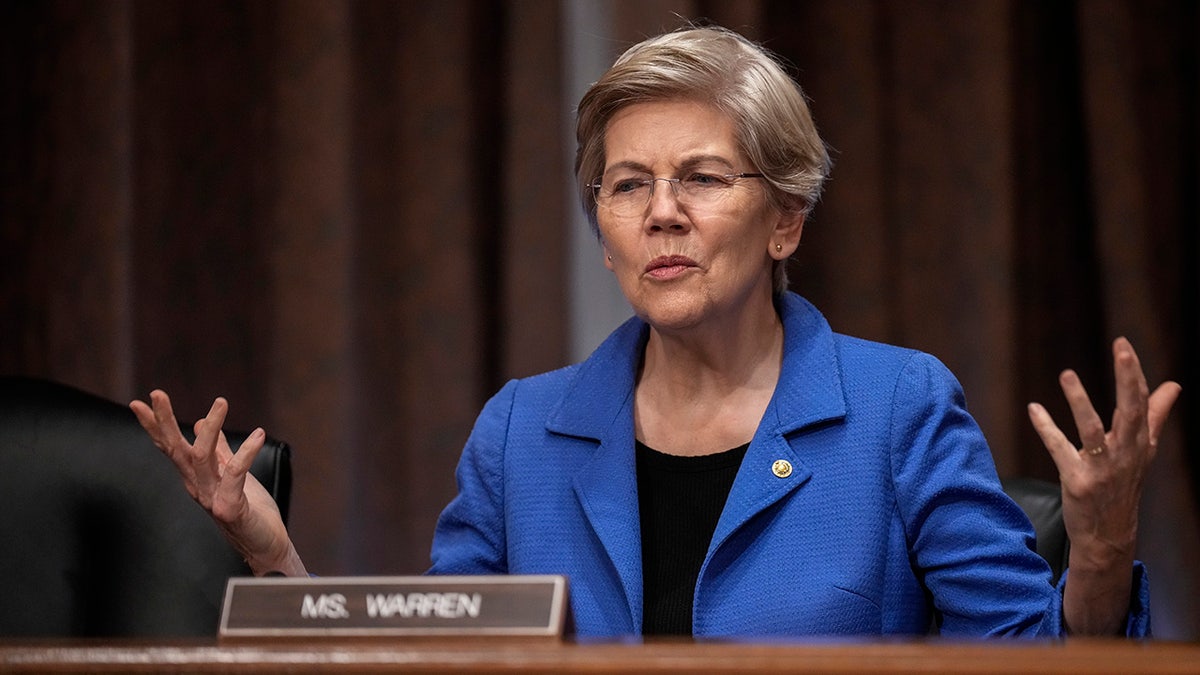
Sen. Elizabeth Warren speaks to a staff member before the Senate Banking Committee hearing on oversight of credit reporting agencies on Capitol Hill in Washington, D.C., on April 27, 2023. (Drew Angerer/Getty Images)
CALIFORNIA’S HATRED FOR CAPITALISM IS KILLING THE GOOSE THAT LAID ITS GOLDEN EGG
Much of the growth in wealth experienced by Bezos and other billionaires comes through the unrealized gains of their assets, which Warren’s tax would target.
Writer Mike Coté pointed out that Bezos is «so rich that he can simply leave the jurisdiction or get citizenship elsewhere» if Warren’s tax plans were signed into law.
CLICK HERE TO DOWNLOAD THE FOX NEWS APP
«Liz Warren does not want progressive taxation,» he continued. «She wants confiscatory taxation. It’s fundamentally un-American. And it doesn’t work.»
Warren’s office did not respond to a request for comment sent by Fox News Digital Tuesday morning.
jeff bezos, taxes, amazon, elizabeth warren, senate elections














Trump slams allies over Iran, Greenland at NATO summit
During the NATO summit in Turkey, President Donald Trump vocalizes his disappointment with allied NATO countries, stating they haven’t adequately supported the U.S. He discusses the recent air strikes against Iran, clarifying the U.S. didn’t require assistance, and highlights scheduled meetings with various world leaders to address global issues.
NEWYou can now listen to Fox News articles!
Greenland is «not for sale,» Denmark’s prime minister said Wednesday, vowing to defend the Danish territory after President Donald Trump again said the United States should control the Arctic island for NATO defense.
Denmark is «ready to defend every inch of NATO including our own territory,» Denmark’s Prime Minister Mette Frederiksen said at the NATO summit in Ankara, Turkey, adding she would call on NATO allies to honor their commitment to defend each other.
«We hope that all, including all allies, will respect the Greenland people’s right for self-determination,» she continued. «And we are sovereign states and we need everybody to respect our territorial integrity and our sovereignty.
«Greenland is of course not for sale.»
TRUMP MAKES FRESH GREENLAND PLAY AFTER XI TALKS AS CHINA’S ARCTIC AMBITIONS LOOM
President Donald Trump’s designs to buy or takeover Greenland for Arctic security has riled up Europe, NATO, and anti-American leftists. (Celal Gunes/Anadolu via Getty Images; Alessandro Rampazzo/AFP via Getty Images)
Trump continues to stress Greenland «is very important» for the U.S. but not for Denmark, declaring, «We need it for protection of the world, not just the United States.»
Also, Denmark is coming up short in its support for Greenland, which remains a strategic target for both Russia and China.
«That’s what hurt my relationship with NATO,» Trump said Tuesday of the refusal to grant his request for annexation of the strategic land.
«Denmark doesn’t spend money to really help Greenland, but it’s an important part for the United States. And it’s surrounded by China ships and Russian ships.»
GREENLAND TALKS ON ‘GOOD TRAJECTORY,’ WHITE HOUSE SAYS AMID TRUMP TAKEOVER PUSH
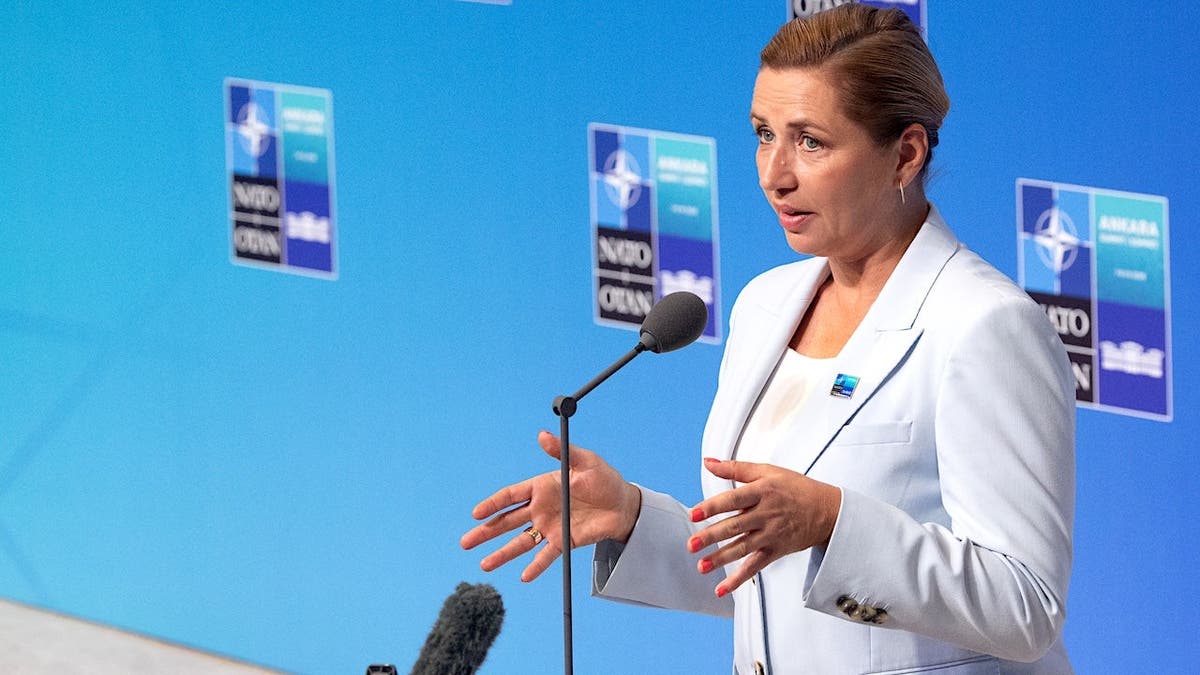
Denmark Prime Minister Mette Frederiksen issued a defiant message against President Donald Trump’s designs on Greenland at the 2026 NATO Leaders Summit on Wednesday in Ankara, Turkey. (Serdar Ozsoy/Getty Images)
For global security, Greenland «should be controlled by the United States, not by Denmark,» Trump added.
«They wouldn’t go along with it,» Trump lamented. «And with all the money we spend to help them with Russia. And we don’t have to spend any money, we could remove all of our soldiers out of Europe because, as you probably noticed, Europe is a very different place than it was 20 years ago. A lot different.»
Greenland is a semiautonomous territory of Denmark, a NATO ally. Trump’s push for U.S. control has repeatedly angered Danish and Greenlandic officials, who have insisted the island’s future should be decided by its people.
Icelandic Prime Minister Kristrun Frostadottir also weighed in Wednesday, saying Greenland’s people «do not wish to be a part of the United States» and urging NATO leaders to stay focused on Russia.
TRUMP CALLS OUT NATO AHEAD OF SUMMIT, CALLING IT ‘RIDICULOUS’ FOR US TO PERSIST ON ‘ONE SIDED PATH’

NATO Secretary Gen. Mark Rutte attempts to assure President Donald Trump on Wednesday in a news conference that allies are increasing their financial commitments so Europe’s defense is not all on the U.S. taxpayers. (Win McNamee/Getty Images)
The dispute injected a tense territorial confrontation into a summit already shaped by Trump’s demands that allies spend more on defense and take greater responsibility for Europe’s security as the U.S. shifts its focus.
NATO Secretary-General Mark Rutte sought to emphasize the alliance’s recent defense spending increases, telling Trump that European allies and Canada had made major new commitments.
«I would argue that without you in this chair, this would not have happened,» Rutte told Trump. «Grab the win. It’s there.»
Trump, however, continued criticizing allies over both Greenland and Iran, where he ordered overnight U.S. strikes after attacks on merchant ships in the Strait of Hormuz. Rutte backed the U.S. strikes, telling Trump they were «absolutely necessary.»
CLICK HERE TO DOWNLOAD THE FOX NEWS APP
The NATO summit is also expected to address Ukraine’s war against Russia, with Ukrainian President Volodymyr Zelenskyy pressing allies for deeper support and renewed consideration of Ukraine’s bid to join the alliance.
But Trump’s comments on Greenland underscored a growing challenge for NATO leaders: projecting unity against outside threats while managing disputes inside the alliance itself.
The Associated Press contributed to this report.
nato, greenland, donald trump, europe, defense
INTERNACIONAL
La consideraban como una hija, pero ella los traicionó: una joven secuestró a sus vecinos para robarles y luego los enterró vivos
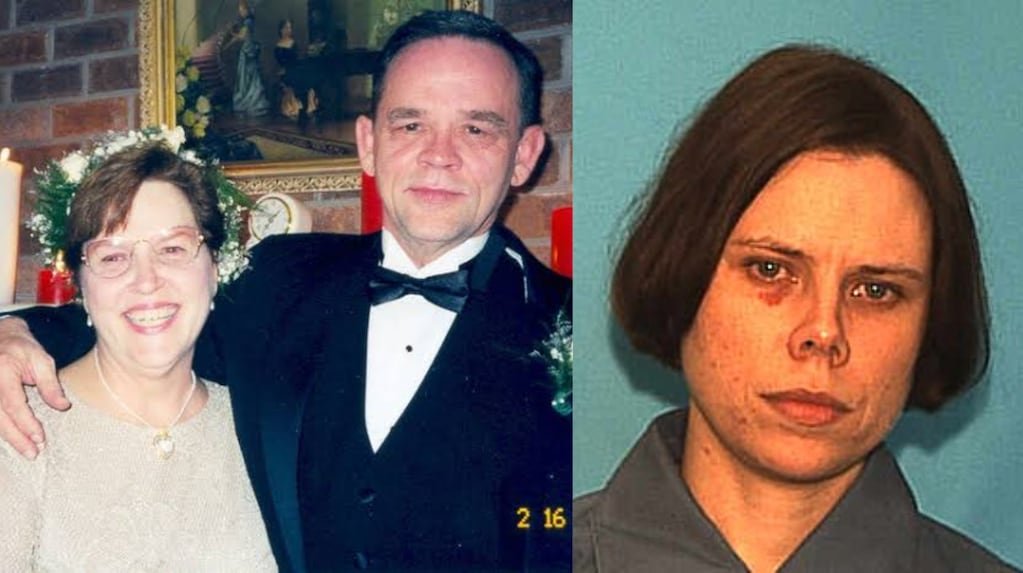
Durante años, Reggie y Carolyn Sumner abrieron las puertas de su casa a Tiffany Cole. La habían conocido cuando era apenas una adolescente, mientras vivían en el mismo complejo de departamentos en Carolina del Sur, en Estados Unidos.
Con el paso del tiempo, el vínculo se volvió tan cercano que la trataban como si fuera una hija. Incluso, cuando el matrimonio se mudó a Florida para disfrutar de su jubilación, nunca perdieron el contacto con la joven.
Según reconstruyó la investigación, Carolyn mantenía con Tiffany una relación casi maternal. La invitaban con frecuencia a su casa, la ayudaban cuando lo necesitaba y siempre se escribían o se llamaban para ponerse al día. La joven conocía perfectamente sus rutinas, sabía que tenían ahorros y también estaba al tanto de la confianza que los dos depositaban en ella.
En paralelo, Tiffany comenzó una relación con Michael Jackson -un chico que no tenía relación con el cantante del mismo nombre- y se hizo amiga de Alan Wade y Bruce Nixon. Entre los cuatro empezaron a planificar un robo que tenía como principal objetivo quedarse con el dinero de Reggie y Carolyn.
Un plan macabro
El 8 de julio de 2005, Tiffany llamó a Carolyn para avisarle que “estaba de paso” por Jacksonville, donde vivía junto a su marido, y preguntarle si podía visitarlos. Los jubilados aceptaron sin sospechar absolutamente nada.
Cuando la joven llegó a la casa no estaba sola. Sus tres cómplices irrumpieron poco después y atacaron a la pareja. Los ataron, los amenazaron con armas y comenzaron a exigirles información sobre sus cuentas bancarias y sus tarjetas.
La banda les robó dinero, joyas y distintos objetos de valor. Sin embargo, el grupo temía que las víctimas pudieran identificarlos ante la policía, por lo que decidió llevárselos de la casa. Reggie y Carolyn Sumner se habían mudado a Florida después de jubilarse. (Foto: documental Unexpected Company)
Los delincuentes trasladaron a las víctimas en vehículos hasta una zona boscosa del condado de Charlton, en el estado de Georgia, a más de una hora de Jacksonville. Allí ya habían preparado una fosa.
Con las manos atadas y la cabeza tapada, Reggie y Carolyn fueron obligados a ingresar al pozo. Luego, los agresores comenzaron a taparlos con tierra mientras todavía seguían con vida. Las autopsias determinaron posteriormente que ambos murieron por asfixia.
Después del crimen, los cuatro responsables usaron las tarjetas bancarias del matrimonio para retirar miles de dólares en distintos cajeros automáticos.
Leé también: Fue secuestrada mientras estaba en una cita con su novio y la encontraron muerta: el asesino cayó después de 46 años
La investigación
La desaparición del matrimonio preocupó rápidamente a familiares y amigos, quienes advirtieron que era completamente extraño que ninguno respondiera llamados ni mensajes.
Los investigadores encontraron la casa revuelta y comprobaron movimientos bancarios realizados después de la desaparición. Las cámaras de seguridad de distintos cajeros registraron las extracciones de dinero y permitieron seguir el rastro de los sospechosos.
Las pistas llevaron rápidamente hasta Tiffany Cole, quien era una de las pocas personas ajenas al círculo familiar que conocía en detalle la vida de los Sumner. Poco después, la policía detuvo también a Jackson, Wade y Nixon. Tiffany Cole y su novio, Michael Jackson. (Foto: Oxygen)
Durante la investigación, los cuatro intentaron minimizar su participación y responsabilizarse entre ellos. Sin embargo, la evidencia reunida por la fiscalía -entre ella registros bancarios, imágenes de cámaras de seguridad y distintos testimonios- permitió reconstruir el plan completo y demostrar que el crimen había sido cuidadosamente organizado.
La condena
En 2007 comenzó el juicio contra los cuatro acusados. La fiscalía sostuvo que Tiffany había utilizado el vínculo de confianza que mantenía con el matrimonio para facilitar el robo y que tuvo un rol fundamental en toda la planificación.
Los jurados la declararon culpable de dos cargos de asesinato en primer grado, además de secuestro y robo. En 2008 recibió la pena de muerte, al igual que Alan Wade, mientras que Michael Jackson y Bruce Nixon fueron condenados a prisión perpetua. Tiffany Cole fue condenada a pena de muerte, pero años después esa sentencia fue revocada. (Foto: The Florida Times-Union)
Sin embargo, la situación judicial de Tiffany cambió años después. En 2016, la Corte Suprema de Estados Unidos resolvió en el fallo Hurst v. Florida que el sistema utilizado en Florida para imponer la pena de muerte era inconstitucional, ya que otorgaba demasiado poder al juez en lugar del jurado.
A partir de esa decisión, numerosos condenados obtuvieron una revisión de sus sentencias. Entre ellos estuvo Tiffany Cole, cuya condena a muerte fue anulada en 2017.
Leé también: La asesinaron mientras caminaba con su hijo de dos años: el verdadero culpable fue identificado más de una década después
Durante un nuevo proceso de sentencia, la fiscalía volvió a pedir la pena capital, pero el jurado no alcanzó la unanimidad requerida por la legislación vigente. Finalmente, la Justicia la condenó a cadena perpetua sin posibilidad de libertad condicional.
Estados Unidos, Asesinato, Crimen
INTERNACIONAL
Platner campaign putting ‘thumb on scale’ to influence possible replacement, Maine Dem alleges
NEWYou can now listen to Fox News articles!
The Maine Democratic Party issued a stern warning to U.S. Senate primary winner Graham Platner, telling him and his campaign that they have «no role» in choosing his replacement.
Platner has not yet withdrawn from the race, and is still the state’s Democrat nominee for U.S. Senate, despite mounting pressure from state and national Democrats to drop out after a woman who previously dated him accused him of sexual assault in a Politico report published Monday. Platner has denied the allegations, but said he is looking at «the best path forward,» as he understood the political fallout the accusation would create.
«The Maine Democratic Party has been working around the clock to develop a process to replace our U.S. Senate nominee that is open, inclusive, transparent, and fair,» state party Executive Director Devon Murphy-Anderson said in a video posted to X amid myriad newly surfaced allegations levied against Platner with less than a week before the deadline to lock in the candidate to challenge incumbent Sen. Susan Collins, R-Maine.
«The integrity of this process is just as important as the outcome, and we are committed to ensuring that Democrats across our state can have confidence in both,» Murphy-Anderson continued. «Unfortunately, Graham Platner’s team has repeatedly reached out to us in an attempt to put their thumb on the scale of what this process looks like. We have repeatedly reiterated to Graham Platner’s team that they have no role in determining our next Democratic nominee for the U.S. Senate, nor in determining what this process looks like.»
WHAT HAPPENS NEXT IF PLATNER DROPS OUT? HERE’S WHO COULD REPLACE HIM ON THE BALLOT AND HOW IT WOULD WORK
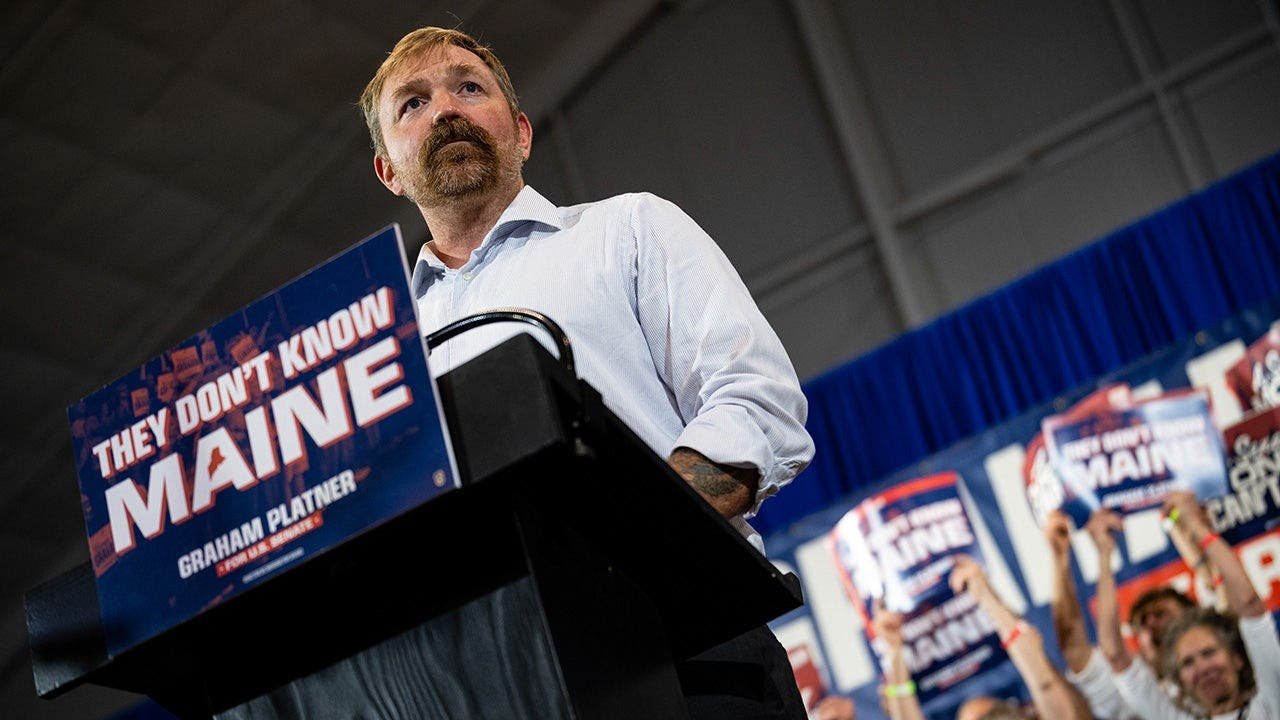
Graham Platner won the Democratic nomination for U.S. Senate, celebrating his victory at the YMCA in Blue Hill, Maine, on June 9, and just one month later the state Democratic Party is forcing him out and having no say in who the nominee will be. (Matt Symons for Fox News Digital)
Amid the fight with the Maine party leaders, an official for the Platner campaign said it «has reached out to the party to try and understand what this process would look like» and «at no point has the campaign tried to ‘put its finger on the scale.’»
The official added that thousands of Maine residents voted and volunteered for Platner and they should play a role in the decision.
«While Graham wouldn’t want to be a part of the process, he would want to make sure the voters and volunteers make this decision — not the political establishment,» the statement said.
GRAHAM PLATNER’S CHANCES OF DROPPING OUT SKYROCKET TO 94% AFTER PARTY REVOLT: KALSHI
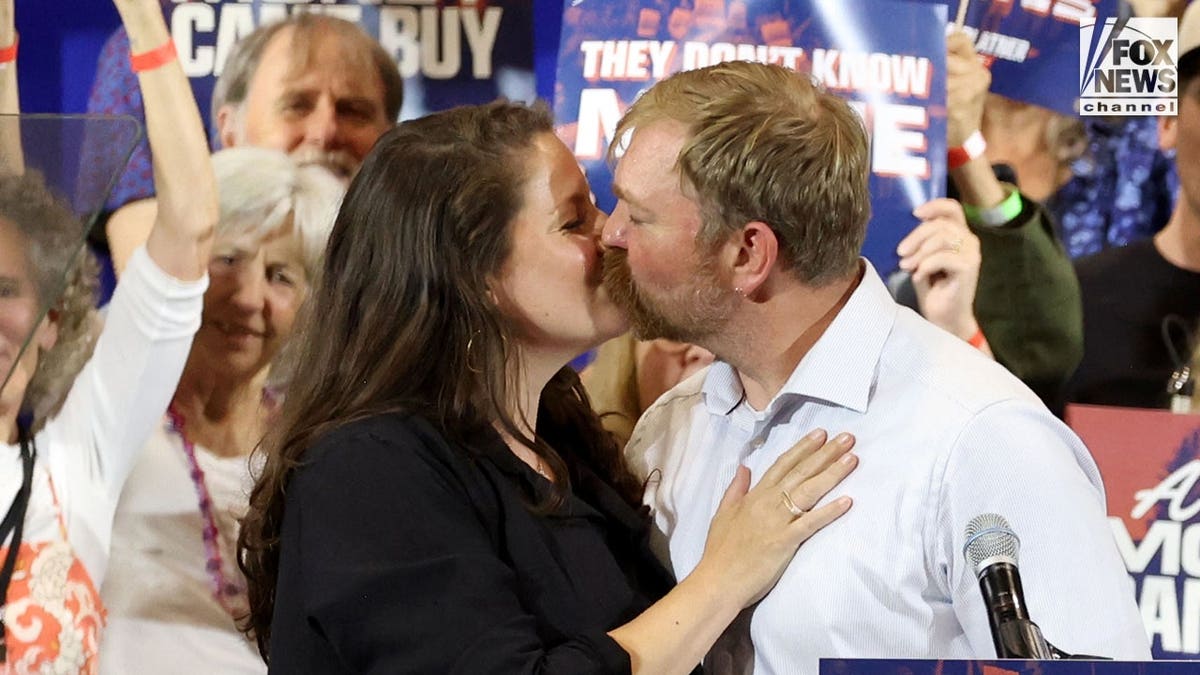
Wife Amy Gertner has stood by her man Graham Platner amid myriad allegations of extramarital affairs and sexual misconduct. (Matt Symons for Fox News Digital)
Fox News Digital has made multiple attempts to reach out to Platner’s campaign for further comment, and also reached out to the Maine Democratic Party.
EXPLOSIVE SEXUAL ASSAULT ALLEGATION ROCKS PLATNER CAMPAIGN AHEAD OF KEY DEADLINE IN CRUCIAL SENATE RACE
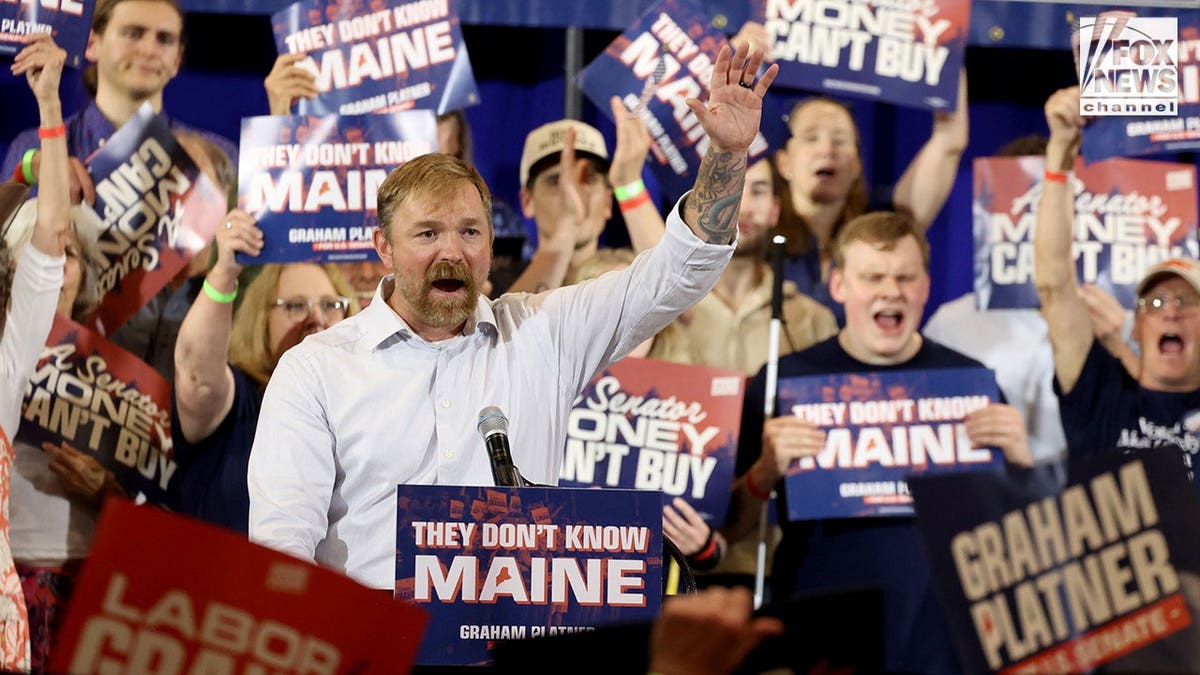
Graham Platner has thus far been defiant and refusing to drop out without conditions, saying the Maine voters have picked him to be their nominee, ‘not the party establishment.’ (Matt Symons for Fox News Digital)
Maine Democratic Party leaders called on Platner to withdraw Monday, saying «multiple women have made serious, credible allegations against Graham Platner» and that the party «stands with women and survivors.» The party noted that no replacement process can begin unless Platner suspends his campaig, while stating that «in no scenario is there a legal possibility for a nominee to be selected by an individual campaign.»
«The sooner this process can begin, the more time we will have to administer an intentional and inclusive process for Mainers and Democrats,» the party said.
«We are entrusted with deciding who represents our values and who carries our banner,» the party said. «That responsibility requires judgment, leadership, and a willingness to act when circumstances demand it.»
The timing is critical. According to the Maine Democratic Party, the deadline set by the secretary of state for a nominee to withdraw is July 13, and the deadline for a new nominee to be submitted is July 27. If Platner does not withdraw by the July 13 deadline, Democrats would not have the option to name a replacement.
CLICK HERE TO DOWNLOAD THE FOX NEWS APP
Names of potential replacements floated in media reports include former Maine Senate President Troy Jackson, Maine Secretary of State Shenna Bellows and Nirav Shah, the former director of the Maine Center for Disease Control and Prevention.
The race is one of Democrats’ top pickup opportunities as they seek to defeat Collins, a five-term Republican incumbent, and regain control of the Senate.
The Associated Press contributed to this report.
graham platner, democrats senate, politics, state and local primaries, maine

Sebastián Galmarini: “Tenemos que ir juntos, porque la sociedad nos pide ganarle a Milei”

Historias y rostros de los 44 tripulantes del submarino ARA San Juan

Video: los desgarradores gritos de la víctima de una banda dedicada a entraderas en barrios cerrados

El arquero de River que decidió rescindir su contrato para atajar en el exterior

Denmark vows to defend Greenland after Trump reiterates US should control territory

Empleada doméstica 2026: la cuenta que deben hacer quienes la contratan una vez por semana

La producción textil aceleró su caída y la capacidad instalada siguió entre las más bajas de la industria

Portugal vs España: formaciones, hora y dónde ver por tv

Ojo con las multas de tránsito: las más caras llegan a $3.8 millones