INTERNACIONAL
Trump announces highest civilian honor for 9/11 hero remembered as the ‘Man in the Red Bandana’

NEWYou can now listen to Fox News articles!
President Donald Trump announced during a rally in New York that he was posthumously awarding the nation’s highest civilian honor to Welles Remy Crowther, the 9/11 hero remembered as the «Man in the Red Bandana» after he repeatedly led victims to safety from the burning South Tower before dying in the terrorist attacks.
Trump revealed the Presidential Medal of Freedom honor during a Rockland County stop on Friday with Rep. Mike Lawler, R-N.Y., who had urged the president to recognize Crowther’s heroism ahead of the 25th anniversary of Sept. 11. Crowther, a 24-year-old equities trader who also worked as a volunteer firefighter, became a symbol of American courage after survivors recounted being guided through smoke and wreckage by a man wearing a red bandana over his face.
«At the request of Bruce, and Mike, and some of the political — great political people we have, and we are approaching the 25th anniversary of September 11th, 2001, a dark day that will live in infamy. We are posthumously awarding Welles the Presidential Medal of Freedom,» Trump told the Rockland County crowd, earning a resounding applause.
FOX NATION, TUNNELS TO TOWERS EXPLORES HOW AMERICA’S PASTIME HELPED A GRIEVING NEW YORK HEAL AFTER 9/11
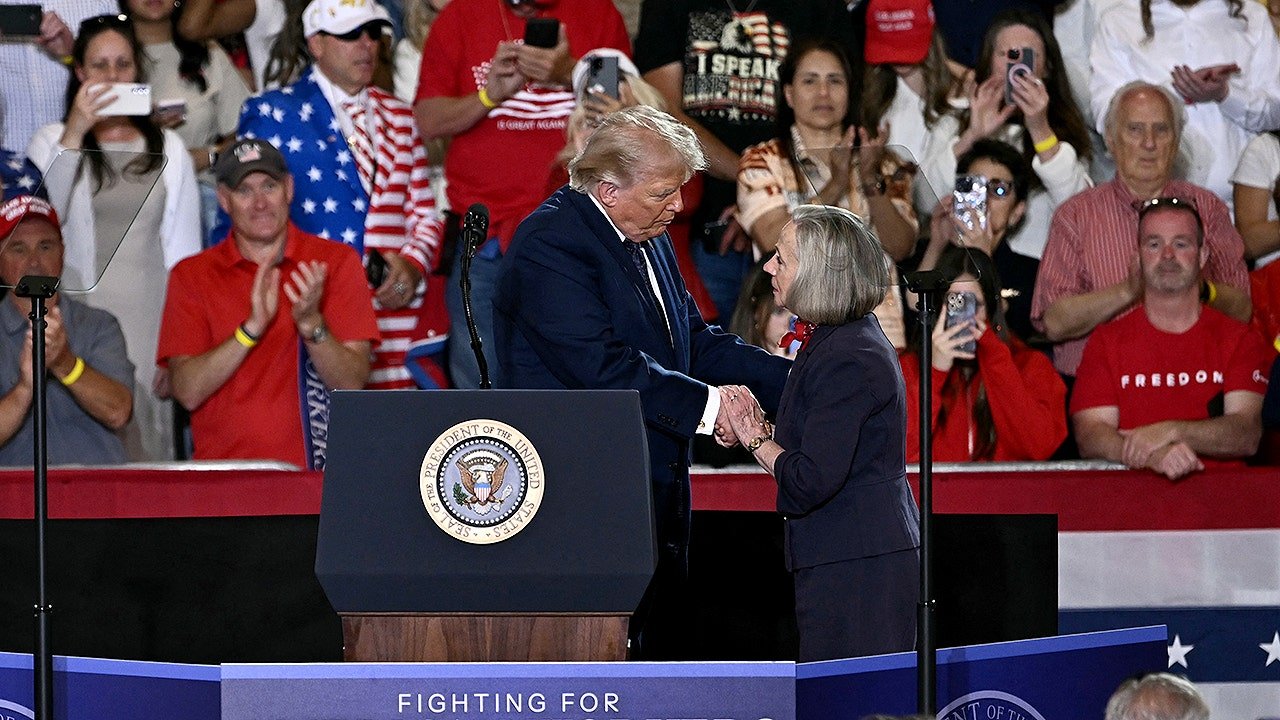
President Donald Trump seen greeting Alison Crowther, the mother of Welles Crowther, known as the ‘Man in the red bandana,’ who the president awarded the highest civilian honor to on Friday, May 22, 2026. (Brendan SMIALOWSKI / AFP via Getty Images)
«It’s the highest award outside of the Congressional Medal of Honor — those are the two biggies and Welles has one of them. I just want to congratulate his great mother in doing a phenomenal job in raising that young man. Boy, what bravery, saved those people and became a legend in a sense, nobody else would have done what he did. So he’s going to be getting the Presidential Medal of Freedom.»
The president subsequently brought up Welles’ mother, Alison Crowther, who addressed the pro-Trump crowd momentarily, describing the award bestowed on her son as a «huge honor.»
«It’s such a beautiful thing that even 25 years later, Welles’ light still shines brightly,» she told the crowd, noting she has traveled the world telling her son’s story to places as far away as Jordan. Alison Crowther remarked that in these travels, when she tells children Welles’ story, «They’re tremendously moved and inspired … to be better people.»
NEW 9/11 MUSEUM EXHIBIT AIMS TO CONNECT YOUNGER AMERICANS TO THE ATTACKS THROUGH POWERFUL ARTIFACTS
Welles, an equities trader who worked on the 104th floor of the South Tower, was in his office when the first aircraft hit the North Tower that morning. He left his mother a voicemail shortly after the towers were struck, letting her know he was okay, but his body was later found amid the rubble.
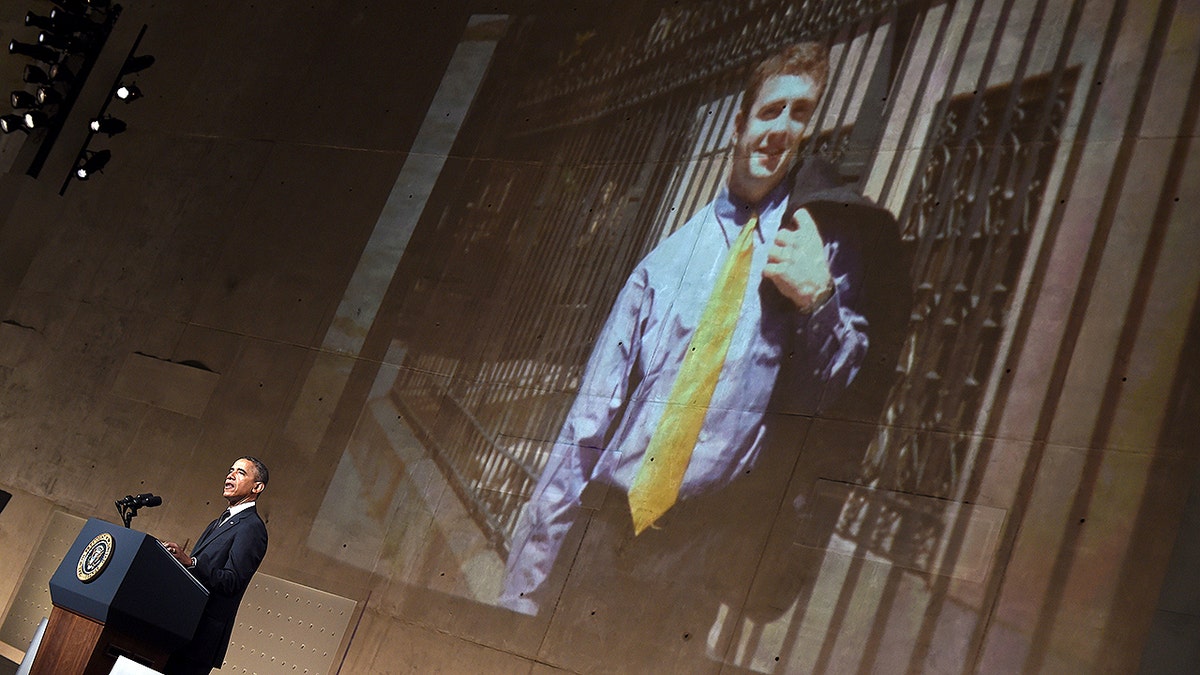
US President Barack Obama speaks at the dedication of the national September 11th Memorial Museum in New York, on May 15, 2014. (JEWEL SAMAD/AFP via Getty Images)
According to the 9/11 Memorial & Museum, Welles «made three trips to the sky lobby, saving as many people as he could, until the burning building collapsed,» with some reports indicating he saved up to 18 lives that day. As he did so, Welles covered his nose and mouth with a red bandana he kept at his desk.
That red bandana is currently displayed at the 9/11 museum in New York City. The Tunnels to Towers Foundation, a nonprofit that supports first responders and their families, including those who became victims after 9/11, said Welles always kept a red bandana at his desk.
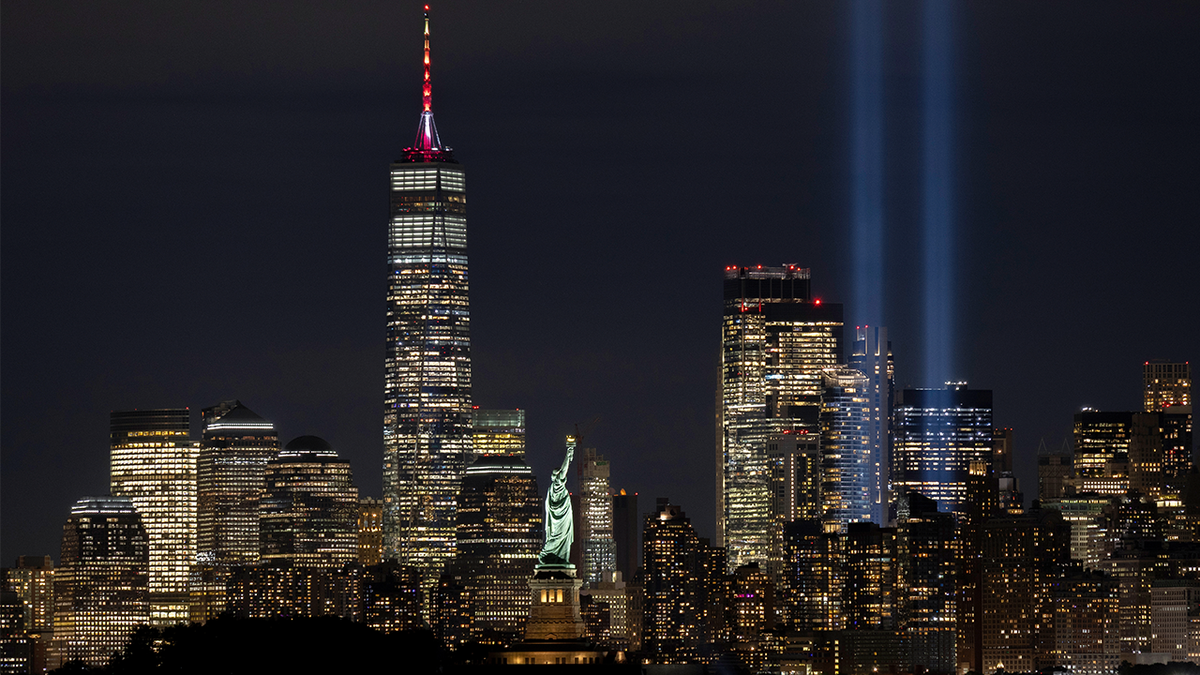
The Tribute in Light is illuminated above the skyline of lower Manhattan and One World Trade Center behind the Statue of Liberty ahead of the 24th anniversary of the 9/11 attacks in New York City on September 10, 2025, as seen from Jersey City, New Jersey. (Gary Hershorn/Getty Images)
CLICK HERE TO DOWNLOAD THE FOX NEWS APP
The foundation recounted how, when he was asked why he always carried the red bandana, Welles replied: «With this red bandana, I’m going to change the world.» His father, the foundation said, told Welles to always carry a red bandana on him for «messy jobs.»
«People can live 100 years and not have the compassion, the wherewithal to do what he did,» a survivor rescued by Crowther has said.
september 11, heroism, tunnel to towers steel across america, donald trump, terrorism








INTERNACIONAL
Inside Fauci’s private diary: What he wrote about Trump, TV personalities and celebrities
NEWYou can now listen to Fox News articles!
Newly released diary entries by Dr. Anthony Fauci offer an unfiltered look at what the nation’s top infectious disease expert really thought of the politicians, television personalities and celebrities who filled his orbit during the COVID-19 pandemic.
Released by Senate Homeland Security Committee Chairman Rand Paul, R-Ky., the diaries chronicle Fauci’s day-to-day role during the COVID-19 pandemic through meetings, phone calls and personal observations. The release comes days before Fauci is scheduled to testify before the Senate Homeland Security and Governmental Affairs Committee after being subpoenaed by Paul.
The entries feature everyone from President Donald Trump to Julia Roberts, Steph Curry, Larry Ellison and Hunter Biden, offering an unusually personal look at the people who crossed Fauci’s path during the COVID-19 pandemic.
Early entries portray a warm working relationship between Fauci and Trump. Fauci wrote that Trump repeatedly directed questions to him during White House meetings, called him «the smartest person in the world,» told him, «We are counting on you,» and later appeared «enamored» with him as Fauci’s national profile grew.
FAUCI’S NEWLY RELEASED COVID DIARIES REVEAL BIZARRE FIXATION ON FAME AS PANDEMIC DEATHS MOUNTED
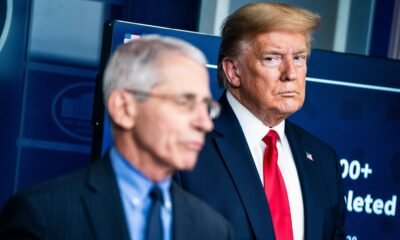
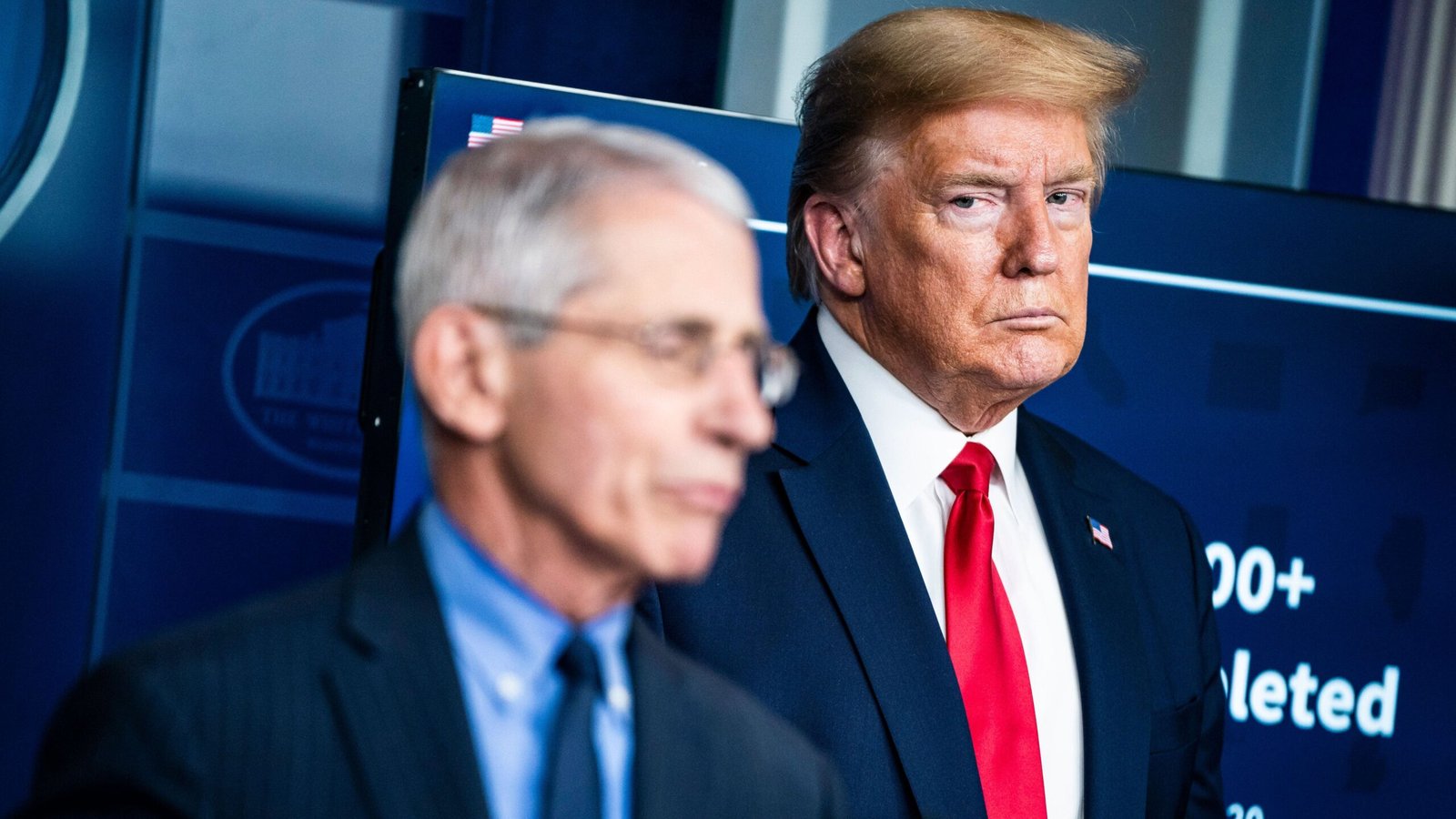
President Donald Trump and Dr. Anthony Fauci are seen during a White House Coronavirus Task Force briefing. Fauci’s newly released diary portrays an initially warm working relationship that later deteriorated as the pandemic unfolded. (Jabin Botsford/The Washington Post via Getty Images)
Fauci’s relationship with White House chief of staff Mark Meadows deteriorated throughout the pandemic. Fauci wrote that Meadows threatened to keep him off television, repeatedly pushed him to soften his public messaging and, in one entry, recounted Meadows «screaming» over his public comments.
Fauci, however, repeatedly described then-White House communications director Alyssa Farah as an ally during internal battles over media appearances. In one May 2020 entry, he wrote that Farah admitted White House staff had been «holding me back,» said the situation had «gotten out of hand» and promised to begin clearing his television requests again.
Not everyone in the administration’s communications operation earned Fauci’s praise. In a July 2, 2020 entry, Fauci called then-HHS Assistant Secretary for Public Affairs Michael Caputo «a con man who is completely full of sh–,» writing that Caputo publicly claimed to support his television appearances while privately blocking them.
Television journalists also became recurring figures in Fauci’s diary. CNN anchor Jake Tapper appears repeatedly, with Fauci documenting phone calls, text exchanges and dinners at the Tappers’ Washington home.
LEGACY MEDIA IGNORES MASSIVE ANTHONY FAUCI DOCUMENT RELEASE ALLEGING HE MISLED CONGRESS ON COVID ORIGINS
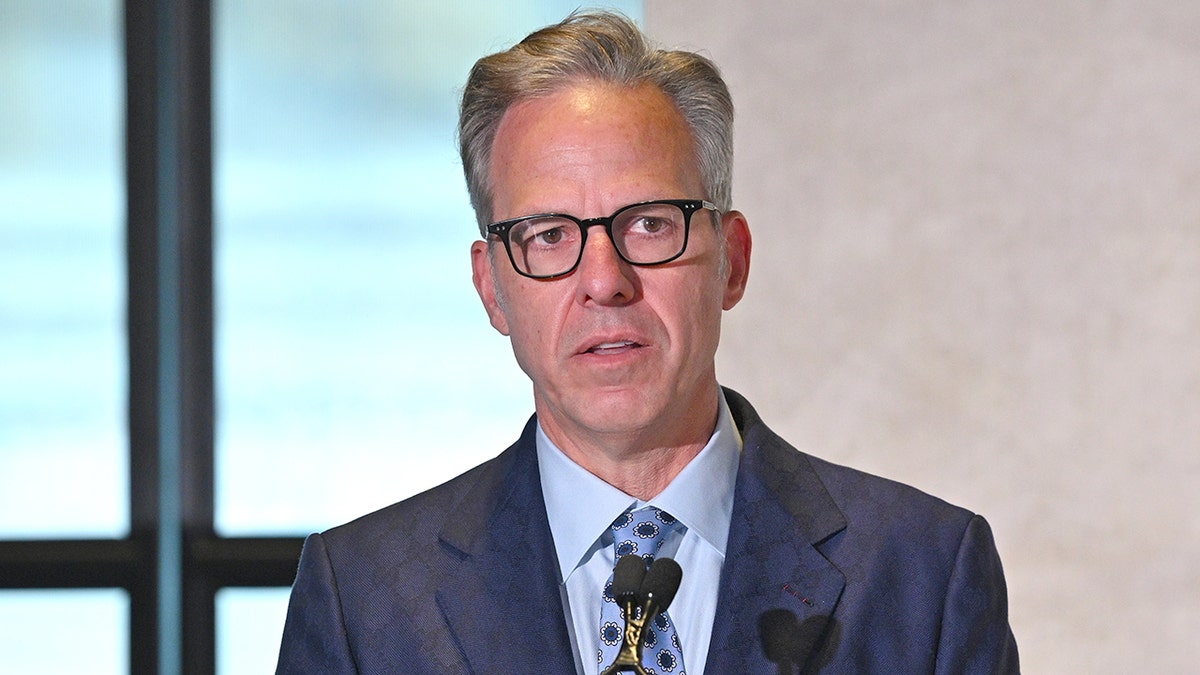
CNN anchor Jake Tapper appears repeatedly in Dr. Anthony Fauci’s newly released COVID-19 diary, which documents phone calls, text exchanges and dinners at Tapper’s Washington home. (Bryan Bedder/Variety/Getty Images)
Fauci wrote that Tapper privately checked to make sure a CNN interview hadn’t caused problems with the White House. When The Atlantic’s Peter Nicholas suggested Fauci had been «humiliated» over a canceled Tapper interview, Fauci fired back in his diary: «F— you, Peter.»
After Fauci’s heated exchange with Ohio Rep. Jim Jordan, Fauci wrote that CNN’s Dana Bash texted him, telling him he was «a better man» and relaying that fellow CNN anchor Wolf Blitzer had joked no one would have blamed Fauci if he had told Jordan to «go f— yourself.»
The following day, Fauci wrote that Bash texted him again, this time pointing him to a Vanity Fair headline mocking Jordan’s performance at the hearing.
The diary also features colorful asides about billionaire Oracle co-founder Larry Ellison, whom Fauci described as «a bit of a loose cannon» while discussing White House efforts to use Oracle technology during the pandemic.
CLICK HERE TO DOWNLOAD THE FOX NEWS APP
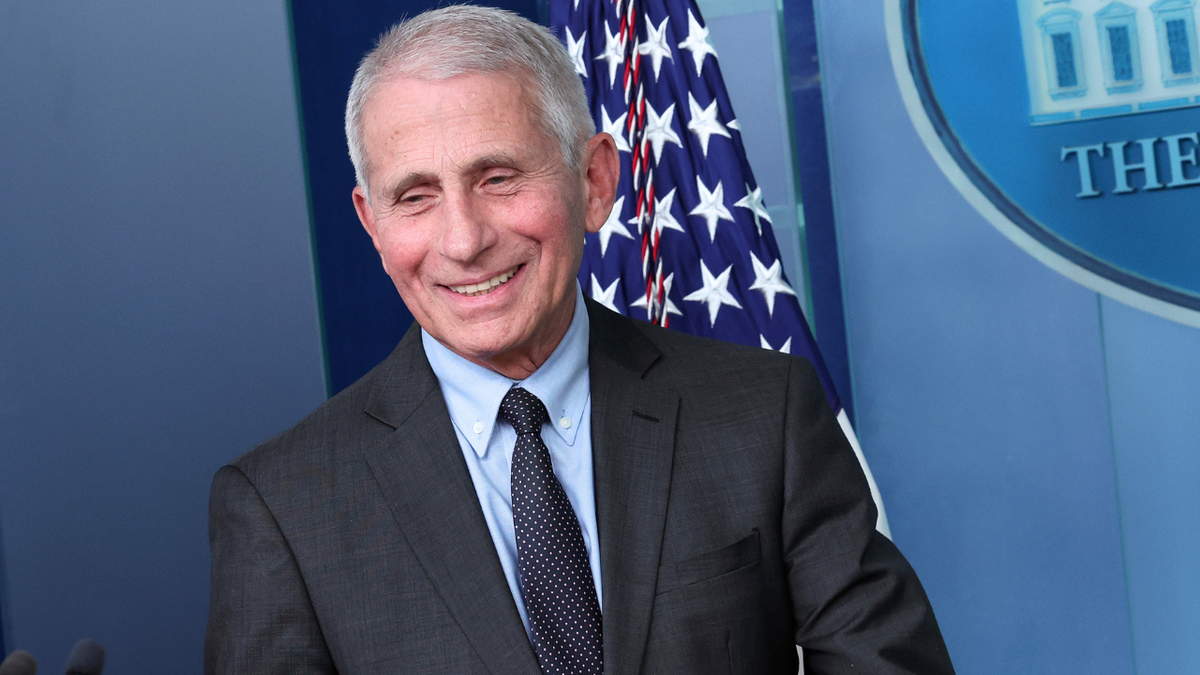
Fauci served as chief medical adviser to President Donald Trump during the COVID-19 pandemic before later continuing in the role under President Joe Biden. (Win McNamee/Getty Images)
Beyond politicians and White House aides, Fauci’s diary reads at times like a Hollywood guest list. Actress Julia Roberts hosted Fauci on Instagram Live, sent him flowers and later presented him with an award, while Vogue editor Anna Wintour, comedian Trevor Noah, NBA star Steph Curry, actors Sean Penn and Matt Damon, and rapper Lil Wayne also make appearances as Fauci documented his growing celebrity during the pandemic.
The diary closes with another unexpected cameo. At the 2022 Kennedy Center Honors, Fauci wrote that he hugged Hunter Biden, who joked the internet «would explode» if someone photographed them together because they were both «being attacked by the far right GOP.»
anthony fauci, white house, donald trump, politics, fox news media, coronavirus
INTERNACIONAL
El precio del petróleo se desplomó más de un 5% tras la pausa en los ataques entre Estados Unidos e Irán
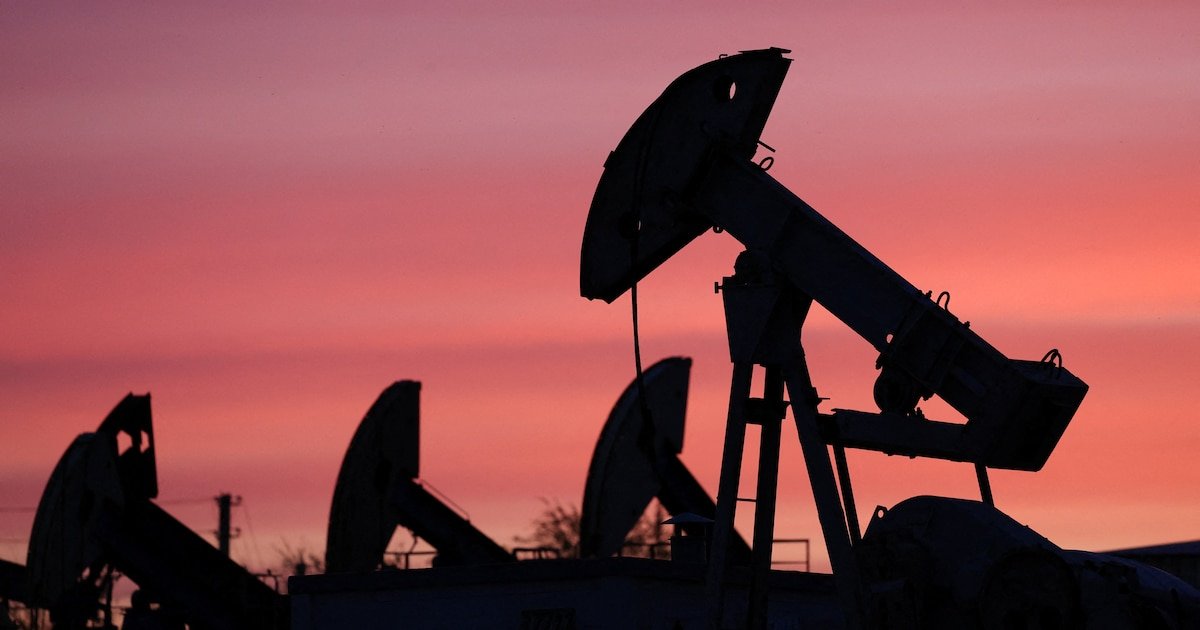
Los precios internacionales del petróleo iniciaron la semana con un marcado descenso después de que los mercados reaccionaran a una disminución temporal de la tensión entre Estados Unidos e Irán. La ausencia de nuevos ataques estadounidenses durante dos noches consecutivas generó expectativas de que ambas partes puedan retomar las negociaciones, lo que redujo la preocupación por una interrupción prolongada del suministro de crudo desde Medio Oriente.
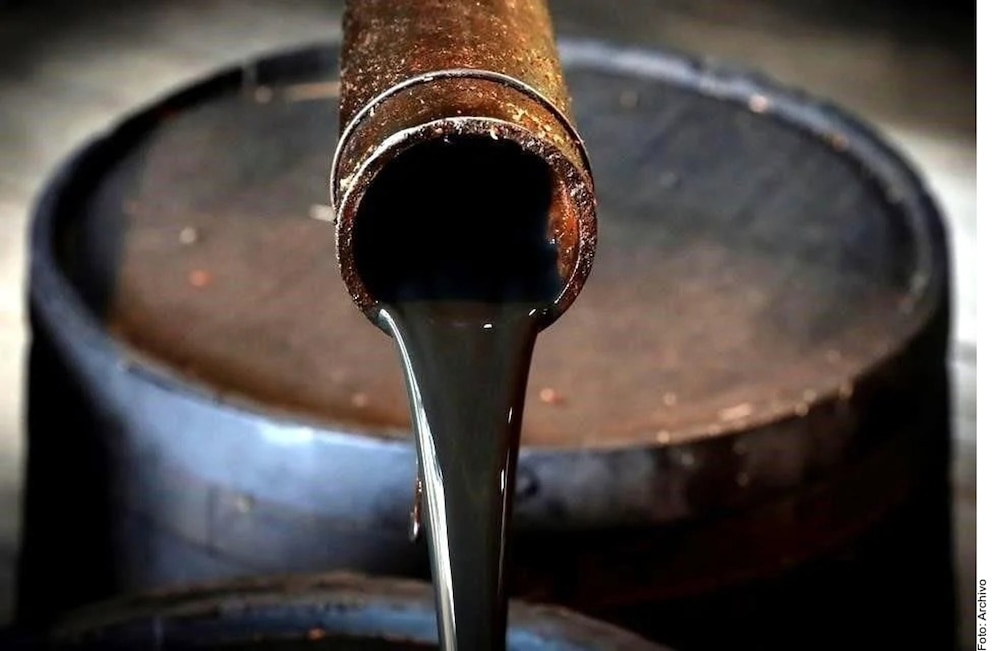
En las primeras operaciones de los mercados asiáticos, el barril de Brent, referencia para buena parte del comercio mundial de petróleo, perdió un 5,58% y se situó en 91,38 dólares. En paralelo, el West Texas Intermediate (WTI), utilizado como referencia en Estados Unidos, descendió un 5,46% hasta los 84,43 dólares. La corrección puso fin al fuerte impulso alcista registrado durante las semanas anteriores, cuando el conflicto elevó el temor a una crisis energética de mayor alcance.
El movimiento del mercado estuvo estrechamente vinculado a la evolución del escenario geopolítico. Durante las últimas dos noches no se registraron nuevos bombardeos estadounidenses sobre Irán, una interrupción que fue interpretada por los operadores financieros como una señal de que aún existe margen para una solución negociada.
El embajador de Estados Unidos ante las Naciones Unidas, Mike Waltz, confirmó esa posibilidad al afirmar que el presidente Donald Trump está dando “un poco de margen” a los contactos diplomáticos con Teherán. No obstante, dejó claro que Washington mantiene abiertas todas las opciones.
“El ejército estadounidense (…) tiene todo lo necesario para llevar a cabo esta campaña con la eficacia que se requiere”, declaró durante una entrevista con Fox News.
El portavoz del ejército iraní, Mohammad Akraminia, aseguró que las operaciones de represalia fueron suspendidas tras el cese de los ataques estadounidenses.
“Estos ataques continuaron hasta hace dos noches, pero durante las dos últimas noches los estadounidenses han cesado sus ataques”, afirmó, al tiempo que agregó que, debido a que la estrategia iraní había sido responder a las ofensivas estadounidenses, “también hemos suspendido nuestras operaciones de represalia”.
La evolución del conflicto tiene un impacto directo sobre el mercado energético porque gran parte de las exportaciones mundiales de hidrocarburos dependen del estrecho de Ormuz. Ese corredor marítimo conecta el Golfo Pérsico con el océano Índico y, en condiciones normales, permite el tránsito de aproximadamente una quinta parte del petróleo y del gas natural licuado que se consume diariamente en el mundo.

Las tensiones militares en esa zona habían disparado las primas de riesgo durante las últimas semanas debido al temor de interrupciones en el transporte marítimo. La posibilidad de una disminución de las hostilidades alimentó la expectativa de que la navegación pueda normalizarse progresivamente, reduciendo así la presión sobre la oferta global de petróleo.
Sin embargo, el mercado continúa atento a otros factores que podrían alterar el equilibrio del suministro. Entre ellos figura el bloqueo marítimo anunciado por los rebeldes hutíes de Yemen contra puertos de Arabia Saudita, una medida que añade incertidumbre sobre las rutas comerciales de la región y mantiene elevado el nivel de vigilancia entre los operadores.
La caída de este lunes contrasta con la fuerte escalada registrada durante julio. A medida que aumentaban los enfrentamientos entre Washington y Teherán, el petróleo acumuló importantes ganancias impulsado por el temor a una expansión del conflicto. Antes de esta nueva escalada, un entendimiento alcanzado entre ambos países el 17 de junio había favorecido un descenso de las cotizaciones, con el Brent negociándose apenas por encima de los 70 dólares.
Aunque la pausa en las operaciones militares alivió momentáneamente la presión sobre los mercados energéticos, la evolución de las negociaciones entre Washington y Teherán seguirá siendo el principal factor para determinar el comportamiento del precio del petróleo en los próximos días.
Middle East
INTERNACIONAL
Europe will one day thank Trump for ‘shaking’ it out of its ‘complacency’: UK defense chief
Trump says NATO allies had a ‘bad moment’ for not helping in potential Iran war
President Donald Trump, speaking at the NATO Summit in Ankara, Turkey, criticizes Spain, Italy and the UK for not offering immediate support to the U.S. in a potential conflict with Iran. Trump describes their response as a ‘bad moment’ but later emphasizes the ‘tremendous unification’ among NATO members, expressing mutual love and respect.
NEWYou can now listen to Fox News articles!
The U.K.’s new defense secretary said Sunday that Europe will ultimately thank President Donald Trump for waking up the continent from its complacency and forcing NATO allies to take responsibility for their own security.
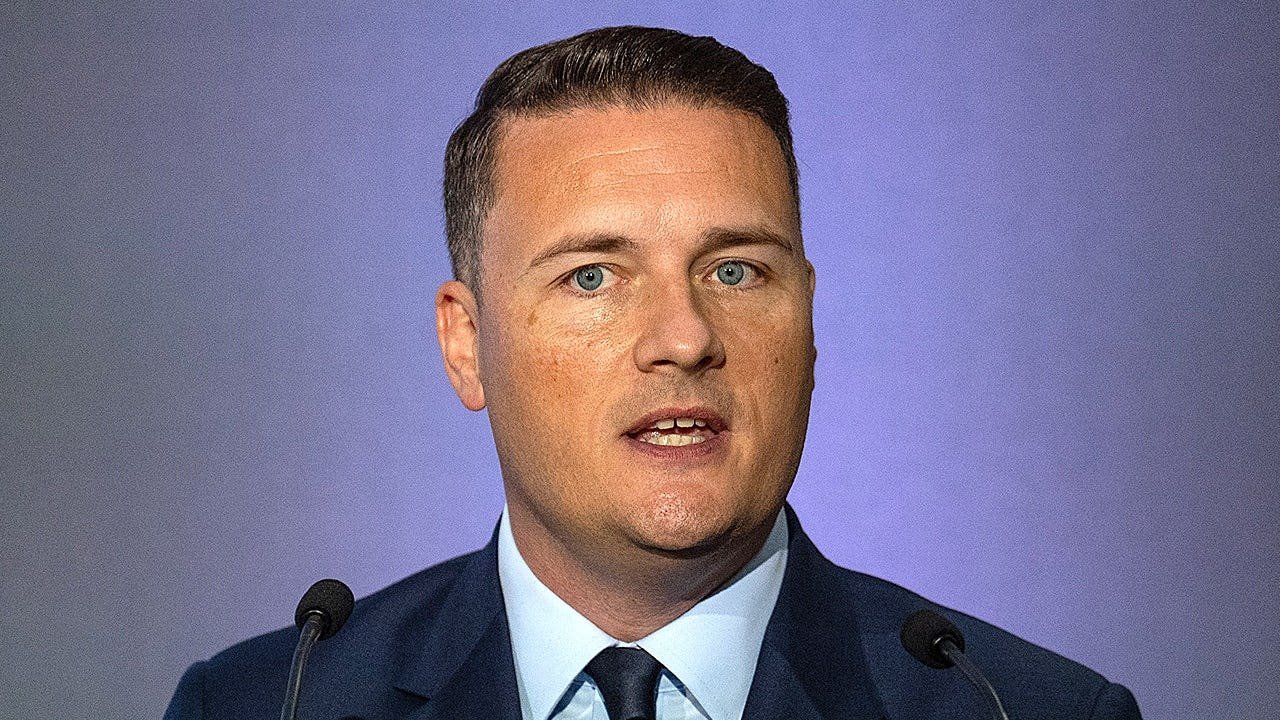
Speaking on Sky News, Wes Streeting also signaled a rebalancing of the U.K. government’s transatlantic stance under new Prime Minister Andy Burnham while stating that Britain continued to refuse to back U.S. offensive military action against Iran.
«The first thing you do is you don’t suck up, and… my impression is President Trump, his administration… that’s not what they’re looking for, actually,» Streeting told Sky News anchor Trevor Phillips, stating his perspective on Washington.
«He’s a straight talker. He says what he means and means what he says.»
ANDY BURNHAM TAKES OVER AS UK PRIME MINISTER, CALLS FOR ‘NEW POLITICAL MODEL’
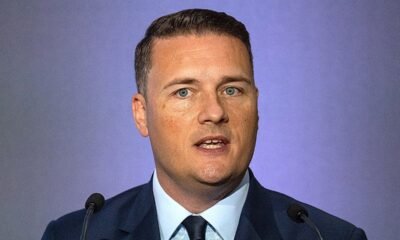
British Secretary of State for Defence Wes Streeting said that Europe will one day thank President Donald Trump for shaking Europe out of its strategic complacency and forcing NATO allies to shoulder more of their own defense. (Carl Court/Getty Images)
«I don’t know him, but I do trust the United States,» he added.
Streeting took charge of the U.K. Ministry of Defence on July 20, the same day Burnham became prime minister.
«I’ve not even been in the job a week. I’ve always been aware that the alliance between the U.S. and the U.K. is unlike any in the world, and of course, that’s historic, it’s cultural, it’s political,» Streeting said. «It’s driven by self-interest as well as mutual shared interests.»
During his first week in office, Streeting also had a call with Secretary of War Pete Hegseth to discuss maritime security in the Strait of Hormuz and broader NATO commitments.
«But just in my first week as defense secretary, I have had a unique insight into just how close and integral that relationship is when it comes to defense and security,» Streeting explained.
UK DEFENSE SHORTFALLS HIGHLIGHTED AS BRITAIN AVOIDS IRAN OFFENSIVE ROLE AMID TRUMP CRITICISM
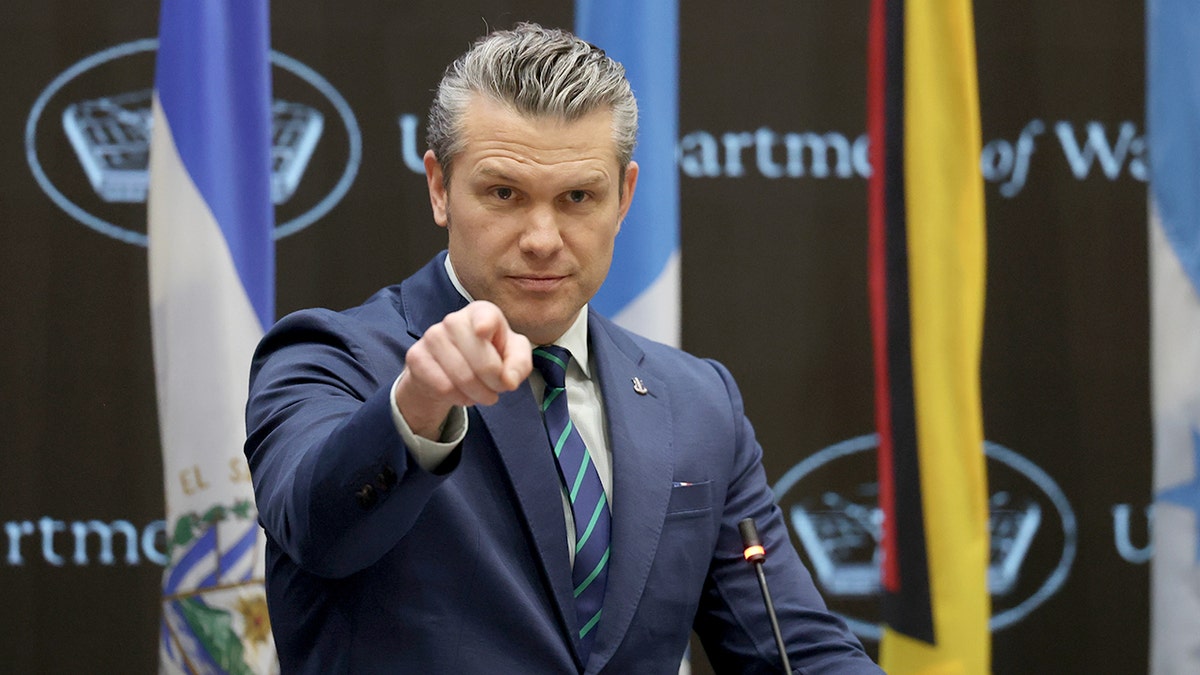
Streeting said he was «very keen and pleased» to meet with his American counterpart, War Secretary Pete Hegseth. (Joe Raedle/Getty Images)
«And it’s one of the reasons why I was very keen and pleased in the first week to meet with my U.S. counterpart, Pete Hegseth, where I was clear that we’ve not supported offensive action in Iran, and we won’t support offensive action in Iran,» he continued. «But there are plenty of things that we can and should do together when it comes to securing the Strait of Hormuz, in making sure that Iran doesn’t develop nuclear weapons, in terms of investing in our capability and NATO’s capability.»
Trump has long criticized European NATO members for failing to spend enough on defense, arguing they should shoulder a greater share of the alliance’s security burden.
WHO IS ANDY BURNHAM? THE TRUMP CRITIC SET TO BECOME THE UK’S NEXT PRIME MINISTER
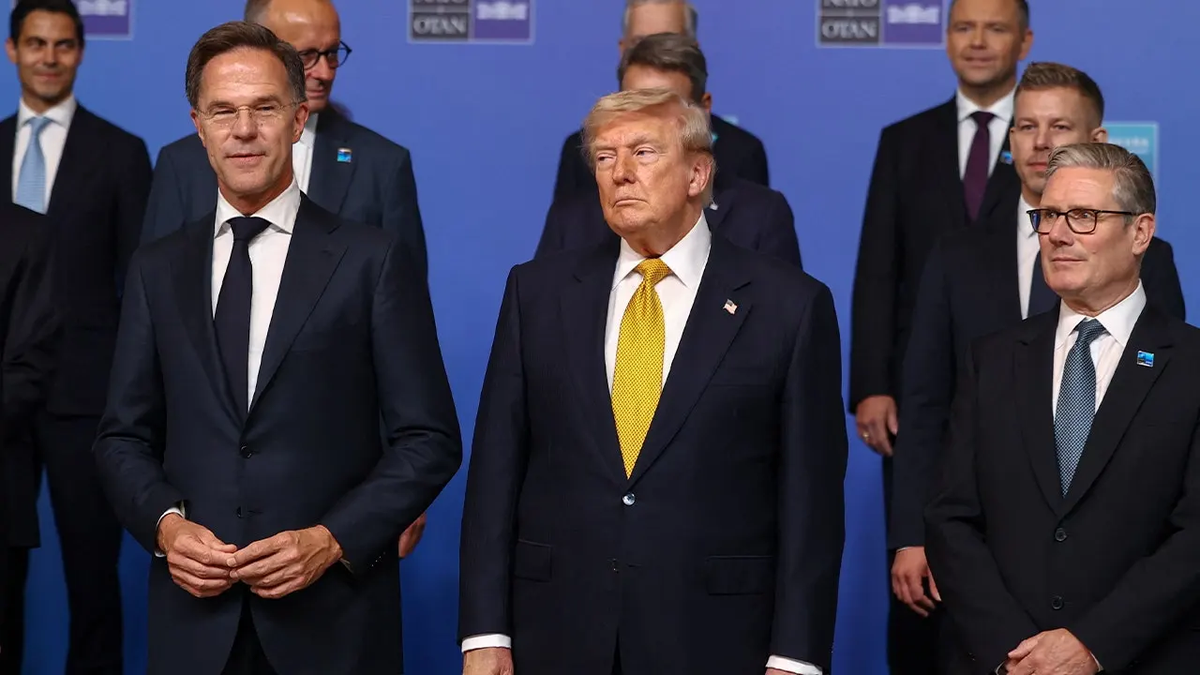
«And one of the things I’d say about President Trump specifically… we don’t always like what he says. We don’t always like his methods,» Streeting said. (Stoyan Nenov/Reuters)
At July’s NATO summit in Turkey, Trump pressed allies to follow through on their commitments to increase defense spending.
«And one of the things I’d say about President Trump specifically: we don’t always like what he says, we don’t always like his methods,» Streeting said. «But I genuinely think when this period of history is written, Europe will thank President Trump for shaking us out of our complacency and forcing us to stand on our own two feet and end the period of overreliance on the United States for defense because what he said about Europe isn’t unique to President Trump, the MAGA movement or the Republican Party.»
CLICK HERE TO DOWNLOAD THE FOX NEWS APP
«This has been a longstanding grain of U.S. frustration with Europe under Democratic and Republican presidents, and in the world we live in, it is right that we can act to secure ourselves,» he added.
Streeting also said the U.K. could «act with our allies here in Europe and, of course, work with the United States without being overly dependent to the extent that NATO and Europe has been.»
Fox News Digital has reached out to 10 Downing Street for further comment.
united kingdom, andy burnham, donald trump, pentagon, iran

Las guerras internacionales impulsaron los precios del trigo y la soja a sus máximos de los últimos dos años

Inside Fauci’s private diary: What he wrote about Trump, TV personalities and celebrities

“Lo sacaron de contexto”: Milei respaldó al vocero Ravier tras la polémica por sus dichos sobre el dólar

Beccacece y su llamativa defensa por el Mundial de Ecuador con ¡la cantidad de tiros en el palo!

Ariel Vallejo, dueño de Sur Finanzas: “No pongo las manos en el fuego por Tapia ni por nadie en cuestiones judiciales”

Caro Trippar habló tras contar que tiene cáncer: “Creí que me iba a morir, pero después de escucharlas veo esperanza”

Jorge Berredo, general retirado de las FFAA, asumió como Secretario de Seguridad en San Isidro

Sin la anestesia mundialista, aflora la crisis del conurbano y Milei necesita reconectar con lo popular

Senado: Bullrich y Sturzenegger cierran filas para tratar de avanzar con la extranjerización de tierras
Marc Stanley destacó el potencial de Vaca Muerta para “estabilizar la economía” y evitó hablar de política interna

 ECONOMIA2 días ago
Vocero de Milei dijo que un dólar a $1.800 es «posible» y la City alerta por fin de la paz cambiaria
- ECONOMIA2 días ago
Polémica por el proyecto que busca desregular los planes de ahorro de autos 0 km: qué podría cambiar
- INTERNACIONAL3 días ago
Panorama internacional: Brasil, una batalla electoral no solo de los brasileños