INTERNACIONAL
FTC alleges influential transgender health organization misled parents about safety of youth treatments

Advocacy group calls for FTC probe into APA over transgender care for kids
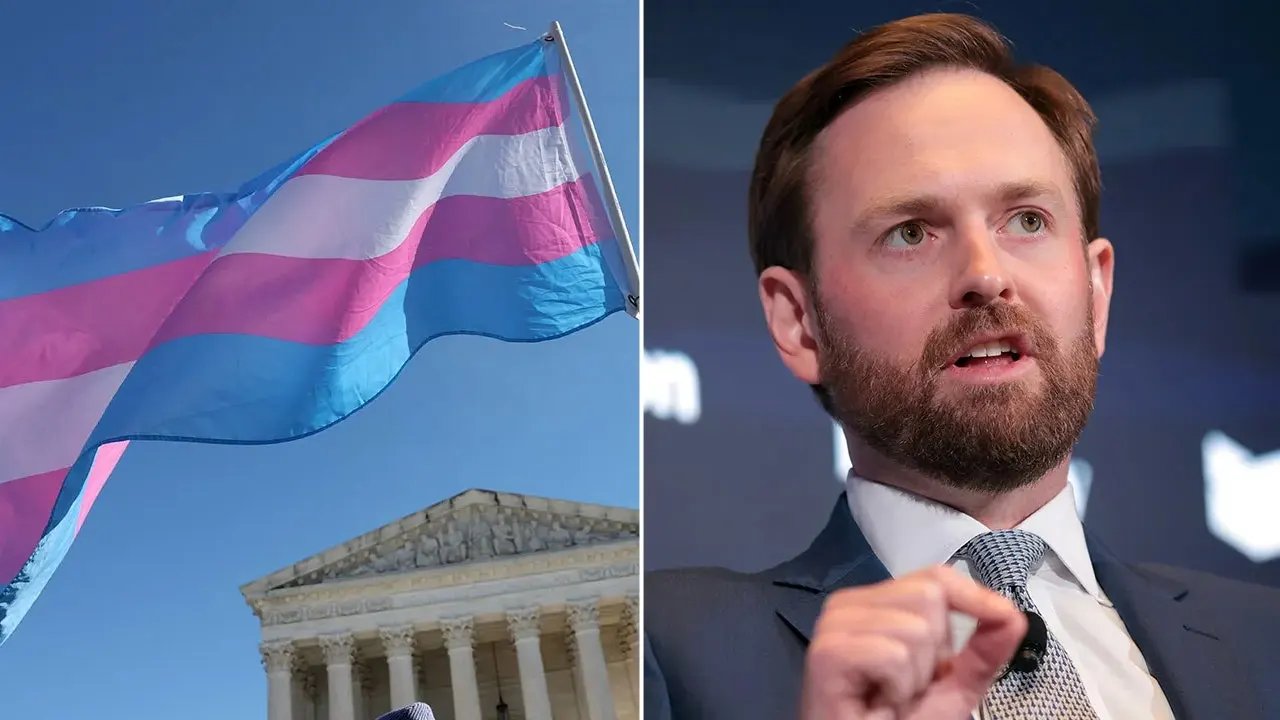
Dr. Kurt Miceli, Chief Medical Officer of «Do No Harm,» raises concerns over the American Psychological Association’s (APA) contradictory messages regarding gender-affirming care for children and adolescents. His advocacy group calls for a Federal Trade Commission probe into the APA’s alleged promotion of sex changes for minors, highlighting the organization’s conflicting statements made in 2024 and 2025.
NEWYou can now listen to Fox News articles!
The Federal Trade Commission (FTC) and four Republican-led states sued the World Professional Association for Transgender Health (WPATH) on Wednesday, alleging the influential medical organization misled parents and doctors about the safety, effectiveness and necessity of transgender medical treatments for minors.
The lawsuit alleges WPATH, whose standards of care are widely used by physicians treating patients with gender dysphoria, made deceptive claims about puberty blockers, cross-sex hormones and sex change surgeries while failing to adequately disclose potential risks and side effects.
«Parents have a right to make informed decisions about their children’s health,» FTC Chairman Andrew Ferguson wrote on X. «The FTC will not allow parents and children to be deceived by medical organizations and providers who are prioritizing profit over children’s health and safety.»
‘TRANSGENDER MADNESS’ UNDER FIRE AFTER CONGRESS LETS TAXPAYER FUNDING BAN LAPSE
Federal Trade Commission Chairman Andrew Ferguson speaks during the Semafor World Economy Summit in Washington, D.C., in April. On Wednesday, the FTC sued the World Professional Association for Transgender Health, alleging the organization misled parents and doctors about transgender medical treatments for minors. (Kayla Bartkowski/Getty Images, File)
According to the complaint, WPATH removed age-based recommendations for certain transgender procedures from its Standards of Care. The FTC also alleges the organization promoted treatments that were not adequately supported by evidence regarding their safety and effectiveness.
The lawsuit, filed alongside Alaska, Iowa, Nebraska and Texas, marks the latest effort by President Donald Trump’s administration to scrutinize medical interventions for transgender minors.
WPATH previously sued to block an FTC investigation into the organization, arguing the agency violated its First Amendment rights. A federal judge in May temporarily blocked the probe.
SEN HAWLEY WARNS IT WOULD BE ‘UNCONSCIONABLE’ IF BILLIONS OF TAXPAYER FUNDS FLOW TO TRANS KIDS’ SEX CHANGES
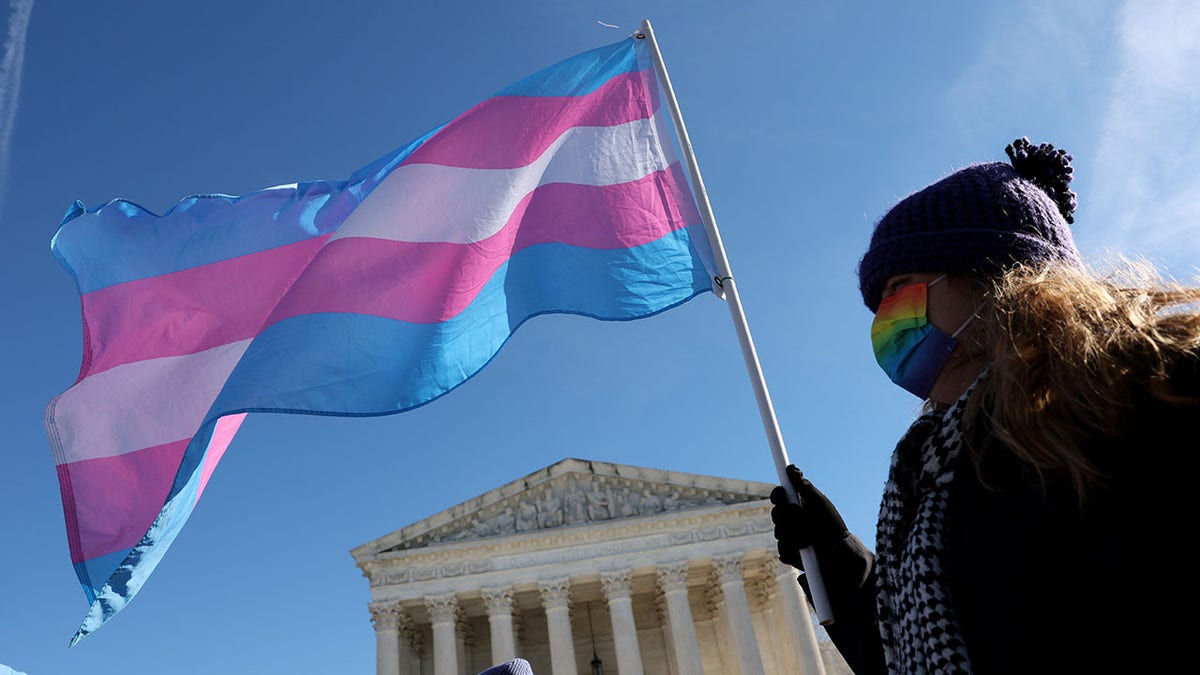
A transgender rights supporter participates in a rally outside the U.S. Supreme Court during protests on Capitol Hill. (Getty Images, File)
WPATH rejected the allegations and said its standards are intended to support individualized patient care. In a statement provided to The Associated Press, the organization said its guidelines are based on individualized treatment rather than a «one-size-fits-all» approach.
Fox News Digital reached out to WPATH for additional comment but did not immediately receive a response.
«WPATH is in a strong position to prove that the FTC is acting out of pure retaliation as part of the federal government’s relentless and targeted campaign to undermine gender-affirming care by attacking the First Amendment rights and the independence of professional medical organizations,» the group said in a statement to the AP.
CLICK HERE TO DOWNLOAD THE FOX NEWS APP
The lawsuit comes amid a broader national debate over puberty blockers, hormone therapies and sex change surgeries for minors.
Supporters argue the treatments can be medically necessary for some patients, while critics contend the long-term risks are not fully understood and that children may be unable to provide informed consent.
health care executive, health care, surgery, childrens health, republicans, parents, politics











INTERNACIONAL
From #MeToo to Maine? Dem experts weigh in on how Platner’s rise tests party standards: ‘Pulling the plug’
NEWYou can now listen to Fox News articles!
Maine Democratic Senate candidate Graham Platner’s scandal-plagued rise is causing rifts within the Democratic Party, and several Democratic strategists who spoke to Fox News Digital warned of the long-term implications of the party embracing him.
«Anyone paying attention to the intersection of culture and politics knows that my party pushed #MeToo well beyond the bounds of common sense long before Graham Platner’s rise,» Michael LaRosa, former press secretary to first lady Jill Biden, said about whether the #MeToo movement rings hollow within the party now that top Democrats have rallied behind Platner.
«But the reflexive partisan instinct to circle the wagons around him is the political equivalent of pulling the plug on whatever credibility Democrats had left as the self-appointed champions of women.»
«If the standards disappear the moment they’re politically inconvenient, they were never standards at all.»
JONATHAN TURLEY: WHEN JOURNALISTS WHINE ABOUT #METOO, THEY DON’T MEAN PLATNER, TOO
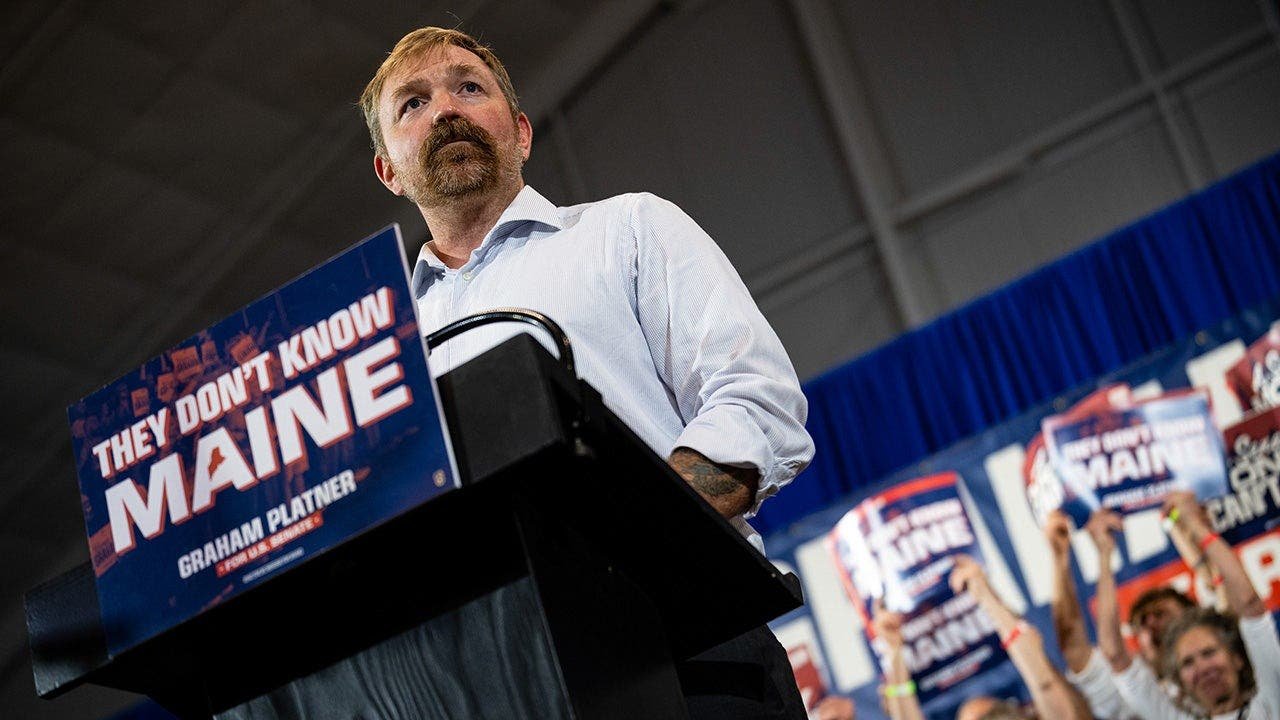
Graham Platner, Democratic Senate candidate for Maine, speaks at a primary election night event at the Blue Hill YMCA in Blue Hill, Maine, on June 9, 2026. Platner won the party’s Senate primary after a campaign marked by accusations of past misbehavior and voter concerns. (Graeme Sloan/Bloomberg via Getty Images)
Former adviser to President Bill Clinton and Democratic strategist Doug Schoen argued that Democrats are choosing power and Senate control over serious concerns about Platner’s past, and that could hurt them in 2028.
«In the short term, for some Democrats, those on the progressive left, it’s the right decision, a practical decision,» Schoen said. «To me, it’s a very sad one and certainly undermines the moral legitimacy of the Democratic Party as a whole.»
«Certainly, I think they’ve left themselves vulnerable vis-à-vis Platner’s extreme left-wing positions, his toxicity as a person, the issues with relationships, arguably lying about his Nazi tattoo,» Schoen said. «I certainly think this creates issues for the Democrats where none needed to exist.»
Platner has denied allegations from former girlfriends who told The New York Times that he discussed rape fantasies, drank heavily and had violent episodes, while also facing mounting criticism over sexually explicit messages allegedly sent to women shortly after getting married, a Nazi-linked tattoo and online comments mocking a Purple Heart veteran.
Despite new controversies emerging days before Maine’s Democratic Senate primary, Graham Platner won with more primary votes than any Democrat in state history.
Democratic strategist Mally Smith told Fox News Digital he doesn’t believe that the Platner campaign is necessarily the «death» of the #MeToo movement, but that Democrats who have «more fully embraced» his campaign are «going to have some trouble when it comes to making the case on the Epstein files or any general claims of believe all women.»
«So maybe Democrats don’t have the advantage on the issue anymore, but I would say that it’s not like Republicans have an advantage either,» Smith added. «I think voters are just gonna say, well, both parties are willing to live with the baggage of their candidates.»
Looking ahead to 2028, LaRosa said that Democrats could be haunted by their ties to Platner for years.
«If he wins, you’ll still have to explain why you stood with him,» LaRosa said. «If he loses, you’ll have nothing to show for it except the association. Either way, he’s someone you’ll be answering for.»
Smith explained Platner’s rise by citing voters that are «unhappy with the status quo» to the point where there’s an «element, whether it’s Republican voters supporting President Donald Trump or Democratic voters supporting Graham Platner in Maine, where they say these elites attacking him is actually evidence that he’s on the right track.»
For others, the controversies are still too big for voters to ignore. LaRosa said that voters «reward guts, not willful blindness» when judging a candidate with Nazi imagery tattooed on his chest, adding that the Democratic leaders are lacking that same «courage.»
DEMOCRATS BREAK WITH SCANDAL-PLAGUED GRAHAM PLATNER, WARN OF ‘CIVIL WAR’ IN PARTY
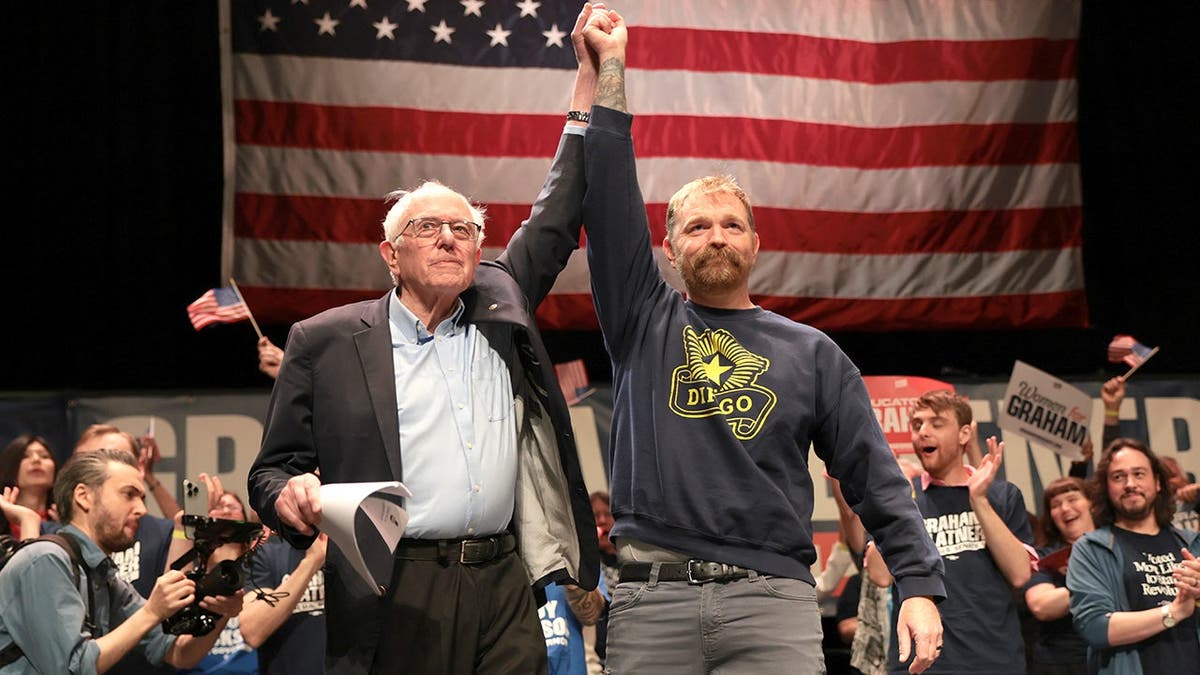
Sen. Bernie Sanders, I-Vt., and Democratic U.S. Senate candidate Graham Platner stood together during a «Fighting Oligarchy» tour stop at the Collins Center for the Arts on the University of Maine campus on May 24, 2026, in Orono, Maine. (Joe Raedle/Getty Images)
«We look pretty vapid, unprincipled and hypocritical to look the other way when it comes to any candidate accused of any level of violence against women just because it is politically inconvenient,» LaRosa said. «Never again should voters trust us or take our moral arguments seriously. Principles only mean something when they’re applied across the board, even when it’s politically uncomfortable.»
For over a decade, Democrats have used the «Nazi» attack line against President Donald Trump, but have nevertheless mostly rallied around Platner, despite the Nazi imagery tattooed on his body for 18 years.
«They’re seeing all of these lunatics, like the guy in Maine…for ten years they’ve been calling me a ‘Nazi,’ and now they have a Nazi running. He’s got a tattoo on him,» President Trump said during a Thursday news conference.
Schoen argued Democrats have now weakened their case against Republican scandals, pointing to Texas Attorney General and Senate candidate Ken Paxton.
«For every criticism that they level at Ken Paxton in Texas, they will be greeted by criticism of Graham Platner in Maine, which to me makes their job more difficult,» Schoen said.
Smith made a similar point, saying both parties are dealing with candidates causing «their own version of heartburn» that can be used against them politically.
Trump-backed Paxton prevailed in the primary against incumbent Sen. John Cornyn, R-Texas, after he was impeached by the Texas House, a federal investigation into allegations that he abused his office to aid a donor and cheating allegations.
LaRosa said the «uncomfortable truth» is that Democrats have reduced Platner to a simple political equation, viewing him as «just another number, another vote, another seat, another data point on a spreadsheet» instead of focusing on whether he is the right person for the job.
PLATNER CONTROVERSIES FUEL SPECULATION ABOUT LITTLE-KNOWN MAINE BALLOT REPLACEMENT PROVISION
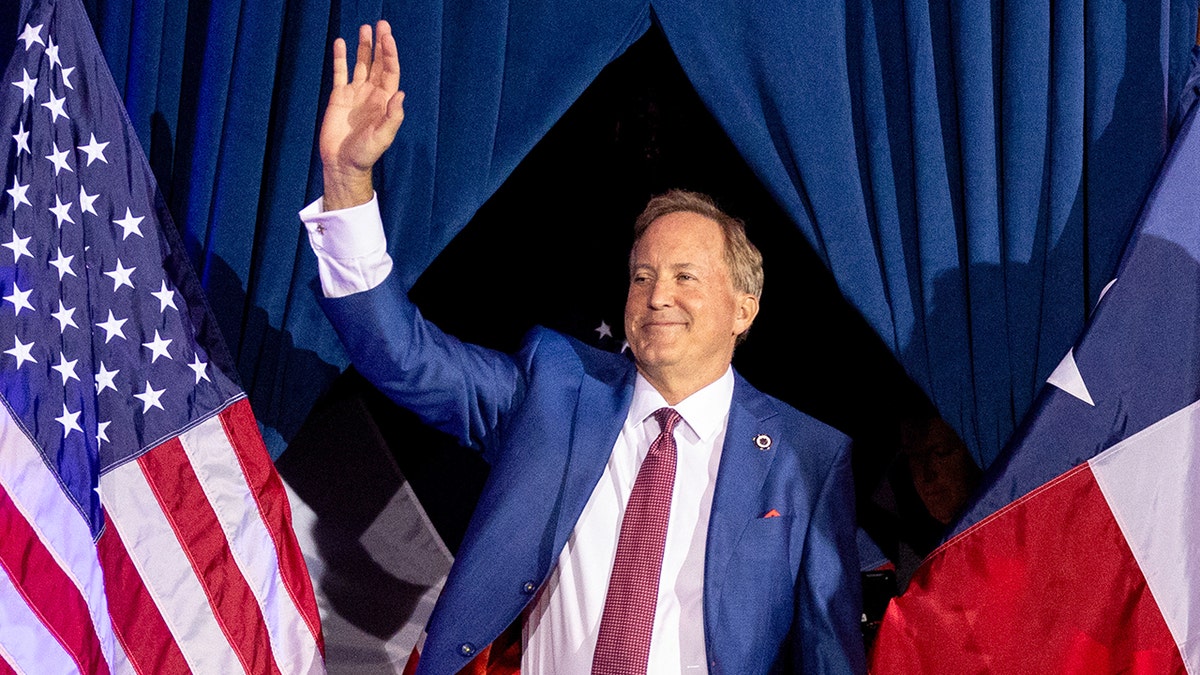
Texas Attorney General Ken Paxton speaks during a runoff election night event in Plano, Texas, on May 26, 2026. (Antranik Tavitian/Bloomberg via Getty Images)
November may provide a clearer test, Schoen said. He said Platner’s victory does not mean he shed his political baggage, adding Platner has left the party to grapple with problems «where none needed to exist.»
«With Graham Platner, there are literally immediate, multiple sources of concern that are ongoing, and it isn’t clear to me that he will necessarily survive and succeed,» Schoen said.
CLICK HERE TO DOWNLOAD THE FOX NEWS APP
Ultimately, Smith said that Maine voters will be focused on the economy and that concerns about Platner will likely only be a major issue within the state rather than nationwide.
«Voters are unhappy with the economy, and I think most people are going to be voting on whether they believe the economy is better than when Trump was inaugurated, and the answer to that is a resounding no,» Smith said. «So I think as much as news stations like to talk about Graham Platner and what this means for Democrats overall, or vice versa, Ken Paxton and Republicans overall, most voters are not going to think about Graham Platner’s Nazi tattoo outside of Maine. So I think this is more of a localized Maine problem.»
Fox News Digital reached out to the Platner campaign for comment.
democrats elections, the clintons, graham platner, primary results, republicans, maine, democratic party
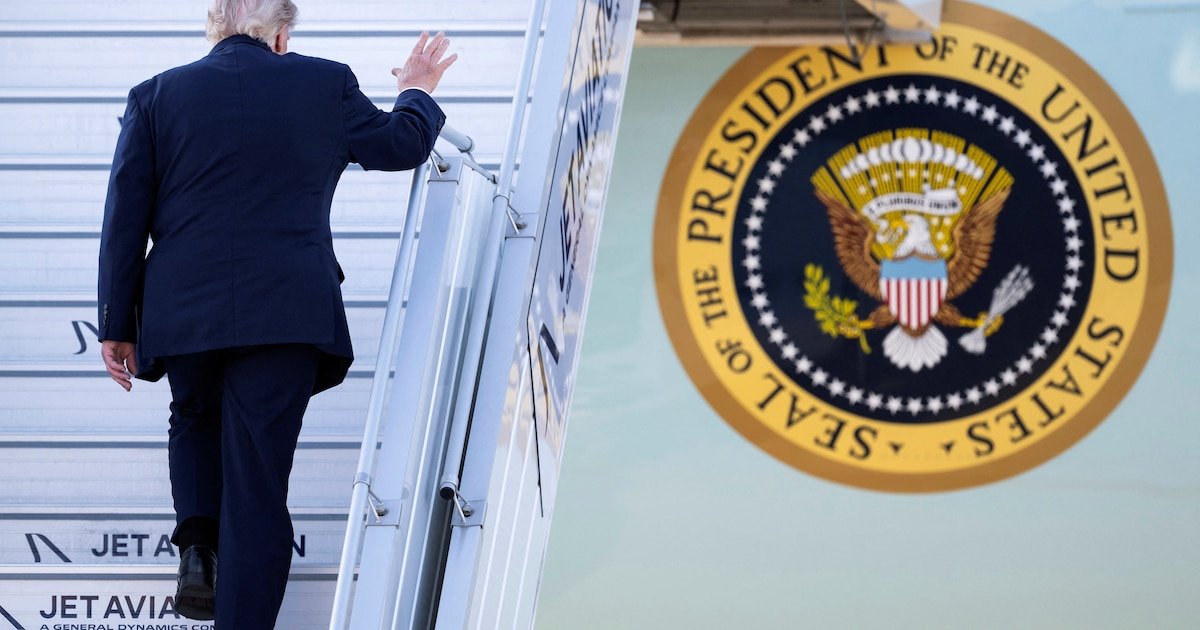
Todas las miradas se dirigían a Bürgenstock, el histórico complejo hotelero sobre el lago de Lucerna, donde Audrey Hepburn se casó y donde Sean Connery protagonizó su heroica lucha contra el malvado Goldfinger. En ese ressort exclusivo propiedad de Katara Hospitality, el fondo soberano de Qatar, se había celebrado en junio de 2024 la Cumbre por la Paz en Ucrania, un esforzado intento de 90 países (sin China, ni Rusia), que se quedó en un mero documento de apoyo. Y debía ser aquí, en ese hotel de lujo suspendido en un acantilado de 500 metros, donde estaba previsto celebrar la ceremonia oficial de firma física del MOU, el memorando de entendimiento entre Estados Unidos e Irán, que dará por concluida la guerra iniciada hace 110 días con la Operación Fúria Épica. Sin embargo, por la premura de la situación, por la repentina influencia de Macrón o, más bien por el amor desatado de Trump por la majestuosidad y la grandilocuencia, al final el presidente norteamericano ha estampado su firma del MOU en el Palacio de Versailles, el mismo lugar donde, en 1783, Gran Bretaña, Francia y España pusieron fin a la Guerra de independencia de Estados Unidos, y donde se firmó en 1919 el tratado de paz de la primera guerra mundial. Rodeado, pues, de tanta carga històrica, y con Petain rondando en el escenario, Trump ha dado por acabada la guerra.
Silenciados los misiles, es el tiempo de analizar un acuerdo que se larbó con demesiada premura por parte de Trump, azuzado por sus errores estratégicos y sus intereses internos. Y el análisis provisional dispara muchas alarmas. La primera alarma arrastra al resto: ¿El acuerdo de Donald Trump con Irán será peor que el pésimo acuerdo nuclear (JCPOA) que firmó Barack Obama en 2015 en el Palais Coburg de Viena? Recordemos sus consecuencias. De entrada, el acuerdo no impidió la carrera nuclear iraní, solo la congeló supuestamente, pero con unas restricciones tan severas a las inspecciones de la OIEA, que sirvieron para que el régimen llegara a acumular 9.000 quilos de uranio enriquecido en diferentes niveles de pureza, 400 de ellos enriquecido al 60%, suficientes para fabricar 10 bombas nucleares. Además, Irán inyectó más de 100.000 millones en activos liberados que sirvieron para rearmar a sus proxys, desde Hezbollah, hasta Hamás y los houthis, y desestabilizar a Oriente Medio. Para rematar, el acuerdo permitió el desarrollo de miles de mísiles balísticos entre alto y corto alcance. Es decir, con Obama, el régimen se mantenia fuerte, no cejaba en su carrera nuclear, creaba un basto arsenal de misiles y armaba a sus proxys terroristas.
¿El acuerdo de Trump cambia esa situación? No solo no lo parece, sino que hay motivos para pensar que deja la situación peor. De entrada, el régimen de Irán estaba, antes de la guerra, en su situación más crítica, acababa de asesinar a miles de manifestantes, su economía entraba en pre colapso, había perdido a su aliado sirio, Hezbollah había sufrido la decapitación de su cúpula y Hamas estaba siendo severamente diezmada por Israel. En este sentido, el objetivo anunciado de la guerra de hacer caer al régimen (“la ayuda está en camino”, escribió Trump en su red Truth Social un mes antes), parecía pausible, pero partió de un gran error de cálculo: no considerar que el régimen llegaría hasta el límite para garantizar su superviviencia, y que poseía el arma más poderosa de la guerra, la capacidad de crear una crisis energética mundial con el dominio del estrecho de Ormuz. Si el régimen estaba débil antes de febrero, después de resistir a la guerra se ha reforzado, con el agravante que ahora lo dirigen los sectores más duros y más radicalizados de la Guardia Revolucionaria. Con ello han conseguido una doble posición de fuerza: han resistido al ejército más poderoso del mundo, y han demostrado que pueden dañar seriamente a la economía de todo Oriente Medio. Lo cual conlleva otra consecuencia desastrosa: Estados Unidos sale debilitado ante los ojos de los países de la región, porque ya no es el paragüas que impedía que fueran atacados. Por ello, es de prever que muchos de estos países inicien ahora una aproximación pragmática con el régimen de los ayatolás, como escudo defensivo para próximas ofensivas.
Además, si Obama liberó 100.000 millones, Trump ha comprometido 300.000 millones para reconstruir el país y la descongelación de los activos iraníes, de manera que el régimen recibirá una inyección ingente de dinero que lo reforzará ile tempore.
Con todo sumado, aún quedan los aspectos más delicados, dónde tampoco parece que Trump haya conseguido ningún éxito creïble: el tema nuclear queda relegado a 60 días de negociaciones, lo cual, en lenguaje iraní, significa que sigue abierto. El tema de los misiles ha desaparecido en la fase uno, y también se pospone a negociaciones posteriores, que partirán de cero. Y lo más punzante es el tema del Líbano, punto en el que Israel ha sido apartado de la decisiones. El acuerdo parece, de entrada, santo: alto el fuego total. Sin embargo, ¿qué significa ello en el Líbano? ¿como puede tomarse esa decisión, sin el acuerdo explícito de Israel, que és el país que sufre la agresión terrorista de Hezbollah? Y, ¿como puede plantearse sin ningún atisbo de seguridad -y menos de paz- sin el desarme completo del grupo terrorista? ¿Como se consigue un Líbano que pueda vivir con seguridad, si se permite la permanente ingerencia iraní y el secuestro de la política libanesa por parte de Hezbollah? El hecho es que con un Hezbollah que acumula miles de misiles y cuyo único objetivo es la destrucción de Israel, el acuerdo es un papel mojado, inútil para la paz e hiriente para el estado hebreo. Al final, la conclusión és clara: el MOU da por hecho que Irán tiene decisión sobre el futuro del Líbano, y ello es un permanente bomba de tiempo.
Finalmente, aunque no menor, la heroica oposición de la ciutadania persa, que esperaba la ayuda prometida, desaparece de todas las ecuaciones, completamente abandonada por quien aseguró que iría a su rescate. Trump ha usado, ha manipulado y ha abandonado a la lucha del pueblo persa.
Visto lo visto, ninguno de los objetivos que prometió Trump han sido conseguidos. No hay “victoria total y completa”, no existe ninguna “rendición incondicional”, no se ha desenterrado el uranio enriquecido, el Libano continúa secuestrado por Hezbollah, el régimen iraní no ha caído y se reforzará económicamente, no se ha conseguido que Irán deje de apoyar a sus proxys terroristas, los países de la región se han sentido vulnerables y Qatar refuerza su posición estratégica. ¿Qué ha conseguido, pues? ¿Abrir el estrecho de Ormuz? Ergo, ha vuelto al punto de partida sin alcanzar ninguno de los objetivos que había prometido. Estratégica, política y militarmente Trump ha sido humillado por una tiranía perversa a la que prometió derrotar. Para el régimen criminal iraní, es una victoria sin paliativos. Para Estados Unidos, una muestra de vulnerabilidad inimaginable. Y para Israel, una situación alarmante que lo deja solo ante los retos terroristas que lo amenazan. Trump abrazó a Israel durante mucho tiempo. Ahora cabe preguntarse si en realidad su abrazo fue el abrazo del oso.
X: @RaholaOficial
Web:
Instagram: pilar_rahola/
International,Relations,Diplomacy / Foreign Policy,North America
INTERNACIONAL
Moscú bajo fuego: un ataque ucraniano a gran escala alcanzó una refinería e hizo volar un techo por el aire

Moscú quedó bajo fuego en la madrugada de este jueves debido a que Ucrania lanzó un ataque a «gran escala» con drones, varios de los cuales alcanzaron una refinería petrolera, donde las explosiones provocaron daños estructurales y, según videos difundidos, hicieron volar parte del techo.
«Las fuerzas de defensa aérea continúan repeliendo un ataque a gran escala. Varios drones lograron alcanzar la MNPZ«, publicó el alcalde de la capital rusa, Serguéi Sobianin, en la plataforma de mensajería Telegram.
Según el funcionario, «se están tomando medidas para lidiar con las consecuencias», sin precisar si la instalación industrial sufrió daños, algo que se vio en las imágenes viralizadas en redes sociales. Posteriormente agregó que la defensa aérea rusa había destruido 52 drones.
El ataque provocó la activación de una alerta aérea en uno de los principales aeropuertos de Moscú, el de Sheremétievo, que luego fue levantada, según la terminal aérea.
Este anuncio se produjo mientras el presidente ruso, Vladimir Putin, recibe desde el miércoles por la noche a líderes asiáticos para una cumbre de dos días entre Rusia y la Asean en Kazán, en el centro del país.
Por su parte, el presidente de Ucrania, Volodimir Zelenski, confirmó la ofensiva sobre Rusia, al escribir en sus redes que los ataques estratégicos con drones de largo alcance “alcanzaron nuevamente la región de Moscú” y que “por segunda vez esta semana», la refinería de petróleo de la capital rusa «fue golpeada”.
“También se atacaron objetivos en la región de Rostov y en territorios temporalmente ocupados de Ucrania. Esta es una respuesta totalmente justificada a los ataques rusos contra nuestras ciudades y comunidades, y otro resultado importante del trabajo de nuestros guerreros contra instalaciones que sostienen la máquina de guerra de Rusia”, escribió.
Al mismo tiempo, insistió con que “es hora de que la guerra termine” y señaló que, para que eso ocurra, “Rusia debe tomar los pasos necesarios en la diplomacia”.
Last night, our long-range sanctions once again reached the Moscow region – for the second time this week, the Moscow oil refinery was hit. Targets were also struck in the Rostov region and in temporarily occupied territories of Ukraine. This is a fully justified response to… pic.twitter.com/NhFl4FlT9L
— Volodymyr Zelenskyy / Володимир Зеленський (@ZelenskyyUa) June 18, 2026
Rusia lanza ataques casi diarios contra Ucrania, con drones y misiles, desde el inicio de su ofensiva en febrero de 2022.
A su vez, Kiev intensificó los últimos meses sus ataques contra territorio ruso, dirigidos en gran parte a instalaciones de crudo y centros exportadores, en busca de impedir que reciba ingresos por la venta de hidrocarburos, con los cuales financia la guerra.
Sin ir más lejos, tal como recordó Zelenski, el último martes se registró otro ataque ucraniano con aeronaves no tripuladas contra la misma refinería MNPZ, que cubre más de un tercio de las necesidades de combustible de la capital rusa. La ofensiva provocó un incendio y daños.
Fue veinticuatro horas después de que Rusia lanzara más de sesenta misiles contra Kiev. Moscú atacada. Arde una refinería moscovita, escribió en su canal de Telegram el militar y jefe del Centro contra la Desinformación del Consejo para la Seguridad Nacional de Ucrania, Andrí Kovalenko, que suele informar de los ataques contra la retaguardia rusa.
Kovalenko publicó un vídeo de un canal de Telegram ruso de la infraestructura atacada en llamas, y dijo que los daños provocados por el ataque al equipamiento necesario para el procesamiento de crudo obligarán a parar la refinería o a reducir al menos su actividad.
Según Kovalenko, la refinería atacada procesa alrededor de once millones de toneladas de petróleo al año y cubre casi el 40 % de la demanda de gasolina y la mitad de la de diésel en Moscú.
El militar ucraniano señaló que la venta de gasolina en la capital rusa ya está limitada a 20 litros por vehículo debido a los continuos ataques ucranianos a refinerías rusas, y pronostico que la crisis se agudizará debido a este último golpe a la industria en la capital.
Aunque Putin ha desplegado prácticamente todas las defensas aéreas y antimisiles clave en Moscú, esto no salva a los rusos. Putin no garantiza la seguridad de Moscú, ha escrito también Kovalenko a propósito de ese ataque.
Con información de agencias.

Mundial 2026: cuál es el jugador más caro de la Scaloneta y qué lugar ocupa en el ranking global

Ronaldo se rindió a Lionel Messi tras hacer historia y convertirse en el máximo goleador en los Mundiales: “Es el indicado”

El peronismo, el PRO, la UCR y el bloque de Larreta negociaron un proyecto para refinanciar deudas en CABA

La dura enfermedad que sufrió Lionel Scaloni tras la gloria con la Selección en Qatar 2022: «Empecé a tener secuelas»

From #MeToo to Maine? Dem experts weigh in on how Platner’s rise tests party standards: ‘Pulling the plug’

Mundial 2026, en VIVO: últimas noticias de hoy, 18 de junio, comienza la segunda fecha, lo que dejó el debut de Colombia y el minuto a minuto

El Gobierno envía señales de que Adorni tiene las horas contadas para evitar que sesione el Senado

Patricia Bullrich: “El Presidente considera que Adorni dio una explicación razonable”

La secuencia del golazo de Messi para Argentina ante Argelia en el debut en el Mundial 2026 y los récords que rompió

Gaspi, reconocido streamer argentino, falleció en un accidente aéreo en Brasil

 POLITICA23 horas ago
El Gobierno envía señales de que Adorni tiene las horas contadas para evitar que sesione el Senado
- POLITICA10 horas ago
Patricia Bullrich: “El Presidente considera que Adorni dio una explicación razonable”
- DEPORTE1 día ago
La secuencia del golazo de Messi para Argentina ante Argelia en el debut en el Mundial 2026 y los récords que rompió