INTERNACIONAL
Bloqueos en Bolivia: por qué paralizar las carreteras es una herramienta de presión política

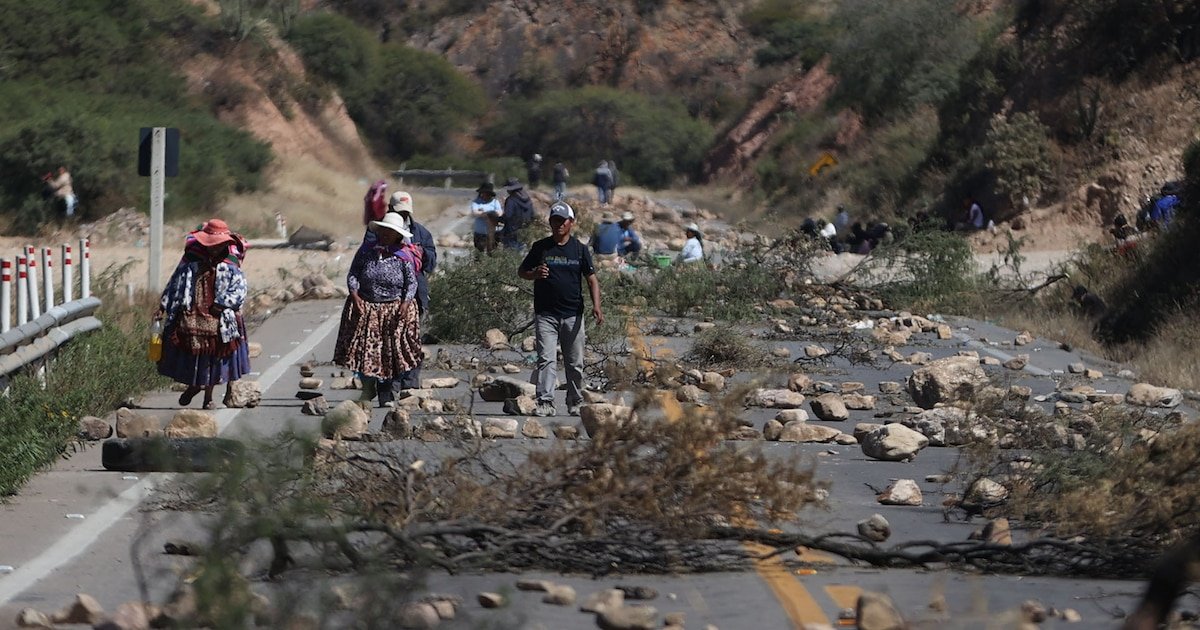
Las principales carreteras de Bolivia están cortadas desde hace más de 45 días por personas que exigen la renuncia del presidente Rodrigo Paz, a quien acusan de traición y de gobernar de manera excluyente en contra de sus intereses.
Aunque el conflicto actual destaca por ser el más prolongado y extendido de los últimos años, el bloqueo de caminos está lejos de ser una medida de presión aislada en la política boliviana. De hecho, fueron la segunda forma de manifestación más recurrente en 2025, solo detrás de las “declaratorias de emergencia”.
Según datos de la Defensoría del Pueblo, el año pasado se registraron 841 hechos de conflictividad en el país, de los cuales 180 se tradujeron en bloqueos, la mayoría motivados por conflictos políticos derivados del proceso electoral y la debacle financiera que atraviesa el país.
Los piquetes actuales han profundizado la crisis y han generado pérdidas millonarias para sectores estratégicos como el transporte, la industria y el turismo. En La Paz, la sede de Gobierno, la población ha experimentado no solo escasez de alimentos y de combustible a causa del cierre de sus vías de acceso, sino también interrupciones en el transporte público, la suspensión de las clases escolares presenciales y la cancelación temporal de algunos servicios médicos por falta de oxígeno.

Ese escenario convulso puso sobre la mesa el debate sobre la legitimidad de los cortes de caminos como una herramienta de lucha política.
“Todo bloqueo es criminal porque atenta contra los derechos de las personas”, manifestó el diputado Carlos Alarcón, quien presentó un proyecto de ley para penalizar los piquetes. La norma, que está trabada en una comisión de la Asamblea Legislativa, plantea sancionar a quienes corten carreteras con penas que van de 3 a 20 años de cárcel.
El diputado justifica su proyecto porque “se afectan los derechos más básicos y elementales, no solo al libre tránsito sino también a la salud, la educación, el trabajo y la alimentación (…) de personas inocentes que no tienen nada que ver con los reclamos de los bloqueadores”. En entrevista con Infobae, Alarcón señaló que “no se puede corregir lo que se considera una injusticia con una injusticia mayor contra el conjunto de la población”.
Para la socióloga Luciana Jáuregui, más allá del debate sobre la criminalización de las protestas, es necesario comprender el origen de este mecanismo de acción política y las tensiones sociales que lo alimentan.

Jáuregui sostiene que en Bolivia existe una “contradicción estructural” entre la conformación institucional y las organizaciones comunitarias que no están representadas en el Estado. “Las protestas se originan en ese desacople”, señala y explica que las causas tienen que ver con una crisis de mediación institucional, la desigualdad económica histórica y una exclusión simbólica de las poblaciones rurales.
Los sectores que recurren a los bloqueos como medida de presión señalan que es la única manera de ser escuchados. “No hay otra forma de lucha sindical”, afirmó en entrevista con Infobae David Mamani, ex dirigente de la Federación de Campesinos de La Paz Túpac Katari, una de las cuales se manifiesta actualmente contra el Gobierno. “Cuando acudimos a una huelga de hambre, nadie la toma en cuenta. Si hacemos una marcha de protesta, no pasa nada. Todo es chiste para los gobernantes. Entonces, ¿cómo podemos lograr hacernos escuchar?”, justificó.
Los bloqueos prolongados revelan el nivel de organización social que tienen las poblaciones campesinas. La forma de sostener más de seis semanas en las calles es mediante turnos de rotación y la toma de decisiones de manera unánime. “Nadie nos da dinero, es una gran mentira que alguien esté financiando esta movilización, no hay nada de eso”, afirmó sobre las versiones que vinculan las protestas con dinero externo y de organizaciones ilícitas.

El dirigente campesino es consciente del daño colateral de la medida de presión y afirma que toda protesta tiene “causa y efectos”. Aún así, considera que su demanda es justa y que si la administración de Rodrigo Paz no hubiera incumplido sus promesas de campaña, ellos no estarían hoy en las calles. “Estamos en las carreteras porque el Gobierno ha ojo cerrado ha ejecutado decretos anticampesinos”, afirmó.
Sin embargo, los bloqueos como herramienta de lucha política trascienden a las organizaciones campesinas. En los últimos años, las clases medias impulsadas por las instituciones cívicas de Santa Cruz también hicieron bloqueos en vías urbanas -con dinámicas diferentes y bajo la modalidad de “paro cívico”-, para exigir desde la renuncia de Evo Morales en 2019 hasta la realización de un censo de población y vivienda en 2022.
Jáuregui explica que estos conflictos suelen estallar en una sociedad dividida y con intereses antagónicos cuando una de las partes no controla los recursos institucionales y económicos del Estado. “Eso sucede en los dos casos (…) cuando no existen canales de ejercicio de poder, se recurre a la calle”, apunta la analista que ve en las instituciones bolivianas un “Estado parcial” que no logra reflejar “la estructura plural de poder que existe en la sociedad”.

Estas diferencias se traducen también en la forma en la que se miran las protestas: mientras unos consideran los bloqueos una medida de presión legítima para obtener beneficios colectivos, otros creen que es un atentado cruel contra los derechos fundamentales.
“¿Cuánto tiempo más nos falta sufrir? ¿Qué quieren? ¿Qué comencemos a robarnos entre nosotros para dar de comer a nuestros hijos? Tanto bloqueo, bloqueo, bloqueo no es justo; nosotros solo queremos trabajar”, manifestó entre lágrimas una mujer comerciante de La Paz, a la que ya no le llegan productos ni clientes. “Nosotros no estamos a favor de nadie, lo único que queremos es poder vender tranquilas”, agregó.
Aunque el diputado Alarcón defiende su proyecto de ley “antibloqueos” como una norma constitutiva de un nuevo ordenamiento social y garantiza los otros métodos de protesta reconocidos en la Constitución Política del Estado —marchas, huelgas, mítines, etc.—, el dirigente Mamani anuncia una “absoluta” resistencia a la aprobación de esa norma.
Esta pulseada latente revela un problema más profundo: la dificultad de una sociedad fragmentada para construir consensos mínimos que le permitan dirimir sus diferencias por vías institucionales.
Civil Conflict,Demonstrations,Riots,South America / Central America,Civil Unrest






INTERNACIONAL
Man charged with attempted murder, released after allegedly forcing toddler into crocodile enclosure at zoo
Man FORCES child into crocodile enclosure
A British man has been arrested after allegedly forcing a 3-year-old boy into a crocodile enclosure at a zoo. The child suffered critical injuries, and authorities say the suspect did not know the boy as the investigation continues.
NEWYou can now listen to Fox News articles!
A man was released from custody on Friday after he was charged with attempted murder for allegedly forcing a 3-year-old boy into a crocodile enclosure at a zoo.
Cambridgeshire police said that the man, who remains unidentified, wasn’t fit to be interviewed.
The boy suffered critical injuries in the incident at Johnsons of Old Hurst, a farm and zoo in Huntingdon, England, north of London.
The 30-year-old man will remain on bail until Sept. 30, pending further inquiries.
GEORGIA MOM’S WALMART TRIP DEVOLVES INTO ‘TUG-OF-WARRING’ IN DESPERATE ATTEMPT TO SAVE HER SON
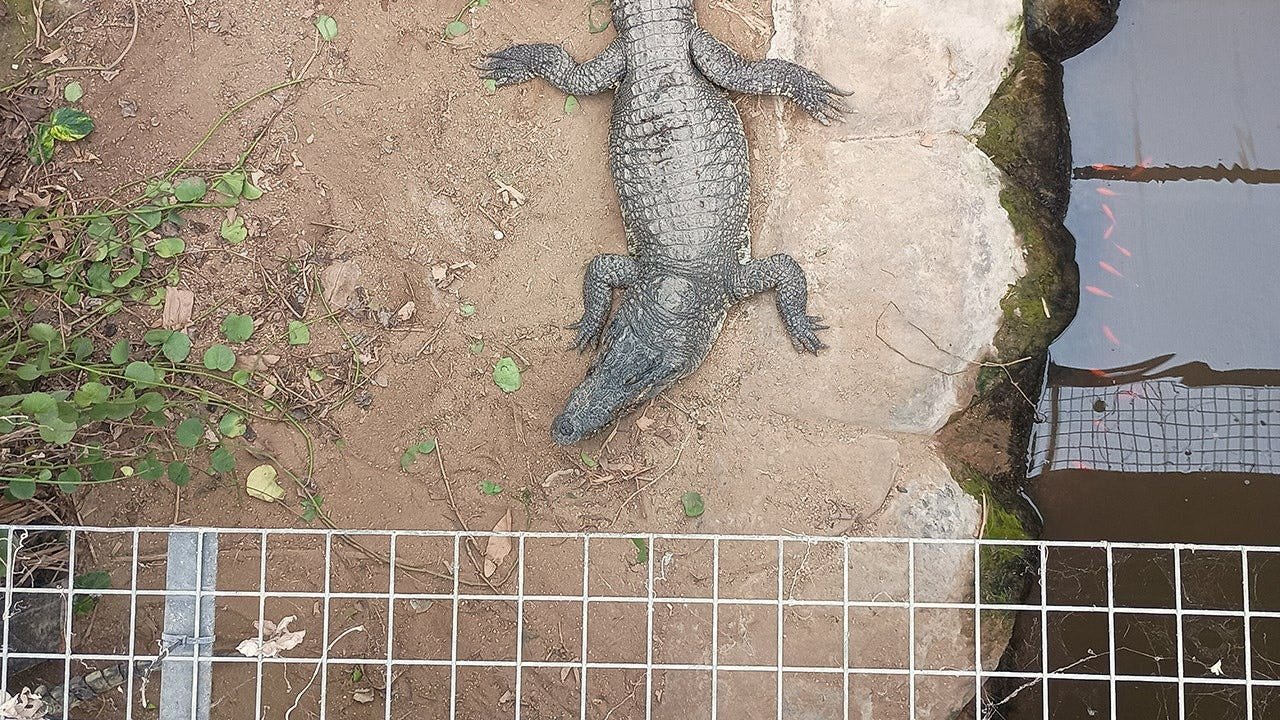
A crocodile rests inside an enclosure at Johnsons of Old Hurst, a farm and zoo in Old Hurst, Cambridgeshire, Britain, on April 14, 2026. (Dorota Dee Trajdos/Reuters)
«The man, who is not known to the victim, was assessed as not being fit for interview,» police said in a statement.
The boy is in stable condition, after reportedly suffering a broken arm and pelvis.
He was saved from the crocodile by Tracey Johnson, the wife of the zoo’s owner.
MOTHER JUMPS INTO WATER TO SAVE 4-YEAR-OLD DAUGHTER WHO FELL BETWEEN CRUISE SHIP AND DOCK
«I know Tracey very well and she’s a lovely lady and it’s nothing more than I’d expect from her,» a local told BBC News. «She’d always put her own life at risk to save someone else. She’s an extraordinary lady and very brave.
The villager added that Johnson put herself in «immense danger» during the rescue.
The owners said their tropical house would remain closed until further notice.
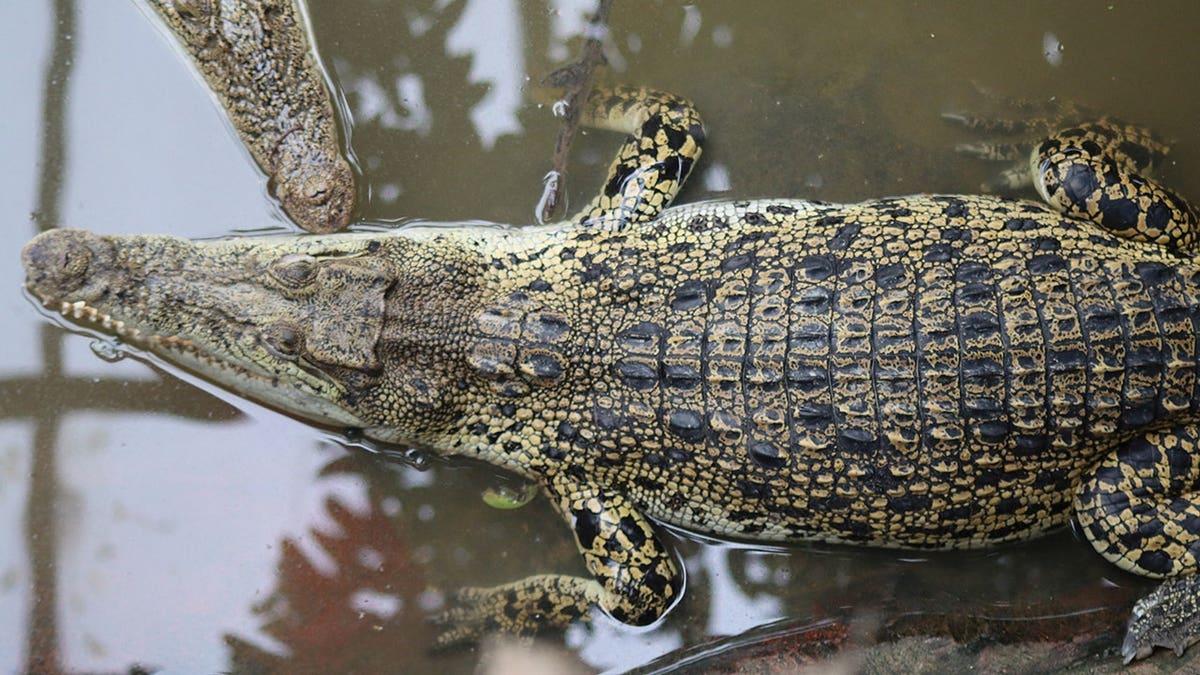
Crocodiles rest inside an enclosure at Johnsons of Old Hurst farm and zoo in Old Hurst, Cambridgeshire, Britain, on April 14, 2026. (Dorota Dee Trajdos/Reuters)
«Our thoughts and prayers are with the boy and his family following the incident that occurred today,» the owners wrote on social media.
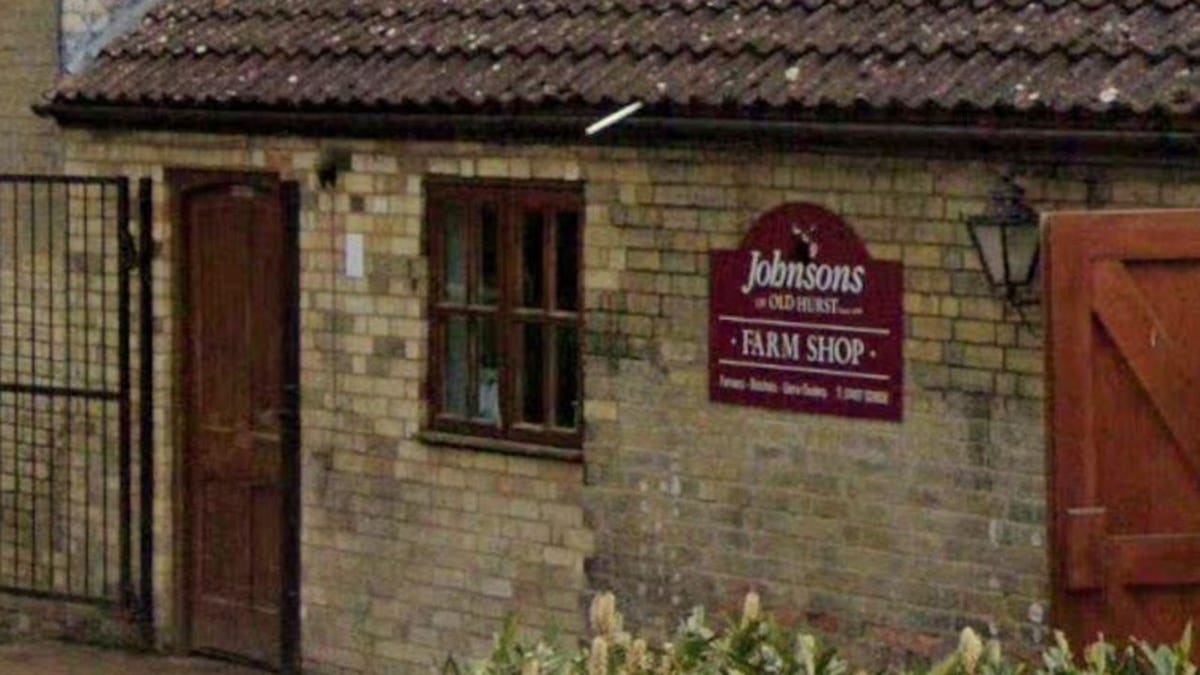
Johnsons of Old Hurst is a farm and zoo north of London in Huntingdon, England. (Google Maps)
Huntingdonshire district councillor Charlotte Lowe said she couldn’t «fathom how it’s happened because they’ve got all the right protection and safety equipment, for want of a better word, in there,» The Guardian reported.
CLICK HERE TO DOWNLOAD THE FOX NEWS APP
Fox News Digital has reached out to the Cambridgeshire Constabulary for comment.
united kingdom, crime, crime world, travel, hunting, world, odd news

«Como una bomba»: así fue el choque de trenes al norte de Londres
La reacción oficial: qué dijo el primer ministro, Keir Starmer
INTERNACIONAL
JD Vance reveals what drew him back to God after seeing Christians had life ‘figured out’
NEWYou can now listen to Fox News articles!
EXCLUSIVE: Vice President JD Vance said years spent chasing academic, professional and financial success ultimately left him searching for something deeper, leading him back to Christianity and eventually to the Catholic faith he practices today.
«I was really worried about where I went to school and what kind of job I had and what kind of money that I made. But I felt like that wasn’t making me a good person, whereas the Christians in my life seem to have it figured out,» Vance told Fox News Digital in an interview as his new memoir, «Communion: Finding My Way Back to Faith,» hit bookshelves.
Whether they were rich or poor, whatever their background or education was. They were just much better people; they were much more gracious and much more kind.»
Vance’s book debuted on Tuesday, recounting the path that took him from a Protestant childhood to atheism — and ultimately to the Catholic faith he embraces today. Vance’s reflections come as he is increasingly regarded as one of the Republican Party’s strongest potential presidential candidates for 2028.
JD VANCE RELEASING BOOK ABOUT FAITH JOURNEY, CONVERSION TO CATHOLICISM
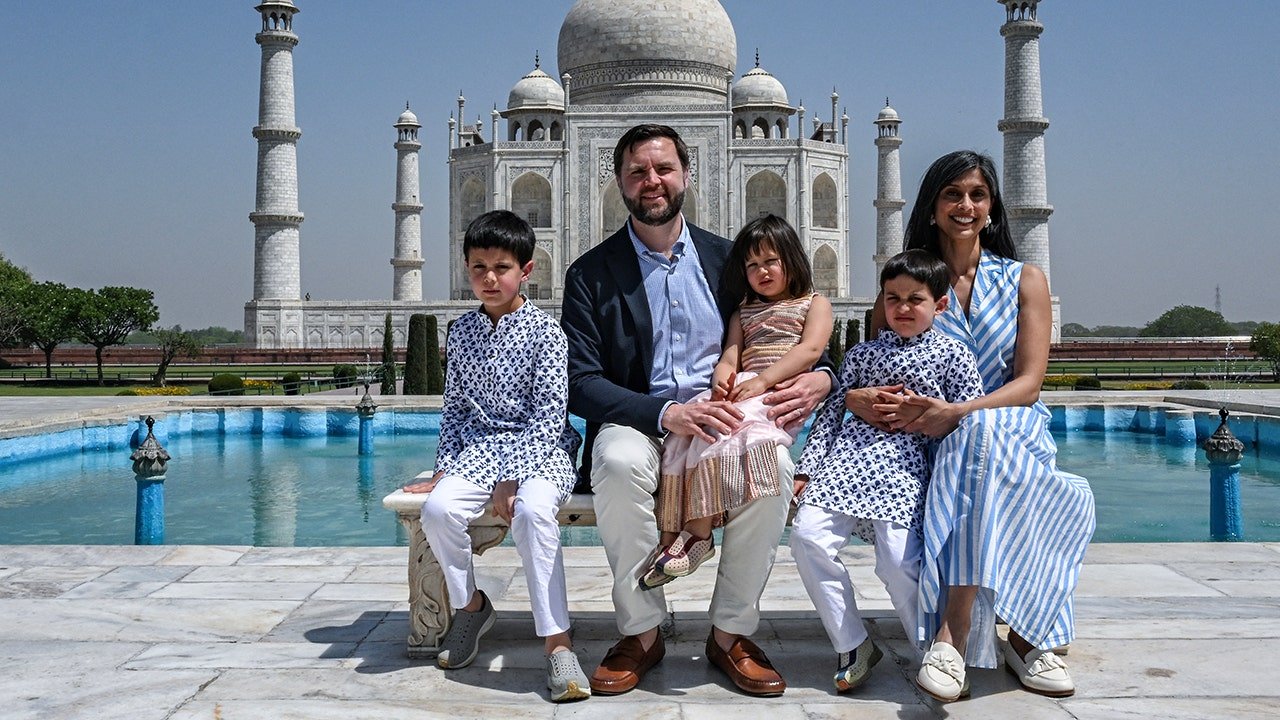
Vice President JD Vance and his family, including wife Usha Vance and their three children, pose for a photo outside the Taj Mahal in Agra, India, on April 23, 2025. (Kenny Holston/Pool/Reuters)
«There have been so many people who have been very good to me, but I just felt at home in the churches that I was going to with my Catholic friends and that’s a big part of why I converted,» Vance told Fox News Digital.
He came to believe that the joy, kindness and character he saw in the Christians around him stemmed from their faith.
«Some of those people call the Catholic Church their home. So I’d go to church with them or I’d talk to them about various things that were on my mind… sometimes God puts people in front of you,» said Vance.
SECOND LADY USHA VANCE ON MOTHER’S DAY AND WHAT SHE STRIVES FOR AS A MOM

Vice President JD Vance and his wife Usha Vance attend the Commander-in-Chief Ball in Washington, D.C., on Jan. 20, 2025. (Anna Moneymaker/Getty Images)
He shared that he loves how American Christianity is «dynamic» with the various denominations.
Vance drew headlines in October when he spoke out about his wife’s Hindu faith, sharing his desire for her to convert.
«Do I hope eventually that she is somehow moved by the same thing that I was moved by in church? Yeah, I honestly do wish that,» Vance said at the time.
In his book, the vice president points out that it is his wife who helps usher the children off to Sunday Mass even though she does not practice Catholicism.
JD VANCE DEFENDS WIFE USHA AGAINST ‘DISGRACEFUL’ ATTACKS OVER INDIAN HERITAGE: SHE’S ‘WAY OUT OF THEIR LEAGUE’
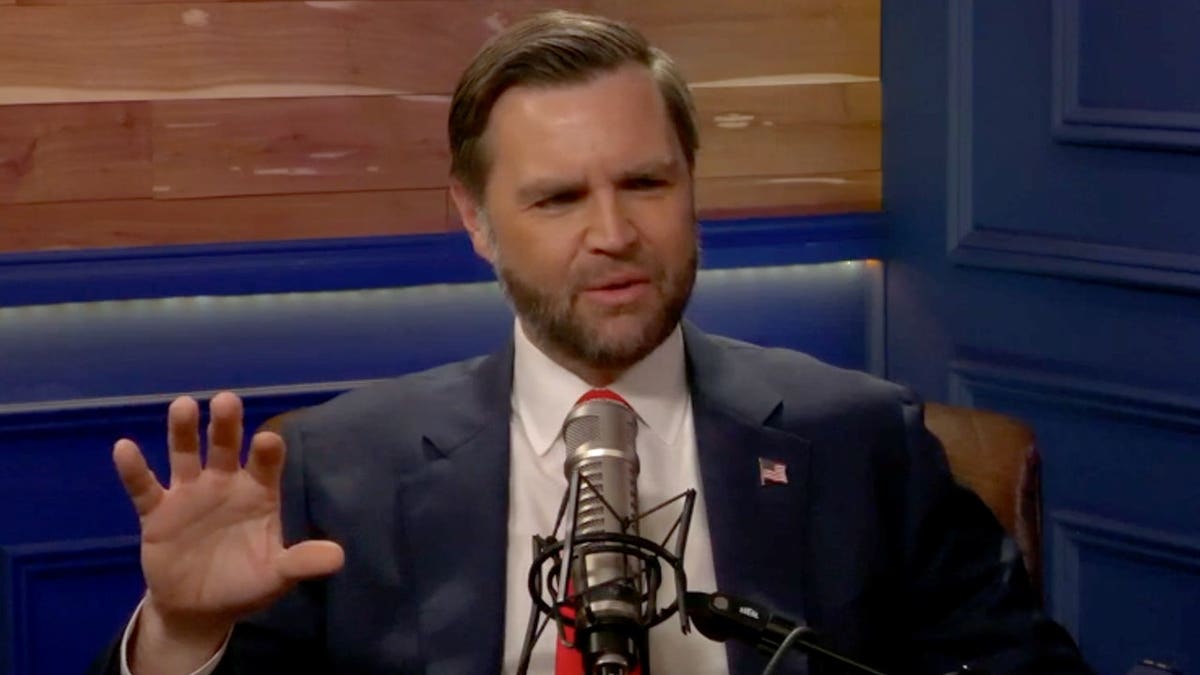
In his new book ‘Communion: Finding My Way Back to Faith,’ VP JD Vance recounts his spiritual journey and how his wife supports his Catholic faith life. (Fox News Digital)
«Usha and I talk about everything. She really is my best friend, and she’s the most interesting person,» said Vance.
The Vances have three children, Ewan, 8, Vivek, 5, and Mirabel, 4, and are expecting a fourth child in July.
Vance said he was surprised by the backlash to his comments last year, arguing that it is «common sense» to want the people you love to share your faith.
Illinois Democratic representative Raja Krishnamoorthi, who is Indian-American himself, took aim at the vice president.
«At a time when Hindu and Indian-American communities are confronting a climate of rising prejudice, talk of mass deportations, and growing anti-Hindu sentiment—even against members of his own party—it’s deeply disappointing that the Vice President would add to that climate through his recent comments while remaining silent in the face of hate,» the congressman wrote on X.
Vance shared that their family life is still centered around faith no matter what faith it is.
CLICK HERE TO DOWNLOAD THE FOX NEWS APP
«She definitely participates in the rituals of the church with us, and I really love that. That’s part of our family life that is very good. Whether we do church at home or whether we go out to a church, she’s the person who’s helping me get the kids ready, and the kids are always late, and it takes forever to get their shoes on.
«Even though she’s not a Christian, she’s been very much a part of my faith journey in ways big and small,» said Vance.
family personal freedoms, republicans elections, faith personal freedoms, usha vance, jd vance

Man charged with attempted murder, released after allegedly forcing toddler into crocodile enclosure at zoo

Primer juicio por jurados en Rosario: condenaron a prisión perpetua a un Aníbal Cabaña por el crimen de su exesposa y su pareja

Ronaldinho ficha a los 46 años por el Ravenna de Serie C

El vocero que ya no puede hablar: Milei blinda a Adorni pese a la presión política y judicial

La industria de fondos de inversión sigue marcando récord

Países Bajos vs Suecia, EN VIVO, por el Mundial 2026: hora, TV, formaciones y todo lo que hay que saber

Patricia Bullrich: “El Presidente considera que Adorni dio una explicación razonable”

El Gobierno envía señales de que Adorni tiene las horas contadas para evitar que sesione el Senado

La secuencia del golazo de Messi para Argentina ante Argelia en el debut en el Mundial 2026 y los récords que rompió

GOP Gov DeWine urges Ohio to abolish the death penalty, says it is no longer a deterrent

 POLITICA2 días ago
Patricia Bullrich: “El Presidente considera que Adorni dio una explicación razonable”
- POLITICA3 días ago
El Gobierno envía señales de que Adorni tiene las horas contadas para evitar que sesione el Senado
- INTERNACIONAL3 días ago
Octavio Paz, escritor mexicano: “Sin libertad la democracia es despotismo, sin democracia la libertad es quimera”