INTERNACIONAL
Lo que hay que saber de segunda vuelta electoral en Colombia


Los colombianos acuden a las urnas este domingo en las elecciones más polarizadas de los últimos años, elecciones en las que los votantes deciden entre el movimiento político de izquierda que gobierna el país y un candidato outsider de derecha respaldado por el presidente Donald Trump.
La votación enfrenta al senador Iván Cepeda, un activista de derechos humanos de larga trayectoria y aliado del presidente Gustavo Petro -el primer presidente de izquierda del país-, contra Abelardo de la Espriella, quien fue abogado penalista y promete una represión contundente de los grupos guerrilleros y las bandas de narcotraficantes.
Esta contienda crucial ha atraído la atención internacional después de que De la Espriella recibiera el respaldo del presidente Donald Trump, quien calificó a Cepeda de “marxista de izquierda radical”.
Esta acción constituye el ejemplo más reciente del respaldo de Trump a candidatos de derecha en las elecciones latinoamericanas, en un momento en que la región se inclina cada vez más hacia la derecha, impulsada en parte por la preocupación ante la creciente inseguridad.
¿Quiénes son los candidatos?
Cepeda, de 63 años, es senador y un conocido defensor de las víctimas del prolongado conflicto armado de Colombia. También fue parte de las negociaciones que llevaron al histórico acuerdo de paz en 2016 entre Colombia y las Fuerzas Armadas Revolucionarias de Colombia (FARC), destinado a ayudar a poner fin a décadas de ese conflicto.
Como candidato del partido de Petro, se ha comprometido a mantener muchas de sus políticas, incluidos los programas contra la pobreza, las iniciativas de redistribución de tierras y las negociaciones con los grupos armados.
De la Espriella, de 47 años, fue un destacado abogado penalista y empresario sin experiencia política previa y quien durante años vivió en Florida.
Apodado “El Tigre”, ha hecho campaña como un candidato externo antisistema, aunque desde hace tiempo ha mantenido una estrecha relación con las élites políticas derechistas de Colombia en su faceta de abogado.
¿Por qué han resultado controversiales estas elecciones en EE. UU.?
Algunas de las promesas de campaña de De la Espriella se hacen eco de las políticas aplicadas por otros líderes de derecha latinoamericanos, como Nayib Bukele y Javier Milei. Su plataforma incluye la construcción de 10 megaprisiones, la reducción del Estado, y una colaboración con Estados Unidos para combatir el narcotráfico.
También se le conoce por emprender acciones legales contra sus oponentes, incluidos periodistas. Tras recibir el respaldo de Trump y el apoyo de algunos legisladores republicanos estadounidenses, De la Espriella, ciudadano estadounidense naturalizado, empezó a advertir de que iría por cualquiera que se le opusiera, con la ayuda de Estados Unidos.
La semana pasada, el secretario de Estado estadounidense, Marco Rubio, emitió un memorándum en el que afirmaba que la presencia de un activista progresista residente en Arizona, Beto Coral, interfería con la política exterior de EE.UU., después de que el activista criticara a De la Espriella. Coral, de 40 años, fue detenido el martes por las autoridades de inmigración de EE.UU., una medida que han condenado los demócratas del Congreso y las organizaciones de derechos humanos.
¿En qué se enfocan los votantes?
Además del descontento sobre el accidentado mandato de cuatro años de Petro, los votantes expresan su preocupación por la delincuencia y la extorsión, así como por el creciente poder de los grupos armados en las zonas rurales.
La violencia se recrudeció también durante la campaña, en la que un aspirante a la presidencia fue asesinado, dos colaboradores de la campaña de De la Espriella perdieron la vida y el compañero de fórmula de Cepeda fue secuestrado brevemente.
Los críticos afirman que la estrategia insignia de Petro, la “Paz Total”, que buscaba acuerdos negociados con diversos grupos armados, permitió que dichos grupos se fortalecieran durante los altos al fuego y las negociaciones.
Las organizaciones humanitarias señalan que la violencia ha alcanzado su nivel más alto desde el acuerdo de paz en 2016, pero Colombia aún es mucho más segura de lo que era durante el apogeo del conflicto en las décadas de 1980 y 1990.
Mientras que De la Espriella dice que va a retirarse por completo las negociaciones de paz y acabar con los grupos de narcotraficantes en un plazo corto, Cepeda dijo que seguirá adelante con su propia versión de las negociaciones de paz.
Las elecciones también se consideran un referendo a la presidencia de Petro. Sus partidarios le atribuyen al gobierno la ampliación de programas sociales y el aumento de la visibilidad política de comunidades históricamente marginadas.
Pero los críticos dicen que su mandato se ha caracterizado no solo por el deterioro de la seguridad, sino por una intervención estatal problemática del sistema de salud y un gasto descontrolado que ha dejado a Colombia con una deuda pública que ha alcanzado niveles similares a los de la pandemia.
Por qué la primera vuelta electoral fue una sorpresa
De la Espriella quedó en primer lugar en la primera vuelta con el 43,7 por ciento de los votos, frente al 40,9 por ciento de Cepeda.
El resultado sorprendió a muchos analistas. A pesar de las quejas, Petro ha mantenido índices de aprobación arriba del 50 por ciento y ha creado una amplia coalición de movimientos que apoyan a la izquierda. Cepeda gozaba de una ventaja cómoda en las encuestas hasta el mes pasado.
Sin embargo, los votantes optaron más bien por De la Espriella, un recién llegado a la política que prometió no solo romper con la izquierda sino con los partidos tradicionales y “los de siempre”.
Desde la primera vuelta, la mayoría de las encuestas han mostrado que De la Espriella mantiene la ventaja. Sin embargo, los analistas señalan que el lenguaje cada vez más estridente del candidato de derecha ha preocupado a los colombianos más moderados, lo que hace más difícil predecir a quién apoyarán los votantes indecisos.
Después de la primera vuelta de mayo, Petro denunció un fraude electoral sin aportar pruebas, lo que suscitó la preocupación de que pudiera negarse a aceptar los resultados de las elecciones del domingo o convocar manifestaciones.
—-
Annie Correal es corresponsal para América Latina del Times.
Genevieve Glatsky es reportera del Times, radicada en Bogotá.
The New York Times, data-cc, data-cc-nyt







INTERNACIONAL
College sports sees pivotal moment as Senate looks to move legislation on NIL, transfers across goal line

Senate stepping in to regulate college sports
The Senate is actively preparing to debate a bipartisan bill that could significantly alter the landscape of intercollegiate sports. Lawmakers aim to create national standards for Name, Image, and Likeness (NIL) money and curb roster chaos from transfers. Senators Cruz, Cantwell, Baldwin, and Booker discuss the necessity of federal intervention due to perceived failures of the NCAA.
NEWYou can now listen to Fox News articles!
Congress could determine the future of college sports.
Thursday was a seminal day as to whether Congress can either salvage – or potentially ruin – intercollegiate athletics. It’s a congressional Hail Mary as senators address name, image and likeness (NIL) deals for athletes, compensation packages and transfers between schools.
«College sports is in crisis,» declared Senate Commerce Committee Chairman Ted Cruz, R-Texas.
«There’s a sense of urgency in that room you can feel it, right? You’ve got to do something rapidly,» said Sen. John Hickenlooper, D-Colo.
TED CRUZ, MARIA CANTWELL UNVEIL BIPARTISAN COLLEGE ATHLETICS BILL AMID NIL CHAOS, LAWSUITS, ‘LANE KIFFIN RULE’
Senate lawmakers advanced a bipartisan college sports bill that would create national NIL standards and limit athlete transfers. The measure now heads toward a full Senate debate. (Kevin Carter/Getty Images)
The Commerce Committee approved a bipartisan gameplan to fundamentally alter college sports. The full Senate plans to debate the bill in July.
«We have put something on the table that’s going to bring more certainty and predictability to the system,» said Sen. Maria Cantwell, D-Wash., the top Democrat on the panel.
Establishing a nationwide payout framework is a key aspect of the deal. Lawmakers know that inaction could mean that monied, major programs will simply outbid smaller schools. Perhaps even for a future NFL MVP.
«I’m worried that we’ll never see a Josh Allen again at the University of Wyoming,» said Sen. Cynthia Lummis, R-Wyo., referring to the Buffalo Bills standout quarterback. «It leaves those of us who don’t really have a donor base [to struggle to] pay for players of that caliber.»
The bill also restricts athletes to one transfer between schools during a five-year period without a penalty.
«Now we have this unbelievable number of players that get in the (transfer) portal every year and we have nothing to control the agents,» said former Alabama head football coach Nick Saban to a Senate panel earlier this month.
UCLA QUARTERBACK ATTEMPTS TO EXPLOIT LOOPHOLE IN TRANSFER PORTAL WINDOW WITH UNIQUE TACTIC
Lawmakers believe this plan will curb the constant roster chaos.
Advocates of the legislation believe it protects student-athletes.
«It definitely makes sure that predatory contracting done by agents or universities or conferences or shill organizations, don’t get students stuck in binding arbitration,» said Cantwell.
Sen. Cory Booker, D-N.J., is the only former Division I college athlete in the Senate. He played tight end for Stanford’s football team. Booker opposes the bill.
SENS MARSHA BLACKBURN, MARIA CANTWELL HUSTLING TO PROTECT COLLEGE ATHLETES’ FINANCES IN MURKY NIL WORLD
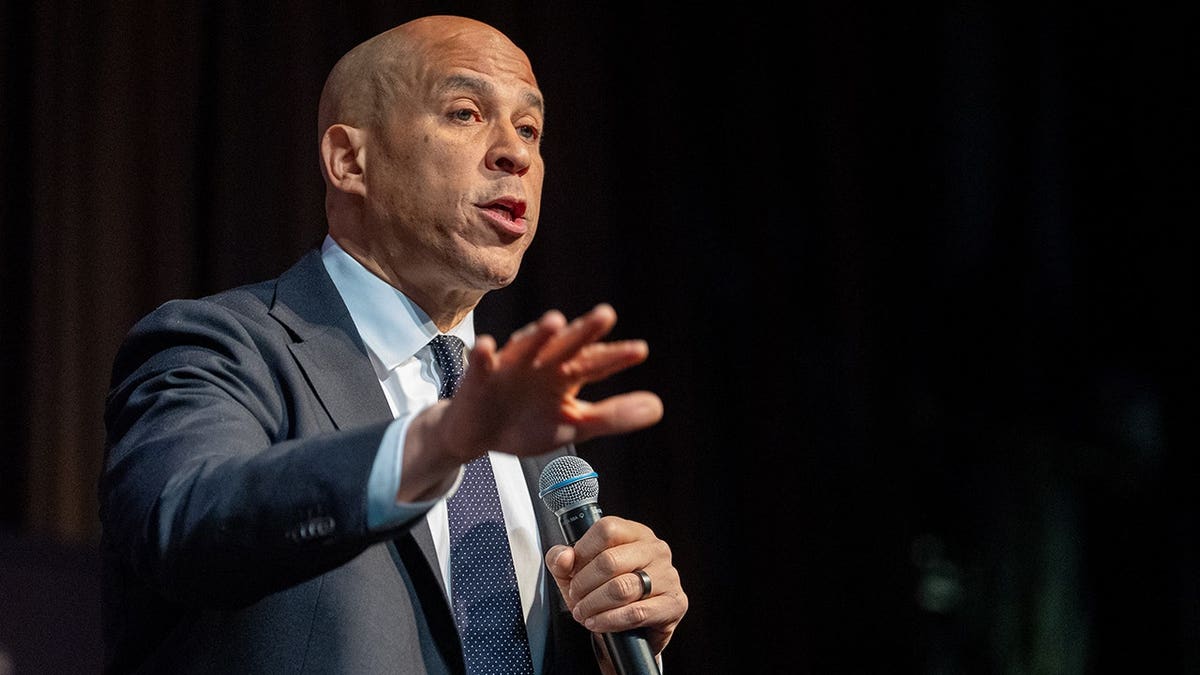
Congress is weighing major changes to college athletics, including athlete compensation, transfers and NIL regulations amid growing concerns about competitive imbalance. (David Dee Delgado/Getty Images)
«I’ve seen decade after decade, how the NCAA has screwed athletes. And so we need to make sure there’s firm athletic protections and not trust the NCAA to do it,» said Booker.
Sen. Tommy Tuberville, R-Ala., is the only former Division I football head coach in the Senate. He led programs at Auburn, Ole Miss, Texas Tech and Cincinnati. He joins Booker in condemning the legislation.
«They’re trying to turn college sports into the same situation we got in with Obamacare,» said Tuberville on Fox News Radio. «We can’t get the federal government involved in college sports.»
During a floor speech, Tuberville argued that «Congress should not decide how much money student athletes can earn.»
Yet Tuberville conceded that «college sports is facing a five-alarm fire. It’s getting ready to be over with as we know it.»
That’s why Cruz believes Congress should intervene.
«If the alternative is do nothing and allow chaos to continue in college sports to be destroyed, I think that alternative is unacceptable,» said Cruz.
Congress struggles to do lots of things right. That’s why some observers doubt that Congress is a good substitute for the NCAA.
Matt Mackowiak is a former GOP Senate aide who’s written about Brendan Sorsby, his gambling scandal and the saga involving Texas Tech megabooster Cody Campbell. Big money lured Sorsby to the school for a hot minute. Mackowiak says the Cruz/Cantwell bill fails to prevent another Sorsby situation. But Mackowiak’s biggest concern is congressional willingness to undercut the NCAA.
«I don’t know why you need to create some new system and make it overly complicated. You have a governing body. They haven’t had a lot of teeth in their enforcement in recent years.»
Some of that is because super conferences like the Big Ten and SEC wield more power than the NCAA. Notably, neither of those conferences endorsed the Senate bill. But it was the NCAA which demanded congressional intervention. The NCAA has told lawmakers it can’t address NIL on its own and pushed for a national standard set by Capitol Hill.
But Booker isn’t enamored with the NCAA.
«The NCAA, which can’t be trusted, has shown decade after decade, (of) failing college athletes,» he said.
There’s concern the bill could undercut current sports broadcasters by diversifying the number of streamers and outlets carrying games. That could complicate viewing. Additional options aren’t necessarily good for fans if they struggle to find their games.
«Then the fans get hurt because all the content is behind a paywall,» said Sen. Amy Klobuchar, D-Minn.
«I suspect everyone in this room has heard about frustrations from their constituents in trying to watch their favorite professional sports teams play. They are met with blackouts and paywalls,» said Sen. Tammy Baldwin, D-Wis.
The House of Representatives stumbled in two previous efforts to regulate college sports. The House Republican leadership had to yank completely different college sports regulation bills off the floor in December and this spring because they lacked the votes. So, now it’s the Senate’s turn to try.
There are lots of questions about whether the Senate, like the House, can command the votes for this bill. Moreover, what bandwidth does the Senate even have for serious legislating in July? The Senate is trying to figure out what’s next about the nomination of Jay Clayton to serve as director of national intelligence. The future of FISA Section 702 – the nation’s top program to fight terrorism – is up in the air after authorization expired a few weeks ago. And some Republicans are optimistic the Senate can advance a third «reconciliation package» to pay for the war in Iran, cut taxes and reduce fraud.
It would seem that those priorities might outweigh something on college sports.
REPORTER’S NOTEBOOK: HOUSE DEMS QUESTION SPORTS BILL TIMING AMID LANE KIFFIN CONTROVERSY
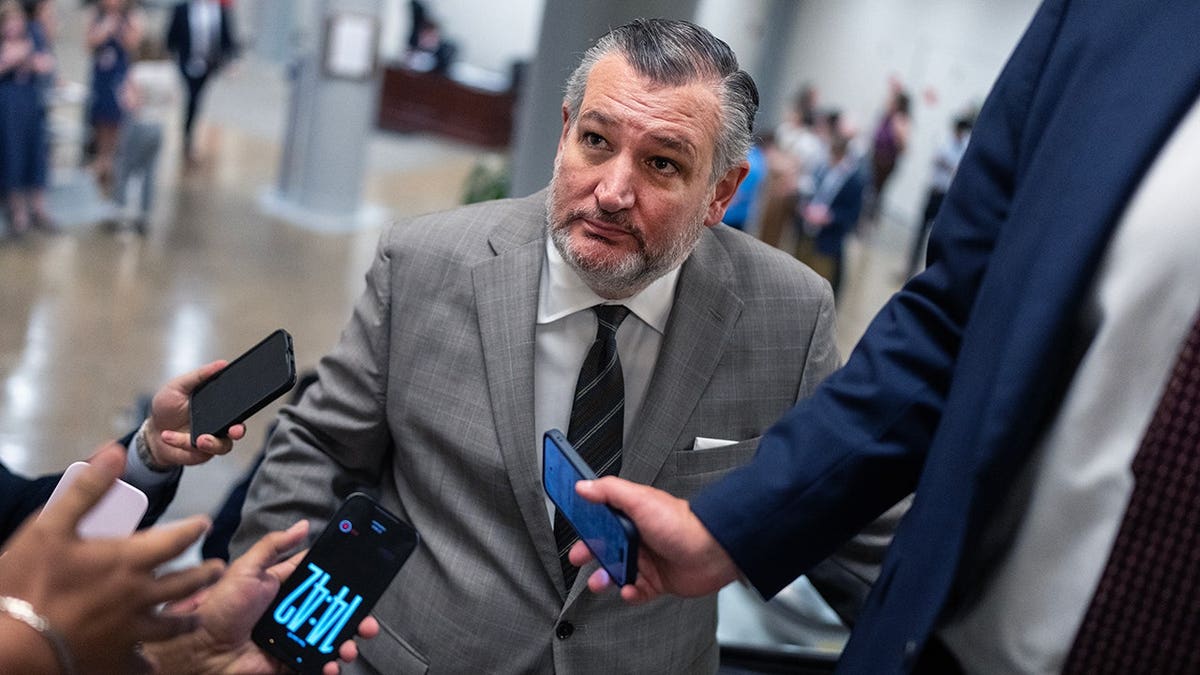
A Senate panel approved legislation supporters say would bring stability to college sports as critics warn it expands federal involvement. (Tom Williams/CQ-Roll Call, Inc via Getty Images)
But as Cruz and Tuberville both say, the situation in college sports is dire. There’s worry that the SEC and/or Big Ten might form a mega conference. Or develop their own broadcast platforms for games. And there may be a lot more Brendan Sorsbys as gaming becomes more ubiquitous.
None of this is going to get any better.
CLICK HERE TO DOWNLOAD THE FOX NEWS APP
The future of college sports is on the line.
So, to fix it, the Senate might just give it the old college try.
ncaa, congress, sec, ncaa fb, senate elections

Concebido como un espacio seguro para el diálogo, la formación y el compromiso de avanzar hacia una sociedad más consciente, responsable y cercana a quienes han sufrido abuso, Panamá será sede, del 8 al 11 de julio, del congreso internacional de las personas sordas.
En el país hay 11,323 personas con deficiencia auditiva, según la Segunda Encuesta Nacional de Discapacidad, realizada en el primer trimestre de 2024, después de 18 años sin tener información actualizada.
Solo en 2025 el Instituto Panameño de Habilitación Especial (IPHE) atendió a 18,319 estudiantes con esta condición.
La discapacidad auditiva se define como la pérdida o anormalidad de la función anatómica y/o fisiológica del sistema auditivo, y tiene su consecuencia inmediata en una discapacidad para oír, lo que implica un déficit en el acceso al lenguaje oral.
Se informó que el congreso busca ofrecer un espacio de escucha y reflexión sobre la realidad que viven las personas sordas víctimas de abuso.

De igual manera, tiene como finalidad fortalecer la formación en materia de prevención, protección de menores y adultos vulnerables, y promoción de entornos seguros dentro de nuestras comunidades eclesiales, dijo monseñor José Domingo Ulloa Mendieta, arzobispo de Panamá, presidente de la Conferencia Episcopal Panameña y segundo vicepresidente del CELAM.
La convención reunirá a especialistas internacionales, agentes pastorales y personas sordas de diversos países de América, con el propósito de sensibilizar sobre los desafíos particulares que enfrenta esta población y promover una cultura de cuidado, respeto, inclusión y protección.
El “Abuso sexual en la Iglesia: su historia y realidad actual. Como se relaciona y afecta a la comunidad sorda”; “El caso Próvolo: ejemplo de modelo interdisciplinario para responder al desafío del abuso en la comunidad sorda en Argentina”; “Perspectiva global: cómo la Iglesia comenzó a escuchar las voces de quienes han sido abusados”, serán algunos de los temas a tratar durante la actividad.
El encuentro es organizado por la Iniciativa de los Jóvenes Católicos Sordos de América (DCYIA, por sus sus siglas en inglés), en colaboración con la Pontificia Comisión para la Protección del Menor, de la Santa Sede; el Centro de Investigación y Formación Interdisciplinar para la Protección del Menor, el Consejo Episcopal Latinoamericano y Caribeño (CELAM) y la Arquidiócesis de Panamá.
En Panamá la Ley N°1 del 28 de enero de 1992 protege a las personas con discapacidad auditiva y reconoce la lengua de señas como la lengua natural del discapacitado auditivo profundo.

Esta es una herramienta fundamental de inclusión, y la norma reafirma la importancia de promover una cultura institucional basada en el respeto, la accesibilidad y la equiparación de oportunidades.
Ratificada por Panama, la Convención Internacional sobre los Derechos de las Personas con Discapacidad establece en su artículo 21 el derecho a la libertad de expresión y acceso a la información, incluyendo el uso de la lengua de señas como medio de comunicación.
En esa línea, la política nacional de discapacidad de Panamá promueve la eliminación de barreras comunicativas y la plena participación de las personas sordas en todos los ámbitos de la sociedad, de acuerdo con el IPHE.
La Organización Mundial de la Salud (OMS) indica que a nivel mundial más de 1.500 millones de personas presentan algún grado de pérdida auditiva, de las cuales aproximadamente 430 millones tienen pérdida auditiva de moderada a grave en el oído con mejor audición.
En América, alrededor de 217 millones de personas viven con pérdida auditiva, cifra que se espera aumente a 322 millones para 2050. Las estimaciones de la OMS proyectan que 700 millones necesitarán atención otológica y servicios de rehabilitación si no se toman medidas preventivas.
hombre,mujer,niña,audífono,familia,discapacidad auditiva
INTERNACIONAL
EXCLUSIVE: Meet the man Israel chose to be its first-ever ambassador to the Christian world
NEWYou can now listen to Fox News articles!
JERUSALEM, Israel: In a move being praised by many Christian leaders, the government of Prime Minister Benjamin Netanyahu recently announced the appointment of a new position of envoy to the Christian world — with the goal of better and smoother relations with the Christian world.
In an exclusive interview in Jerusalem, Ambassador George Deek told Fox News Digital the importance the Netanyahu government has put on his position.
«We see the ethnic cleansing of the region from its Christians, who have been diminished from 20% of the population of the Middle East to less than 2% of the population today,» Deek said. «All those places that used to have thriving Christian communities today have been reduced to nothing.»
CHRISTIAN LEADERS HOLD EMERGENCY SUMMIT IN JERUSALEM TO CONFRONT GLOBAL RISE IN ANTISEMITISM
Ambassador George Deek is Israel’s first envoy to the Christian world. (Yoav Dudkevich/TPS-IL)
Israel counts 300 churches, double the number in 1948, while its Christian population has grown from 34,000 in 1948 to more than 180,000 today.
Deek said of his role. «My hope is to also be able to build strong bridges between the State of Israel and Christian leaders… by telling a fuller story of the State of Israel, which I think is missed in most of the narratives we hear today in the world,» he said.
According to Israel’s Central Bureau of Statistics, as of December 2025, Israel’s Christian population stood at approximately 184,200, representing 1.9% of the country’s total population. The community grew by 0.7% over the previous year.
Deek, who served for six years as Israel’s ambassador to Azerbaijan before assuming his current role, said most people know Israel only through its Jewish identity and are unaware of the complexity and diversity of Israeli society.
Deek said the decision announced by the Foreign Ministry in April to appoint him to the role stems from three factors: first, the special connection between Christians and the land of Israel as the birthplace of Christianity.
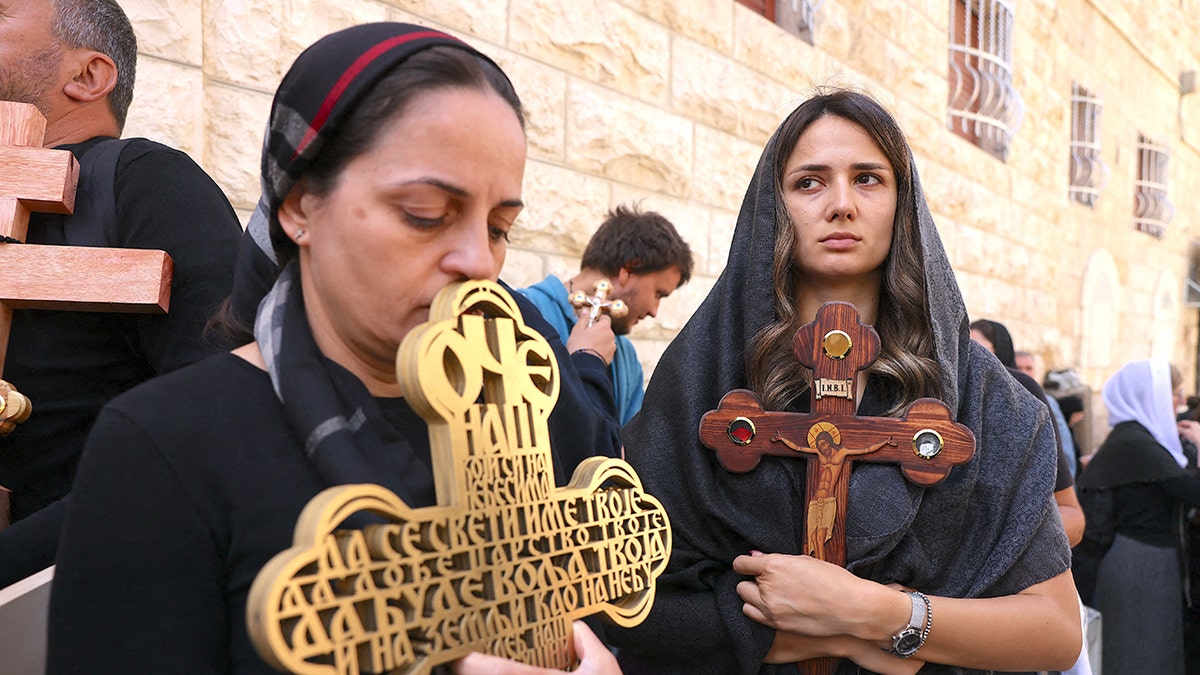
Christian pilgrims carrying wooden crosses walk through Jerusalem’s Old City toward the Church of the Holy Sepulchre during the Orthodox Good Friday procession on May 3, 2024. (Ahamd Gharabli/AFP via Getty Images)
Second is the deep historical bond reflected in the churches of the Holy Land and in Christians and Jews living under shared biblical values, from which they derive societal principles including democracy, individualism, and freedom of conscience and thought.
Third is the importance Israel places on relations with people of all denominations and religions.
CHRISTMAS RETURNS TO HOLY LAND CITIES AS BETHLEHEM’S CHRISTIAN POPULATION DWINDLES, NAZARETH REMAINS STRONG
«It has a special relationship with the Christian people abroad and the Christian community in Israel, which is the only Christian community in the entire Middle East that is actually growing in numbers and basically thriving as part of Israeli society,» Deek said.
«As the only nation to appoint a special envoy to the Christian world, Israel has indicated its deep appreciation for Christian support and its long-term interest in guarding Christian-Jewish relations. This is especially vital in this time of resurgent antisemitism spreading like wildfire in the poorly regulated digital sphere,» International Christian Embassy Jerusalem (ICEJ) ‘s President Dr. Jürgen Bühler told Fox News Digital.

Israel’s northern city of Nazareth and its Catholic Basilica of the Annunciation on Dec. 18, 2021. (Ahmad Gharabli/AFP via Getty Images)
The organization has operated from Jerusalem for 46 years and maintains branch offices and representatives in 95 countries, with a presence spanning approximately 185 nations worldwide.
It recently organized an emergency summit on antisemitism that brought together more than 200 theologians, pastors and ministry leaders from over 30 countries in person, alongside approximately 3,000 participants attending online.
CHRISTIAN PASTORS, INFLUENCERS JOIN 1,000-STRONG ISRAEL MISSION BACKING JEWISH STATE, FIGHTING ANTISEMITISM
He says Israel has the potential to serve as both an inspiration and a partner across the region and beyond, helping ensure that people can practice their faith freely and remain in the lands of their forefathers.

The annual Christmas parade in Nazareth, Israel on Dec. 24, 2025. (Eitan Elhadez-Barak/TPS-IL)
Still, Deek noted that in recent months there have been several isolated incidents involving attacks on Christian symbols and, in one case, an assault on a Christian nun.
«More than anything, this was an attack on the values on which this country is established—values of tolerance and acceptance — where no one has the right to attack anyone or use violence against anyone for any reason whatsoever, especially not attack a symbol of Christianity, Islam or Judaism,» he said.
DISPUTED FIRE BY ANCIENT CHURCH IN HOLY LAND SPARKS DIPLOMATIC, RELIGIOUS FALLOUT
«That is absolutely unacceptable and that is why the leadership of the State of Israel, from the prime minister to the foreign minister and others, have all condemned it unequivocally and unanimously,» he added.
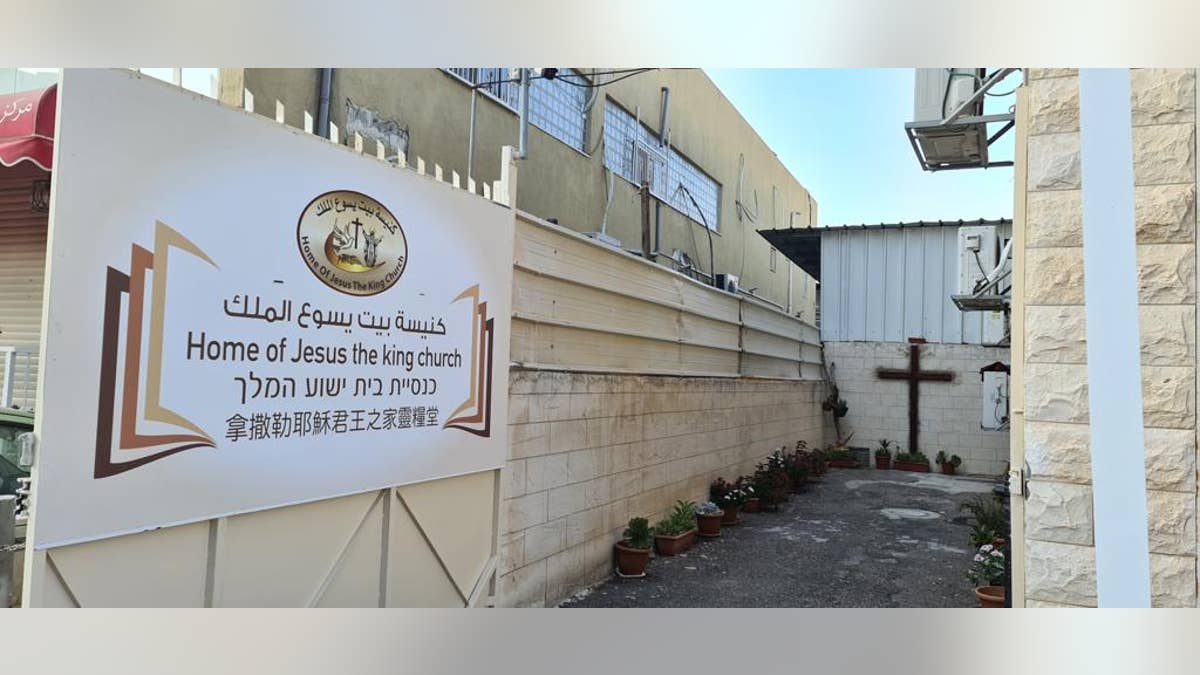
The pastor of the Home of Jesus the King church in Nazareth says one of the biggest challenges facing Israel’s Christian community is a low birth rate. (Pastor Saleem Shalash)
The Israeli soldier who desecrated a cross in southern Lebanon is in prison, as is the individual who pushed a nun to the ground and attacked her in Jerusalem. These cases, Deek said, demonstrate that the State of Israel takes such incidents very seriously and fully enforces the law.
Amid a surge in antisemitic incidents in Europe and elsewhere following the Hamas-led Oct. 7 massacre, Deek said hate that begins with Jews never ends with Jews, and that the same hate that drove out Jews from Arab countries in the 20th century has over the past two decades been directed against other minorities in the region.
TURKEY DEPORTS PEACEFUL CHRISTIANS UNDER GUISE OF ‘NATIONAL SECURITY’ CLAIMS WATCHDOG
«We see it even with Hamas pushing out the Christian population there, which has completely disappeared from Gaza,» he added.
Within this environment, Israel is the only place where such minorities have been able to live safely and practice their faith without fear. In fact, they do not merely survive in the State of Israel, they thrive, Deek said.
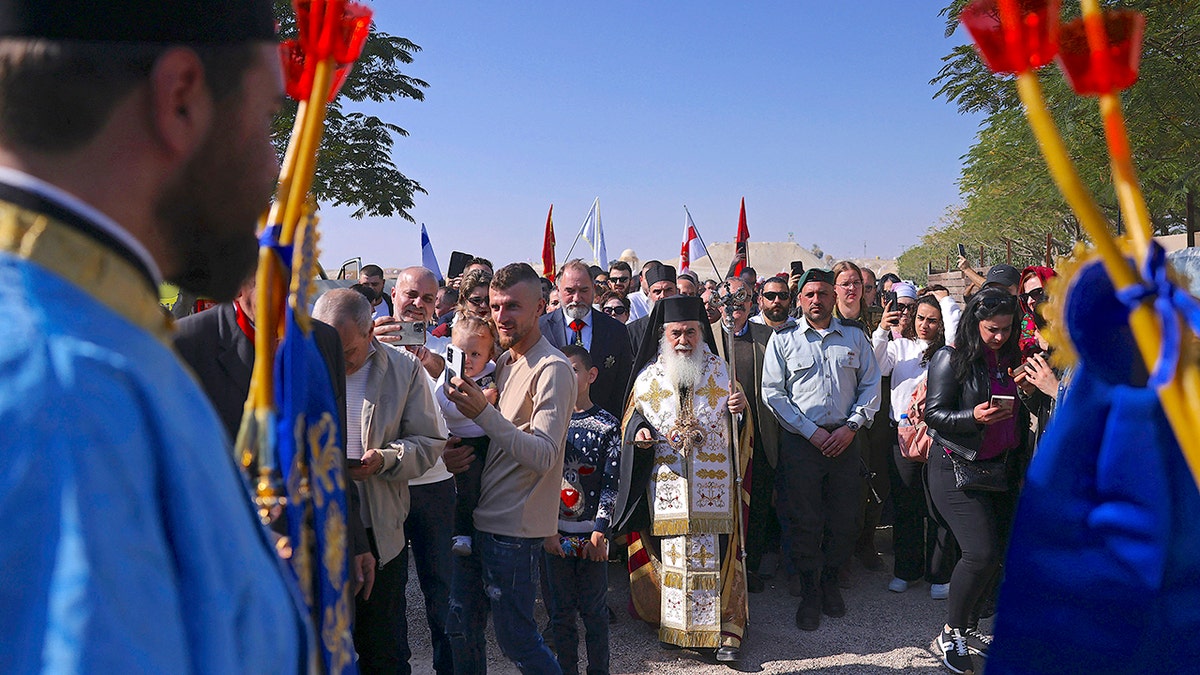
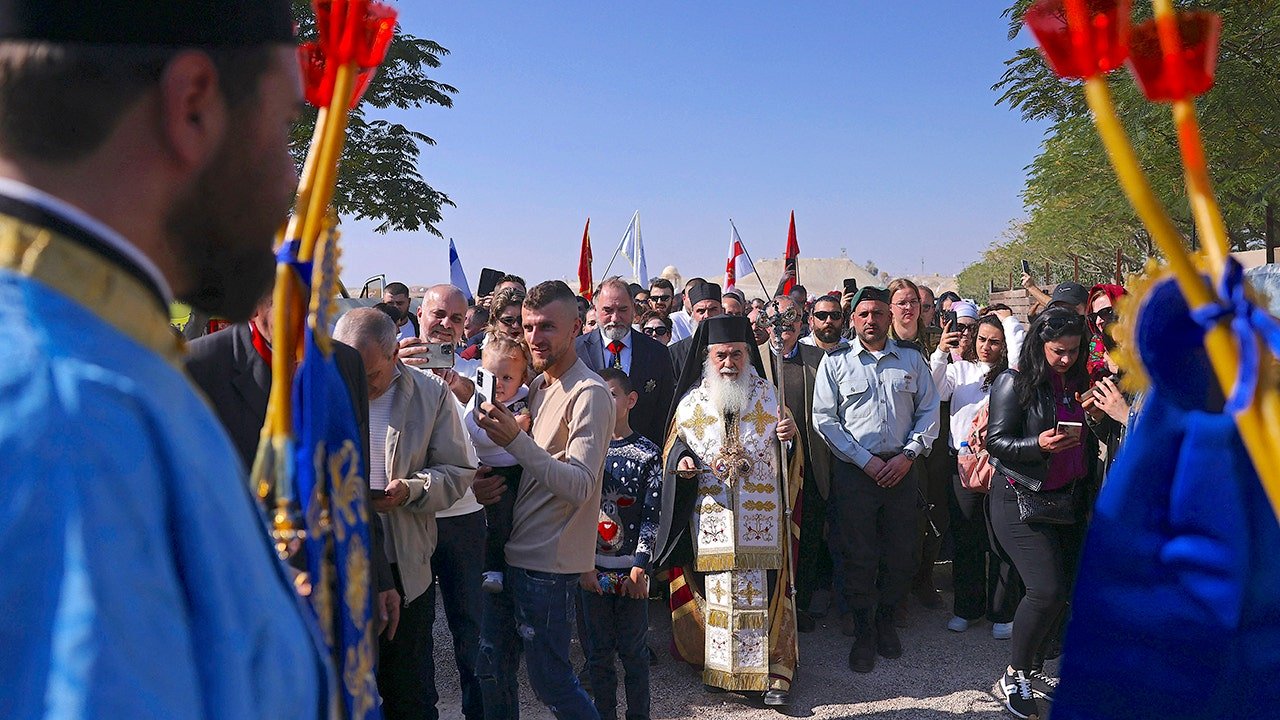
The Greek Orthodox Patriarch of Jerusalem, Theophilos III, leads a ceremony as part of the Orthodox Feast of the Epiphany at the Qasr al-Yahud baptismal site near Jericho on Jan. 18, 2025. (Hazem Bader/AFP Via Getty Images)
He nevertheless pointed to a well-oiled campaign by forces on the woke left and right, along with extremist Islamist groups, that are manipulating the Christian faith and promoting claims of what he says is the so-called mistreatment of Christians in Israel.
«I see it as a personal mission to bring as many Christians as possible to visit the land of Israel, not as a political campaign…. I want them to come here to connect to their Bible. I want them to connect to their Scripture, I want them to connect to the roots of their values by simply going to those places,» Deek said.
CLICK HERE TO DOWNLOAD THE FOX NEWS APP
«And, under the protection of Israel as the guardian of the holy sites of Christianity… to reconnect to these values and to remember that these are the biblical values that connect Jews, Christians and all the people of the book in this world,» he added.
israel, christianity religion, benjamin netanyahu, middle east, anti semitism

La psicología afirma que las personas que ayudan a desconocidos no solo son solidarias, sino que poseen una elevada inteligencia emocional

College sports sees pivotal moment as Senate looks to move legislation on NIL, transfers across goal line

El sentido mensaje de Araceli González en su cumpleaños tras su reconciliación con Adrián Suar: “Estoy feliz”

La lluvia de goles de España contra Arabia Saudita por el Grupo H del Mundial 2026

La lista completa de privatizaciones: qué empresas siguen en la mira oficial y cuánto espera recaudar el Gobierno antes de fin de año

Qué dice el comunicado completo: las palabras de Jesica Cirio luego de que publicaran los videos en los que se ven bolsas de dólares

Patricia Bullrich: “El Presidente considera que Adorni dio una explicación razonable”

El lapidario posteo de Javier Milei contra Florencia Peña por la fake news sobre la muerte del papá de Messi

Decomisan un helicóptero producto del lavado de las coimas de Odebrecht

Papelón y escándalo: anularon un sorteo de viviendas en PBA porque se olvidaron de incluir una bolilla

 POLITICA3 días ago
El lapidario posteo de Javier Milei contra Florencia Peña por la fake news sobre la muerte del papá de Messi
- POLITICA22 horas ago
Difundieron videos en los que Jésica Cirio aparece junto a miles de dólares
- POLITICA8 horas ago
Preocupación en el oficialismo por el impacto digital del caso Adorni y la insuficiencia del “efecto Mundial”