INTERNACIONAL
Acting AG Todd Blanche says Newsom’s DOJ claims are not ‘grounded in fact’

NEWYou can now listen to Fox News articles!
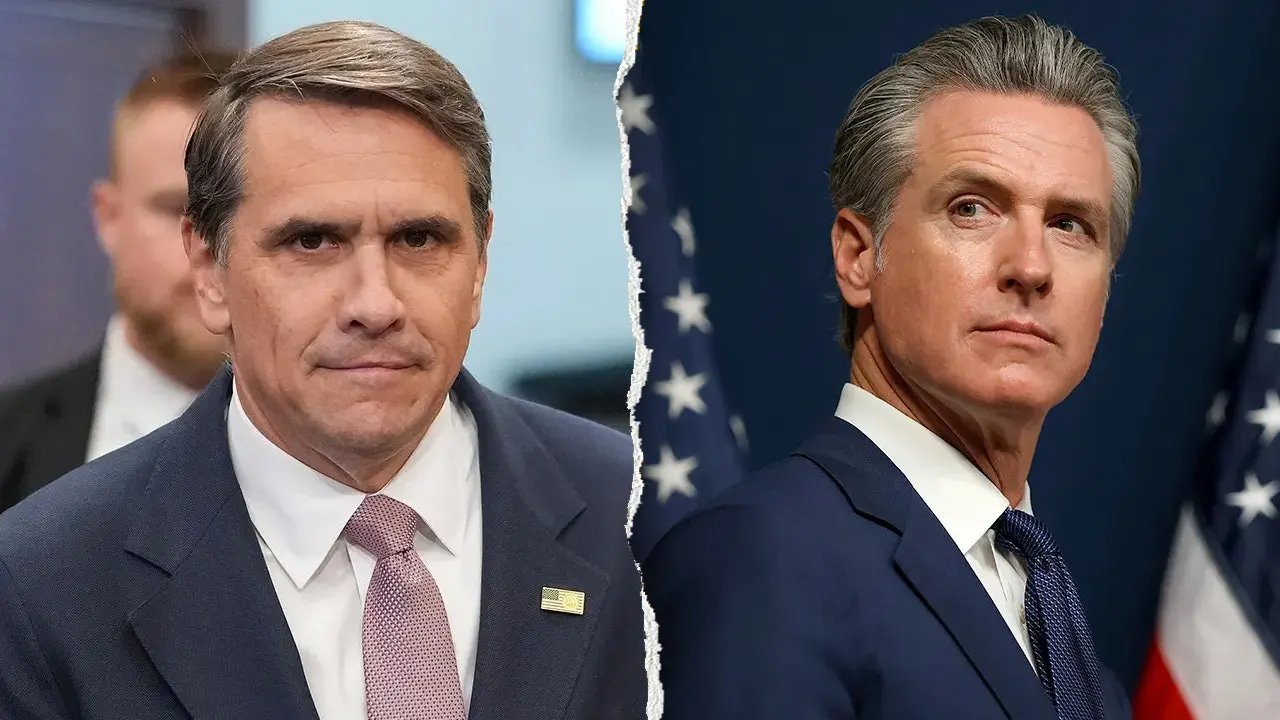
Acting Attorney General Todd Blanche on Wednesday rejected California Gov. Gavin Newsom’s claims that the Justice Department is politically targeting him, saying the governor’s assertions are not «grounded in fact.»
Blanche responded to comments made by Newsom, who said last month that the Justice Department is investigating him and his wife, Jennifer Siebel Newsom, under orders from President Donald Trump.
While Blanche declined to comment on any ongoing investigations, he dismissed the governor’s claims.
GAVIN NEWSOM CLAIMS TRUMP ORDERED DOJ PROBE TARGETING HIM AND HIS WIFE
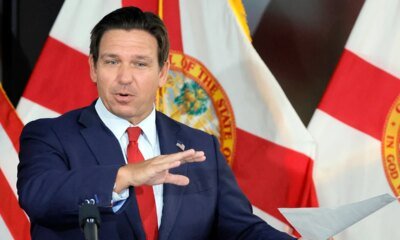
Acting Attorney General Todd Blanche rejected California Gov. Gavin Newsom’s claims that the Justice Department is politically targeting him, saying the governor’s assertions are not «grounded in fact.» (Andrew Harnik/Getty Images; Justin Sullivan/Getty Images)
«The only thing I’ll say about what he chose to do and what he chose to say is, I’m not sure his words are in any way grounded in fact,» Blanche said during a news conference.
«He’d have to address that,» Blanche added.
Newsom claimed June 15 that Trump had directed the Justice Department to investigate him and his wife in an effort to undermine a potential White House campaign.
The California governor has described the investigation as a politically motivated «fishing expedition» by Trump’s DOJ, saying he and his wife have «nothing to hide.» Newsom has also argued the inquiry is aimed at him because he is considering a presidential run, saying, «To get me, he’s coming after my wife.»
WHAT TO KNOW ABOUT THE NEWSOM-LINKED CHARITIES REPORTEDLY CAUGHT IN DOJ’S SIGHTS
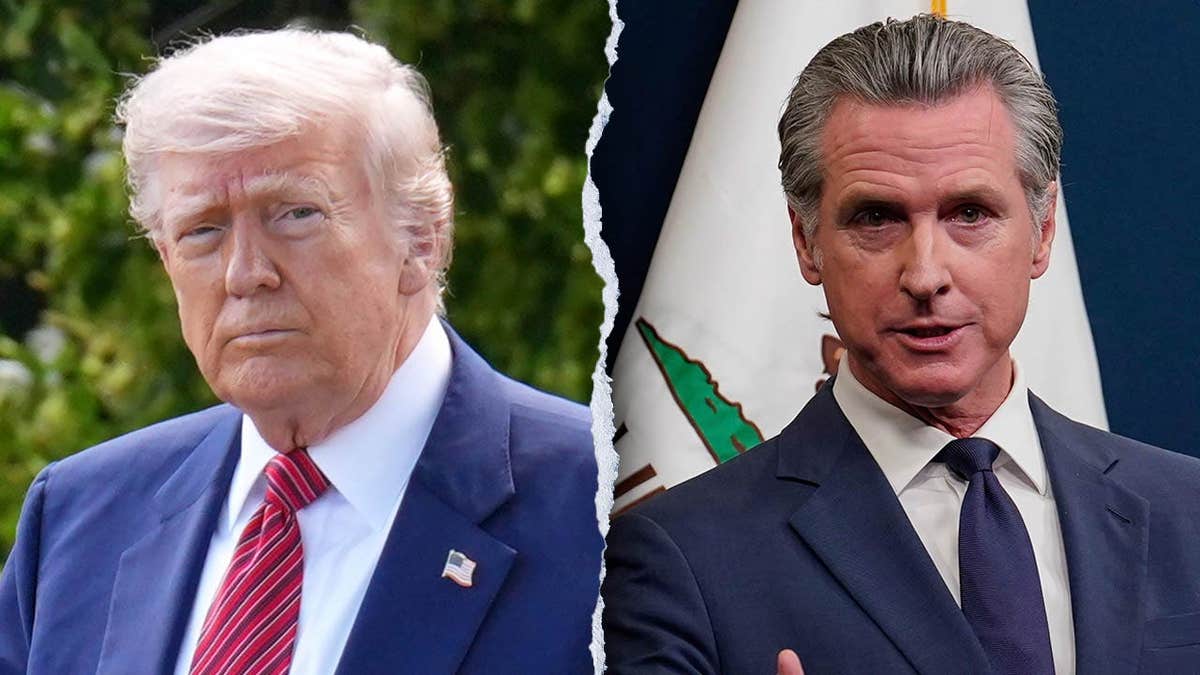
President Donald Trump and Gov. Gavin Newsom, D-Calif., have feuded throughout Trump’s second term so far. (AP Newsroom)
«Donald Trump isn’t just coming after me because of my mean Tweets. He’s coming after me because I am considering running for President,» Newsom said. «Because he hates that I’ve consistently called him out – over and over again – for his lies and deceit. Donald Trump is simply the most corrupt President in American history.»
Blanche also rejected Newsom’s broader characterization of the situation.
«He can choose to say whatever he thinks helps him,» Blanche said. «It doesn’t make it true.»
NEWSOM UNDER FIRE AS CALIFORNIA GAS TAX HIKE SENDS PUMP PRICES EVEN HIGHER
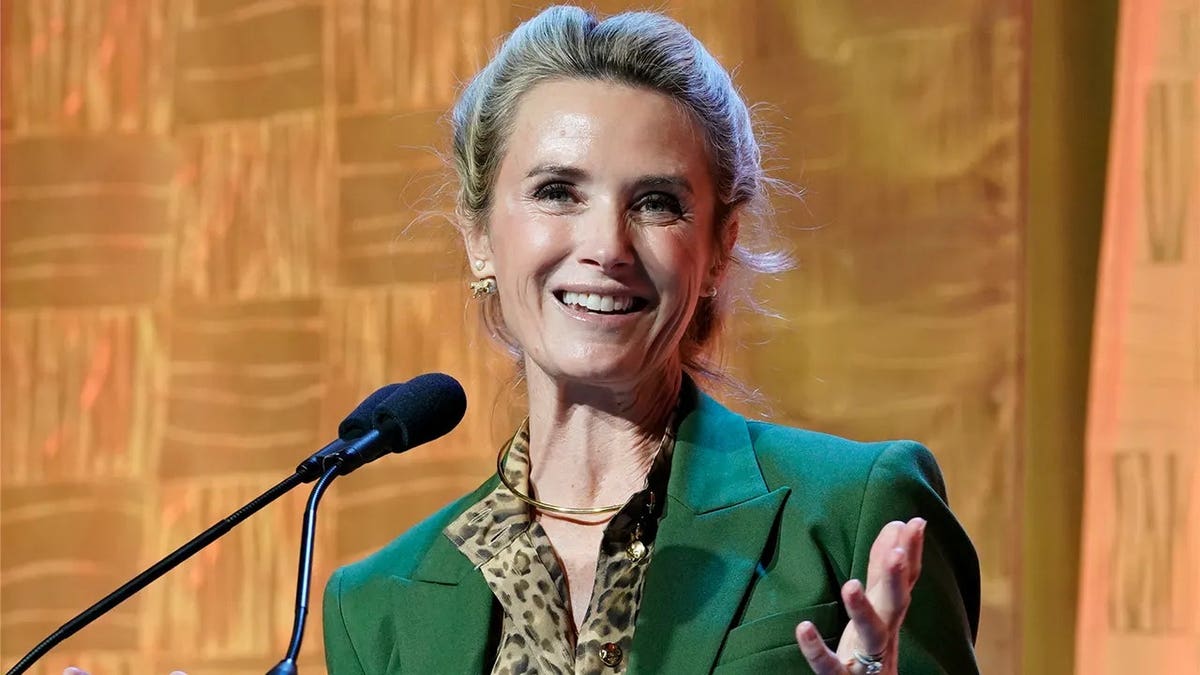
Jennifer Siebel Newsom, Award-Winning Filmmaker, Co-Founder of California Partners Project speaks on stage during the 2024 California Conference For Women at Santa Clara Convention Center on Feb. 29, 2024 in Santa Clara, California. (Marla Aufmuth/Getty Images for Conference for Women)
Sources previously told Fox News the investigation has been ongoing since 2025 and is based on whistleblower complaints related to Newsom and his wife’s personal finances. The matter is being handled by the U.S. Attorney’s Office in Sacramento.
Federal sources confirmed to Fox News there are investigations involving Jennifer Siebel Newsom, but Fox News has not learned of any federal investigation directly targeting Gov. Newsom himself.
The Justice Department has not publicly confirmed any investigation involving Newsom or his wife.
Jennifer Siebel Newsom is a documentary filmmaker who runs The Representation Project, a nonprofit organization that seeks to advance feminism through media production. Fox News Digital previously reported the charity has faced «pay-for-play» allegations, with critics claiming corporations with business interests in California donated to the organization in an effort to gain influence with Newsom.
«There are clearly no boundaries to what Donald Trump will do to get his way or to challenge those who get in his way. This is not presidential behavior, and the Governor and I will continue to speak truth to power because the American people deserve so much more,» Jennifer Siebel Newsom said in a previous statement to Fox News.
Following Blanche’s remarks Wednesday, the governor’s office posted a meme on social media with the caption, «Why you always lyin.»
The governor’s press office also wrote, «Trump goons know that it’s not a crime to lie to a reporter.»
CLICK HERE TO DOWNLOAD THE FOX NEWS APP

California Gov. Gavin Newsom has described the Justice Department’s alleged investigation as a politically motivated «fishing expedition.» (Carlin Stiehl/Los Angeles Times via Getty Images)
Fox News Digital has reached out to Newsom’s office for additional comment.
Fox News Digital’s Bonny Chu and Robert Schmad contributed to this report.
attorney general, gavin newsom, justice department, controversies state and local, politics











NEWYou can now listen to Fox News articles!
TEL AVIV: As Israel marks 1,000 days since the Hamas-led Oct. 7 massacre, children — many still coping with the psychological effects of the war — are beginning their summer vacation, with some navigating the uncertainties of traveling abroad amid rising antisemitism and others grappling at home with the anxieties of living in a society shaped by nearly three years of war on multiple fronts.
Lilach, 47, of Kibbutz Eilon, jut over a mile and a half from Israel’s border with Lebanon in the Western Galilee, told Fox News Digital she hopes her children — Yuval, Amit, and Yoni — will finally be able to enjoy a normal summer.
During the war, there was always concern about leaving home. The kids were barely in school and spent most of their time indoors in front of screens,» she said.
«I hope they can now spend time with their friends and enjoy activities together. Tomorrow, Yoni is going to an amusement park. I just want them to have fun, be with their friends and enjoy being kids again,» she added.
ISRAEL ANNOUNCES IT KILLED ONE OF THE ARCHITECTS OF THE OCT. 7 ATTACKS
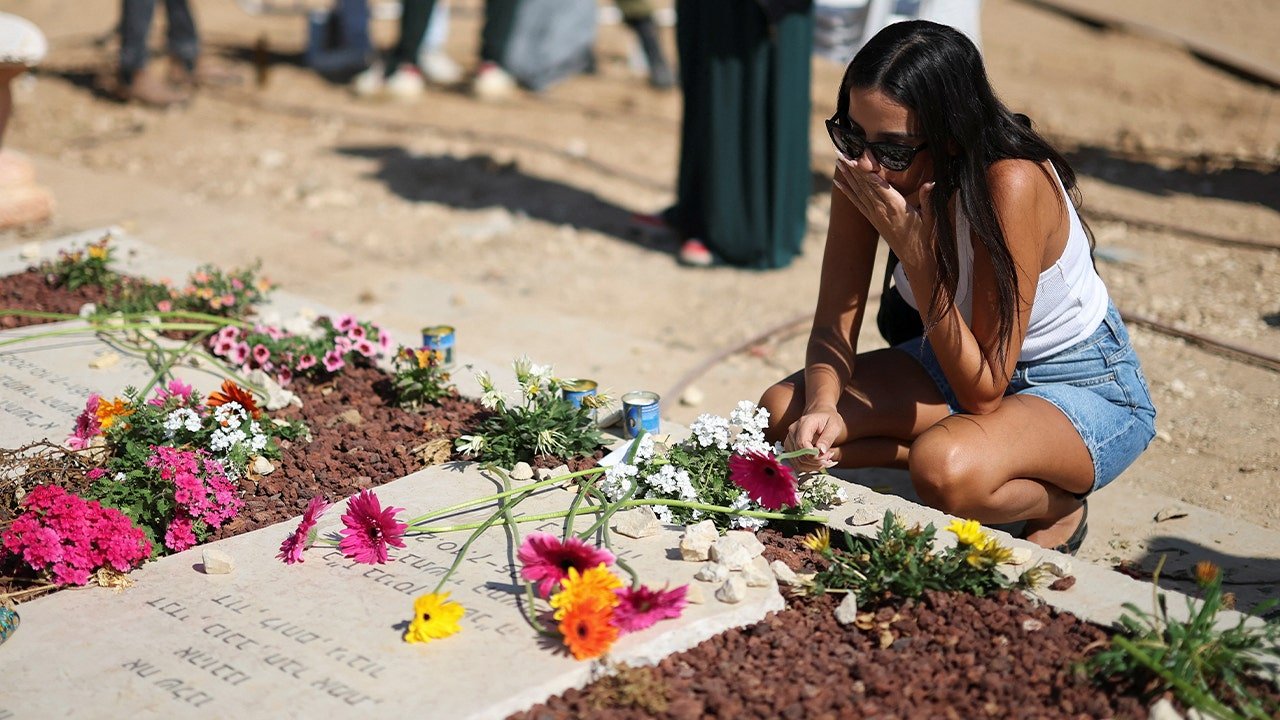
A woman reacts as the community of Kibbutz Kfar Aza commemorates their members who were killed, taken hostage and who died in captivity, following the deadly Oct. 7, 2023 attack by Hamas terrorists, in Kibbutz Kfar Aza, southern Israel, Oct. 16, 2025. (Hannah McKay/Reuters)
Since the COVID-19 pandemic began in early 2020, Lilach said, her children have had only one uninterrupted year of school.
«It was hard. They would start school, attend for a month or two, then classes would stop because of the war with Iran or fighting with Lebanon, and then resume. It was difficult to get back into a routine each time. It felt like starting a new school year over and over again,» she said.
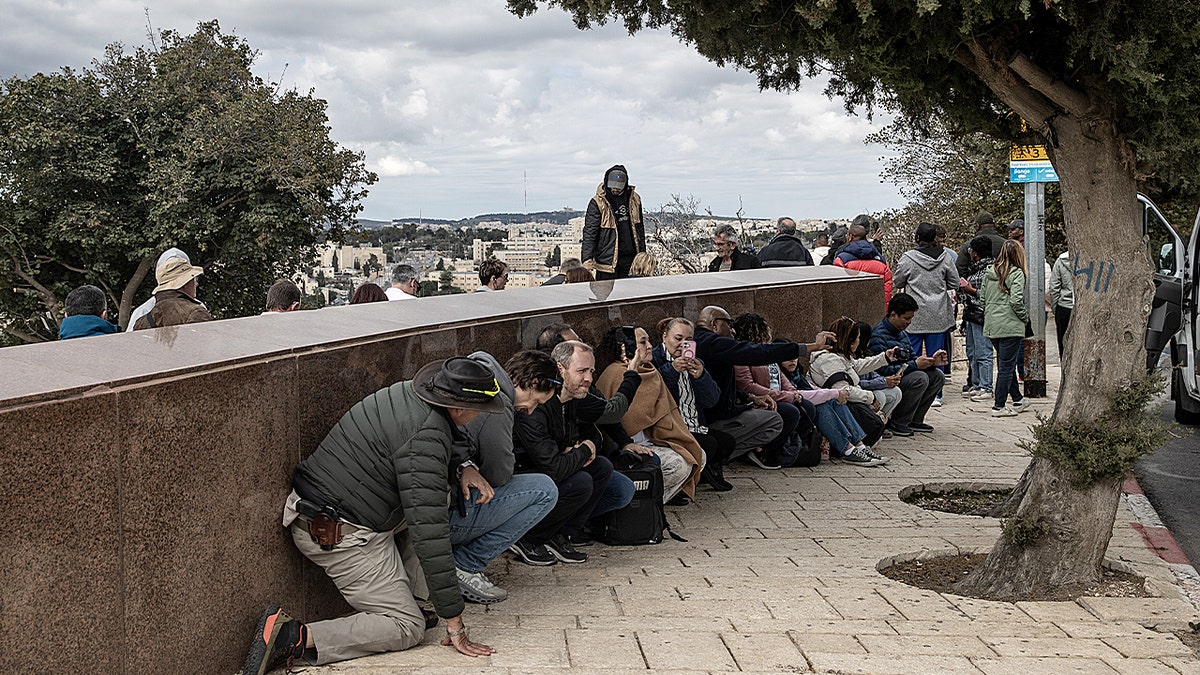
People take shelter as Iran launched missiles and drones towards Israel following the US-Israeli attacks. ( Mostafa Alkharouf/Anadolu via Getty Images)
Despite the repeated disruptions, Lilach said her daughter Amit graduated from high school thanks to her determination and private tutoring. Yoni, however, who has attention deficit disorder, struggled with spending weeks at home during the fighting and will move to a smaller classroom next year to receive additional support.
Evacuated with her family a day after the Oct. 7 attacks, Anat, 50, of Kibbutz Yiftah in the Upper Galilee, less than two miles from Israel’s border with Lebanon, told Fox News Digital that her children changed schools three times before the family returned home in February 2025. During Israel’s recent war with Iran, they were again out of school for about six weeks.
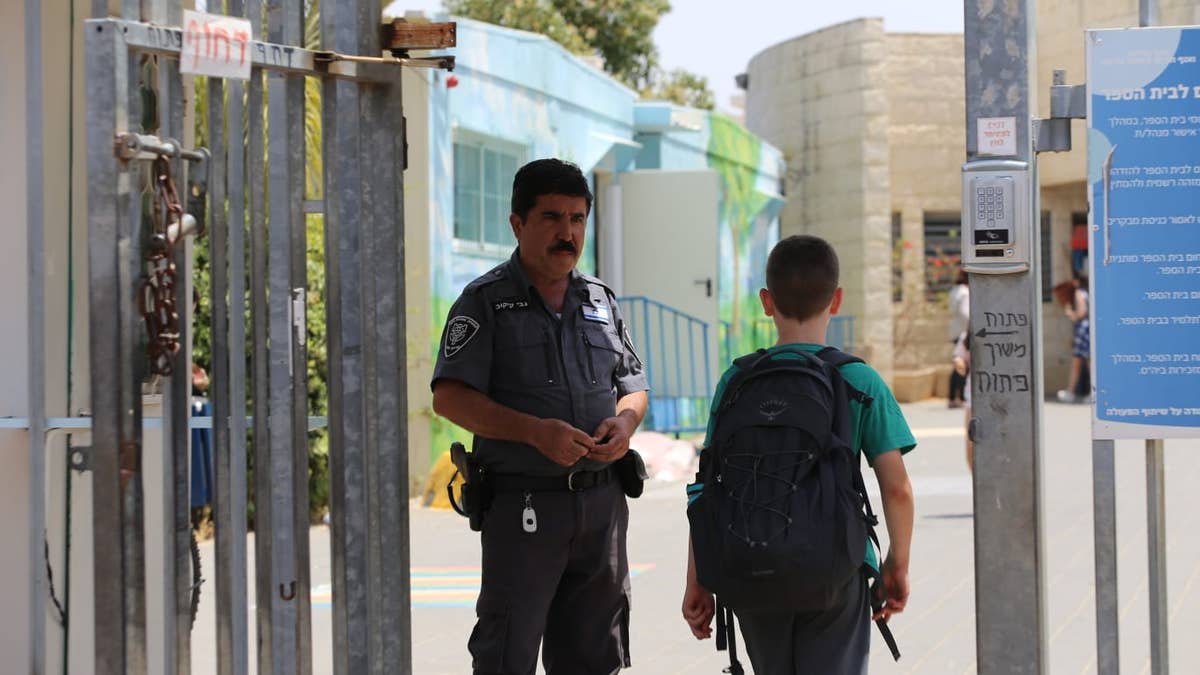
An Israeli school security officer watches on as students enter school (Eitan Elhadz/TPS)
«Every day, having my 10-year-old log on to Zoom for online classes was a challenge. It was very difficult to maintain a routine and continuity in her learning,» Anat said.
With the family hoping to travel abroad this summer, Anat said she has tried to shelter her children from the tidal wave of antisemitism that has emerged globally over the past three years of war.
«We don’t talk at home about people around the world who hate us. We love everyone, and we don’t talk about hate, period. For them, traveling is something wonderful that they can’t wait for,» she said. «Despite how difficult it has been, our children are strong. They have grown up quickly because of everything they’ve been through and know how to cope. We don’t feel sorry for ourselves—we’re fighters.»
EXPERTS URGE EXTREME CAUTION ON IRAN’S ‘CROWN JEWEL’ HEZBOLLAH — TERROR GROUP WITH US BLOOD ON ITS HANDS
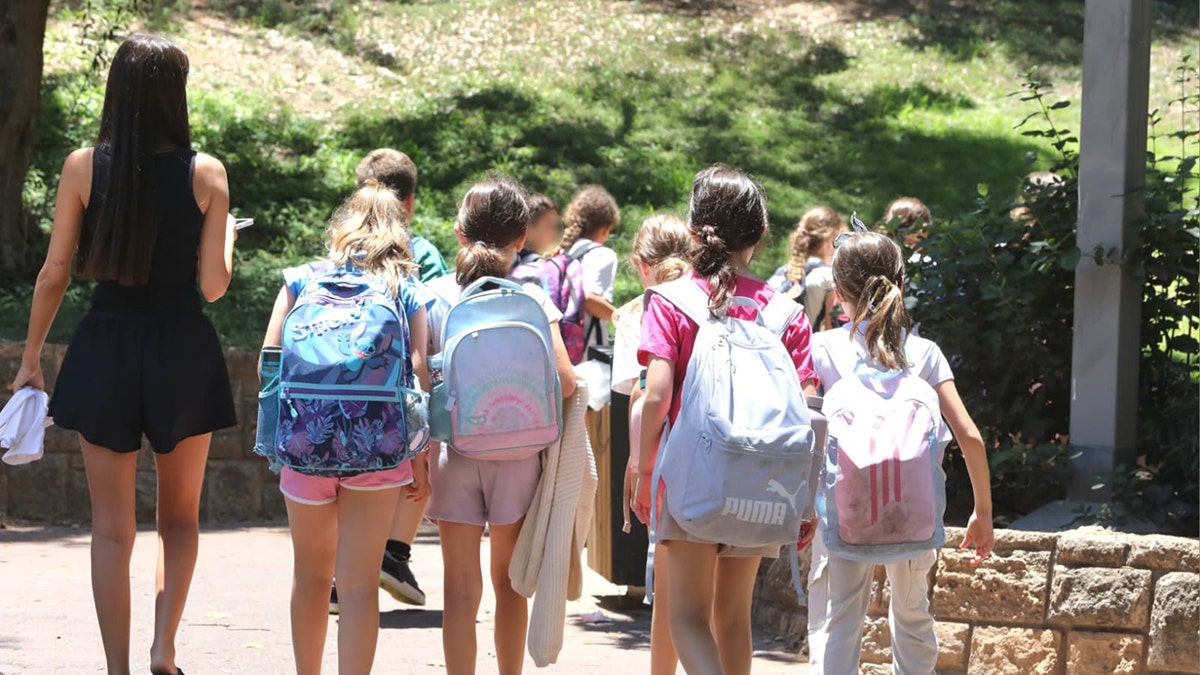
Israeli school kids on an outing on June 30, 2026. (Gideon Markowicz/TPS-IL)
Nufar Bar Lipshatz, a developmental psychologist in the Northern District of Clalit Health Services, Israel’s largest healthcare provider, said many children continue to show signs of trauma.
According to data she cited from Israel’s National Insurance Institute, 25,274 children had been officially recognized as victims of hostile acts between Oct. 7, 2023 and the end of 2025. She also referenced a joint study by the Goshen organization and the Israeli Pediatric Association showing that 84% of Israeli children exhibited signs of emotional distress by late 2023 following the cross-border terror assault from Gaza and Hezbollah’s entry into the war from Lebanon the following day.
«We see many symptoms that are connected but manifest differently in each child, whether it’s a child who can’t speak, wets their pants, or develops [nervous] tics,» Bar Lipshatz said. «Trauma is real, and children can’t always express it with words, so they act it out. They reenact running to shelters, their father being deployed, war, aggression and kidnappings during play.»
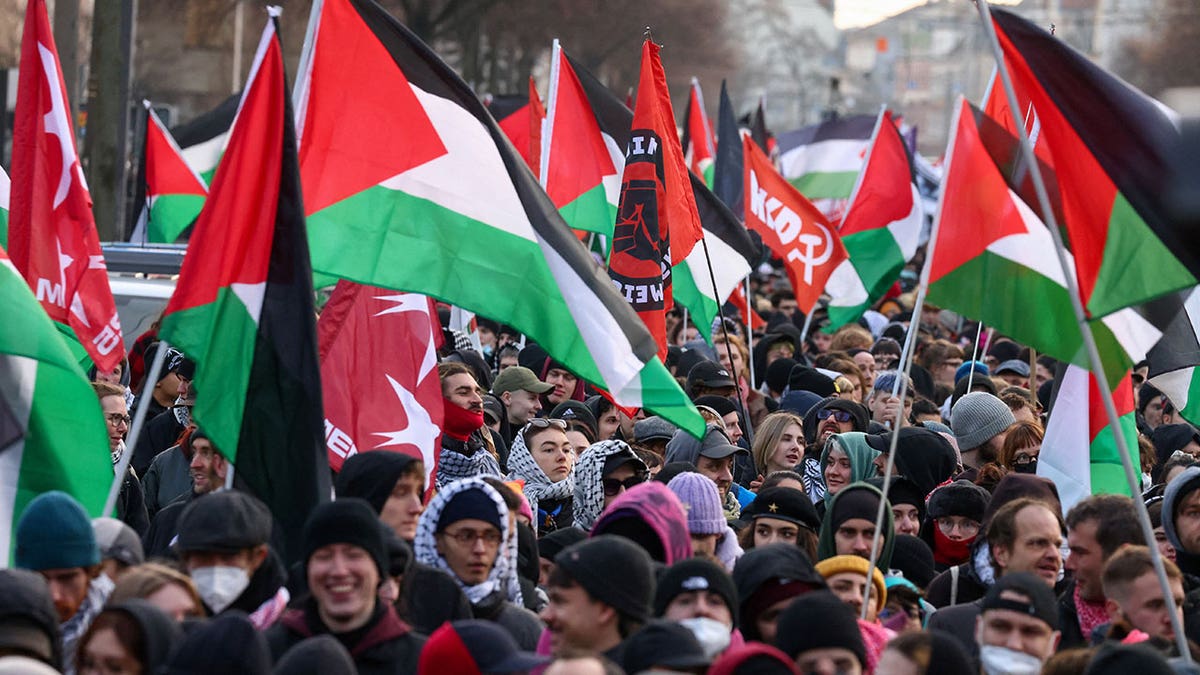
Protesters attend an anti-Israel demonstration in Leipzig, Germany Jan. 17, 2026. (Christian Mang/Reuters)
She recalled treating a girl who became unable to ride her bicycle because she constantly looked over her shoulder, checking whether someone was behind her.
While summer vacation may offer temporary relief, Bar Lipshatz warned that long breaks from routine can reinforce anxiety.
«We know from research that children need stability and routine because it helps them feel safe. During school breaks, children may feel safer because they are avoiding situations that trigger stress, but over time they are also avoiding facing their fears,» she said. «We need to give parents and children the tools to cope with stress because it will not disappear simply by staying at home.»
Bar Lipshatz, who also works with autistic children, said travel itself can be challenging because unfamiliar sounds and crowded environments may trigger traumatic memories.
SIGN UP FOR ANTISEMITISM EXPOSED NEWSLETTER
«When you go on vacation, you go to places with lots of people and noise. What we think could be fun can actually become a trigger,» she said, recalling a trip to Romania where bear-warning sirens in a national park sounded identical to Israel’s missile alerts.
She noted that one of her young patients told her she feared traveling abroad because, despite the war, Israel felt more predictable than an unfamiliar country.
In a bid to maintain a sense of routine and help students catch up on lost time, the Israeli Ministry of Education told Fox News Digital that it will continue operating throughout the summer through programs serving approximately 1.12 million students, supported by an investment of about $270 million.
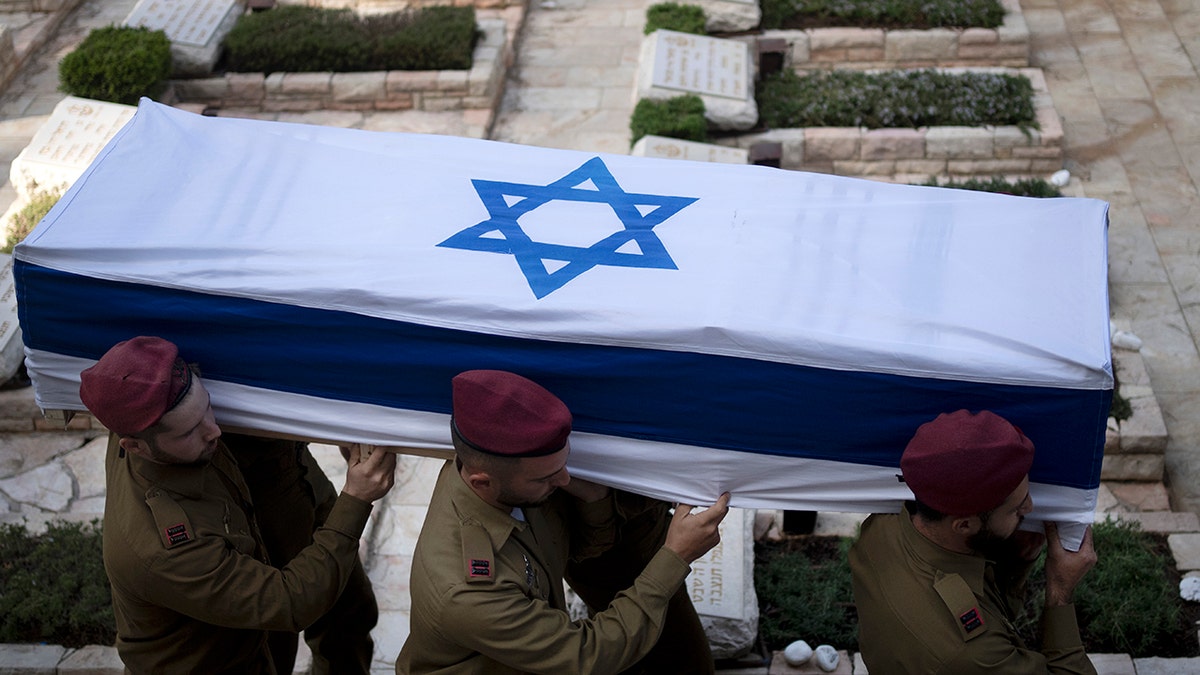
Soldiers carry Oster’s coffin during his funeral on Wednesday in Tel Aviv. (AP/Maya Alleruzzo)
For the first time, middle school students will participate in summer programs focused on artificial intelligence, STEM subjects, mathematics, science, and English. The ministry said the highest participation rates are in northern and southern communities affected by the war.
It also said it will continue providing emotional support through its Psychological Counseling Service, expand psychological services for students in need, and keep its «Voice for All» support hotline operating throughout the summer.
«The education system will continue to support Israeli students during the summer vacation to ensure educational, emotional and social continuity for every student who needs it,» the ministry said.
FROM HOMEROOM TO HATE: HOW JEWISH STUDENTS ARE FACING A NEW KIND OF PRESSURE IN PUBLIC SCHOOLS
Children affected by the war are also attending summer camps such as those led by OneFamily, an organization that supports victims of terrorism and war and their families.
More than 400 children — each of whom has lost an immediate family member to terrorism or war, most since the Hamas-led Oct. 7, 2023, attacks — will take part in OneFamily’s annual summer camp from July 8 to July 13 in the Golan Heights, where they will spend time with other children who share similar experiences of grief and loss.
A central focus of the camp is helping children build resilience while learning to cope with their grief. This year, the organization’s founding director, Chantal Belzberg, received the Israel Prize for Lifetime Achievement.

Israeli children at the OneFamily summer camp, July 2025. (Meir Pavlovski)
Activities include swimming, competitions, sports, but also therapeutic group dialogue circles. On the last night, some campers share stories about their lost loved ones and their own journey to healing, followed by a big concert.
«Children who have lost a parent, both parents or siblings to terrorism or acts of war don’t always want to go to therapy. But when you bring them together with other children who have experienced the same loss, it gives them strength and creates a therapeutic environment,» Belzberg told Fox News Digital.
CLICK HERE TO DOWNLOAD THE FOX NEWS APP
«They come to have fun, and through the activities they meet other children who have gone through the same thing. That’s when they begin to talk. Traditional support services are not always places where children want to go,» she continued.
«We bring them together so they meet children who truly understand them. They realize they are not alone and can build a community where they don’t feel isolated. One of the greatest challenges after trauma is isolation,» she added.
anti semitism, israel, conflicts, terrorism, war with iran
INTERNACIONAL
Francisco, papa argentino: “El corrupto no conoce la fraternidad, conoce la complicidad”
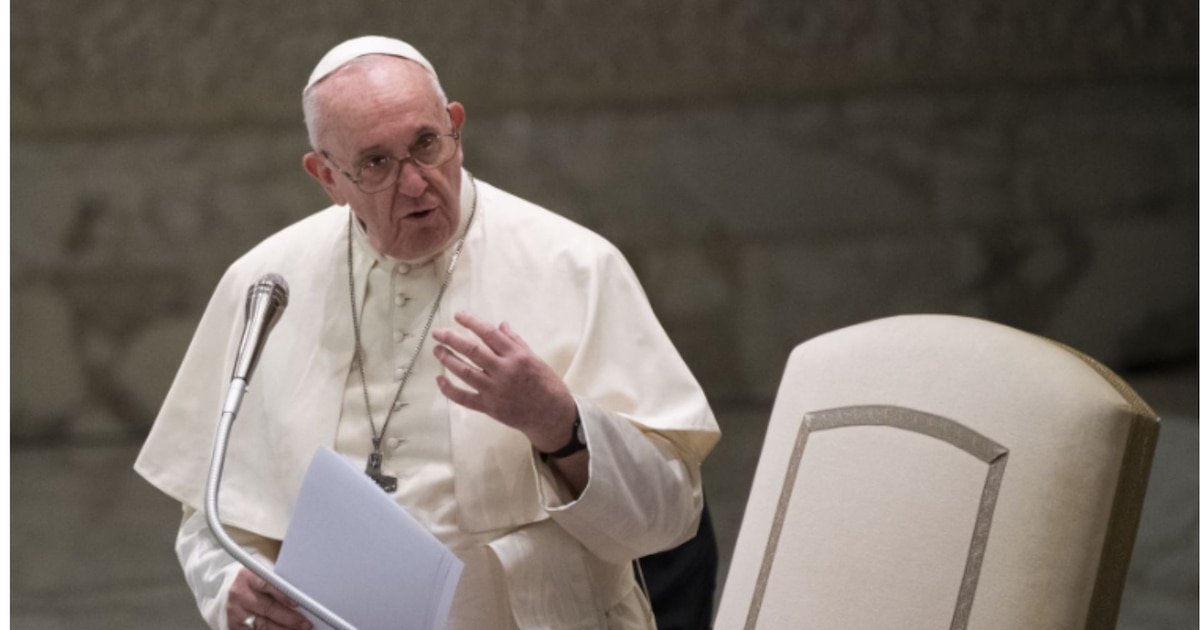
En el vasto andamiaje del pensamiento contemporáneo, pocas figuras han diseccionado las dinámicas del poder con la crudeza conceptual de Jorge Bergoglio. Mucho antes de convertirse en el Papa Francisco, el entonces arzobispo de Buenos Aires ya orbitaba alrededor de una obsesión que combinaba la teología pastoral con la sociología de las instituciones: la naturaleza destructiva de la corrupción. Sobre este asunto dejó un gran aforismo: “El corrupto no conoce la fraternidad, conoce la complicidad”.
Detrás de esta línea hay una tesis filosófica que define la corrupción como la negación absoluta del lazo social y la instauración de una mafia del espíritu. Aunque el mundo la escuchó con resonancia global el 23 de octubre de 2014, cuando el Papa Francisco la pronunció en el Aula del Sínodo de la Ciudad del Vaticano ante los miembros de la Asociación Internacional de Derecho Penal, la idea ya había sido gestada casi una década antes en el ruidoso escenario de la crisis argentina.
La matriz conceptual de esta declaración se encuentra en Corrupción y pecado: algunas reflexiones en torno al tema de la corrupción, un breve pero filoso ensayo publicado por Jorge Bergoglio en el año 2005. En aquellas páginas, escritas bajo el pulso de una sociedad que aún suturaba las heridas políticas y económicas del cambio de siglo, el cardenal se propuso delimitar una frontera invisible pero insalvable para la Iglesia católica: la sutil distancia que separa al pecador del corrupto.
Cuando en 2014 se paró frente a los máximos penalistas del mundo, no lo hizo para hablar exclusivamente de códigos o procedimientos técnicos, sino para describir la psicología del criminal de cuello blanco. Fue en ese contexto de debate sobre los abusos del poder punitivo y la criminalidad económica donde la frase cobró su dimensión definitiva. ¿Por qué el corrupto es incapaz de la fraternidad? Para el Papa Francisco, la fraternidad requiere una simetría moral y la aceptación de la vulnerabilidad del otro.

En su concepción, el hermano es un igual con quien se comparte un destino común. El corrupto, atrapado en una paranoia de impunidad, es incapaz de mirar al otro sin calcular su utilidad. La complicidad es, entonces, la siniestra parodia de la amistad. Mientras que la amistad libera, la complicidad encadena; mientras que la fraternidad se funda en la transparencia, la complicidad exige el secreto compartimentado. Los hombres libres se asocian para construir; los cómplices, para encubrir.
En la arquitectura mental que Jorge Bergoglio describe, el corrupto no tiene amigos, tiene socios; no genera redes de contención, sino pactos de silencio. Quien no entra en la transa colectiva no es un disidente: es un enemigo directo que amenaza la estabilidad del sistema. Esta idea no es un satélite periférico en su producción intelectual; es el centro de gravedad de su geopolítica y sus encíclicas más disruptivas. El pensamiento bergogliano se hamaca siempre entre dos polos: la comunión y la fragmentación.
A diferencia del pecador común, que experimenta la culpa y el peso de su caída —vía que el pensamiento católico clásico explora en obras que van desde las Confesiones de San Agustín hasta la literatura existencialista de Graham Greene—, el corrupto analizado por Jorge Bergoglio ha anestesiado su conciencia. El corrupto no se siente en falta; se siente un ganador. Vive en un estado de autosuficiencia donde la impunidad, y su consiguiente autopreservación, ha sido internalizada como un derecho adquirido.
En última instancia, al denunciar que el corrupto solo conoce la complicidad, el Papa Francisco despoja a la corrupción de su ropaje meramente financiero. Nos advierte que el verdadero peligro de este flagelo no es el dinero que se desvía, sino la degradación antropológica que produce: la transformación de una comunidad de hermanos en una asociación ilícita de cómplices. Esas palabras tan simples y a la vez tan profundas vuelven a sonar hoy cuando —lo vimos estos días— la corrupción sigue enquistada.

Jorge Mario Bergoglio, conocido como el Papa Francisco, nació en Buenos Aires, Argentina, el 17 de diciembre de 1936. Hijo de inmigrantes italianos, se graduó como técnico químico antes de descubrir su vocación religiosa y unirse a la Compañía de Jesús en 1958. Su carrera eclesiástica avanzó con rapidez: se desempeñó como provincial de los jesuitas en Argentina y, en 1998, asumió como arzobispo de Buenos Aires, cargo desde el cual se convirtió en una figura central de la Iglesia latinoamericana.
Su liderazgo cercano, su estilo de vida austero y su constante preocupación por las periferias marcaron su gestión pastoral en el país, consolidando un perfil profundamente enfocado en la justicia social y el cuidado de los sectores más vulnerables. El 13 de marzo de 2013 hizo historia al ser elegido como el papa número 266 de la Iglesia católica, convirtiéndose en el primer pontífice jesuita y el primero proveniente de América. Adoptó el nombre de Francisco en honor a San Francisco de Asís.
A lo largo de sus doce años de pontificado, impulsó reformas estructurales en la curia romana, abogó por la transparencia financiera e instaló debates globales a través de encíclicas fundamentales como Laudato si’ (sobre el cuidado del medio ambiente) y Fratelli tutti (sobre la fraternidad y la amistad social). Tras un prolongado deterioro de su salud debido a afecciones respiratorias, falleció a los 88 años el 21 de abril de 2025 en su residencia de la Casa de Santa Marta, en la Ciudad del Vaticano.
INTERNACIONAL
How Iran attacks are forcing the Pentagon to rethink its decades-old Middle East base strategy
NEWYou can now listen to Fox News articles!
After weeks of Iranian missile and drone attacks exposed the vulnerability of major U.S. military bases across the Gulf, the Pentagon is weighing whether decades of relying on large, permanent installations within range of Iranian weapons still makes strategic sense.
Defense officials are considering dispersing some capabilities and reassessing parts of the U.S. regional base posture, according to a Wall Street Journal report.
The Gulf base network is how the U.S. responds quickly to Iran, protects shipping lanes, reassures Arab partners and keeps pressure on ISIS and al Qaeda. If the Pentagon reduces or disperses that footprint, it could make U.S. forces harder to hit — but also slower to surge in a crisis.
For decades, the tradeoff was straightforward: the closer U.S. forces were to the fight, the faster they could respond. But Operation Epic Fury reignited a long-running debate over whether concentrating aircraft, ships, command centers and thousands of troops at a handful of large Gulf bases had become an increasingly dangerous liability in an era of precision missiles and drones.
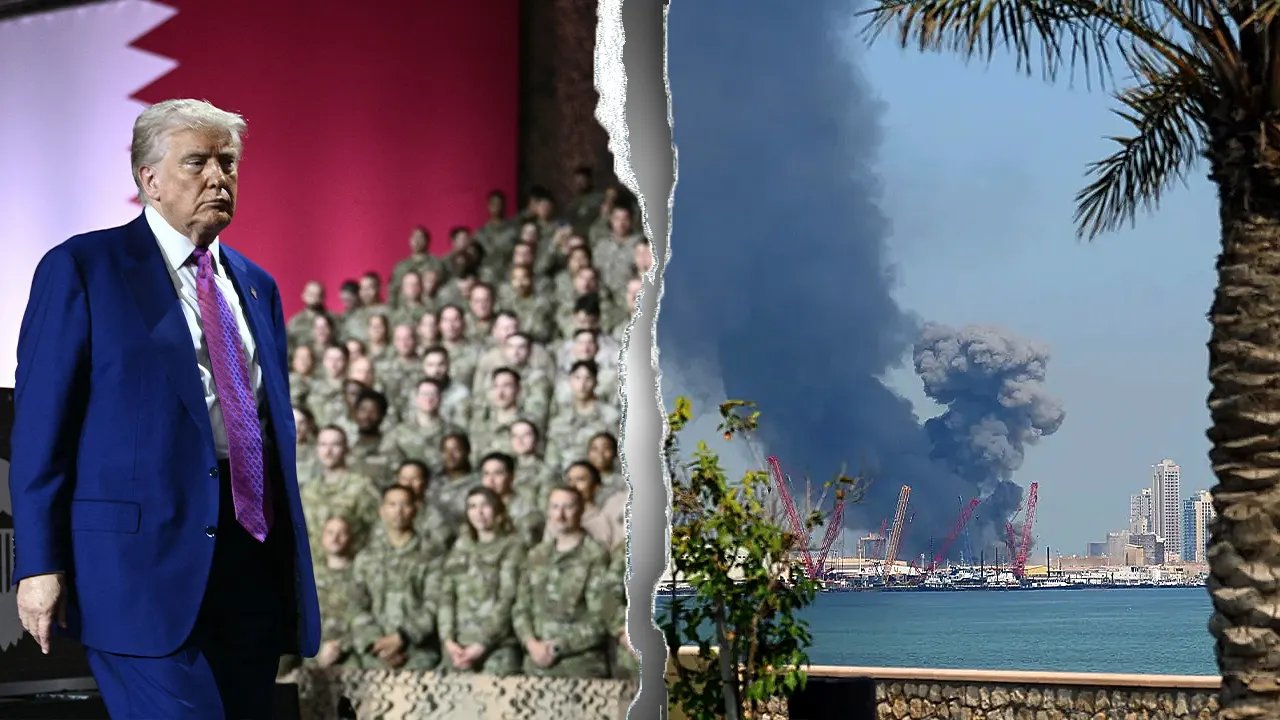
U.S. troops react as President Donald Trump walks to deliver remarks, near a banner reading, «Peace Through Strength», during a visit to Al Udeid Air Base in Doha, Qatar, May 15, 2025. (Brian Snyder/REUTERS)
REPUBLICANS BREAK WITH TRUMP TO REBUKE IRAN WAR — BUT IT WON’T CHANGE POLICY
Retired Navy Rear Adm. Mark Montgomery said the military already has started relying more heavily on alternate command-and-control locations — the headquarters and communications hubs commanders use to direct military operations — and rotating forces rather than concentrating capabilities at a handful of installations close to Iran.
«We’re not relying on them in the same way that we did before the war,» Montgomery told Fox News Digital. «I think we are going to reposition these forces.»
The Pentagon has spent decades building a network of Gulf bases designed to put aircraft, ships and troops within minutes of potential crises across the Middle East. That strategy relied on concentrating combat power at a handful of large installations that offered unmatched access to the region.
But during Operation Epic Fury, Iran launched repeated missile and drone attacks against some of the Pentagon’s most important regional installations, including Naval Support Activity Bahrain, home to the U.S. Fifth Fleet, Al Udeid Air Base in Qatar, Al Dhafra Air Base in the United Arab Emirates and Ali Al Salem Air Base in Kuwait.
While U.S. and partner air defenses intercepted many incoming weapons and casualties remained limited, the attacks demonstrated that virtually every major American operating hub in the Gulf now sits within range of Iranian missiles and drones.
U.S. forces in the Middle East have endured rocket and drone attacks for years, many carried out by Iranian-backed proxy groups against individual outposts in Iraq and Syria. Operation Epic Fury marked a broader test of the Pentagon’s regional basing model, with Iran directly targeting multiple major air and naval hubs that underpin U.S. military operations across the Gulf.
Naval Support Activity Bahrain alone sustained extensive damage to command facilities and communications infrastructure, The Wall Street Journal reported. Since the conflict began Feb. 28, 13 U.S. service members have been killed and 400 wounded, with most wounded returning to duty.
Many of the fatalities resulted from a small number of attacks, including a missile strike in Kuwait and an attack on Prince Sultan Air Base in Saudi Arabia.
Navy Capt. Tim Hawkins, Central Command spokesperson, declined to discuss battle damage assessments but told Fox News Digital the U.S. military «rightfully prioritized the protection of people over buildings, and our strategy of protecting people worked. Iran shot more than 8,000 missiles and drones and only two resulted in U.S. fatalities. We did far more damage to Iran than they did to us — by a lot.»
HEGSETH ANNOUNCES 6-MONTH REVIEW OF AMERICAN FORCES IN EUROPE, BLASTS NATO ALLIES FOR PUTTING TROOPS ‘AT RISK’
What that future posture ultimately looks like remains under review.
A senior U.S. official told Fox News Digital questions about dispersing forces and reducing reliance on a handful of large Gulf bases had been debated since well before Operation Epic Fury, which had reignited those conversations.
«As a planning organization, we continually assess the security environment and make adjustments to best support operations and protect our troops. This has always been the case and remains so going forward,» Hawkins said in response.
Defense officials are weighing whether to disperse military capabilities across a broader network of facilities, move some bases or functions further west and even relocate certain operations to Israel, while reducing the U.S. presence at some installations in Kuwait and Saudi Arabia, the Journal reported. Officials also are reportedly considering moving some command structures underground, or forgoing rebuilding damaged structures.
«We do not have any force posture changes to announce or anything to provide at this time,» a War Department official told Fox News Digital.
A Joint Staff spokesperson told Fox News Digital that the military is tracking diplomatic developments in the region while continually monitoring and evaluating U.S. force posture.
Former counterterrorism director Joe Kent, who resigned over the Trump administration’s war with Iran, has long pushed for the U.S. to reduce its presence in the Gulf.
«Our bases in the Middle East are strategic liabilities not strategic assets. Less bases = less targets for Iran to shoot at and that = less leverage for Iran,» he wrote on X Saturday.
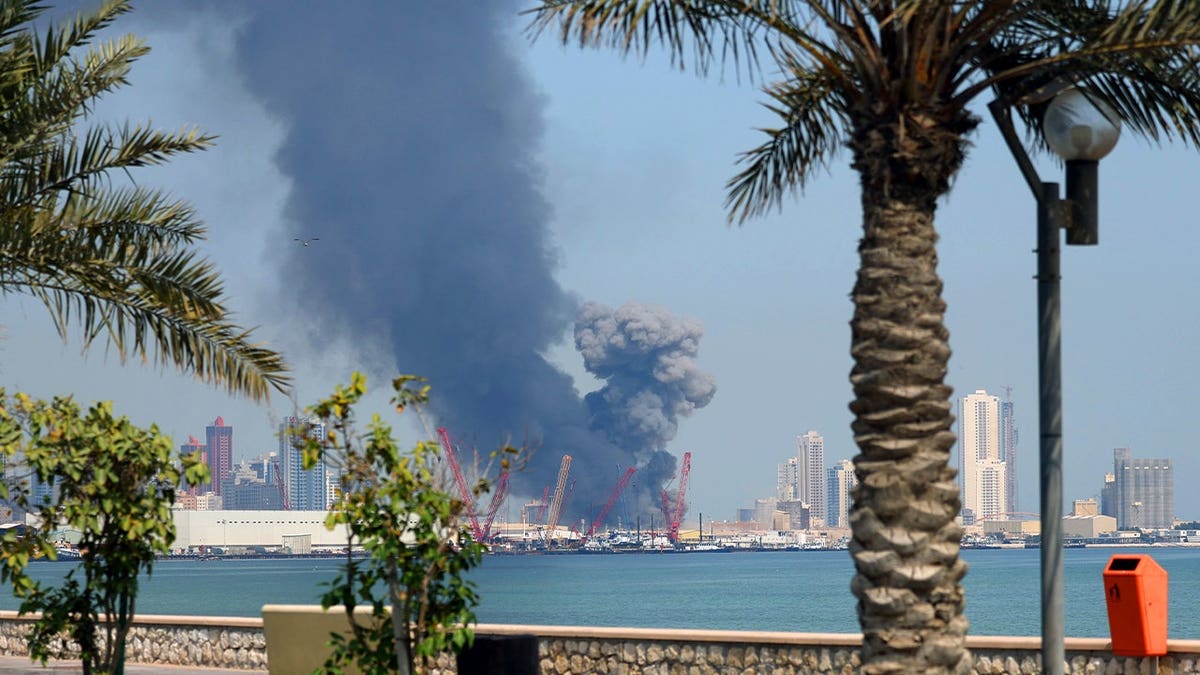
Aftermath of an Iranian missile strike on a Navy 5th Fleet installation in Bahrain is shown above. (Stringer/Anadolu via Getty Images)
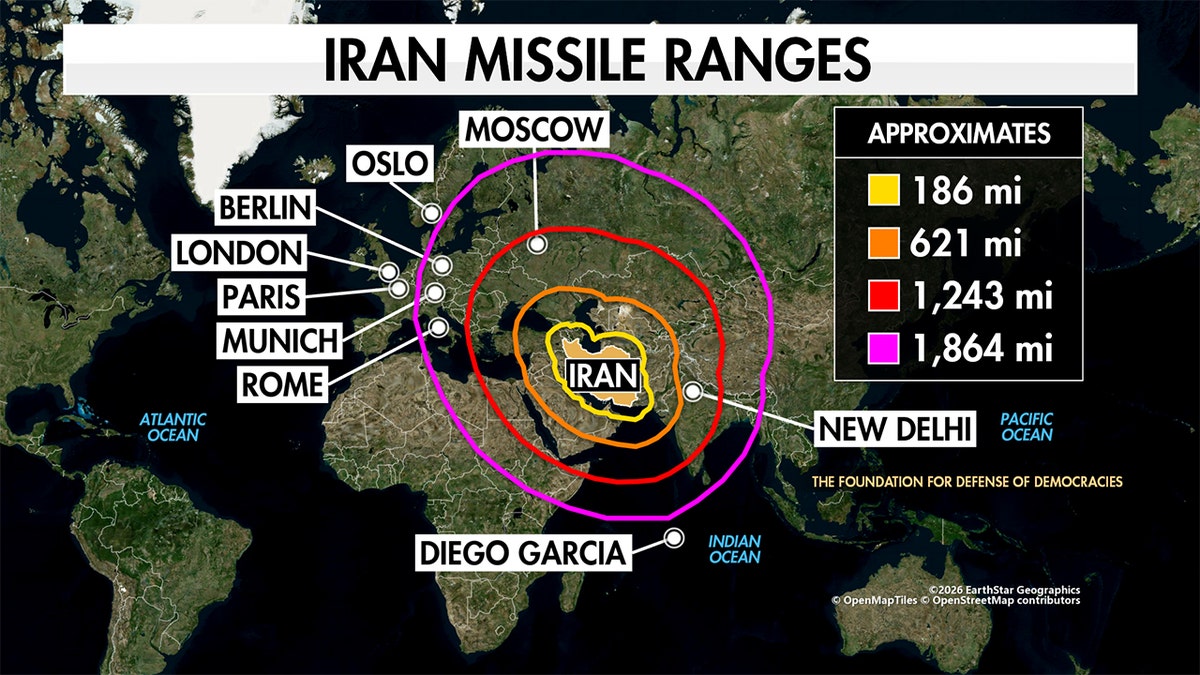
Map from the Foundation for Defense of Democracies showing Iran’s missile ranges. (The Foundation for Defense of Democracies)
«It’s absolutely being discussed,» Retired Adm. Kevin Donegan, the former commander of the U.S. Navy’s Fifth Fleet, which leads U.S. naval operations across the Middle East, told Fox News Digital. «After (the Iran conflict) is over, I think in each country it’ll be independently evaluated based on our relationships with those countries.»
Montgomery said geography itself has become part of the problem. Many of the Gulf’s largest U.S. bases sit only about 90 miles from Iranian launch sites, leaving little time and space to respond to incoming drones.
«They’re just too close,» Montgomery said. «They’re…90 miles away from Iranian launch points.»
Fighter aircraft have become one of the primary tools for intercepting Iranian drones, but Montgomery said the Gulf’s proximity to Iran leaves defenders with less time and space to intercept drones after launch.
«Our way of shooting down drones, the best way is aircraft equipped with rockets,» he said. «But to do that, you got to get behind the drones. That’s hard.»
Moving some operations farther west would not put U.S. troops beyond the reach of all Iranian weapons. Iran’s longer-range missiles can reach Israel and other parts of the region, and former commanders cautioned that there may no longer be any truly safe rear area.
But dispersing command nodes, aircraft, logistics hubs and personnel across more locations could reduce the risk that a single strike disabling a critical U.S. capability.
«Everywhere we have forces around the world, they are under the missile envelope of potential adversaries,» he said. «So, where do you go to?»
«What you can do is buy yourself a little time against the threat, but in the end, we still need to have access to basing, because our being in the Gulf is not just to revolve around Iran, we have other reasons to be there, whether that be to ensure that terrorists like ISIS and Al Qaeda, etc. don’t threaten stability,» Donegan went on.
The bases that came under attack form the backbone of America’s military presence in the Gulf.
CLICK HERE TO DOWNLOAD THE FOX NEWS APP
The U.S. typically maintains about 40,000 troops across the Middle East, anchored by a network of major bases built up during the post-9/11 wars. Al Udeid Air Base in Qatar —home to the forward headquarters of U.S. Central Command and the largest U.S. military installation in the region — alone hosts about 10,000 American personnel. Other major hubs include Naval Support Activity Bahrain, home to the U.S. Fifth Fleet, Camp Arifjan and Ali Al Salem Air Base in Kuwait, and Al Dhafra Air Base in the United Arab Emirates.
Those installations became the backbone of U.S. military operations during the wars in Afghanistan and Iraq and remain central to American air, naval and logistics operations across the region.
Fox News Digital reached out to the U.S. Fifth Fleet, the White House and the governments of Bahrain, Qatar, the UAE, Kuwait, Saudi Arabia and Israel for comment.
Trump has not publicly commented on the matter.
war with iran, middle east foreign policy, military

After 1,000 days of war: Many Israeli children carry trauma into summer break

Construir los cimientos de la Inteligencia Artificial: los desafíos de la infraestructura del futuro

El Senado se paraliza en medio de la guerra entre Patricia Bullrich y Victoria Villarruel

Cesc Fàbregas se lleva a Luis Milla: operación redonda para el Como

¡Lo arruina a Nico Occhiato! Se confirmó que Flor Peña llevará a juicio a Luzu por 750 millones de pesos y va por todo

El lado B del ascenso de Santilli: la jugada del PJ que altera los planes 2027 y los peligros de la “silla eléctrica”

Exigen que Adorni renuncie a su cargo en el directorio de YPF

Tras haber dejado su cargo de jefe de Gabinete, Manuel Adorni también renunciará como director de YPF

Shipping giant warns Strait of Hormuz chaos is ‘new normal’ as Tehran shifts 4M barrels

Javier Milei irá a la cumbre del Mercosur en tensión con Brasil y con Venezuela como telón de fondo

 POLITICA1 día ago
Con la incorporación de Santilli al Gabinete, el Gobierno relanza su estrategia para las elecciones 2027
- ECONOMIA3 días ago
Exportadores y el sindicato de aceiteros acordaron un aumento de sueldo para todo 2026
- ECONOMIA2 días ago
Comcast’s Breakup Is Overdue. It Shouldn’t Rush Into a New Marriage.