INTERNACIONAL
Massie ally sparks backlash after accusing Trump-backed challenger of abusing VA benefits

NEWYou can now listen to Fox News articles!
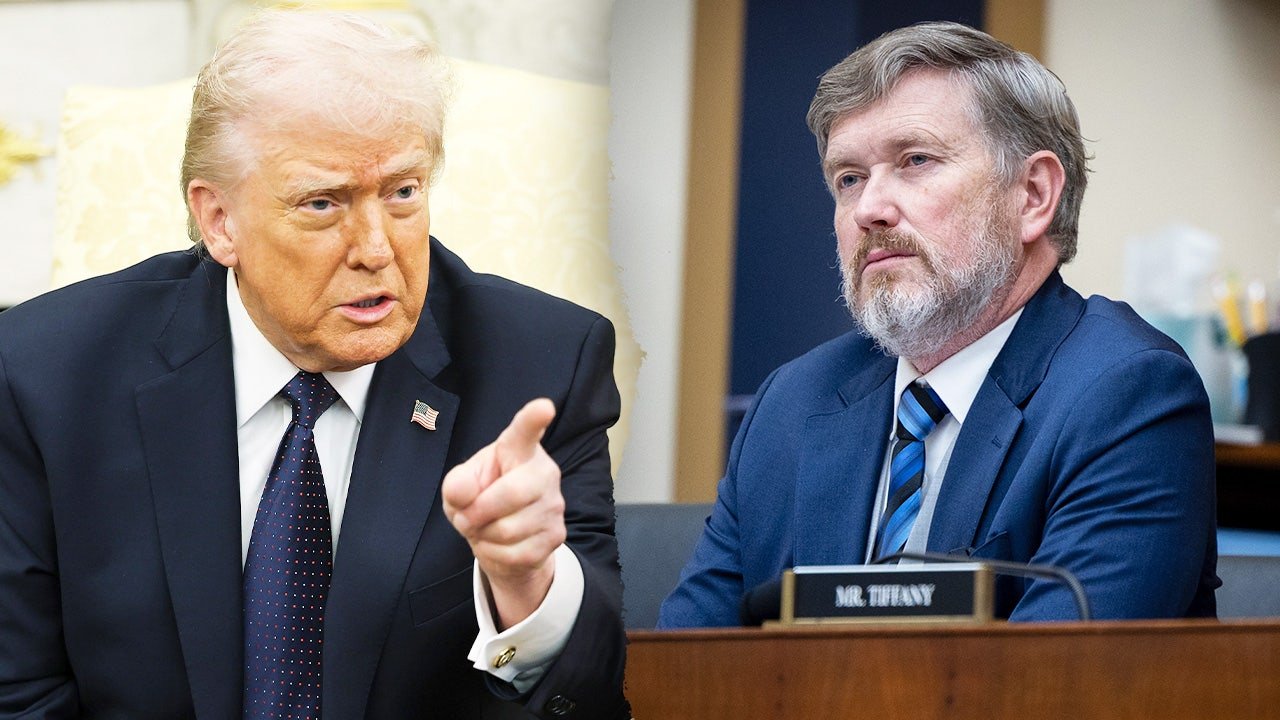
An ally of Rep. Thomas Massie, R-Ky., is receiving blowback for painting Ed Gallrein, Massie’s challenger, as a veteran potentially abusing disability benefits.
«Ed Gallrein has received government benefits for claiming to be 100% physically disabled, while also claiming to do demanding full-time farm work on his family’s operation,» Andrew Cooperrider, a radio and podcast host, said in a post to Facebook.
«This raises serious questions about consistency, transparency and accountability,» he continued.
The post drew criticisms from experts in the veterans’ community for what they called a mischaracterization of the Veterans Affairs (VA) disability rating system. It also highlights the sensitivity of a race that pits a Trump-endorsed candidate against one of the president’s most frequent critics.
SCOOP: TRUMP-BACKED FORMER NAVY SEAL LAUNCHES GOP PRIMARY CHALLENGE AGAINST MASSIE
Republican congressional candidate for Kentucky, Ed Gallrein speaks as U.S. President Donald Trump looks during an event at Verst Logistics on March 11, 2026, in Hebron, Kentucky. (Andrew Harnik/Getty Images)
«I think it’s disgraceful that any type of campaign would try to use a VA disability rating against somebody,» Mark Lucas, founder and president of Veteran Action, an advocacy group, said of Cooperrider’s post.
«Just because a veteran has a disability, it does not mean that they can’t work,» Lucas added.
Gallrein, a former longtime Navy SEAL and fifth-generation Kentucky farmer, has positioned himself as a pro-Trump candidate looking to unseat the biggest thorn in the side of the GOP. He contends that Massie’s decision to vote against Trump’s Big Beautiful Bill, his push to pass the Epstein Files Transparency Act and constant criticisms of overseas conflicts in Iran and Venezuela all go against the grain of the party.
Gallrein received Trump’s endorsement earlier this year.
Tim Murtaugh, an advisor to his campaign, blasted Cooperrider’s Facebook post, calling the criticism an «offensive attack.»
«This is a ridiculous and offensive attack on a veteran, a potentially illegal invasion of privacy and it proves Massie and his allies truly have no shame and no honor,» Murtaugh said.
EXCLUSIVE INTERVIEW WITH NAVY SEAL EDDIE GALLAGHER AS TRUMP POISED TO INTERVENE IN CASE
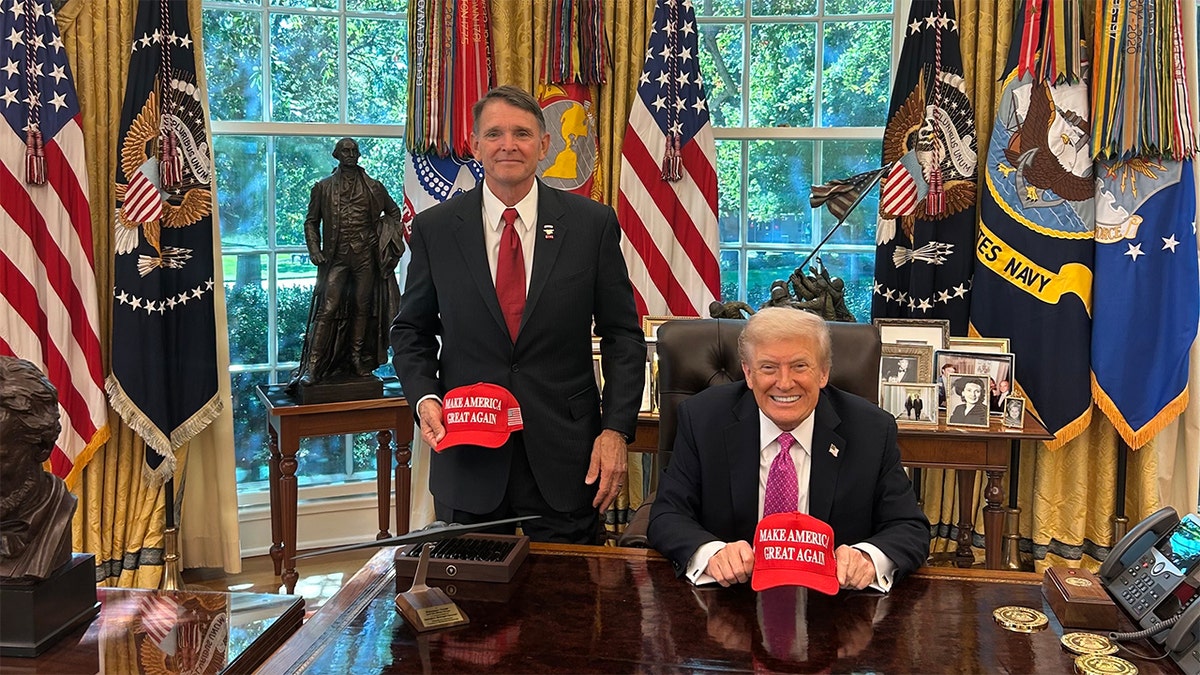
Ed Gallrein launched a congressional campaign to challenge Rep. Thomas Massie in Kentucky after President Donald Trump endorsed him. The announcement took place in the Oval Office at the White House in March. (Fox News)
Prior to his political aspirations, Gallrein served as a member of SEAL Team Six, deploying to conflict zones in Panama and the Persian Gulf among others, before returning to work on his family’s farm, according to his online biography.
It’s unclear what kind of injuries led the Department of Veterans’ Affairs to give Gallrein the 100% disability rating.
Darin Selnick, former VA Affairs advisor for the White House Domestic Policy Council and a senior advisor for Veteran Action, explained that a disability rating is a multi-factor assessment of injuries sustained in service-related activity that then serves as a basis for federal assistance.
He stressed that veterans have little say in the rating they ultimately receive.
ARMY OFFICER-TURNED-CREATOR ‘MANDATORYFUNDAY’ RISES ABOVE VETERANS DAY BACKLASH: ‘I CHOOSE TO LAUGH’

Signage is displayed outside the Department of Veterans Affairs headquarters in Washington, D.C. (Stefani Reynolds/Bloomberg)
«When you file for the claim, the VA has an independent medical examiner that looks at your medical records. They do additional medical examinations to confirm what’s in the medical records. That report goes to the ratings examiner,» Selnick said.
CLICK HERE TO DOWNLOAD THE FOX NEWS APP
«VA then says, okay, based on this rating, you then get X amount of compensation per month for the service-connected injuries that happened to you.»
Cooperrider did not immediately respond to a request for comment from Fox News Digital.
fox news, republicans, republicans elections, veterans













INTERNACIONAL
Democrat compares ICE to ‘domestic terrorists’ as 111 House Dems demand Texas detention center close

Rep. Delia Ramirez calls for abolition of ICE at DHS hearing
At a House Homeland Security Committee hearing, Rep. Delia Ramirez, D-Ill., delivers a powerful and emotional statement, questioning if any parent wouldn’t go to extreme lengths for their dying child. Ramirez attacks for-profit prison corporations and makes a direct call to abolish ICE and dismantle DHS, citing concerns over inhuman conditions.
NEWYou can now listen to Fox News articles!
A House Democratic lawmaker compared actions by Immigration and Customs Enforcement (ICE) to domestic terrorism after a visit to a Texas detention facility on Tuesday.
Rep. Luz Rivas, D-Calif., said that seeing ICE’s actions was personal for her as the daughter of Mexican immigrants and argued that «for the people of the United States, we don’t want to see our government, or ICE officials, acting like domestic terrorists,» she said in Spanish during a press conference.
She said her Los Angeles district saw more ICE raids than anywhere else in her county.
Rivas was among a group of lawmakers led by Rep. Joaquin Castro, D-Texas, on a visit to an ICE facility in Dilley, Texas, which over 100 House Democrats have demanded to be shut down.
TRUMP ON VERGE OF SECURING $70B ICE FUNDING VICTORY AFTER HOUSE CLEARS HURDLE
ICE agents stand guard in front of protesters outside the federal immigration center at Delaney Hall in Newark, where ICE is housing detained immigrants on May 26, 2026, in Newark, New Jersey. (Spencer Platt/Getty Images)
The lawmakers accused the Trump administration of holding families, including a child as young as 2 months old, in inhumane conditions.
Rep. Ayanna Pressley, D-Mass., a member of the left-wing «Squad,» also attacked President Donald Trump as a «dictator.»
SOMETHING TO HIDE? ICE UNDER FIRE FOR SUBSTANDARD CONDITIONS AT FOR-PROFIT DETENTION CENTER
«It’s so important that we not acquiesce to this, this fascist administration, this dictator in the Oval Office,» Pressley said. «History has shown us time again, appeasement does not work. The only way to beat a dictator is with defiance. The only way to beat fascism is to refuse to accept this segregated, divided, dark, dystopian view that they have for our country, is to reject it as an inevitability.»
She called on Americans to «resist, reject, condemn at every turn.»
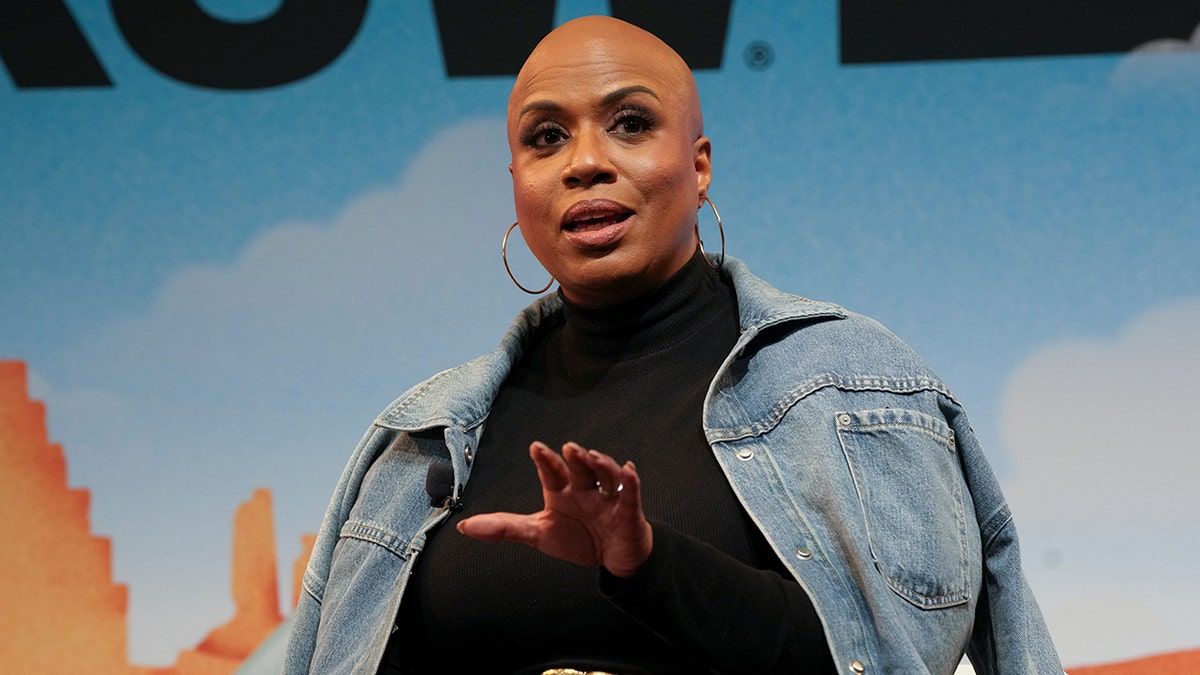
Ayanna Pressley at the Featured Session «Repro Revolution: A Conversation with Rep. Ayanna Pressley» during the SXSW Conference & Festivals held at the Austin Convention Center on March 9, 2025, in Austin. (Amy E. Price/SXSW Conference & Festivals via Getty Images)
But it’s that kind of rhetoric that Republicans have argued is responsible for sending tensions across the U.S. skyrocketing.
SPANBERGER’S ICE ROLLBACK TO BLAME FOR TODDLER KILLING, VIRGINIA ‘HOTBED’ OF ILLEGAL IMMIGRANT CRIME: DHS
GOP allies of the president have accused Democrats of encouraging violence and resistance against ICE agents, drawing a line between encouragement to resist federal immigration officers and the slate of violent incidents involving those officers this year alone.
But Democrats are accusing ICE of acting as a rogue agency outside the bounds of the law.
«We have to abolish ICE. And then I’m going to take it one step further and say any of those agents that have contributed to and caused the injury, the harm, and even fatalities, they must also be held accountable,» Pressley said. «And we should abolish qualified immunity for these federal law enforcement officers.»
In a letter sent earlier this month, 111 House Democrats accused the administration of harming children and families with the conditions at the Dilley detention center.
«Parents describe horrendous conditions at Dilley, leading to severe depression, hopelessness, and suicidal ideation amongst their children. Children have reported that their food is often contaminated with worms and mold and that they feel sick after drinking tap water,» the letter said. «Families also report not being able to sleep at night because the lights are kept on in their rooms throughout the night. … Medical care provided by CoreCivic staff is delayed, denied, and in many cases outright dismissed, even when children are suffering life-threatening medical emergencies.»

In this Aug. 23, 2019, file photo, immigrants seeking asylum hold hands as they leave a cafeteria at the ICE South Texas Family Residential Center in Dilley, Texas. (Eric Gay/AP Photo)
CLICK HERE TO DOWNLOAD THE FOX NEWS APP
Fox News Digital reached out to the Department of Homeland Security (DHS) for a response to Rivas’ comments.
DHS did previously accuse Democrats of lying about conditions at Dilley, which it said in a press release was specialized to hold families and care for children specifically.
«The Dilley facility is retrofitted for families. Children have access to teachers, classrooms, and curriculum booklets for math, reading, and spelling. They have access to age-appropriate books, toys, and outdoor activities. All of this is generously funded by the U.S. taxpayer,» DHS said.
«Infant care packages include formula, baby food, bottles, diapers, wipes, and hygiene items. The facility also provides sippy cups and cribs. Adults with children are housed in facilities that provide for their safety, security, and medical needs.»
illegal immigrants, deportation, homeland security, immigrant rights, politics
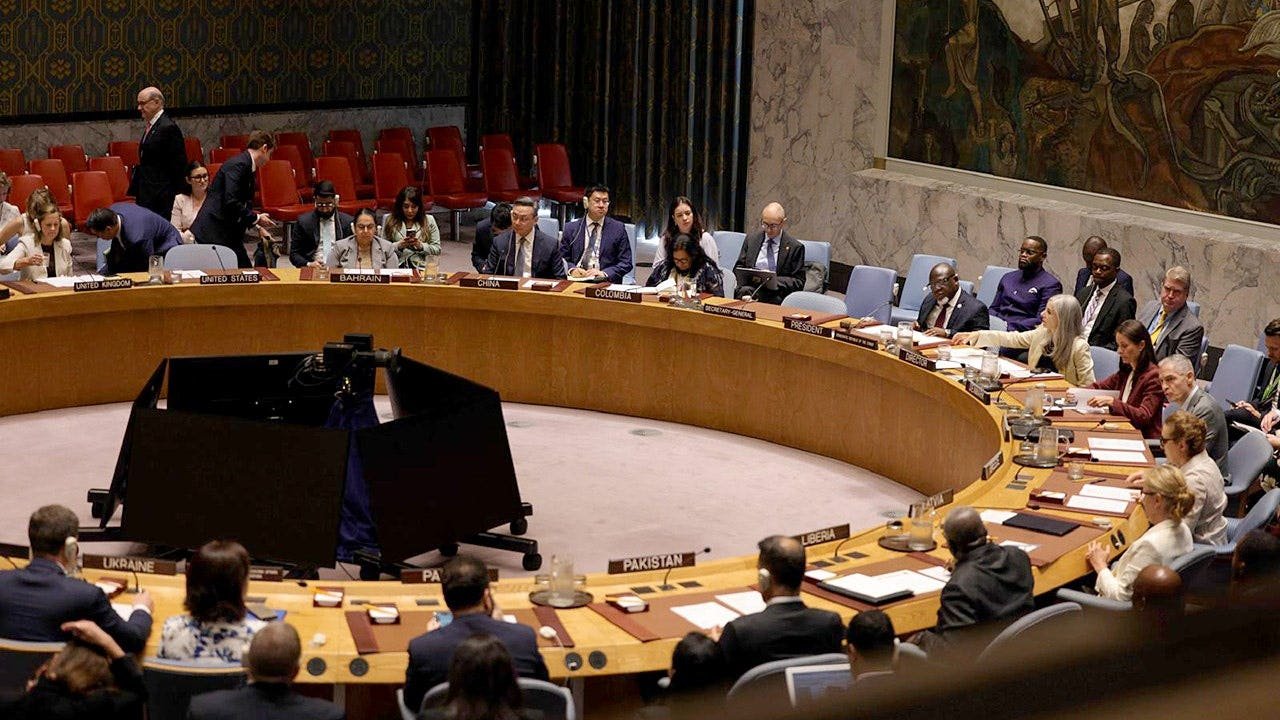
NEWYou can now listen to Fox News articles!
The United States dramatically walked out as France addressed the United Nations (U.N.) Security Council Monday, escalating an extraordinary clash between the longtime allies after Paris claimed America was no longer a «beacon of human rights.»
The U.S. delegation left the chamber as French Ambassador Jérôme Bonnafont delivered remarks during a Security Council meeting on Ukraine, days after France’s U.N. mission in Geneva accused Washington of standing alongside North Korea, Nicaragua, Mali and Russia following a vote on the U.N.’s human rights chief.
Deputy U.S. Ambassador Dan Negrea accused France of «disingenuous grandstanding» and warned that American diplomats would continue walking out during French statements until Paris renounces what he called its «condescending and disrespectful rhetoric.»
TRUMP ADMINISTRATION TOUTS MORE THAN $1B IN UN BUDGET CUTS AS REFORM PUSH GAINS MOMENTUM
Deputy U.S. Ambassador to the United Nations Dan Negrea leaves the Security Council chamber as French Ambassador Jérôme Bonnafont speaks. ( U.S. Mission to the United Nations)
«Today, I remind them that it is the United States that remains the beacon of liberty for the world,» Negrea told the council. «As such, we will not be affording them the benefit of listening to their politicized drivel until they renounce their condescending and disrespectful rhetoric and behave in a manner commensurate with their seat on this council.»
The clash matters because the United States and France are among the world’s oldest allies, dating back to French support for the American Revolution, and today remain NATO partners and permanent members of the U.N. Security Council. Their cooperation is central to Western policy on Ukraine, European security and sanctions enforcement.
A French diplomat told Fox News Digital that the dispute should not be interpreted as a broader rupture between the longtime allies. «Differences in how we assess a vote do not call into question the quality of our relations or our ability to work together,» the diplomat said.
Israel’s U.N. Ambassador Danny Danon backed Washington’s response and sharply criticized France.
«I think the behavior of France is shameful,» Danon told Fox News Digital Tuesday. «The U.S. is demonstrating moral clarity, standing for the real values of the U.N.»
Danon accused France and other European countries of supporting voices within the United Nations that undermine rather than advance human rights. «It’s about time to reform the U.N., and I want to thank the U.S. for showing leadership on that issue,» he said.
The confrontation marked a significant escalation from the unusually personal social media exchange that erupted after the General Assembly approved a second four-year term for U.N. High Commissioner for Human Rights Volker Türk.
Türk, an Austrian diplomat who has served as U.N. high commissioner for human rights since 2022, has drawn criticism from the United States and outside watchdogs over what they describe as uneven scrutiny of democracies and authoritarian governments. A 2024 analysis by UN Watch found that, among public country criticisms initiated by Türk or his office, he criticized the United States more often than China, North Korea, Cuba, Saudi Arabia and Qatar combined, while issuing no such criticism of several repressive governments during the period reviewed.
Türk’s supporters, including France and the European Union, argue that his willingness to criticize powerful democracies reflects the independence and universality required of the U.N.’s top human rights official.
France’s Geneva mission had declared that the United States was no longer a human rights leader and claimed «the world no longer listens to it» after Washington joined nine other countries in voting against Türk’s extension.
IRAN SECURES UN ROLE WITH BACKING FROM UK, FRANCE, CANADA, AUSTRALIA AS US STANDS ALONE

French Ambassador to the UN Jérôme Bonnafont (2L) and French President Emmanuel Macron (C) arrive for a United Nations Summit on Palestinians at U.N. headquarters during the United Nations General Assembly (UNGA) in New York on Sept. 22, 2025. (Ludovic MARIN / AFP via Getty Images)
U.S. Ambassador Mike Waltz responded by accusing France of backing an official who lectures democracies while «cozying up to the world’s worst oppressors.»
Negrea went further Monday, invoking the history of the U.S.-French alliance and saying Washington had stood beside France whenever its freedom was threatened.
The United States had tolerated France’s «grandstanding» out of «a sense of camaraderie and mutual respect,» he said, but would no longer remain silent in the face of what he described as feigned French «moral outrage.»
Bonnafont did not directly address the walkout when he spoke again at the end of the meeting. Instead, he invoked the countries’ historic ties, noting that France helped the United States secure its independence and participated in celebrations marking America’s 250th anniversary. «This is the spirit of the relationship between France and the United States,» he said, before reaffirming France’s commitment to the U.N.’s work on peace, development and human rights.
AMERICANS ARE NOT GIVING UP ON NATO, BUT THEY EXPECT EUROPE TO DO ITS SHARE
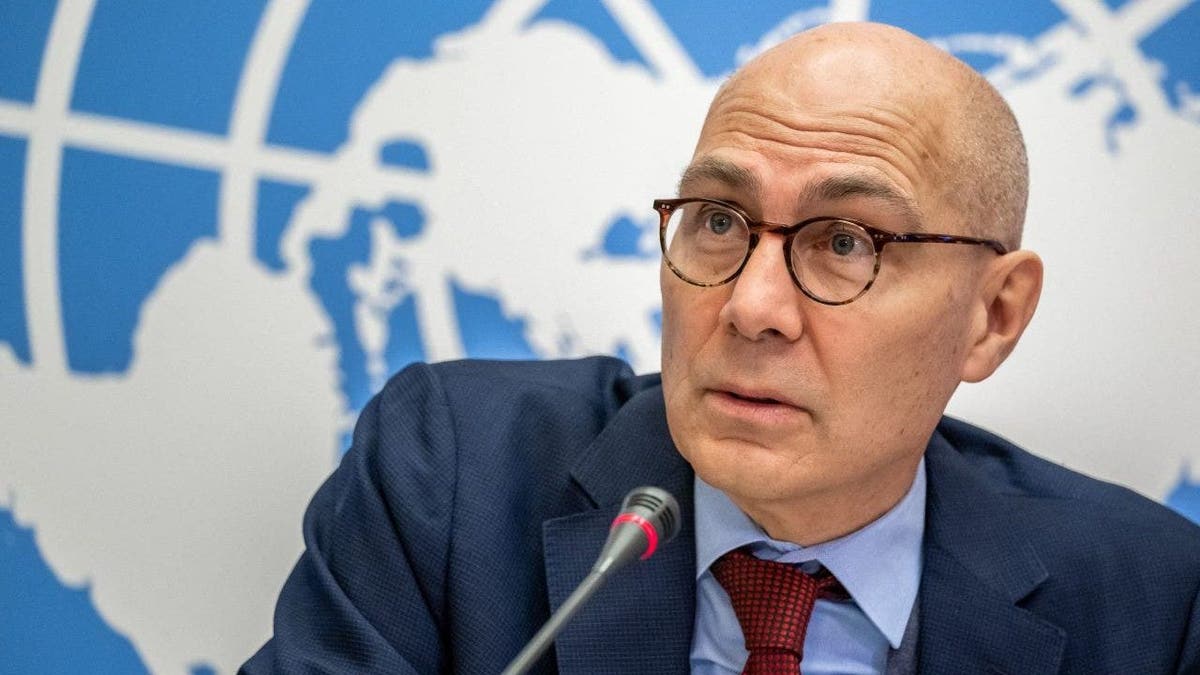
High Commissioner for Human Rights Volker Turk delivers a press conference at the UN Offices in Geneva on December 9, 2022. (FABRICE COFFRINI / AFP) (Photo by FABRICE COFFRINI/AFP via Getty Images))
«The United Nations was created with the goal of working towards international peace and security, human rights and development,» Bonnafont said, adding that France would continue working to protect the institution’s independence and its ability to serve human rights and peace.
The dispute began after the General Assembly voted 144-10, with 13 abstentions, to extend Türk’s tenure through October 2030.
The United States had unsuccessfully sought an additional week for consultations, arguing that the vote was being rushed even though Türk’s current term does not expire until Oct. 11.
CLICK HERE TO DOWNLOAD THE FOX NEWS APP
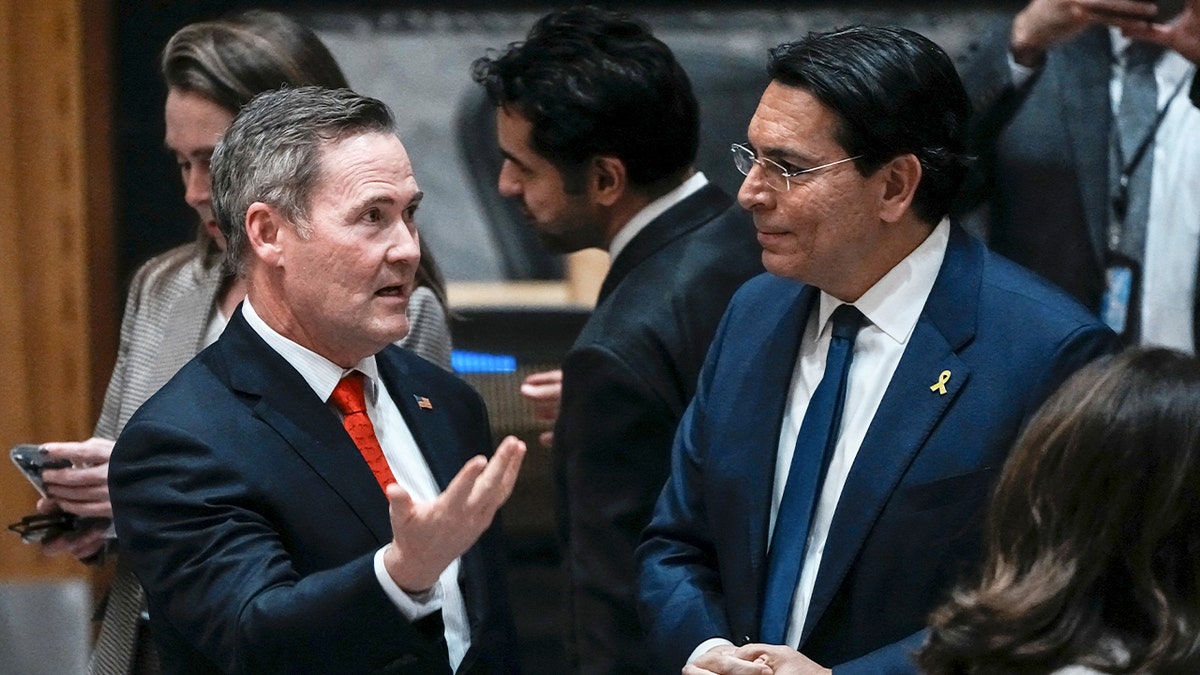
U.S. Ambassador to United Nations Michael Waltz speaks with Israel’s Ambassador to the United Nations Danny Danon before a meeting of the United Nations Security Council to consider a U.S. proposal for a U.N. mandate to establish an international stabilization force in Gaza, at U.N. headquarters in New York City, Nov. 17, 2025. (Eduardo Munoz/Reuters)
Washington also objected to Türk’s record. U.S. officials have accused him of disproportionately criticizing democracies, including the United States and Israel, while failing to confront authoritarian governments with the same urgency.
united nations, security council, france, world

El gobierno de Brasil mantiene bajo análisis el regreso de su embajador a la Argentina y se extiende la tensión diplomática

Canales para ver el Platense vs. Unión por el Torneo Clausura

Máximo Kirchner dijo que Cristina mostró su “voluntad de participar en la vida política” y dijo: “Queremos que sea candidata”

Comienza una audiencia decisiva para definir la paritaria de la UOM: cuál es la nueva fórmula en discusión

Cuba abre al sector privado estaciones de servicio, puertos, geriátricos y farmacias

Democrat compares ICE to ‘domestic terrorists’ as 111 House Dems demand Texas detention center close

Crisis entre Milei y Lula: la trama política, personal y geopolítica detrás del mayor choque diplomático entre Argentina y Brasil

Cuentapropismo emocional en lo profundo del conurbano

San Isidro: la ballena que quedó varada en un banco de arena murió pese al operativo de rescate

Joaquín Furriel contó cómo fue ver la final del Mundial con su novia española: “Una situación incómoda”

 POLITICA2 días ago
Crisis entre Milei y Lula: la trama política, personal y geopolítica detrás del mayor choque diplomático entre Argentina y Brasil
- SOCIEDAD3 días ago
San Isidro: la ballena que quedó varada en un banco de arena murió pese al operativo de rescate
- POLITICA3 días ago
Milei cruzó al aire a De Mendiguren, exministro de Duhalde: “Vos, sí, ladrón”