INTERNACIONAL
Noncitizens on voter rolls in Democrat-run state exposed as RNC chair pledges secure elections

NEWYou can now listen to Fox News articles!
EXCLUSIVE — Noncitizens in a key blue state were on the voter rolls for years — and some even voted in prior elections, according to documents obtained via public records request.
The New Jersey Republican Party (NJGOP) and the Republican National Committee (RNC) requested voter rolls from all 21 counties in the Garden State and found multiple instances of noncitizens seeking naturalization asking to be removed from the rolls, claiming they were unknowingly registered to vote. Most were registered as Democrats.
Noncitizens cannot vote in state or federal elections, and the candidates for citizenship worried that being on the rolls would disqualify them.
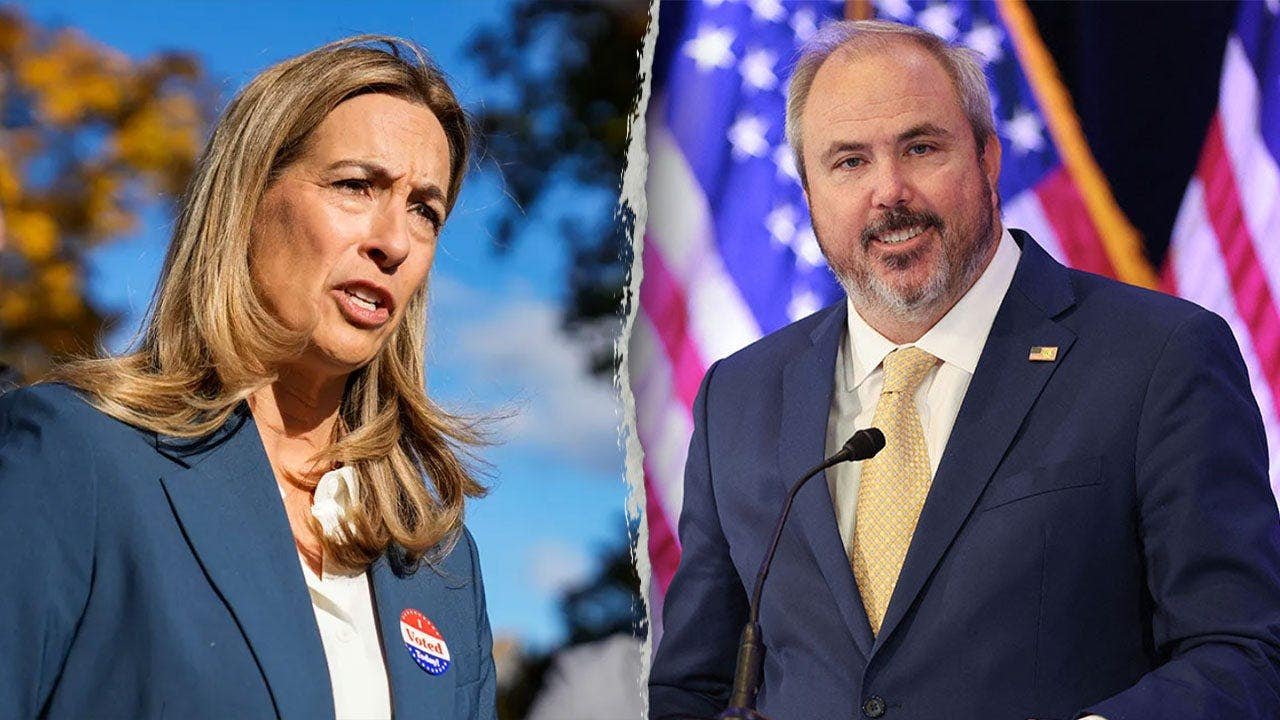
Rep. Mikie Sherrill casts her ballot at a polling location inside Hillside Elementary School in Montclair, N.J., on Nov. 4, 2025, during the New Jersey gubernatorial election. (John Lamparski/Bloomberg)
In official letters viewed by Fox News Digital from Atlantic County, Superintendent of Elections & Commissioner of Registration Maureen Bugdon certified that noncitizens came to her asking to be removed.
FOUR NONCITIZENS CHARGED WITH ILLEGALLY VOTING IN 2020, 2022 AND 2024 FEDERAL ELECTIONS IN NEW JERSEY
«Please allow this letter to confirm that on today’s date, the below referenced individual came before this office to confirm her registration and voter status,» the typical letter reads. «She relayed that she did not wish to be a New Jersey registered voter and does not understand how she became registered through the Department of Motor Vehicles, allegedly.»
Most of the letters confirmed that the noncitizens did not have a voting record, but not all.
One noncitizen, who the county said was removed from the rolls in 2015, voted several times in 2000 and 2001, and in the 2008 general election. Another voted in a primary election in 2005 and a municipal election in 2000.
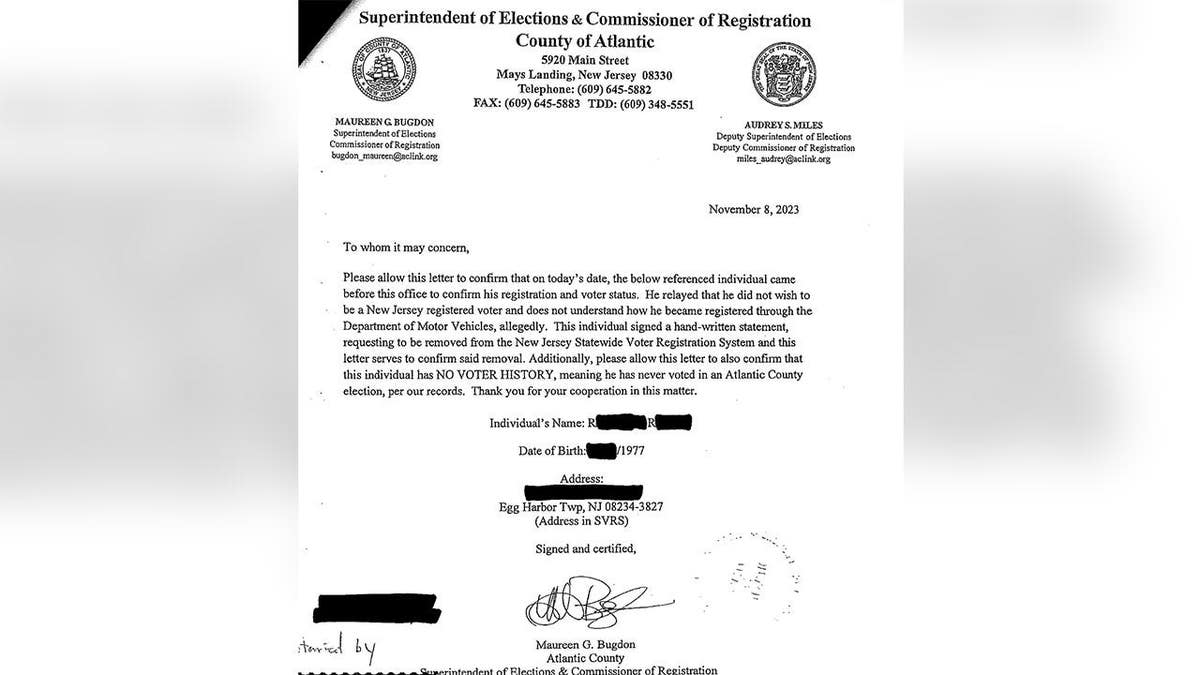
A letter showing Atlantic County Election Commissioner Maureen Bugdon certifiying that a New Jersey noncitizen was on the voter rolls and wished to be removed. (Obtained by the RNC and NJGOP)
TRUMP ADMIN BLOCKS CITIZENSHIP FOR ILLEGAL MIGRANT VOTERS
Other documents showed noncitizens directly asking to be removed from the rolls through a state voter registration cancellation form.
When prompted about why they wished to be removed, the vast majority of the unknowingly registered voters checked a box labeled «other» and wrote that they were not citizens.
In Atlantic County alone, Fox News Digital reviewed more than 50 documents from noncitizens attesting that they were registered to vote unknowingly.
OVERSIGHT GROUP SEEKS DOCS FROM WALZ’S MINNESOTA AS DOJ REBUKES VIRGINIA VOTER-ROLL MAINTENANCE
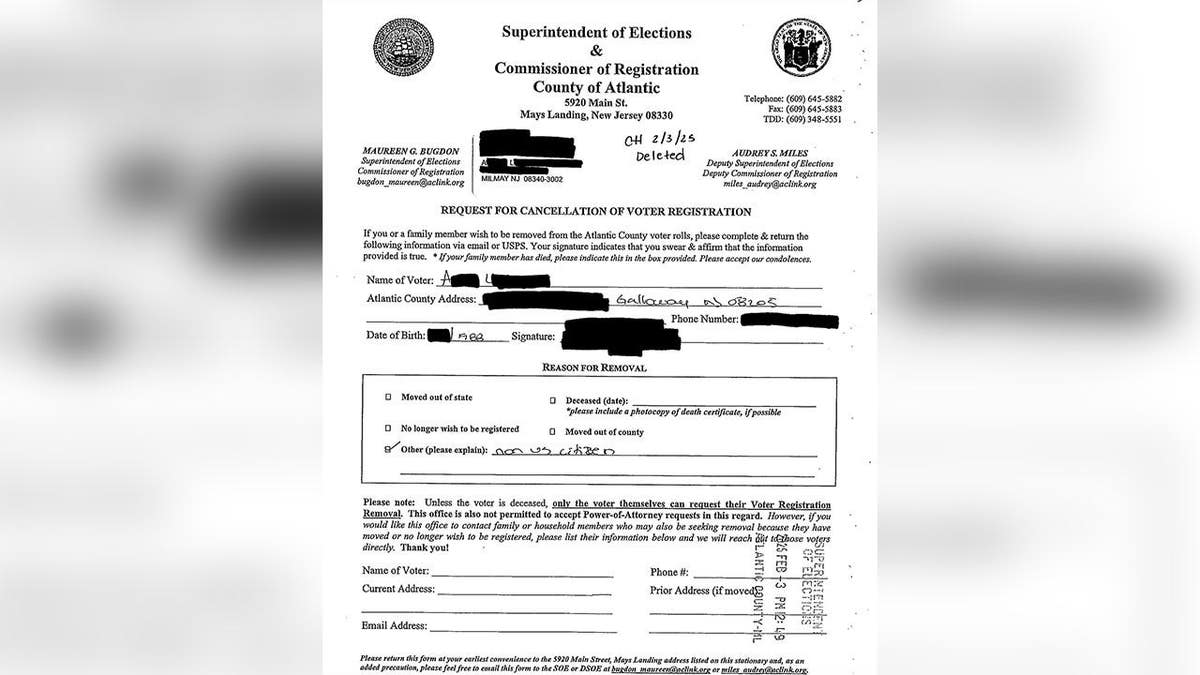
A noncitizen on the New Jersey voter rolls used this removal form to request to be unregistered. (Obtained by the RNC and NJGOP)
RNC Chairman Joe Gruters says the group found hundreds of noncitizen registrants in New Jersey who are likely only the tip of the iceberg, but that New Jersey and other Democrat-run states are unwilling to disclose information about their voter registration list maintenance processes. The organization has requested that information from 48 states.
«I mean, it’s really incredible because here the Democrats are saying that, you know, noncitizens never vote, [that], this is a non-issue, but every county we’re finding people that are self-reporting now, and I’m glad we’re doing these records request because it’s really eye-opening, because this is just the people that have self-reported,» Gruters told Fox News Digital.
«You want a democracy that’s secure and elections that are free and safe and that people can depend upon, and people have full confidence in,» he said.
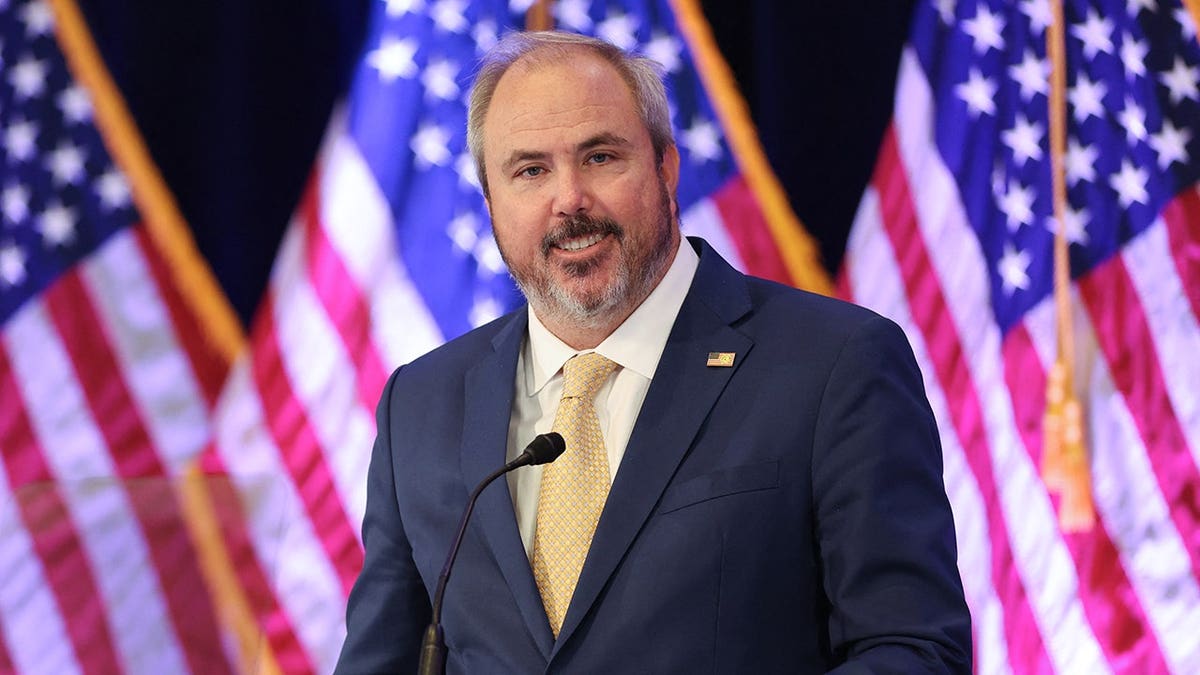
Republican National Committee Chair Joe Gruters is claiming victory over Democrat efforts to block efforts to kick noncitizens skipping out of North Carolina jury duty from the state’s voter rolls. (Patrick T. Fallon/AFP)
RNC LAUNCHES MULTIMILLION-DOLLAR ELECTION INTEGRITY PUSH IN 17 STATES AHEAD OF MIDTERMS
The RNC in 2024 made a full-throated election integrity push to ensure, one that continues to this day, according to Gruters.
He told Fox News Digital that the group is «bringing the hammer down» and that it has «boots on the ground» across the country to ensure even more diligence in November.
«We have staffers already in 17 states working on these issues to make sure that, like I said, it goes back to having a safe and secure election that’s free and fair,» he said.
RNC GETS DAY AT SUPREME COURT TO CHALLENGE LATE-ARRIVING MAIL BALLOTS
Gruters is also optimistic about another RNC battle on the election integrity front.
The Supreme Court is soon set to decide on the case of Watson vs. RNC, a challenge to laws that allow ballots to be cast by mail on election day, but counted days later. The RNC’s goal is eliminate the practice, which Gruters highlighted as California continues to count ballots from Tuesday night’s primary elections almost a week after polls closed.
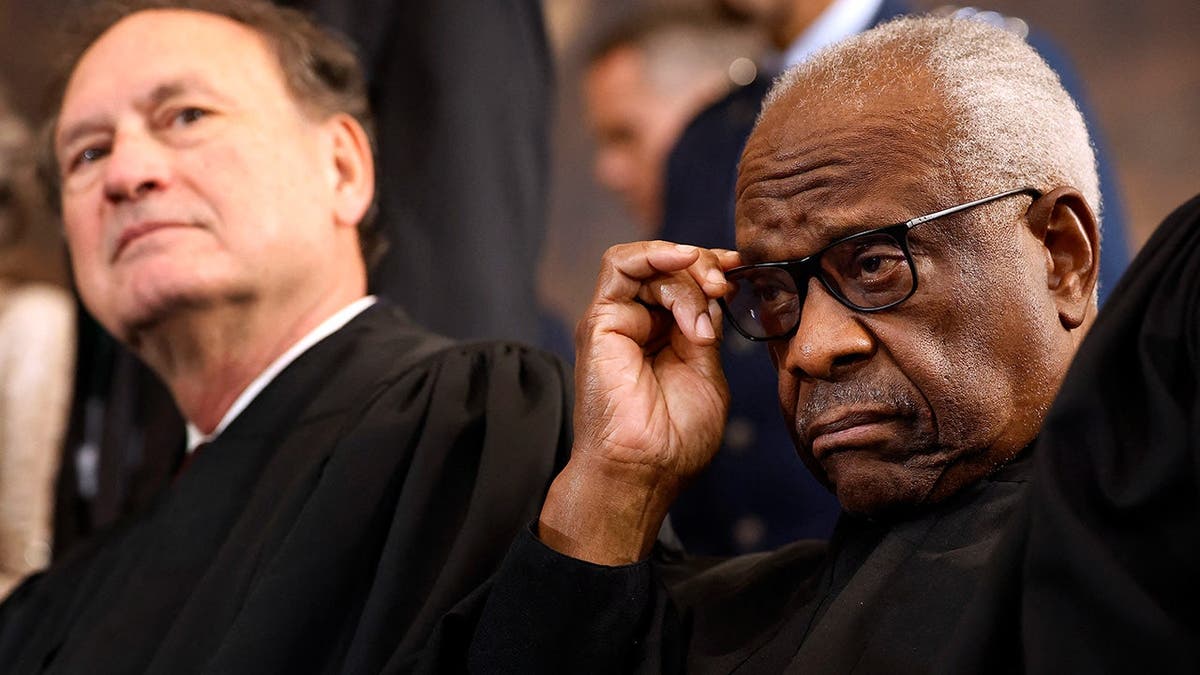
Supreme Court Associate Justices Samuel Alito and Clarence Thomas waited to leave the stage at the conclusion of inauguration ceremonies in the Rotunda of the U.S. Capitol on Jan. 20, 2025, in Washington, D.C. (Chip Somodevilla/POOL/AFP via Getty Images)
He said a win in that case could be «one of our biggest election victories ever.»
«I mean, just what’s happened with [Los Angeles Mayoral Candidate] Spencer Pratt should open your eyes, and you should be sick to your stomach,» he said. «This should not be allowed in America.»
CLICK HERE TO DOWNLOAD THE FOX NEWS APP
Gruters said that when elections have an «open-ended target date,» it opens the doors for potential manipulation.
«We’re fighting hard to put an end to this, and this, like I said, this could be probably our biggest win ever from an election integrity standpoint by stopping this and making sure that election day means exactly what it says, election day.»
Democratic New Jersey Gov. Mickie Sherrill’s office did not return a request for comment. Neither did the New Jersey Motor Vehicle Commission or Atlantic County officials.
A spokesman for the New Jersey Department of Motor Vehicles said it’s rare that noncitizens end up on the rolls.
«MVC, together with state and local partners across New Jersey, uses rigorous processes to ensure eligible individuals register to vote through the MVC. Consistent with all applicable laws, individuals who apply to register to vote through the MVC affirm their citizenship. While it is exceedingly rare that non-citizens claim citizenship or other voter eligibility through the MVC, such instances are taken extremely seriously by this agency.»
SEE THE FULL CACHE OF DOCUMENTS HERE:
new jersey, politics, democrats elections, naturalization, republicans, voter fraud concerns










INTERNACIONAL
Rusos y ucranianos atacan los almacenes de comercio electrónico: ¿Cuál es la razón detrás de esta táctica de guerra?
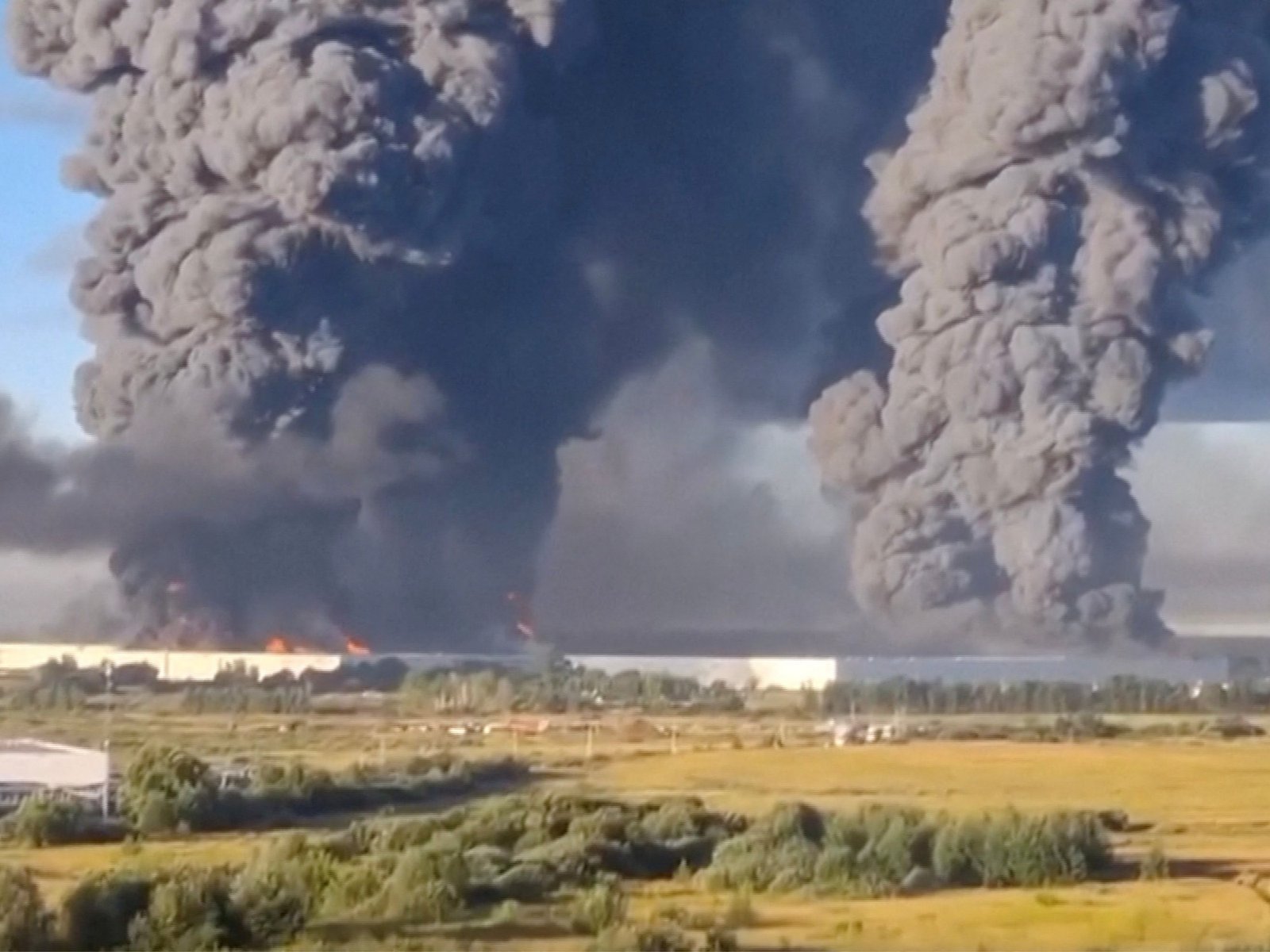
El Amazon ruso y la empresa de correos ucraniana
¿Objetivo civil o militar?
Costo humano y material

¿Crimen de guerra?
Consecuencias para el frente
NEWYou can now listen to Fox News articles!
FIRST ON FOX: Former Biden special counsel Jack Smith could face potential criminal prosecution after Republicans accused the ex-prosecutor of misleading Congress about the scope of his investigation into President Donald Trump.
House Judiciary Committee Chairman Jim Jordan, R-Ohio, issued a criminal referral for Smith Wednesday, arguing newly released records contradict Smith’s testimony to his committee that he did not obtain or review lawmakers’ text messages during his multiple probes into President Donald Trump.
«All individuals have an obligation to comply with a duly authorized congressional inquiry. Mr. Smith, a former public servant, is no different,» Jordan wrote in a letter to acting Attorney General Todd Blanche on Wednesday. «Yet his testimony included intentionally false statements designed to obstruct the Committee’s oversight.
«His conduct can only be understood as an effort to thwart the Committee’s inquiry by intentionally making false statements and representations before Congress,» Jordan continued, adding that the Justice Department should examine whether Smith’s actions warrant criminal charges.
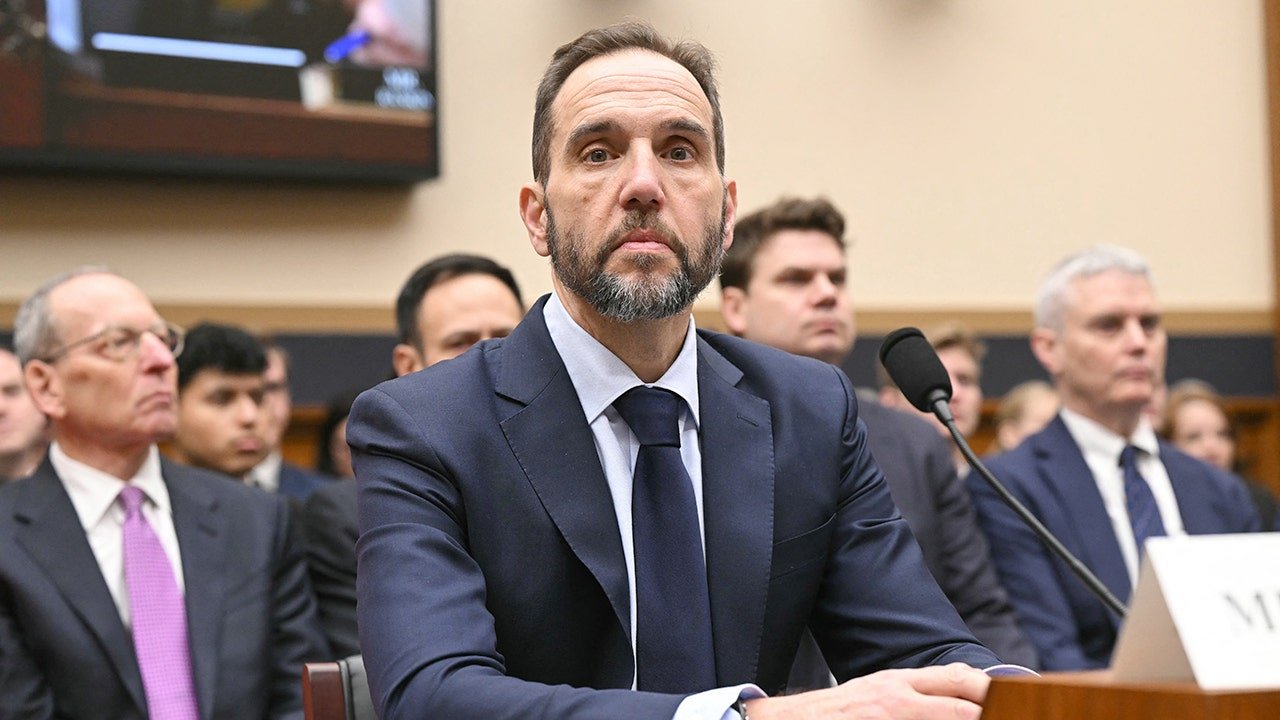
Former U.S. special counsel Jack Smith testifies before the House Judiciary Committee about his investigations into President Donald Trump in the Rayburn House Office Building on Capitol Hill in Washington, D.C., Jan. 22, 2026. (Saul Loeb/AFP via Getty Images)
VETERAN DEM BREAKS PARTY LINE AS JACK SMITH SPYING SCANDAL GRIPS CAPITOL HILL
Jordan’s letter accused Smith of making false statements during a December deposition before the House Judiciary Committee. Specifically, Jordan argued that «responses provided by Mr. Smith gave the impression that neither Mr. Smith nor his team had access to the content of members’ privileged text messages.»
«We now know this to be false,» the letter adds.
The referral comes after Smith faced mounting scrutiny from Republicans over allegedly weaponizing the Justice Department and violating constitutional privacy protections during his investigations into alleged interference during the 2020 election and Trump’s handling of classified documents.
He has denied any wrongdoing.
And Rep. Jamie Raskin, D-Md., the top Democrat on the House Judiciary Committee, blasted Jordan’s referral.
«This referral deliberately distorts and misstates the facts, including what questions the Republicans actually asked at Mr. Smith’s interview. The Republicans fault Mr. Smith for not reading the minds of congressional investigators and for not volunteering information they didn’t ask for. This is absurd. Mr. Smith may be telegenic but he is not telepathic,» Raskin said in a statement.
Senate Judiciary Committee Chairman Chuck Grassley, R-Iowa, released documents last week showing Smith’s team read the text messages of 44 members of Congress from both parties and White House staff during its investigation.
Targeted lawmakers included Jordan and Grassley in addition to the late Sen. Lindsey Graham, R-S.C.; Sen. Susan Collins, R-Maine; House Majority Leader Steve Scalise, R-La.; and Sen. Cory Booker, D-N.J.
Trump officials affected included former Vice President Mike Pence, White House deputy chief of staff Stephen Miller, FBI Director Kash Patel and Ivanka Trump, among others in the president’s orbit during his first term.
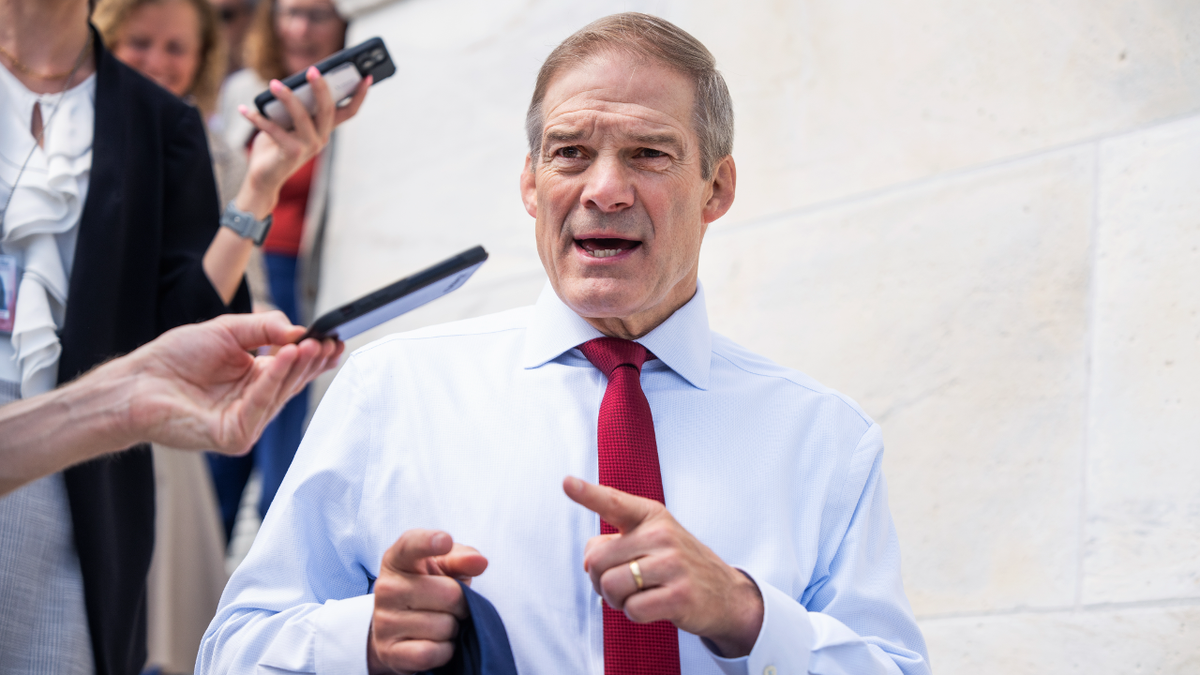
Rep. Jim Jordan, R-Ohio, leaves the U.S. Capitol after the last votes of the week on Thursday, June 11, 2026. (Tom Williams/CQ-Roll Call, Inc via Getty Images)
BIDEN SPECIAL COUNSEL’S ‘RUNAWAY TRAIN’ SCOOPED UP SENSITIVE LAWMAKER INFO: ‘ABUSE OF POWER’
Grassley’s office also found that Smith’s team appeared to violate investigative protocols by accessing text messages that had not been reviewed by a «filter team,» a safeguard designed to prevent investigators from accessing privileged information, according to the documents.
When Smith was asked by congressional investigators if he examined the contents of lawmakers’ text messages during his probe, he said, «no.»
He told the House Judiciary Committee his team only sought telephone toll records.
«Toll records were sought for historical telephone routing information, collected after calls had taken place, identifying the incoming and outgoing call numbers, the time of the calls and their duration,» Smith testified in December. «Toll records do not include the content of calls.»
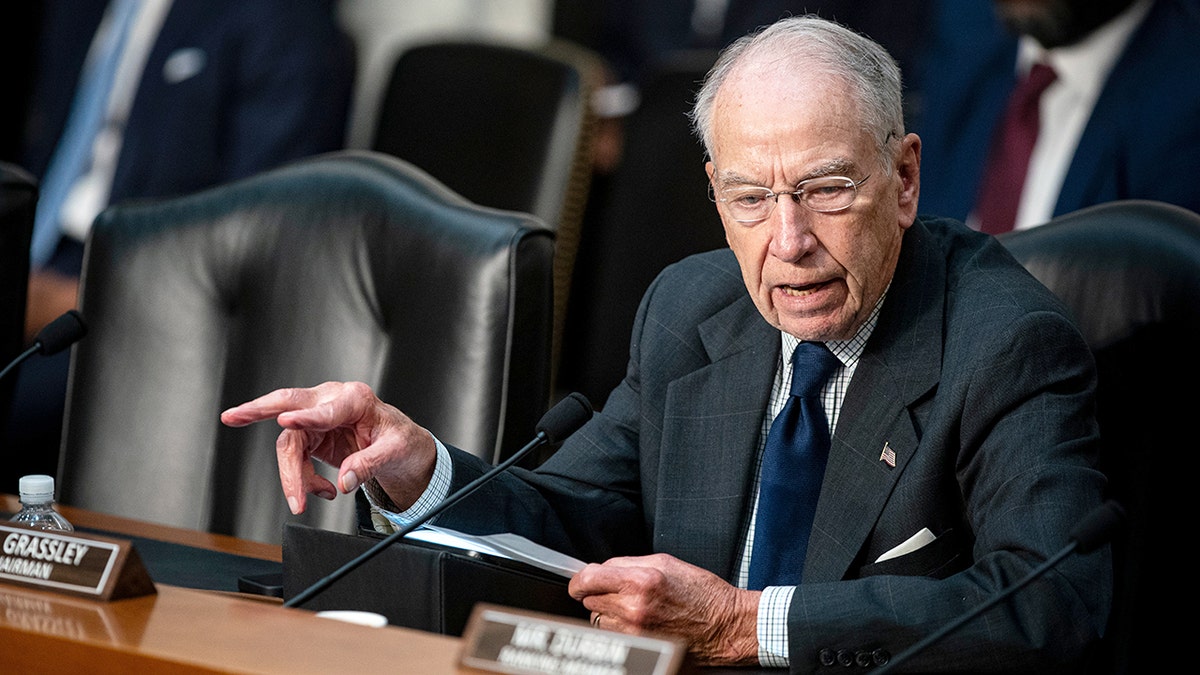
Sen. Chuck Grassley, R-Iowa and chairman of the Senate Judiciary Committee, speaks during a hearing in Washington Sept. 16, 2025 (Al Drago/Bloomberg via Getty Images)
CLICK HERE TO DOWNLOAD THE FOX NEWS APP
The Justice Department told Fox News Digital when reached for comment, «The Department can confirm receipt of the criminal referral from the House Judiciary Committee and will investigate all evidence of criminal conduct.»
politics, justice department, jim jordan, chuck grassley
INTERNACIONAL
Mientras aumenta el precio del petróleo, Trump amenaza con destruir puentes y centrales eléctricas de Irán
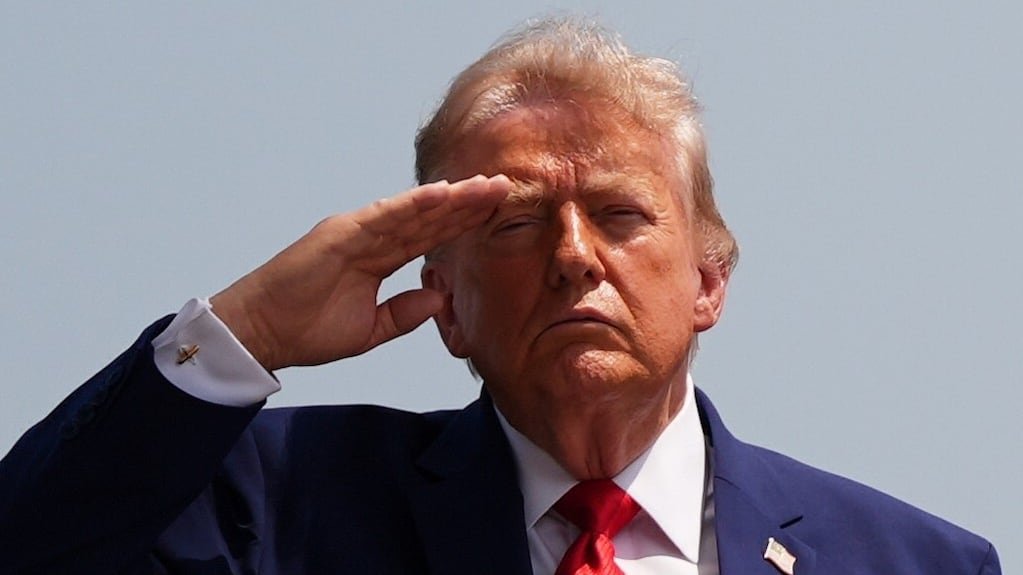
Donald Trump amenazó este miércoles con destruir puentes y centrales eléctricas en Irán por cada ataque contra barcos en el estrecho de Ormuz y advirtió que la guerra que le costó a Estados Unidos más de 37.000 millones de dólares “no ha terminado”.
“Cada vez que la República Islámica de Irán ataque a un navío en el estrecho de Ormuz, sea con misiles, drones o cualquier otro tipo de arma o munición, Estados Unidos bombardeará y destruirá UN PUENTE O UNA CENTRAL ELÉCTRICA”, escribió el presidente estadounidense en su red Truth Social.
La reanudación de las hostilidades genera inquietudes sobre el suministro de crudo y gas por el bloqueo iraní del estrecho de Ormuz y la amenaza de un cerco a los puertos de Arabia Saudita por los rebeldes de Yemen, aliados de Irán.
El bloqueo disparó los precios del petróleo y aumenta la presión sobre Trump para buscar una salida a un conflicto que ya afecta a los consumidores estadounidenses antes de unas elecciones de mitad de mandato muy reñidas.
Como consecuencia de estas tensiones, los precios del petróleo subieron considerablemente este miércoles: el barril de Brent, referencia internacional, volvió a superar los 95 dólares.
¿Se reanudan las negociaciones?
Sin embargo, el secretario de Estado estadounidense, Marco Rubio, aseguró que Washington sigue dispuesto a buscar un acuerdo negociado con Teherán.
“Seguimos abiertos a resolverlo de manera negociada. Pero, por ahora, no parecen estar interesados en eso”, declaró Rubio en una reunión de ministros del sudeste asiático en Manila. El secretario de Estado Marco Rubio (Foto: BRENDAN SMIALOWSKI/Pool via REUTERS)
Poco después, Trump afirmó que Irán todavía no está “listo” para cerrar un acuerdo nuclear que ponga fin a la guerra, dado que, según dijo, cada vez que se alcanza un trato la República Islámica acaba por echarse atrás”.
“Están siendo golpeados con mucha dureza y quieren llegar a un acuerdo. Pero yo digo que no están listos para hacer un acuerdo porque cada vez que hacen uno, quieren cambiarlo y todo eso. No están listos. Estarán listos muy pronto”, señaló en un mitin en Georgia.
Según el portavoz del Ministerio de Relaciones Exteriores iraní, Esmail Baqai, continúan los intercambios diplomáticos con Washington a través de mediadores.
En tanto, un misil estadounidense impactó este miércoles en la isla de Larak, en el estrecho de Ormuz, informó la agencia de noticias iraní Tasnim, sin un balance de daños.
Guerra impopular
A medida que la guerra se acerca a los cinco meses y se avecinan las elecciones de noviembre en Estados Unidos, Trump enfrenta una intensa presión política para poner fin a este conflicto impopular.
Los críticos señalaron el alto costo de la guerra, que el jefe del Pentágono, Pete Hegseth, dijo que se disparó a 37.500 millones de dólares, al defender ante el Congreso una solicitud de otros 67.000 millones.
Leé también: La Justicia de EE.UU. resolvió que el juicio contra Nicolás Maduro empezará el 1 de junio de 2027
Pero Trump, por ahora, resistió la presión y el martes aseguró que el conflicto “no ha terminado en absoluto”.
Por undécima noche consecutiva, el ejército estadounidense lanzó una ofensiva contra objetivos militares de la república islámica con el fin de “seguir debilitando su capacidad para amenazar el tráfico marítimo comercial en el estrecho de Ormuz”.
Trump aseguró que el próximo objetivo de Estados Unidos podría ser un complejo subterráneo en un lugar llamado Kuhe Kolang-e Gaz La, cerca de Natanz, donde las agencias de inteligencia occidentales sospechan que Irán está construyendo una instalación no declarada de enriquecimiento de uranio.
El mando militar iraní (Jatam al Anbiya) advirtió que consideraría el ataque “una expansión de la guerra”, mientras que el portavoz de Exteriores afirmó que “la obsesión de Washington con Kuhe Kolang, donde no se realiza ninguna actividad nuclear, no es más que un pretexto inventado para la agresión, la destrucción y el sabotaje”.
El petróleo vuelve a subir
Las amenazas se producen mientras Teherán intensifica sus ataques contra objetivos en Estados del Golfo aliados de Washington.
En Kuwait, el ejército declaró que sus defensas antiaéreas están interceptando drones procedentes de Irán, mientras que Jordania afirmó haber derribado cuatro misiles iraníes y cuatro drones.
Las sirenas de alerta aérea también sonaron en Baréin.
El Ejército iraní declaró que había atacado activos estadounidenses en Kuwait y Baréin, incluyendo sistemas de defensa aérea, instalaciones de radar y edificios administrativos.
Los Guardianes de la Revolución iraníes también afirmaron haber atacado bases estadounidenses en Jordania.
Por su parte, los hutíes avanzan en su amenaza de obstaculizar el tráfico al otro lado de la península de Arabia. Ese grupo controla el estrecho de Bab el Mandeb, en el extremo sur de Yemen, por el que los buques deben pasar para llegar al Canal de Suez.
(Con información de AFP)
Donald Trump, Irán

Suárez 2 – Lewandowski 0: el uruguayo le ganó el duelo al polaco por la MLS en el triunfo de Inter Miami sobre Chicago Fire

Elecciones 2023: el ausentismo creció más de 5 puntos respecto de 2019 y preocupa al oficialismo

Mercados: la Bolsa subió por cuarto día y avanzaron las acciones argentinas en Wall Street

Rusos y ucranianos atacan los almacenes de comercio electrónico: ¿Cuál es la razón detrás de esta táctica de guerra?

Tras la marcha al Congreso con los jubilados: ¿cómo sigue la agenda de protesta de la CGT?

El horóscopo de hoy: jueves 23 de julio

Sin la Copa y sin Messi en el avión, vuelve Tapia y deberá enfrentar tres frentes de tormenta tras la pausa del Mundial

Escándalo Mundial: Las presiones secretas, la amenaza de la FIFA por Malvinas y la verdad detrás del partido contra España

Samuel L. Jackson llamó a Argentina “el país más racista del mundo”: la contundente respuesta que le dejó Bárbara Lombardo

Le ganan a la inflación: los senadores pasarán a cobrar $12 millones brutos a partir de agosto

 POLITICA3 días ago
Sin la Copa y sin Messi en el avión, vuelve Tapia y deberá enfrentar tres frentes de tormenta tras la pausa del Mundial
- DEPORTE1 día ago
Escándalo Mundial: Las presiones secretas, la amenaza de la FIFA por Malvinas y la verdad detrás del partido contra España
- CHIMENTOS2 días ago
Samuel L. Jackson llamó a Argentina “el país más racista del mundo”: la contundente respuesta que le dejó Bárbara Lombardo