INTERNACIONAL
Ships seized by Iranians ‘armed to the teeth’ along Strait of Hormuz have been taken toward port: report

NEWYou can now listen to Fox News articles!
The two container ships seized by Iranian forces in the Strait of Hormuz have been taken toward the port of Bandar Abbas along the key waterway, a report said Thursday.
Iran’s Revolutionary Guard claimed on Wednesday that the vessels, identified as the MSC Francesca and the Epaminondas, were operating without proper authorization and had tampered with navigation systems, accusations that could not be independently verified.
«Some 20 Iranians armed to the teeth stormed the ship. Sailors are under Iranians’ control, their movements on the ship are limited, but the Iranians are treating them well,» a relative of a captive onboard one of the ships told Reuters on Thursday in relation to one of the seizures.
The news outlet cited sources as saying that both ships — which are managed by Mediterranean Shipping Company (MSC) — were taken toward Bandar Abbas, with a combined 40 crew onboard.
LIVE UPDATES: US-IRAN CEASEFIRE DEAL HANGS IN THE BALANCE AS ISRAEL, LEBANON SLATED FOR RARE WASHINGTON TALKS
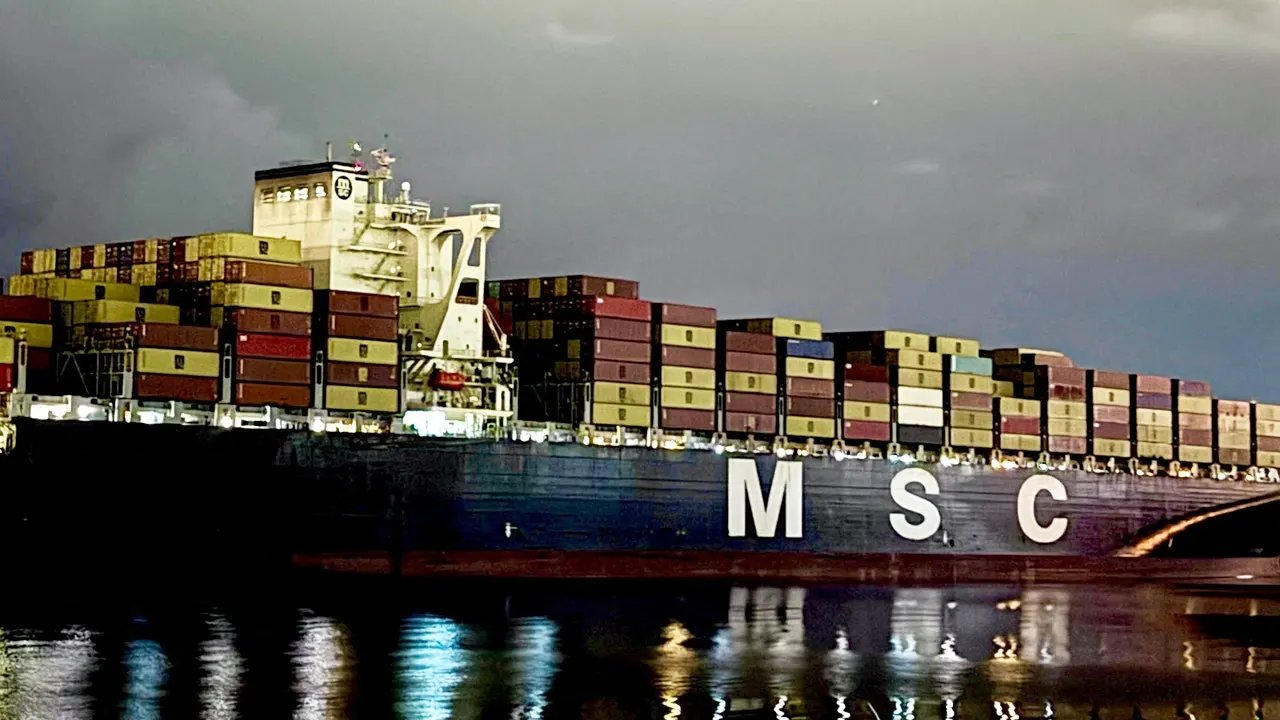
The Panama-flagged MSC Francesca vessel is docked in Long Beach, Calif., on April 16, 2025. (Efrain Morales/Reuters)
«The ship is anchored nine nautical miles from the Iranian coast. Negotiations between MSC and Iran are ongoing, our sailors are fine,» Filip Radulovic, Montenegro’s minister of maritime affairs, was quoted by Reuters as telling state television there.
Before their seizure on Wednesday, the ships reported coming under fire near the strait, underscoring the increasingly volatile conditions in one of the world’s most critical shipping lanes.
The situation is unfolding after U.S. forces recently seized an Iranian-flagged cargo ship in the Gulf of Oman as it was approaching Iranian waters Sunday.
PENTAGON WARNS OF 6-MONTH TIMELINE TO CLEAR IRANIAN MINES FROM STRAIT OF HORMUZ: REPORT

Soldiers take part in the operation seizing container ships MSC Francesca and Epaminondas in the Strait of Hormuz, according to Iranian state TV on April 22, 2026. (IRIB/Handout/Reuters)
That vessel, the Touska, remains in U.S. custody as American forces continue inspecting what maritime security sources told Reuters is likely «dual-use» cargo — materials that can serve both civilian and military purposes — following a voyage from Asia.
The U.S. military is also continuing to enforce a blockade of Iranian ports on Thursday.
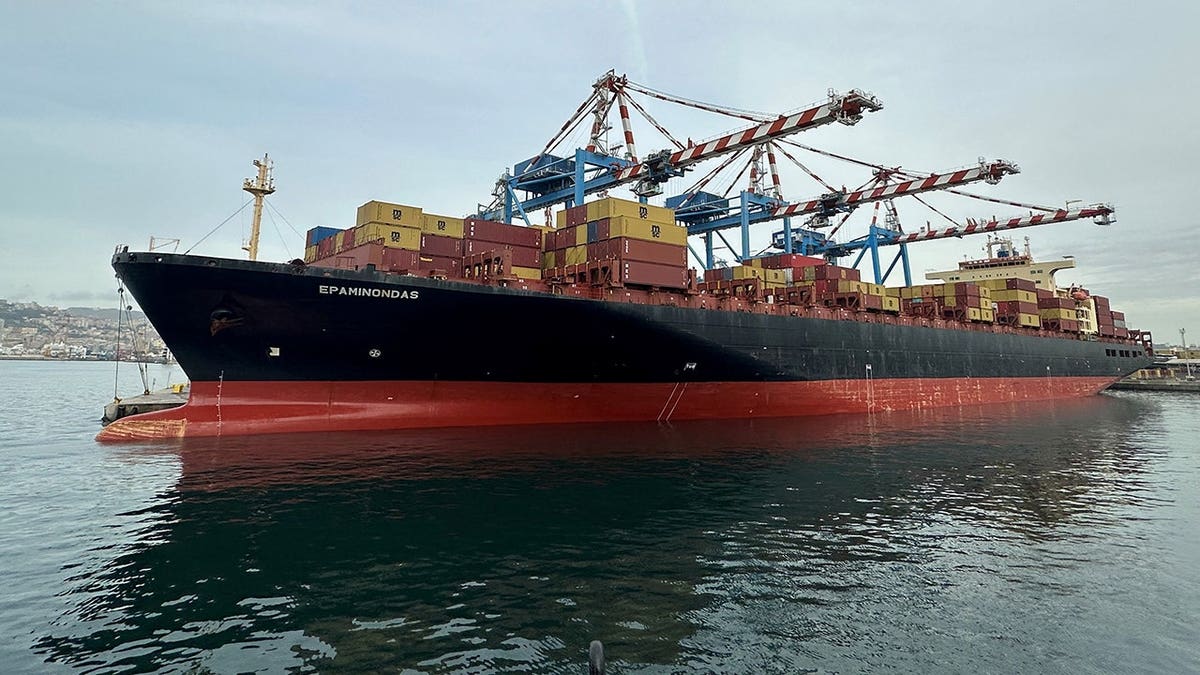
The Epaminondas container ship is seen in Naples, Italy, on March 12, 2025. (Giovanni Costigliola/Reuters)
CLICK HERE TO DOWNLOAD THE FOX NEWS APP
So far, U.S. forces have redirected 33 vessels since the start of the blockade against Iran, U.S. Central Command said Thursday.
Fox News Digital’s Morgan Phillips contributed to this report.
iran, navy, us navy, middle east, armed forces











INTERNACIONAL
Rafael Grossi confirmó que mantuvo conversaciones con Irán y aseguró que será necesaria una verificación nuclear “muy rigurosa”

El director del Organismo Internacional de Energía Atómica (OIEA), Rafael Grossi, afirmó este viernes que Irán requiere un sistema de verificación “muy sólido” para asegurar que no desarrolle armas nucleares tras el reciente acuerdo alcanzado con Estados Unidos.
A su vez, manifestó que las conversaciones para visitar el territorio iraní comenzaron pese a negativa de Teherán: “Tuvimos un intercambio con la parte iraní a nivel técnico, y la expectativa es que este proceso continuar. El trabajo técnico ha comenzado y esperamos estar allí pronto”.
El titular de la OEUA remarcó ante la prensa en Tokio: “Creo que el objetivo de este acuerdo es garantizar que no se desarrollen armas nucleares en Irán. El gobierno iraní declaró muy claramente que esa no es su intención”.
Sin embargo, pese a las declaraciones oficiales del régimen persa, Grossi sostuvo que las manifestaciones de intención no resultan suficientes para la comunidad internacional. “Pero, por supuesto, las intenciones no son suficientes. Tenemos que contar con un sistema de verificación muy sólido… tan pronto como sea posible”, subrayó en su visita a Japón.
Grossi había confirmado el miércoles pasado que los inspectores de la agencia de la ONU visitarán las instalaciones de enriquecimiento nuclear de Irán. El anuncio representó la señal más concreta hasta ahora sobre la implementación de uno de los puntos clave del entendimiento entre Washington y Teherán.

El acuerdo dispone que las actividades relacionadas con instalaciones y materiales nucleares iraníes quedarán bajo supervisión del OIEA. Durante una conferencia de prensa realizada en la central nuclear de Fukushima Daiichi, en Japón, Grossi explicó: “Puedo comprender las declaraciones políticas, son parte de la realidad, pero lo fundamental que quisiera recordarles y a lo que quisiera llamar su atención es que ha habido un Memorando de Entendimiento, firmado por ambos presidentes”.
El jefe del organismo internacional agregó que el texto “establece explícitamente que las actividades nucleares que se lleven a cabo en relación con las instalaciones de material nuclear serán supervisadas por el OIEA, en todos los sentidos”. El anuncio refuerza la postura del organismo sobre la necesidad de control y transparencia en el desarrollo nuclear iraní, en línea con los compromisos adoptados en las negociaciones recientes.
La negociación diplomática entre Estados Unidos e Irán enfrenta obstáculos significativos debido a desacuerdos en torno al programa nuclear iraní y al destino de 6.000 millones de dólares congelados en Qatar pertenecientes al régimen chiíta. Las diferencias han dificultado la posibilidad de avanzar hacia un acuerdo integral entre ambas partes.
El presidente estadounidense Donald Trump insistió en el desmantelamiento del plan nuclear iraní como condición para impedir que Irán adquiera capacidad de desarrollar un arsenal nuclear. Además, plantea que los fondos por liberar solo puedan utilizarse para la adquisición de bienes estadounidenses.

Por su parte, Teherán aseguró días atrás que no existieron comunicaciones con el organismo de la ONU: “No hemos tenido ninguna reunión con el director general del OIEA (por Rafael Grossi), ni tenemos previsto que el organismo inspeccione las instalaciones nucleares iraníes ,afirmó Esmail Baqaei, portavoz de la Cancillería de Irán.
Estas demandas intensificaron el debate diplomático y mantienen la incertidumbre sobre el futuro de los recursos bloqueados y la orientación del programa nuclear de Teherán.
Cabe recordar que en cumplimiento con una ley sancionada por el Parlamento iraní después de la guerra de 12 días con Israel en 2025, Teherán suspendió la cooperación con el Organismo Internacional de Energía Atómica en julio del año pasado. La medida restringió el acceso y la supervisión internacional sobre el programa nuclear iraní, en un contexto de creciente tensión regional.
(Con información de AFP y EFE)
Energy Resources,International Relations,Diplomacy / Foreign Policy,Energy Markets,Europe

Por qué a un terremoto fuerte le siguió inmediatamente otro

¿Por qué fueron tan destructivos estos terremotos?

¿Esta zona es propensa a terremotos?

¿Habrá réplicas importantes?
Trump administration notches major immigration victories at Supreme Court
The Supreme Court delivers significant immigration victories for the Trump administration, affirming presidential authority to end temporary protected status and turn away asylum seekers at the border. Constitutional law attorney Jonathan Turley breaks down the impact of these crucial 6-3 decisions, highlighting their implications for border sovereignty and future immigration policy in the United States.
NEWYou can now listen to Fox News articles!
The Supreme Court’s Thursday decision to restrict asylum applications, hailed by immigration hawks, could actually end up increasing illegal crossings, according to the three dissenting justices and immigration nonprofit involved in the case.
On Thursday, the Supreme Court held in Mullin v. Al Otro Lado that migrants must physically set foot in the United States in order to be eligible for asylum, reversing lower court rulings that had required the government to process certain asylum seekers turned away at ports of entry. While the decision is broadly viewed as making asylum claims more difficult to secure, an objective of the Trump administration, Justice Sonia Sotomayor and Al Otro Lado both argue that it may have unintended consequences.
«This Court has previously recognized that immigration statutes and procedures should not be construed to ‘create a perverse incentive to enter at an unlawful rather than a lawful location. Yet, the majority’s construction does exactly that,» Sotomayor wrote in her dissent. «It tells asylum seekers that they may apply for asylum if they can make it across the border illegally but that they cannot apply if they patiently wait at the edge of a port of entry.»
Al Otro Lado argued on similar lines, stating in a court filing that restricting asylum access to those who physically enter the United States would»create a perverse incentive to cross the border between ports of entry» as people who do so will receive greater rights than those stopped at ports.
SUPREME COURT HANDS TRUMP TWO MAJOR IMMIGRATION VICTORIES
Asylum seekers seen walking toward the southern border in Tijuana, Mexico and a image of a courtroom in the Concord Immigration Court. Kyra Lilien, an immigration judge is suing the Trump administration over her termination, alleging she was fired because of her political affiliations. (Getty Images; Concord Immigration Court)
It is unclear if the Department of Homeland Security, which celebrated the decision, has prepared for the potential uptick in asylum seekers illegally crossing the border. DHS did not respond to a request for comment when reached by Fox News Digital on Thursday.
The conservative majority, led by Justice Samuel Alito, downplayed this possibility, calling the concern «overstated.»
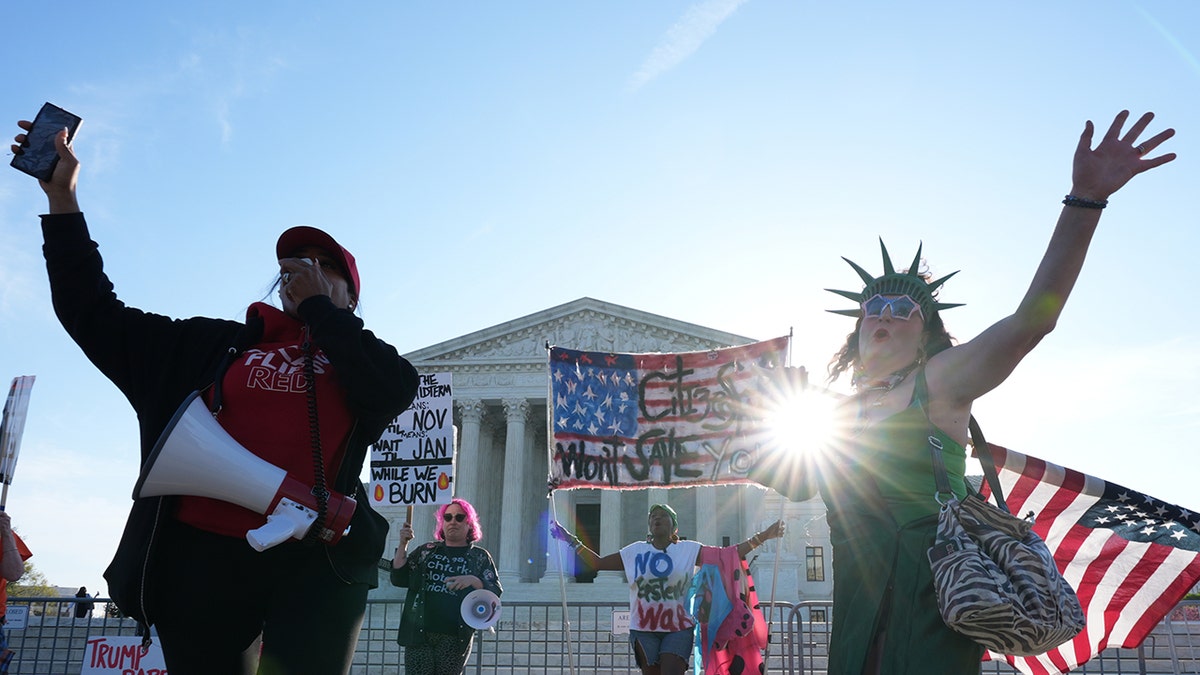
Pro and anti-Trump demonstrators rally outside the U.S. Supreme Court in Washington, D.C., on April 1, 2026, before justices hear oral arguments on whether President Donald Trump can deny citizenship to children born to parents who are in the United States illegally or temporarily. (J. Scott Applewhite/Associated Press)
DOJ ACCUSES COURTS OF UNDERCUTTING EXECUTIVE POWER IN HIGH-STAKES SUPREME COURT BORDER CASE
«Metering does not permanently bar any alien from arriving in the United States and then applying for asylum,» Alito wrote for the majority. «Illegal entry, on the other hand, may be expensive and dangerous, and it carries adverse legal effects. Entry at an improper location is a crime. An alien becomes ineligible for asylum if he unlawfully re-enters the country after having been removed.»
«An alien whose admission and inspection are delayed due to metering would need a powerful reason to apply for asylum immediately for it to be preferable to run all the risks of illegal entry,» he added.
TRUMP ADMIN EASES ASYLUM FREEZE FOR VETTED MIGRANTS, KEEPS BANS ON ‘HIGH-RISK’ NATIONS
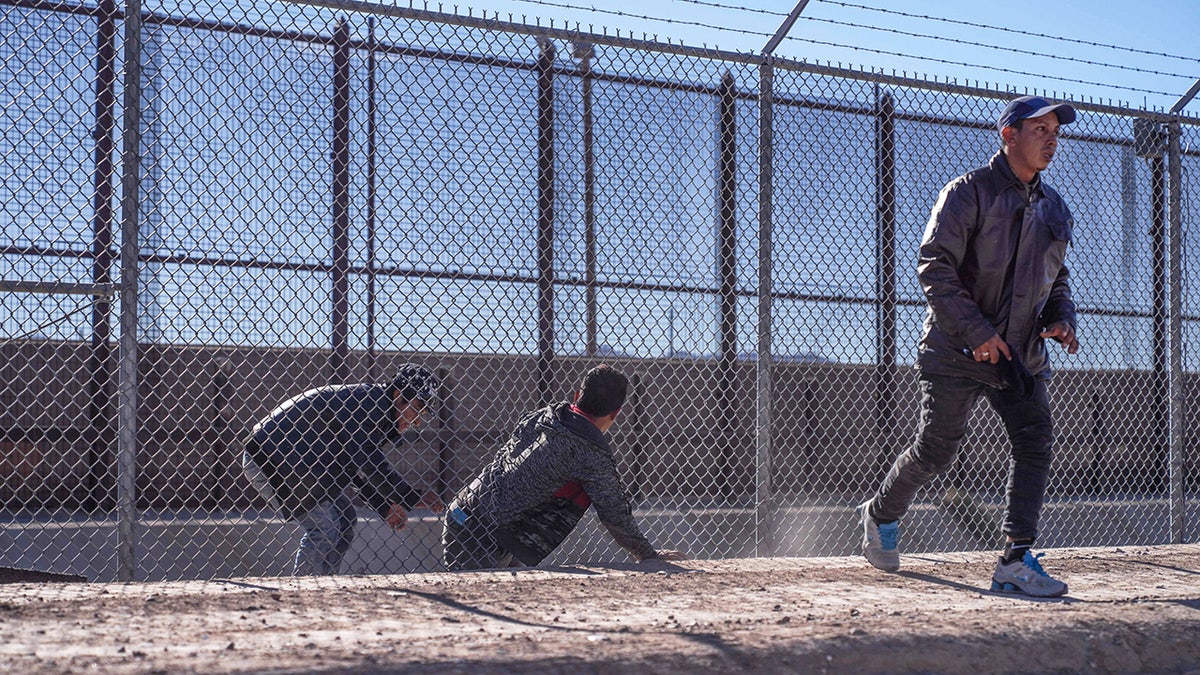
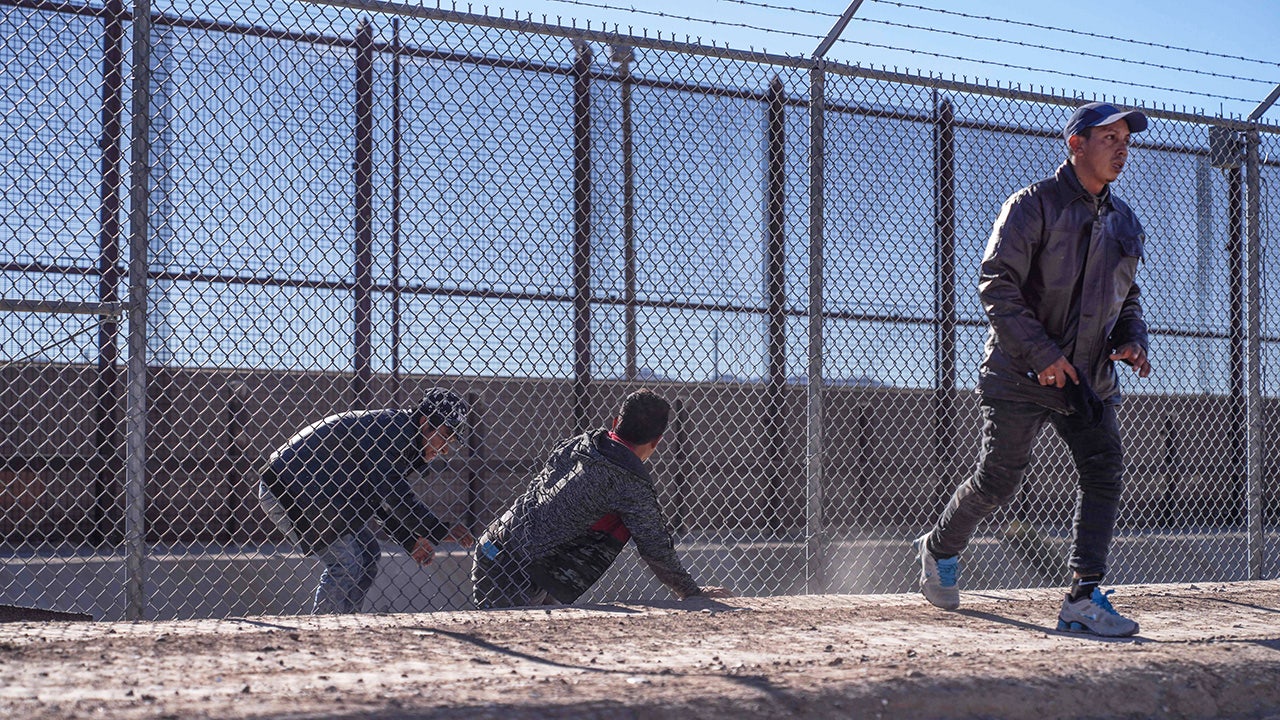
Migrants cross illegally through a hole in a fence near El Paso, Texas, on Dec. 22, 2022, after the U.S. Supreme Court halted the removal of Title 42, a policy used to block migrants at the southwest border. (Allison Dinner/AFP)
Metering refers to the practice of limiting how many asylum seekers can approach or enter a U.S. port of entry each day for processing. Under the policy, migrants were often told to wait in Mexico until U.S. officials determined the port had capacity.
Alito’s rationale was not enough to convince Sotomayor and the other dissenting justices.
«The point, however, is not that illegal entry always produces a net windfall for asylum seekers; it is that Congress was unlikely to devise a system in which asylum is available to those who unlawfully set foot over the border, but not to those who attempt to comply with the law and are physically blocked from entering at the threshold of a port of entry by an immigration officer,» she wrote. «It is also the unfortunate reality that, despite the adverse consequences the majority cites, many asylum seekers are desperate enough to flee the persecution they face in their home countries that they are willing to run significant risks to apply for asylum.»
Sotomayor went on to cite a 2018 DHS Office of the Inspector General report that found metering had «unintended consequences» which «le[d] some aliens who would otherwise seek legal entry into the United States to cross the border illegally.»
The report was published before lower courts held that migrants turned away at the border could apply for asylum, meaning that the conditions it covered are comparable to the new status quo set by the Supreme Court.
CLICK HERE TO DOWNLOAD THE FOX NEWS APP
«This administration has demonstrated that the border can be secured against illegal entries. As border wall construction continues, the ability to deter illegal crossings will only improve,» Matt Crapo, the director of litigation at the right-wing Federation for American Immigration Reform, told Fox News Digital.
«So long as the federal government makes border security a priority, illegal crossings should not be a major concern,» he added.
supreme court, homeland security, immigration, mexico, border security
Rafael Grossi confirmó que mantuvo conversaciones con Irán y aseguró que será necesaria una verificación nuclear “muy rigurosa”

El exsenador Edgardo Kueider suma una nueva causa en Paraguay por lavado de dinero

Karina Milei forcejea con Santiago Caputo después de los cambios para paliar las consecuencias del caso Adorni

Ley de GNL en Vaca Muerta crea un nuevo esquema de regalías en acuerdo con YPF

“Me pasó lo mismo”: Luis Suárez opinó sobre el conflicto de Julián Álvarez con Atlético de Madrid y lo comparó con el que vivió él

Daniela Celis impactó con un look a pura sensualidad tras su separación de Nick Sícaro: la audaz producción en topless

“El mejor del mundo”: los elogios a Messi y a la selección argentina en el arco político tras el triunfo ante Austria

Violencia, déficit fiscal y crisis sanitaria: los desafíos que enfrentará Abelardo de la Espriella en Colombia

A los 100 años, murió Alan Greenspan, histórico presidente de la Reserva Federal de Estados Unidos

AI-first: los detalles de la estrategia de Inteligencia Artificial del banco Santander

 POLITICA3 días ago
Diputados: con el apoyo de bloques aliados, LLA logró frenar la sesión en la que la oposición buscaba interpelar a Adorni
- ECONOMIA3 días ago
ANSES: quiénes cobran hoy martes 23 de junio de 2026
- ECONOMIA2 días ago
Nuevos controles a las devoluciones de 30% por gastos en el exterior: cómo pedir el reembolso del dólar tarjeta ante ARCA