INTERNACIONAL
Missing general, scientist deaths tied to secret US work prompt White House probe

NEWYou can now listen to Fox News articles!
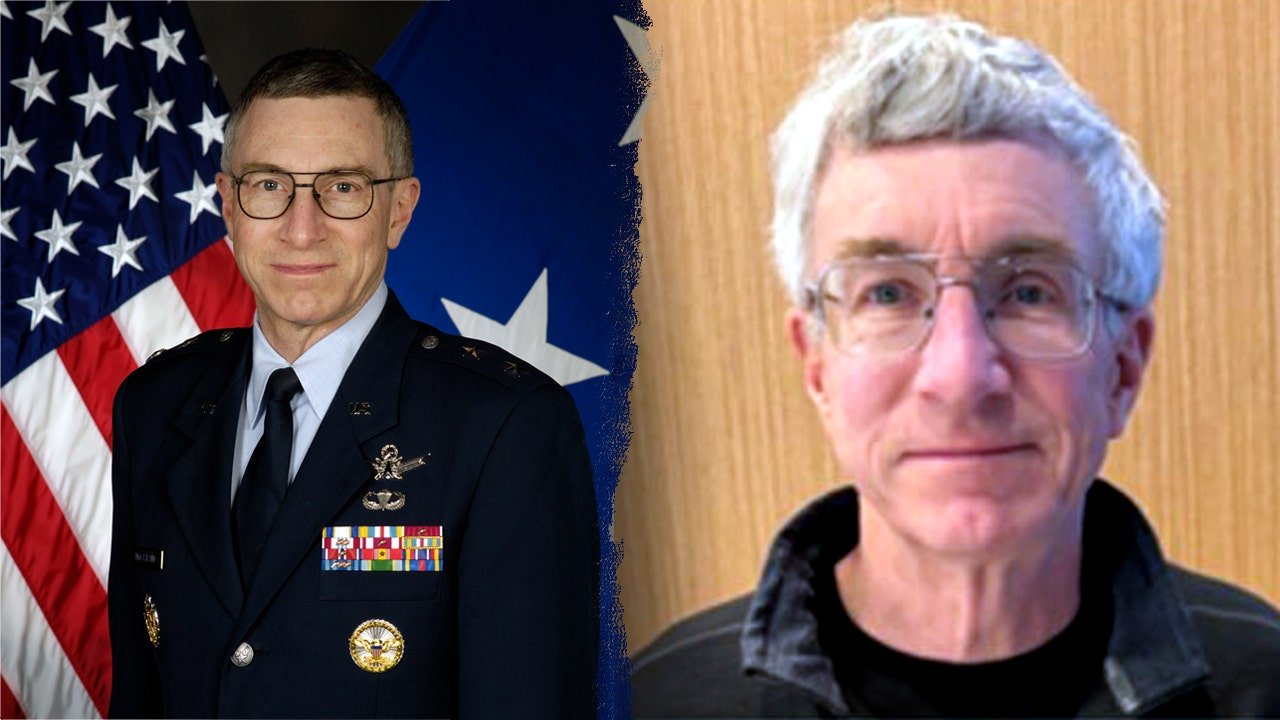
Susan Wilkerson was gone for just more than one hour when her husband, retired Air Force Maj. Gen. William «Neil» McCasland — who once oversaw some of the military’s most advanced and highly classified research programs — reportedly vanished from their Albuquerque home.
McCasland, 68, left his phone behind, but his wallet and a .38-caliber revolver were missing, according to the Bernalillo County, New Mexico, Sheriff’s Office.
The general previously had said he was experiencing what he described as a «mental fog,» according to investigators, but authorities stressed there was no indication he was disoriented at the time of his disappearance.
«Arguably, he would still be the most intelligent person in the room,» Albuquerque police Lt. Kyle Wood said March 16.
McCasland’s disappearance is one of 10 recent cases involving scientists tied to U.S. military and government research that have drawn attention, including at the White House, where officials said they are looking into the matter after being asked about a potential pattern.
«I hope it’s random, but we’re going to know in the next week and a half,» Trump told reporters Thursday. «I just left a meeting on that subject.»
Here’s what we know about the scientists who have disappeared or died under a range of circumstances over the past three years.
Neil McCasland: Disappeared Feb. 27, 2026
Ret. Maj. Gen. William Neil McCasland, 68, was reported missing in New Mexico in February. (Bernalillo County Sheriff’s Office)
McCasland disappeared Feb. 27 and police have found no trace of him since. His phone, prescription glasses and wearable devices were found at home, but his hiking boots, wallet and a .38‑caliber revolver were reported missing, according to the Bernalillo County, New Mexico, Sheriff’s Office.
McCasland held senior roles in space research and acquisition, including leadership positions at the Air Force Research Laboratory and the National Reconnaissance Office, according to the Air Force. He held senior roles at the Pentagon and commanded the Phillips Research Site of the Air Force Research Laboratory at Kirtland Air Force Base in New Mexico, and the Air Force Research Laboratory at Wright-Patterson Air Force Base in Ohio, according to the Air Force.
McCasland’s name also surfaced in an unexpected place years earlier — the 2016 WikiLeaks release of emails from Hillary Clinton campaign chairman John Podesta. In those messages, musician and UFO enthusiast Tom DeLonge described working with McCasland on discussions related to unidentified aerial phenomena, noting that the general had previously led the Air Force Research Laboratory at Wright-Patterson Air Force Base — a facility long tied in UFO lore to the alleged 1947 Roswell crash.
«Neil does not have any special knowledge about the ET bodies and debris from the Roswell crash stored at Wright-Patt,» his wife, Susan, wrote on Facebook shortly after his February disappearance.
The 1947 Roswell incident involved debris later identified by the U.S. government as part of a classified military balloon program, though it has long been the subject of UFO and extraterrestrial conspiracy theories.
Susan Wilkerson also noted that her husband retired in 2013.
«It seems quite unlikely that he was taken to extract very dated secrets from him,» she said on Facebook.
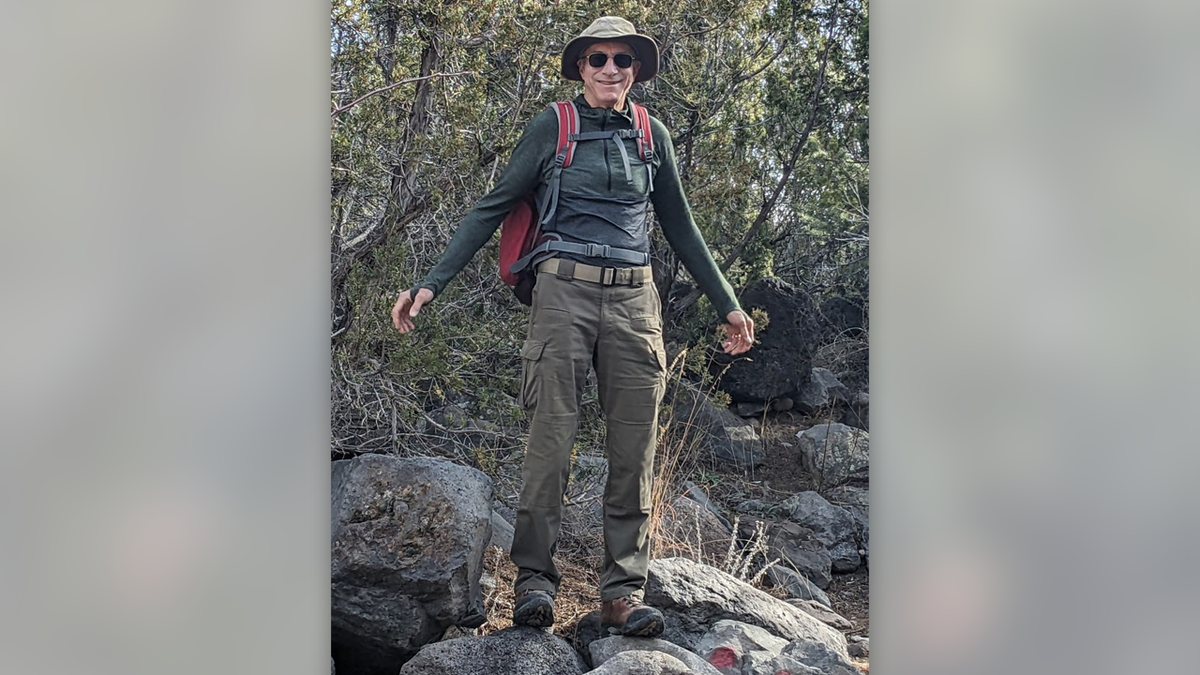
An undated photo of missing retired Air Force Gen. William «Neil» McCasland in hiking gear. The 68-year-old was last seen near his Albuquerque, New Mexico, home on Feb. 26. (Susan McCasland Wilkerson/Facebook)
Monica Jacinto Reza: Disappeared June 22, 2025
Reza, 60, was hiking with a friend in the Angeles National Forest near Los Angeles on a well-traveled trail around 9 a.m. on the morning of her disappearance, according to the Los Angeles County Sheriff’s Department.
The friend was about 30 feet ahead, and told police he turned around to check on her and she smiled and waved, indicating she was doing fine. The friend turned back to continue hiking, and when he looked back again moments later, she was gone, according to, according to case details released during the search.
He immediately alerted authorities who sent out a search party. Since then, there have been no sightings or any trace of Reza or her belongings.
Reza, an aerospace engineer, was the co-creator of Mondaloy, a nickel-based alloy capable of withstanding the extreme heat of rocket engines. At the time of her disappearance, she was the Director of Materials Processing at NASA’s Jet Propulsion Laboratory (JPL).

The entrance to NASA’s Jet Propulsion Laboratory in Pasadena, California is seen on February 7, 2024. (Robyn Beck/AFP)
Reza’s work in advanced rocket materials was funded in part by the Air Force Research Laboratory — the same organization McCasland later led — placing the two in overlapping corners of the U.S. defense research ecosystem, though no direct relationship between them has been publicly confirmed.
Steven Garcia: Disappeared Aug. 28, 2025
Garcia, 48, was last seen leaving his home in Albuquerque around 9 a.m., captured on surveillance footage walking away on foot while carrying a handgun. He left behind his phone, wallet, keys and car, and has not been seen since, according to Albuquerque police.
Garcia was a government contractor tied to the Kansas City National Security Campus, a key facility responsible for producing the vast majority of non-nuclear components used in the U.S. nuclear weapons arsenal. His role reportedly gave him high-level security clearance and oversight of sensitive assets.
Authorities initially warned Garcia «may be a danger to himself,» raising concerns about his mental state. But an anonymous source familiar with the case pushed back on that assessment to the Daily Mail, describing him as «a very stable person» and disputing suggestions that he was suicidal or experiencing mental health issues.
Both Garcia and McCasland lived in the same region of New Mexico, a hub for U.S. nuclear and defense research, though authorities have not confirmed any connection between the cases.
Carl Grillmair: Killed Feb. 16, 2026
Grillmair, 67, a California Institute of Technology astrophysicist known for his work on exoplanets and the discovery of water on distant worlds, was shot and killed outside his home in Llano, California, early in the morning. Deputies responding to a call found him on his front porch with a gunshot wound; he was pronounced dead at the scene.
Authorities later arrested a 29-year-old suspect in connection with the killing, charging him with murder as well as carjacking and burglary in separate incidents. Investigators said the suspect had previously been reported for trespassing on Grillmair’s property in the weeks leading up to the shooting.
Grillmair had spent decades working on major NASA-backed missions, including the Hubble and Spitzer space telescopes, contributing to research on galactic structure, dark matter and the search for habitable planets.
Nuno Loureiro: Killed Dec. 15, 2025
Loureiro, 47, a renowned MIT physicist and director of the university’s Plasma Science and Fusion Center, was shot at his home in Brookline, Massachusetts, and died from his injuries the following day.
His killing came within months of both the disappearance of McCasland and the fatal shooting of Grillmair, adding to growing attention around a series of cases involving scientists tied to defense and aerospace research.
Loureiro was a leading figure in fusion energy research, studying plasma physics and working on technologies aimed at harnessing near-limitless clean energy.
Authorities later linked his killing to a suspect connected to a separate mass shooting at Brown University days earlier. Investigators said the suspect, who had previously attended university with Loureiro in Portugal, died by suicide after the attacks, effectively closing the case.
Despite early speculation online, officials have not indicated Loureiro’s death was connected to his research or to any broader pattern.
Frank Maiwald: Died July 4, 2024
Maiwald, 61, a longtime engineer at NASA’s Jet Propulsion Laboratory, died in Los Angeles on Independence Day.
The only widely available public record of Maiwald’s death is a brief online obituary. No cause of death has been publicly disclosed, and reporting indicates no autopsy was performed.
Maiwald spent decades at JPL developing advanced instruments used to study Earth and distant planetary environments, including tools capable of detecting chemical signatures such as water and organic molecules.
His work focused on building instruments capable of detecting chemical signatures including water, organic molecules and other indicators scientists use to assess whether environments beyond Earth could support life.
Melissa Casias: Disappeared June 26, 2025
Casias, 53, was last seen on June 26, 2025, in Taos County, New Mexico, walking alone along State Road 518 near the community of Talpa.
Earlier that day, Casias, an administrative employee with security clearance at Los Alamos National Laboratory, had left work and spent time in Taos. At one point, her niece told local media, she picked up a Subway sandwich and dropped it off for her daughter, who was working at a coffee shop in the Taos Plaza area.
When family members returned home, they found her car, purse, keys and both her personal and work-issued phones inside. The phones had been factory reset, wiping recent data and communications.
Family members have strongly pushed back on the idea that she left voluntarily. «All of her friends keep telling us this is not like her… she wouldn’t leave her daughter,» her sister, Trudy Najera, said. The family added that Casias had been preparing to care for their mother during an upcoming surgery.
Despite multiple searches, no confirmed trace of Casias has been found since that afternoon.
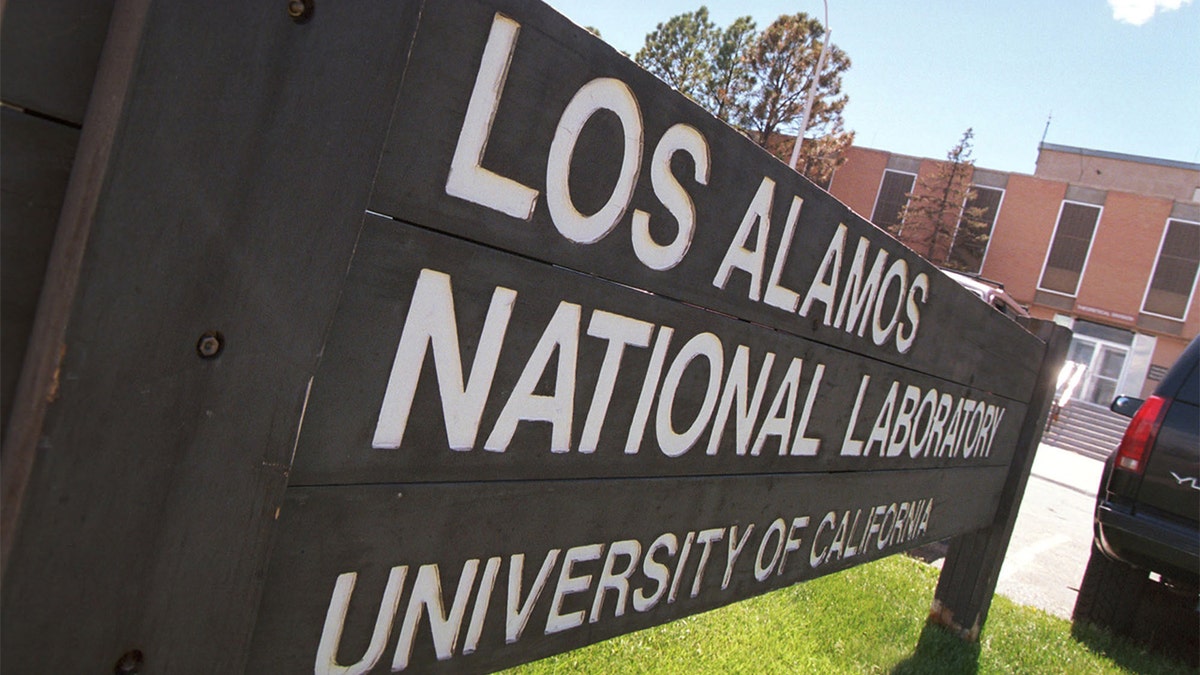
A sign greets visitors as they arrive on the Los Alamos National Laboratory campus June 14, 1999 in Los Alamos, New Mexico. (Joe Raedle/Newsmakers)
Anthony Chavez: Reported missing May 8, 2025
Chavez, 78, a retired Los Alamos National Laboratory employee, is believed to have last been seen around May 4, 2025, at his home in Los Alamos, New Mexico. He was reported missing four days later, May 8.
When authorities and family members searched his home, they found his wallet, keys and other personal items left behind inside, while his car remained locked in the driveway. There were no signs of forced entry or a struggle, according to the Los Alamos Reporter.
Investigators reviewed hours of surveillance footage from nearby homes and businesses but have not publicly identified any confirmed footage showing Chavez after he left his residence.
Chavez had worked for decades at Los Alamos National Laboratory before retiring in 2017, placing him within the same northern New Mexico defense corridor as others who later vanished.
Jason Thomas: Missing Dec. 13, 2025, found deceased March 17, 2026
Thomas, 45, an associate director of chemical biology at pharmaceutical company Novartis, was reported missing in December 2025 after leaving his home in Wakefield, Massachusetts, late at night. Surveillance footage captured him walking near train tracks shortly after midnight, and he left behind his phone and wallet.
Thomas worked in chemical biology, a field at the intersection of chemistry and biology that uses small molecules to study and manipulate biological systems — work that plays a central role in modern drug discovery and the development of new treatments.
At Novartis, he focused on identifying and testing compounds that could target disease-related proteins, part of a broader effort to develop new medicines for complex conditions.
CLICK HERE TO DOWNLOAD THE FOX NEWS APP
In the months after his disappearance, authorities conducted extensive searches but found no trace of him. On March 17, 2026, a body believed to be Thomas was recovered from Lake Quannapowitt after the ice thawed. Officials said no foul play was suspected, though the cause and manner of death have not been publicly disclosed.
The overlap in timing and profession has fueled questions about whether something more is at play. But investigators have not identified any evidence of a broader pattern, and the cases themselves, ranging from confirmed homicides to disappearances and natural deaths, point in different directions.
missing persons, ufos, pentagon, us air force, nasa













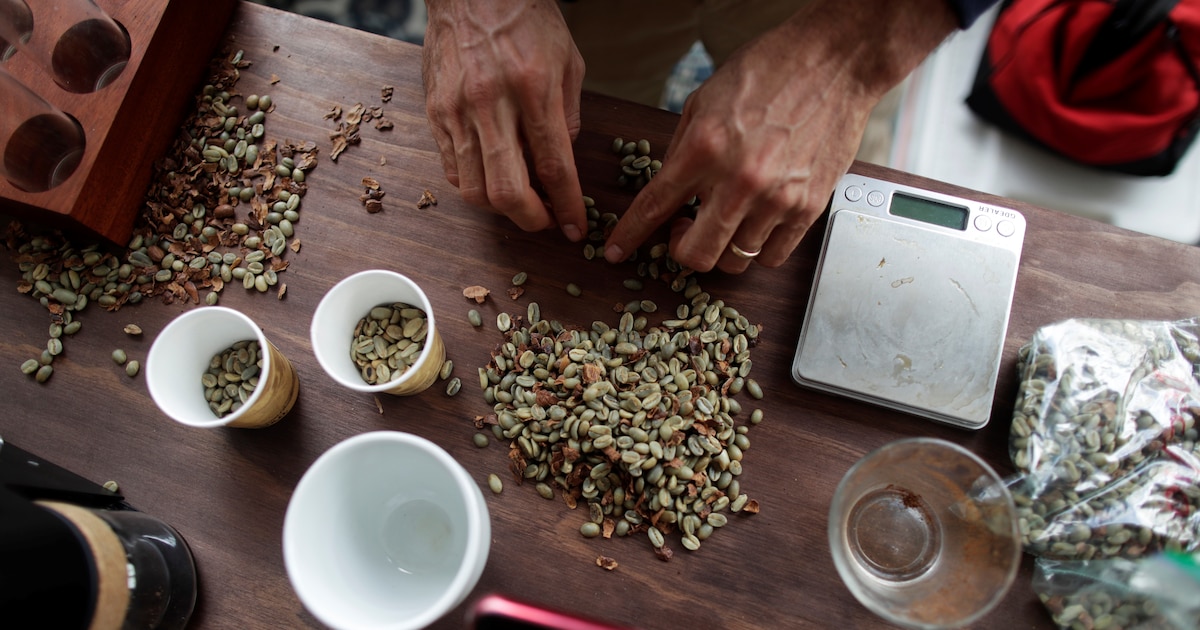
Dos empresas de Corea del Sur pagaron $14,710 por kilogramo por un nanolote de café geisha panameño, producido en la primera cosecha de Luito Estate. Ruli Coffee y GSC International adquirieron los dos kilogramos por $29,420 durante la sexta subasta privada de Lamastus Family Estate.
El lote alcanzó el mayor precio de la jornada después de recibir 3,881 ofertas durante una puja electrónica internacional. El resultado superó la marca de $13,518 por kilogramo obtenida por la familia en 2024 y confirmó el interés asiático por los cafés panameños de producción limitada y alta calidad.
El grano fue cultivado a 1,930 metros sobre el nivel del mar, en una zona próxima al Sendero de Los Quetzales, en las montañas de Boquete. Su perfil de taza presentó notas de jazmín blanco, limón y manzana verde fresca, acompañadas por un delicado final de bergamota.
La subasta, denominada “First Light, Before the World Wakes”, comenzó a las 6:00 p.m. del 8 de septiembre y terminó a las 5:00 a.m. del día siguiente. La puja se extendió durante 11 horas y 15 minutos, con compradores conectados desde diferentes mercados internacionales.

Lamastus Family Estate ofreció 26 lotes que sumaron 526 kilogramos de café geisha, procesados mediante los métodos lavado y natural. Los granos procedían de El Burro, Elida y, por primera vez, Luito Estate, cuyos primeros resultados la colocaron entre las protagonistas de la subasta privada.
Los lotes pesaron entre dos y 40 kilogramos debido al menor rendimiento registrado durante la cosecha de 2026. Wilford Lamastus explicó que la producción disminuyó en todas las zonas cafetaleras, aunque los granos alcanzaron niveles elevados de calidad, un factor determinante para los precios obtenidos durante la jornada.
Un segundo lote de Luito Estate, compuesto por cuatro kilogramos, fue vendido a $6,433 por kilogramo, para un total de $25,732. El café procedía de una polinización cruzada realizada en el semillero antes de la siembra, una característica que acompañó el debut comercial de la nueva finca.
Ambos lotes representan los primeros seis kilogramos cosechados en Luito Estate. Wilford Lamastus Jr. describió sus resultados como “un accidente de la naturaleza”, debido a que árboles todavía jóvenes produjeron los cafés mejor valorados durante la primera participación de la propiedad en este mecanismo internacional de comercialización.

Luito Estate es la finca de la familia situada más al norte de Boquete. El bajareque, una neblina casi permanente durante la estación seca, ralentiza de manera extrema la maduración del fruto. Las oscilaciones térmicas también someten las plantas a condiciones que favorecen una mayor intensidad aromática en la taza.
El proceso lavado utiliza una fermentación breve y controlada que permite destacar las características del terreno por encima del procesamiento. Según Lamastus Jr., el resultado muestra sobriedad, equilibrio y una expresión marcada del origen, atributos especialmente buscados por compradores y tostadores dedicados al segmento mundial de cafés de alta gama.
Los demás lotes fueron adquiridos por compradores de China, Corea del Sur, Emiratos Árabes Unidos, Estados Unidos, Japón y Arabia Saudita. La participación confirma el creciente peso de Asia y el Golfo dentro de las subastas panameñas, donde los compradores pagan por exclusividad, puntuación y perfiles diferenciados, no únicamente por volumen.
En otra subasta privada realizada este año, Hacienda La Esmeralda vendió 87 kilogramos distribuidos en 12 microlotes por $499,820. La mayoría quedó en manos de compradores de China y Hong Kong, mientras el precio promedio alcanzó $5,745 por kilogramo, una referencia del valor adquirido por la producción panameña más exclusiva.

Los registros comerciales también muestran este cambio. Entre enero y julio de 2026, China pagó un promedio de $63.16 por kilogramo, frente a $9.46 en Estados Unidos. Aunque el mercado estadounidense concentró 45% del volumen exportado, China aportó 32% del valor con solo 10% de los kilogramos enviados.
El precio obtenido por Luito Estate no supera el récord individual del Best of Panama. Esa marca pertenece a un geisha lavado de Hacienda La Esmeralda, vendido en 2025 por $30,204 el kilogramo. Sin embargo, los $14,710 establecen un nuevo máximo para las subastas privadas de Lamastus Family Estate.
La familia tendrá otra oportunidad de competir el 23 de septiembre, cuando la Asociación de Cafés Especiales de Panamá realice su subasta internacional. Lamastus presentará el geisha lavado Torre de Elida Estate, que obtuvo 96.25 puntos, la calificación más alta del Best of Panama 2026, frente a compradores de todo el mundo.
alianza,anillo,ferias de muestras,granos café,manos,panamá cofee festival 2020,recipientes,vasos
INTERNACIONAL
Trump administration accuses prestigious law school of favoring Black applicants over White, Asian peers
NEWYou can now listen to Fox News articles!
The Trump administration on Wednesday blasted the University of California, Berkeley, School of Law for allegedly favoring Black applicants while discriminating against Asian and White students, marking its latest federal action targeting race-conscious admissions policies at universities.
The Department of Justice (DOJ), along with the Department of Education, found Berkeley Law in violation of Title VI of the Civil Rights Act of 1964, which prohibits racial discrimination in programs and activities receiving federal funds.
«The data produced by Berkeley Law demonstrates a strong bias against Asian and White applicants, with a corresponding bias in favor of Black applicants,» the DOJ said.
The findings came after officials launched a compliance review of Berkeley Law in March 2025, roughly two years after the Supreme Court struck a major blow to affirmative action programs many universities used in admissions for decades. California had already banned affirmative action in public education under Proposition 209, enacted in 1996.
JUSTICE DEPARTMENT ZEROES IN ON UCLA FOR ALLEGED ILLEGAL DEI ADMISSIONS AS ELITE SCHOOL CRACKDOWN EXPANDS
FILE — A sign marks Berkeley Law in Berkeley, Calif., on June 4, 2021. Federal officials allege Black applicants had higher admission odds than comparable White applicants at Berkeley Law. (David Paul Morris/Bloomberg via Getty Images)
According to the DOJ’s analysis, Black applicants in 2025 had «5.8 times higher odds of admission than comparable white applicants.»
An analysis of LSAT scores for admitted students in 2024 and 2025 found that 37% of Black admitted applicants scored below 99% of admitted White applicants.
In addition, half of the school’s admitted Black applicants had LSAT scores «below 95% of the admitted white applicants.»
According to figures cited by the DOJ, median LSAT scores from 2021 through 2025 showed a persistent disparity between racial groups, with Black admits scoring around 165. Asian and White admits scored around 172, while Hispanic admits had median scores around 169.
«The median Black admit consistently has an LSAT score about 5 points lower than the median white or Asian admits,» the department said in a letter to attorney Tania Faransso, who is representing the law school.
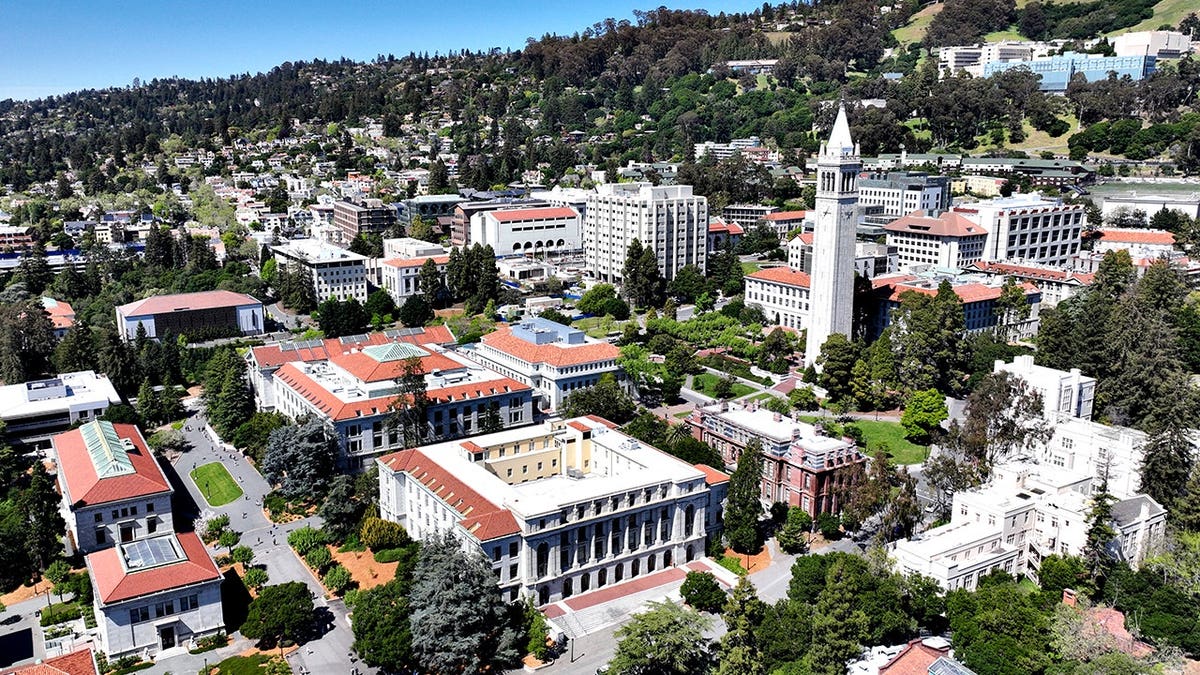
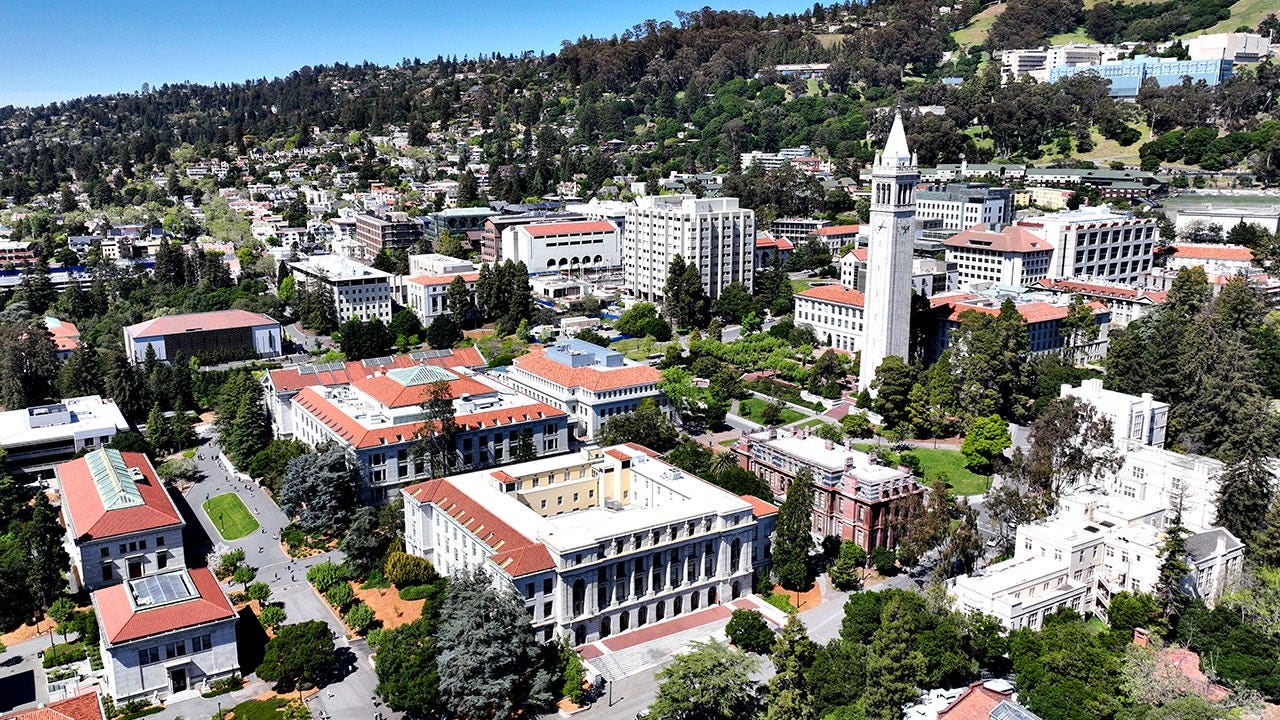
FILE — An aerial view of the University of California, Berkeley, campus in Berkeley, Calif., on May 2, 2024. The DOJ cited LSAT score disparities among law school admits. (Jane Tyska/Digital First Media/East Bay Times)
DOJ OPENS PROBE INTO PRESTIGIOUS COLLEGE OVER ALLEGED DISCRIMINATION FAVORING MINORITY STUDENTS
As of October 2025, Berkeley Law had 1,128 students enrolled. Of those, 516 were White, 293 were Asian, 51 were Black and 130 were Hispanic.
In a statement to Fox News, Berkeley Law firmly rejected the allegations, saying its admissions decisions comply with federal law and Proposition 209.
However, the school noted that the laws still allow institutions to build diverse student bodies by considering race-neutral factors, which can include socioeconomic status and personal experiences.
«Our admissions policy is clear that race is not considered in any way in admissions decisions,» the school said. «Proposition 209, federal statutes, and the Supreme Court’s decisions do not preclude schools from pursuing diversity so long as they give no preferences based on race. Berkeley Law does not do so.»
UC Berkeley’s central administration also said the school is «committed to ensuring that every student is admitted based on their merit, and not on their race, sex, color, ethnicity, or national origin.»

FILE — Students walk past Sather Gate at the University of California, Berkeley, on Feb. 19, 2026. The school maintains that it complies with California’s Proposition 209 and federal law. (Christina House / Los Angeles Times via Getty Images)
«UC Berkeley will spare no effort to provide ample evidence showing that the university complies with all relevant laws, policies and rules governing admissions,» the school said.
education, california, administration, diversity
INTERNACIONAL
El parque temático Puy du Fou reaviva la batalla cultural en Francia en medio del avance de la ultraderecha

En un parque temático situado entre los campos de trigo del occidente rural de Francia, barcos vikingos y pianos emergen de estanques y caballeros montan a caballo. Ahora el parque temático más popular de Francia, detrás del Disneyland cerca de París, ha abierto una sede en España y tiene el objetivo de construir una en Inglaterra pronto.
Pero muchos en Francia odian el parque, llamado el Puy du Fou.
Los críticos lo han llamado un difusor de “propaganda de extrema derecha”, una acusación que ha adquirido resonancia a medida que los ultraconservadores se acercan al poder por primera vez desde la Segunda Guerra Mundial. Los críticos lo acusan de usar la historia como arma para popularizar los valores de su fundador, Philippe de Villiers, un exlegislador que apoya a políticos de extrema derecha y ha hecho campaña durante mucho tiempo contra la Unión Europea, el islam, el matrimonio homosexual y la inmigración.
Él escribió hace poco que el parque es parte de una “batalla cultural” más amplia por el alma del país, y que “las victorias culturales preceden a las victorias políticas”. Pero su hijo Nicolas, que ha dirigido el parque desde 2012, dijo que su única ambición es “crear espectáculos que hagan que la gente ame a Francia”, y agregó, “para mí, esa es mi única batalla cultural”.
El parque está a cuatro horas al suroeste de París en auto. Con miles de árboles que crecen entre ríos y estanques artificiales, el Puy du Fou parece más un parque nacional que un parque de diversiones. No hay atracciones de feria y hay pocos vendedores. En su lugar, caminos de tierra llevan a los visitantes a escenarios inmersivos, así como a representaciones, en su mayoría sobre historia francesa, que se presentan en grandes escenarios al aire libre y teatros bajo techo y que por lo general duran alrededor de media hora.
El atractivo, para la mayoría, no son solo las míticas historias francesas, sino los espectaculares efectos especiales y los animales.
En una función sobre los romanos, los aurigas compiten con yuntas de caballos engalanados alrededor de un obelisco egipcio que más tarde se transforma en una galera gigante. En otro espectáculo, más de 300 aves vivas, incluyendo buitres y águilas calvas, dan vueltas sobre las cabezas de los espectadores.
“La ingeniería mecánica es increíble”, dijo Arido Agrifoglio, de 69 años, un médico jubilado de Suiza, mientras hacía fila con su esposa, Sylvie, para ver su noveno espectáculo del día. La noche anterior habían visto uno en el que bailarines, un pianista y un piano emergieron de un estanque.
“A menudo me pregunto ‘¿cómo hicieron eso?’”, dijo Agrifoglio.
Antes de que existiera el parque de 101 hectáreas, Philippe de Villiers lanzó un solo espectáculo en 1978 junto a un castillo en ruinas llamado Puy du Fou, que según él significa “colina de hayas” en francés antiguo y latín.
Philippe de Villiers, que en ese entonces estudiaba en la universidad de élite del país para funcionarios públicos, escribió el guión para un espectáculo sobre la sangrienta experiencia de la región durante la Revolución francesa, cuando los lugareños tomaron las armas contra el nuevo gobierno y fueron masacrados. Como Philippe de Villiers no podía pagar a actores ni a tramoyistas, miembros de la comunidad se ofrecieron como voluntarios. Desde entonces, el espectáculo –llamado la Cinéscénie– ha crecido, y aún es montado en el verano por miles de voluntarios.
Leé también: Juicio por la muerte de Federico Aramburu: revelaron qué pasó en la sala cuando se mostraron los videos del momento del crimen
Philippe de Villiers pasó a convertirse en el secretario de Estado de Cultura del país, y en un legislador electo. En 1989, después de un viaje a Walt Disney World Resort en Orlando, Florida, vio el potencial de negocio. Creó un nuevo parque junto a la Cinéscénie, con personal profesional. Se propuso escribir los guiones para nuevos espectáculos que ofrecerían al país lo que llamó su “narrativa fundacional”.
“Debemos devolver a los franceses su pasado”, escribió en su libro de 2025 Populicide, que decía que la inmigración estaba causando un colapso civilizatorio en Francia, donde el libro fue un éxito de ventas.
Hoy en día, el parque tiene alrededor de 3000 trabajadores que atienden unos 20 espectáculos, cinco hoteles de temática histórica y 26 restaurantes. La empresa ganó aproximadamente 350 millones de dólares en 2025 con un récord de tres millones de visitantes, dijo Nicolas de Villiers. En 2021, abrió un parque en Toledo, España, centrado en la historia de España, y en 2025 solicitó abrir una versión británica cerca de Oxford. (Proyectos planeados para Rusia, la Crimea ocupada por Rusia y Estados Unidos nunca se concretaron).
Con su creciente éxito, el parque ha sido objeto de intensas críticas por parte de políticos de izquierda e historiadores, quienes durante años han señalado imprecisiones en sus espectáculos, y lo han acusado de distorsionar la historia por razones políticas. Esa crítica se amplificó en 2022, cuando cuatro historiadores publicaron un libro mordaz llamado Le Puy du Faux, o El Puy de la falsedad, que dice que se trata de un parque “ideológico” donde los visitantes “no aprenderán nada”.
“Es el borrado de la Revolución francesa y el elogio del cristianismo. Justo ahí está la receta del Puy du Fou”, dijo Florian Besson, uno de los autores y un historiador medieval.
Muchos de los espectáculos se centran en el catolicismo. Los vikingos saqueadores dispuestos a atacar una aldea cristiana son detenidos por un santo fantasmal y se convierten rápidamente. Los romanos son retratados como crueles amos paganos que perseguían a los galos cristianos, hasta que también se convirtieron.
“Es una inversión completa de la historia: el cristianismo llegó a Galia desde Roma, sin embargo, allí se presenta exactamente de la manera opuesta”, dijo Pauline Ducret, otra historiadora y coautora del libro.
El parque presenta una “Francia eterna” que está bajo ataque, dijo Ducret, si no por vikingos, entonces por un ejército revolucionario o alemanes; un eco de las posturas antiinmigración del mismo de Villiers.
Luego están las elecciones de qué partes de la historia francesa presentar. No hay nada, señalan los críticos, sobre los momentos más oscuros de Francia: la esclavitud, el colonialismo o Vichy, el gobierno durante la Segunda Guerra Mundial que colaboró con los nazis.
Philippe de Villiers no respondió a las solicitudes de entrevista. Pero su hijo Nicolas, de 46 años, habló con nosotros dos veces, una en una habitación arriba de un restaurante en el parque donde los camareros cantan canciones folclóricas francesas. Dijo que atribuir objetivos políticos al parque era “ridículo”.
“¿Los vikingos son de derecha o de izquierda? ¿Los romanos eran de derecha o de izquierda?”, dijo. “Esa pregunta no tiene nada que ver con los espectáculos que presentamos”.
Pero él sí ve que el parque ayuda a construir la memoria colectiva del país. “Si queremos como pueblo en Francia tener un destino común, necesitamos recuerdos comunes”, dijo. Y no pidió disculpas por omitir ciertos capítulos históricos.
“Siempre preferimos la gloria frente a la vergüenza”, dijo.
Nicolas de Villiers dijo que creía que la reciente avalancha de críticas sobre el parque estaba motivada por los celos, en particular de la élite de izquierda que dijo que controla la escena teatral en París.
François Ruffin, un candidato presidencial de izquierda, ofreció otra teoría. El escrutinio, dijo Ruffin, aumentó con la suerte del partido de extrema derecha Agrupación Nacional, cuya líder, Marine Le Pen, tiene una gran posibilidad de ganar la presidencia el próximo año.
Cuando Philippe de Villiers construyó el Puy du Fou, era “un foco de resistencia, manteniendo viva la llama del neoconservadurismo”, dijo Ruffin en una entrevista. “Hoy se han vuelto dominantes, la mayoría, y posiblemente están listos para tomar el poder el próximo año”, agregó Ruffin.
El Puy du Fou es solo una parte de una creciente constelación cultural de derecha, dijo, impulsada por el multimillonario francés Vincent Bolloré, cuyas propiedades incluyen editoriales, productoras de cine y un canal de televisión de derecha, CNews, en el cual Philippe de Villiers tiene un programa los viernes por la noche.
Esa constelación está ganando ahora la “guerra cultural” de Francia, dijo Ruffin.
Él ha llamado a la creación de un Puy du Fou de izquierda que monte espectáculos sobre la Revolución francesa y la resistencia francesa durante la Segunda Guerra Mundial.
Hace poco, un día sofocante, las familias se apresuraban para ir de un espectáculo al siguiente.
Algunos dijeron que les gustaba el mensaje histórico del parque. Los críticos solo “lo odian porque es francés”, dijo Laurent Smirnow, de 53 años, un guardia de seguridad.
Pero muchos dijeron que habían venido por el entretenimiento, no por las lecciones de historia ni la política.
Valérie Billet, de 57 años, tomó un descanso bajo un árbol con sus suegros y sus hijos adultos.
Su hermana se negó a ir al parque debido a las políticas de de Villiers, dijo.
“Cuando vengo aquí, desvinculo al parque del hombre que lo creó”, dijo Billet, una profesora de inglés. Sentada cerca, su hija Nolwenn, de 28 años, murmuró que los sesgos del parque eran difíciles de ignorar. “Es algo que definitivamente puedes sentir”, dijo la hija.
Aun así, ella había regresado con su familia cuatro veces.
*Por Catherine Porter y Giulia Imbert.
The New York Times, Francia

La Cámara Federal anuló un tramo de la causa contra un exsocio de Martín Menem por contrataciones en Osprera

Una vestuarista denunció a Axel por acoso y estalló otro escándalo con el cantante: “En un hotel me…”

El posteo del presidente Javier Milei sobre el sueño de que Scaloni dirija alguna vez a Boca

Jornada financiera: el precio del petróleo volvió a saltar y las acciones argentinas subieron hasta 6% en Wall Street

Empresas surcoreanas pagan $14,710 por un kilogramo de geisha panameño

Vence el plazo para que Manuel Adorni justifique su patrimonio y en la Justicia no descartan que pida una nueva prórroga

El gobierno de Kicillof retendrá un 2% en los premios de las apuestas online

Femicidio brutal en Merlo: un jubilado de 64 discutió con su esposa y la asesinó a puñaladas

El rotundo cambio de Julián Álvarez en una foto presentación del Atlético de Madrid tras quedarse en el club

Los alimentos aumentan un 0,8% en septiembre y ya anticipan una inflación de 1,8%

 POLITICA2 días ago
Patricia Bullrich cuestionó a la jueza que frenó la ley penal juvenil en la provincia de Buenos Aires: “No le corresponde decidir”
- POLITICA18 horas ago
La intendenta de José C. Paz criticó a Kicillof por la inseguridad tras el crimen de un joven de 23 años
- CHIMENTOS1 día ago
La desafiante aventura de Carolina Baldini en moto por Europa: desde Edinburgo a Liverpool en dos ruedas