INTERNACIONAL
Una muerte dudosa, 13 años de lucha y un femicidio que cambió la historia judicial de México

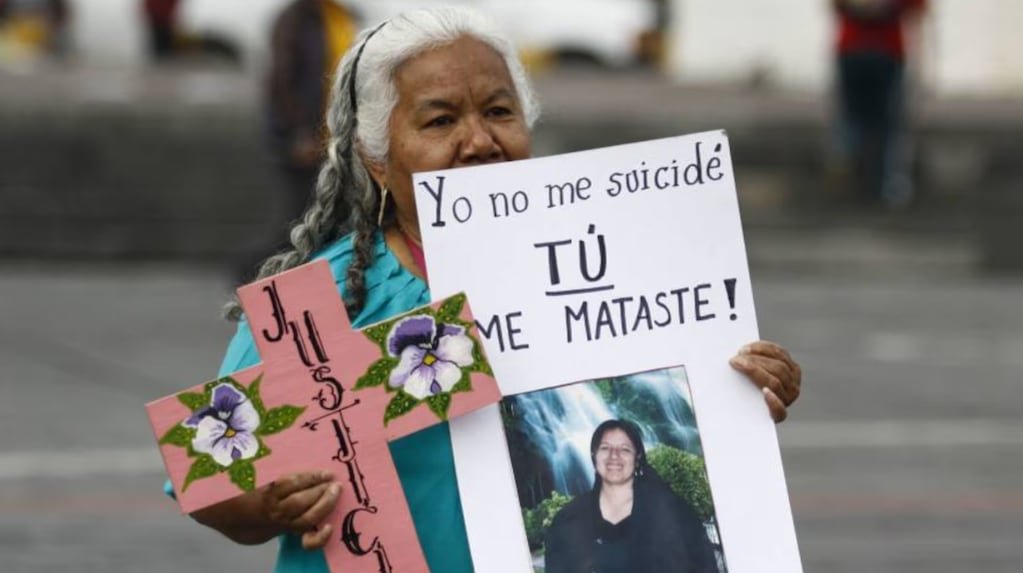
Cuando Irinea Buendía recibió la llamada que cambiaría su vida para siempre, la explicación parecía simple. Del otro lado de la línea, el esposo de su hija le aseguró que Mariana Lima Buendía se había quitado la vida. Las autoridades llegaron rápidamente a la misma conclusión: se trataba de un suicidio. El expediente parecía destinado a cerrarse sin mayores preguntas. Pero Irinea no creyó esa versión ni por un instante.
Lo que siguió fue una lucha de más de una década contra la impunidad, las irregularidades judiciales y la indiferencia institucional. Esa batalla no solo terminó con la condena del responsable, sino que además transformó el sistema judicial mexicano.
Mariana Lima Buendía tenía 28 años y vivía en el municipio de Chimalhuacán, en el Estado de México. Estaba casada con Julio César Hernández Ballinas, un comandante de la Policía Judicial estatal, que ocupaba un cargo de poder dentro de la estructura de seguridad local.
Según el relato posterior de su familia, Mariana sufría violencia de género por parte de su esposo desde hacía tiempo. Su madre aseguró que existían antecedentes de maltrato físico y psicológico y que la joven había expresado temor por su situación. Mariana Lima Buendía fue asesinada en 2010 por su marido, aunque él declaró que se había tratado de un suicidio. (Foto: Imagen Zea)
Incluso, un día antes de morir, Mariana le habría contado a su madre que estaba atravesando episodios de violencia y que había decidido terminar la relación.
Nada hacía pensar que estuviera planeando quitarse la vida. Sin embargo, el 29 de junio de 2010 fue encontrada muerta dentro de su casa.
La versión oficial: un supuesto suicidio
Desde el primer momento, Julio César Hernández sostuvo que Mariana se había suicidado. La investigación inicial avanzó bajo esa hipótesis y las autoridades prácticamente descartaron otras líneas de investigación.
Con el paso de los meses comenzaron a surgir cuestionamientos sobre la forma en que se había manejado el caso. Una de las irregularidades más llamativas fue que el propio esposo de Mariana, quien trabajaba dentro de la Procuraduría, tuvo participación e influencia en momentos clave relacionados con el procesamiento de la escena y la investigación inicial.
Irinea Buendía denunció que las autoridades habían aceptado la versión del marido sin profundizar en los antecedentes de violencia doméstica y sin realizar pericias que permitieran determinar si se trataba de un homicidio.
A pesar de las objeciones, el caso avanzó hacia el cierre. En septiembre de 2011, la Fiscalía Especializada en Homicidios concluyó formalmente que Mariana se había suicidado y resolvió no ejercer acción penal contra ninguna persona.
La lucha de una madre contra el sistema
Lejos de resignarse, Irinea Buendía inició una batalla judicial para demostrar que su hija había sido asesinada.
En noviembre de 2011 solicitó la revisión de la decisión que había cerrado la causa. Ante la falta de respuestas satisfactorias, presentó distintos recursos legales y posteriormente promovió un juicio de amparo argumentando que se habían vulnerado derechos fundamentales y que las autoridades no habían investigado adecuadamente la muerte de Mariana.
La pelea fue larga y compleja. Durante años, Irinea recorrió tribunales, habló con organizaciones de derechos humanos y encontró apoyo en el Observatorio Ciudadano Nacional del Feminicidio, que acompañó el caso y ayudó a visibilizarlo a nivel nacional.

Julio César Hernández Ballinas, el autor del femicidio de Mariana Lima, acompañado de efectivos policiales. (Foto: El Universal)
La presión ejercida por la familia logró un primer avance importante en mayo de 2012, cuando el procurador general de Justicia del Estado de México revocó la decisión de cerrar la causa y ordenó continuar con la investigación. Sin embargo, el camino hacia la justicia todavía sería largo.
El fallo histórico de la Suprema Corte
El punto de inflexión llegó el 25 de marzo de 2015. Ese día, la Primera Sala de la Suprema Corte de Justicia de la Nación emitió una resolución histórica que marcó un antes y un después en la investigación de los femicidios en México.
Los ministros concluyeron que la muerte de Mariana no había sido investigada de manera adecuada y ordenaron reabrir el caso para que fuera analizado con perspectiva de género.
La Corte señaló que las autoridades tenían la obligación de examinar seriamente la posibilidad de que se hubiera tratado de un femicidio y no limitarse a aceptar la hipótesis del suicidio.
La sentencia estableció además un criterio que luego sería utilizado en todo el país: toda muerte violenta de una mujer debe investigarse inicialmente como posible femicidio y con perspectiva de género. La lucha de Irinea Buendía marcó un precedente en la historia judicial mexicana. (Foto: Reuters)
El fallo también cuestionó las omisiones y deficiencias cometidas durante la investigación original y ordenó que se analizaran las responsabilidades de los funcionarios involucrados.
Para especialistas y organizaciones de derechos humanos, la llamada “Sentencia Mariana Lima” se convirtió en uno de los precedentes más importantes en materia de violencia de género en México.
La reapertura de la investigación
Tras la resolución de la Corte, el expediente fue reconstruido prácticamente desde cero. Peritos, fiscales y especialistas volvieron a analizar las pruebas con una mirada diferente. La investigación incorporó los antecedentes de violencia que había sufrido Mariana y revisó aspectos que habían sido ignorados durante los primeros años.
Esto permitió fortalecer la hipótesis de que la joven había sido víctima de un femicidio.

Irinea Buendía fue una figura clave para que se establezca la figura del femicidio en la legislación penal de México. (Foto: El País)
Finalmente, en junio de 2016 se imputó a Julio César Hernández Ballinas por homicidio calificado y días después un juez ordenó que continuara detenido mientras avanzaba el proceso judicial. La fiscalía lo acusó de haber estrangulado a su esposa hasta la muerte.
Aun así, la familia debió esperar varios años más para obtener una sentencia definitiva.
Leé también: Una llamada, una desaparición y un crimen que conmocionó a México: el femicidio de María Fernanda Contreras
La condena después de 13 años
La justicia llegó recién en marzo de 2023. Luego de más de una década de recursos de amparo, audiencias y reclamos, el Poder Judicial del Estado de México declaró culpable a Julio César Hernández Ballinas por el asesinato de Mariana Lima Buendía y lo condenó a 70 años de prisión, la pena máxima prevista para este tipo de delitos.
La resolución fue celebrada por organizaciones feministas, colectivos de derechos humanos y familiares de víctimas de violencia de género, que consideraron el fallo como una victoria histórica contra la impunidad.
La sentencia llegó casi 13 años después del crimen y fue vista como el resultado directo de la persistencia de Irinea Buendía, quien nunca aceptó la versión oficial del suicidio y dedicó más de una década a exigir justicia para su hija.
México, Femicidio, Muerte














INTERNACIONAL
Noncitizens on voter rolls in Democrat-run state exposed as RNC chair pledges secure elections
NEWYou can now listen to Fox News articles!
EXCLUSIVE — Noncitizens in a key blue state were on the voter rolls for years — and some even voted in prior elections, according to documents obtained via public records request.
The New Jersey Republican Party (NJGOP) and the Republican National Committee (RNC) requested voter rolls from all 21 counties in the Garden State and found multiple instances of noncitizens seeking naturalization asking to be removed from the rolls, claiming they were unknowingly registered to vote. Most were registered as Democrats.
Noncitizens cannot vote in state or federal elections, and the candidates for citizenship worried that being on the rolls would disqualify them.
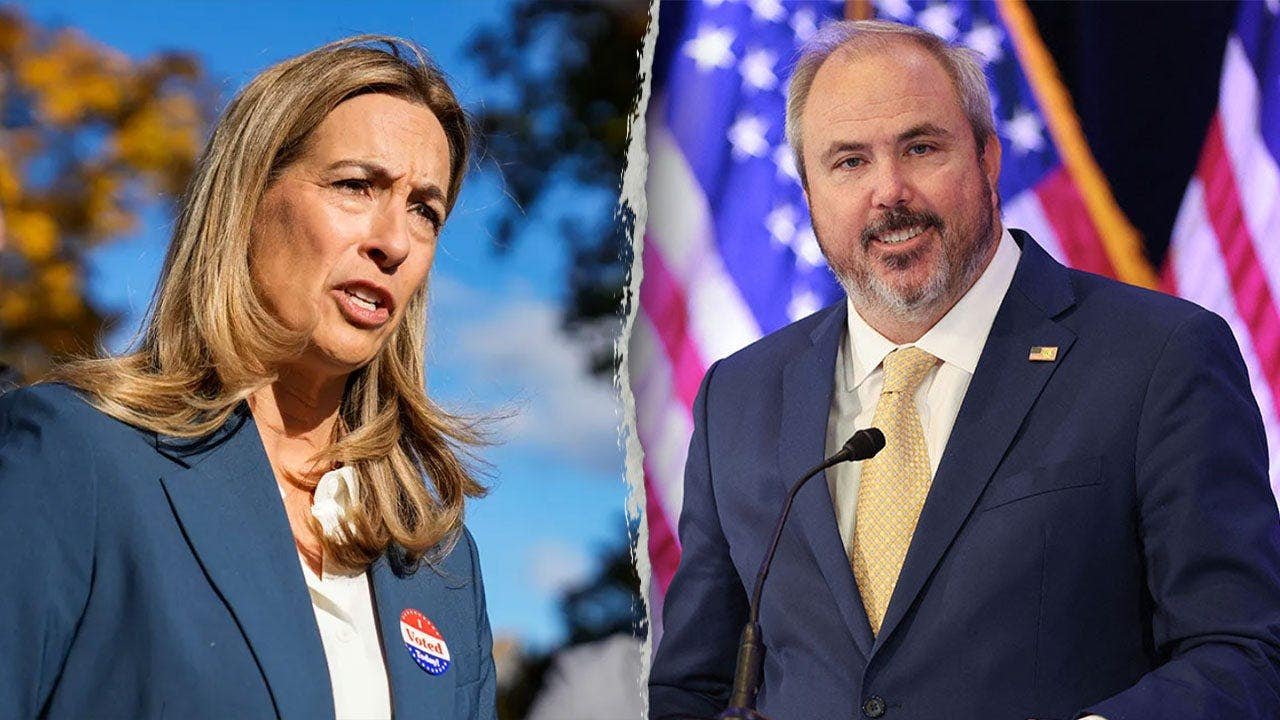
Rep. Mikie Sherrill casts her ballot at a polling location inside Hillside Elementary School in Montclair, N.J., on Nov. 4, 2025, during the New Jersey gubernatorial election. (John Lamparski/Bloomberg)
In official letters viewed by Fox News Digital from Atlantic County, Superintendent of Elections & Commissioner of Registration Maureen Bugdon certified that noncitizens came to her asking to be removed.
FOUR NONCITIZENS CHARGED WITH ILLEGALLY VOTING IN 2020, 2022 AND 2024 FEDERAL ELECTIONS IN NEW JERSEY
«Please allow this letter to confirm that on today’s date, the below referenced individual came before this office to confirm her registration and voter status,» the typical letter reads. «She relayed that she did not wish to be a New Jersey registered voter and does not understand how she became registered through the Department of Motor Vehicles, allegedly.»
Most of the letters confirmed that the noncitizens did not have a voting record, but not all.
One noncitizen, who the county said was removed from the rolls in 2015, voted several times in 2000 and 2001, and in the 2008 general election. Another voted in a primary election in 2005 and a municipal election in 2000.
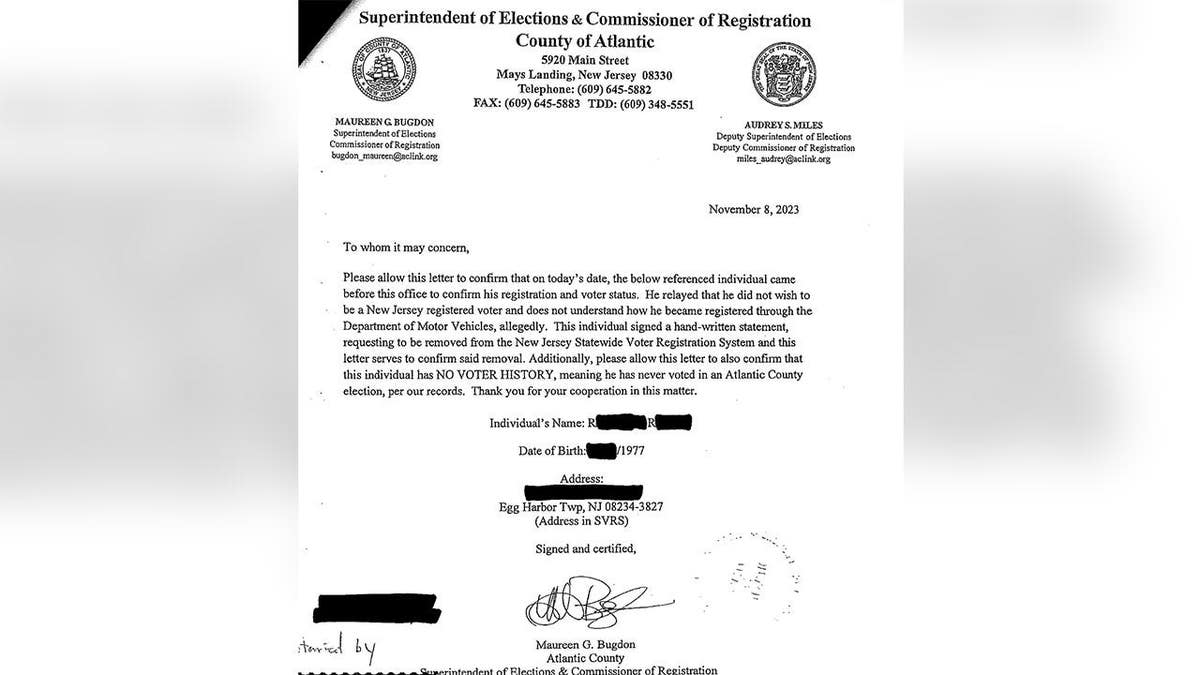
A letter showing Atlantic County Election Commissioner Maureen Bugdon certifiying that a New Jersey noncitizen was on the voter rolls and wished to be removed. (Obtained by the RNC and NJGOP)
TRUMP ADMIN BLOCKS CITIZENSHIP FOR ILLEGAL MIGRANT VOTERS
Other documents showed noncitizens directly asking to be removed from the rolls through a state voter registration cancellation form.
When prompted about why they wished to be removed, the vast majority of the unknowingly registered voters checked a box labeled «other» and wrote that they were not citizens.
In Atlantic County alone, Fox News Digital reviewed more than 50 documents from noncitizens attesting that they were registered to vote unknowingly.
OVERSIGHT GROUP SEEKS DOCS FROM WALZ’S MINNESOTA AS DOJ REBUKES VIRGINIA VOTER-ROLL MAINTENANCE
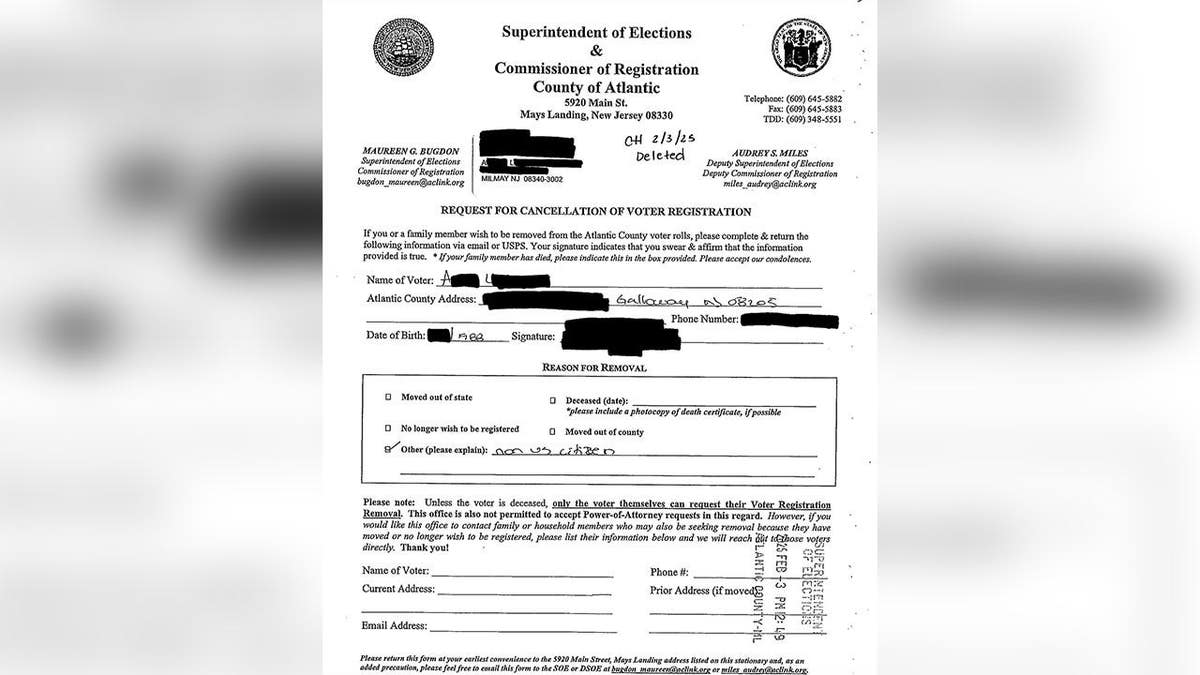
A noncitizen on the New Jersey voter rolls used this removal form to request to be unregistered. (Obtained by the RNC and NJGOP)
RNC Chairman Joe Gruters says the group found hundreds of noncitizen registrants in New Jersey who are likely only the tip of the iceberg, but that New Jersey and other Democrat-run states are unwilling to disclose information about their voter registration list maintenance processes. The organization has requested that information from 48 states.
«I mean, it’s really incredible because here the Democrats are saying that, you know, noncitizens never vote, [that], this is a non-issue, but every county we’re finding people that are self-reporting now, and I’m glad we’re doing these records request because it’s really eye-opening, because this is just the people that have self-reported,» Gruters told Fox News Digital.
«You want a democracy that’s secure and elections that are free and safe and that people can depend upon, and people have full confidence in,» he said.
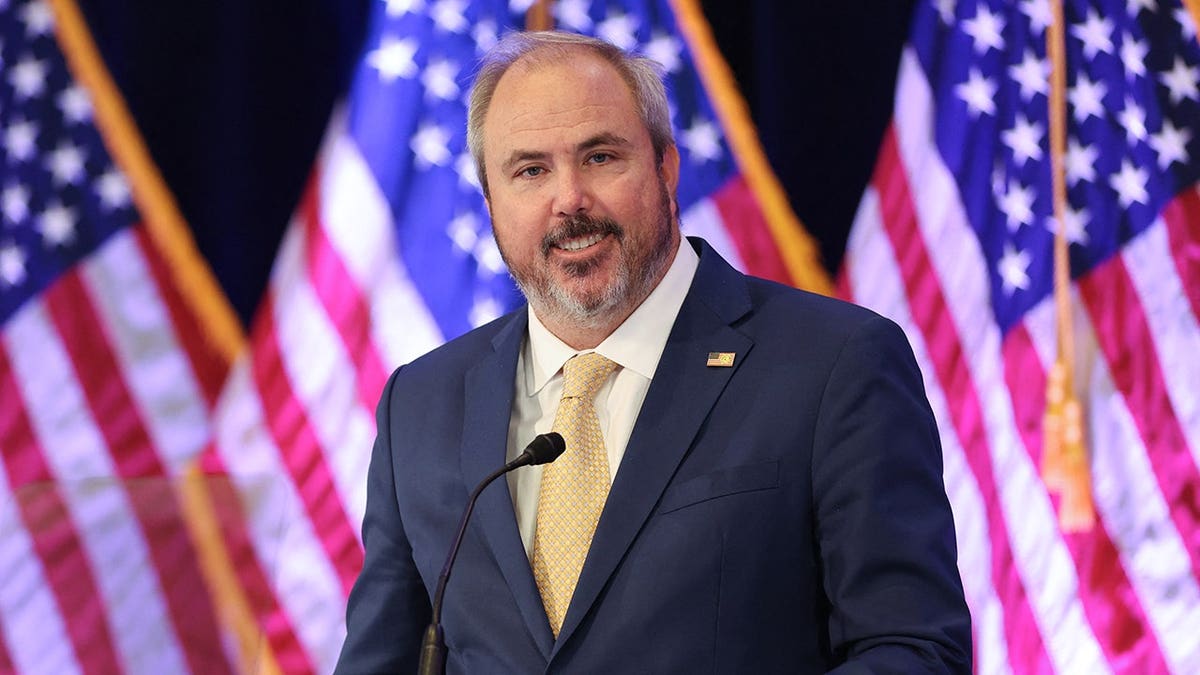
Republican National Committee Chair Joe Gruters is claiming victory over Democrat efforts to block efforts to kick noncitizens skipping out of North Carolina jury duty from the state’s voter rolls. (Patrick T. Fallon/AFP)
RNC LAUNCHES MULTIMILLION-DOLLAR ELECTION INTEGRITY PUSH IN 17 STATES AHEAD OF MIDTERMS
The RNC in 2024 made a full-throated election integrity push to ensure, one that continues to this day, according to Gruters.
He told Fox News Digital that the group is «bringing the hammer down» and that it has «boots on the ground» across the country to ensure even more diligence in November.
«We have staffers already in 17 states working on these issues to make sure that, like I said, it goes back to having a safe and secure election that’s free and fair,» he said.
RNC GETS DAY AT SUPREME COURT TO CHALLENGE LATE-ARRIVING MAIL BALLOTS
Gruters is also optimistic about another RNC battle on the election integrity front.
The Supreme Court is soon set to decide on the case of Watson vs. RNC, a challenge to laws that allow ballots to be cast by mail on election day, but counted days later. The RNC’s goal is eliminate the practice, which Gruters highlighted as California continues to count ballots from Tuesday night’s primary elections almost a week after polls closed.
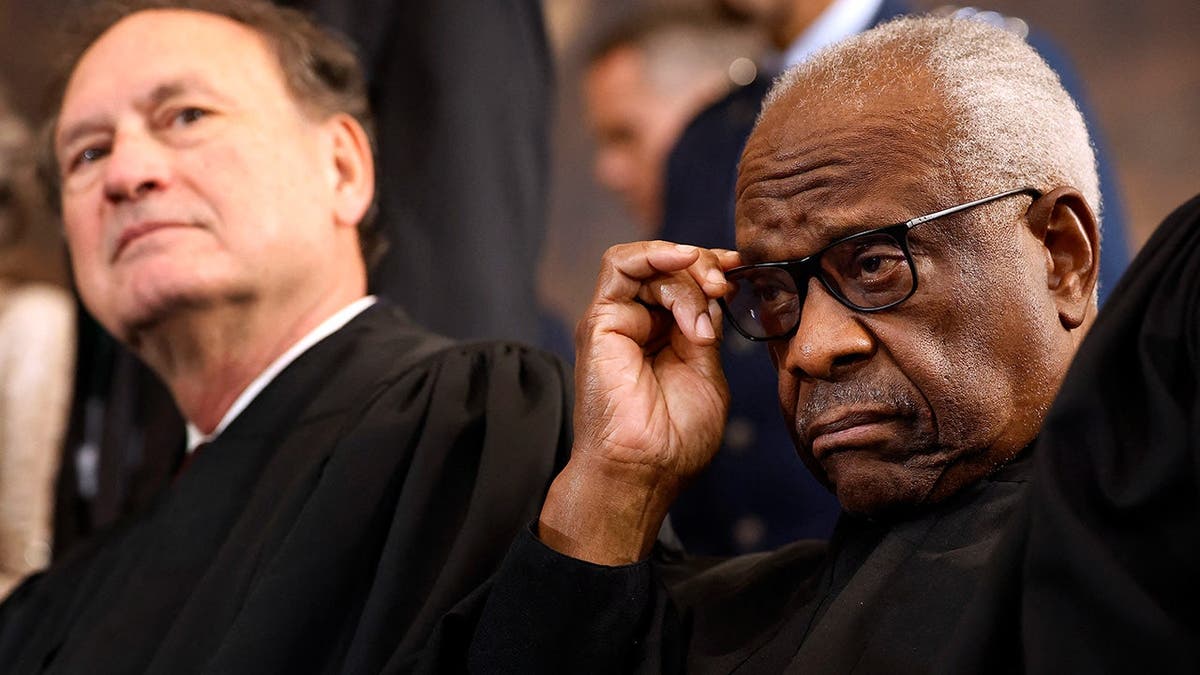
Supreme Court Associate Justices Samuel Alito and Clarence Thomas waited to leave the stage at the conclusion of inauguration ceremonies in the Rotunda of the U.S. Capitol on Jan. 20, 2025, in Washington, D.C. (Chip Somodevilla/POOL/AFP via Getty Images)
He said a win in that case could be «one of our biggest election victories ever.»
«I mean, just what’s happened with [Los Angeles Mayoral Candidate] Spencer Pratt should open your eyes, and you should be sick to your stomach,» he said. «This should not be allowed in America.»
CLICK HERE TO DOWNLOAD THE FOX NEWS APP
Gruters said that when elections have an «open-ended target date,» it opens the doors for potential manipulation.
«We’re fighting hard to put an end to this, and this, like I said, this could be probably our biggest win ever from an election integrity standpoint by stopping this and making sure that election day means exactly what it says, election day.»
Democratic New Jersey Gov. Mickie Sherrill’s office did not return a request for comment. Neither did the New Jersey Motor Vehicle Commission or Atlantic County officials.
A spokesman for the New Jersey Department of Motor Vehicles said it’s rare that noncitizens end up on the rolls.
«MVC, together with state and local partners across New Jersey, uses rigorous processes to ensure eligible individuals register to vote through the MVC. Consistent with all applicable laws, individuals who apply to register to vote through the MVC affirm their citizenship. While it is exceedingly rare that non-citizens claim citizenship or other voter eligibility through the MVC, such instances are taken extremely seriously by this agency.»
SEE THE FULL CACHE OF DOCUMENTS HERE:
new jersey, politics, democrats elections, naturalization, republicans, voter fraud concerns
INTERNACIONAL
Why Trump picked Bill Pulte to lead US intelligence as critics question his qualifications

NEWYou can now listen to Fox News articles!
President Donald Trump’s selection of Federal Housing Finance Agency Director Bill Pulte to serve as acting director of National Intelligence elevates a housing finance regulator and former social media philanthropist to one of the government’s most sensitive national security posts.
Before entering government, Pulte was best known as the grandson of the founder of homebuilding giant PulteGroup and for building a large following through social media philanthropy campaigns that distributed money to followers online. He later became a prominent figure in conservative social media circles before Trump tapped him to lead the Federal Housing Finance Agency, which regulates Fannie Mae and Freddie Mac.
Trump announced the selection in a Truth Social post, praising Pulte’s leadership of the housing finance system and his experience managing «the most sensitive matters in America.»
The White House declined to tell Fox News Digital whether Trump is considering Pulte for the position on a permanent basis. But expectations for Pulte became clearer Friday when Trump told The Wall Street Journal that he wants the acting intelligence chief to begin reducing the size of the Office of the Director of National Intelligence.
TRUMP NAMES BILL PULTE ACTING DIRECTOR OF NATIONAL INTELLIGENCE
«I’d like to see it smaller. I think there are a lot of people in there that shouldn’t be there,» Trump told the newspaper, describing the agency as «unnecessary and/or too big.» Asked whether he wants Pulte to fire employees, Trump said he wants him to «start the process.»
Senate Intelligence Committee Chairman Tom Cotton, R-Ark., quickly endorsed the effort, arguing that the Office of the Director of National Intelligence has expanded far beyond the mission Congress envisioned when it created the office after the Sept. 11 attacks.
«President Trump is right: the ODNI has grown far beyond its original mandate,» Cotton wrote on X. «I’ve long advocated for downsizing, if not outright eliminating, this bureaucracy.»
Director of the Federal Housing Finance Agency Bill Pulte walks outside the White House, Sept. 2, 2025, in Washington. (AP Photo/Mark Schiefelbein)
The appointment immediately generated pushback from lawmakers and former officials who argued that Pulte lacks the experience for the role.
But Trump allies, many of whom spent years railing against an intelligence «Deep State» they believed was working to undermine Trump insisted he would dutifully carry out the president’s agenda.
«There is still very much so – I would say – internally a battle between different intelligence agencies,» Rep. Anna Paulina Luna, R-Fla., said. «Half the battle in these intelligence positions is the fact that you want someone that will not obstruct the declassification order but assist in locating documents, and that is something that Bill will do.»
TRUMP’S DRASTIC NSC CUTS SPARK DEBATE: DOES FIGHTING THE ‘DEEP STATE’ PUT NATIONAL SECURITY AT RISK?
«Bill Pulte is a great American and Patriot who will always fight for President Trump and his agenda,» White House communications director Steven Cheung wrote on X. «This is an important time in our country, and Bill has the required energy and focus to achieve great things in this new position.»
Pulte’s selection follows a period of public friction between Trump and outgoing director Tulsi Gabbard, who leaves the role on June 30.
Gabbard entered the role as a critic of the intelligence establishment, but her assessment that Iran was not building a nuclear weapon became a point of contention with the president as the administration moved toward military action against Tehran. Trump publicly rejected her assessment, saying «I don’t care what she said» and later declaring that she was «wrong.»
Neither Trump nor his allies have defended Pulte’s selection by pointing to any intelligence or national security experience. Instead, supporters have emphasized his management experience, willingness to challenge bureaucracy and commitment to advancing administration priorities.
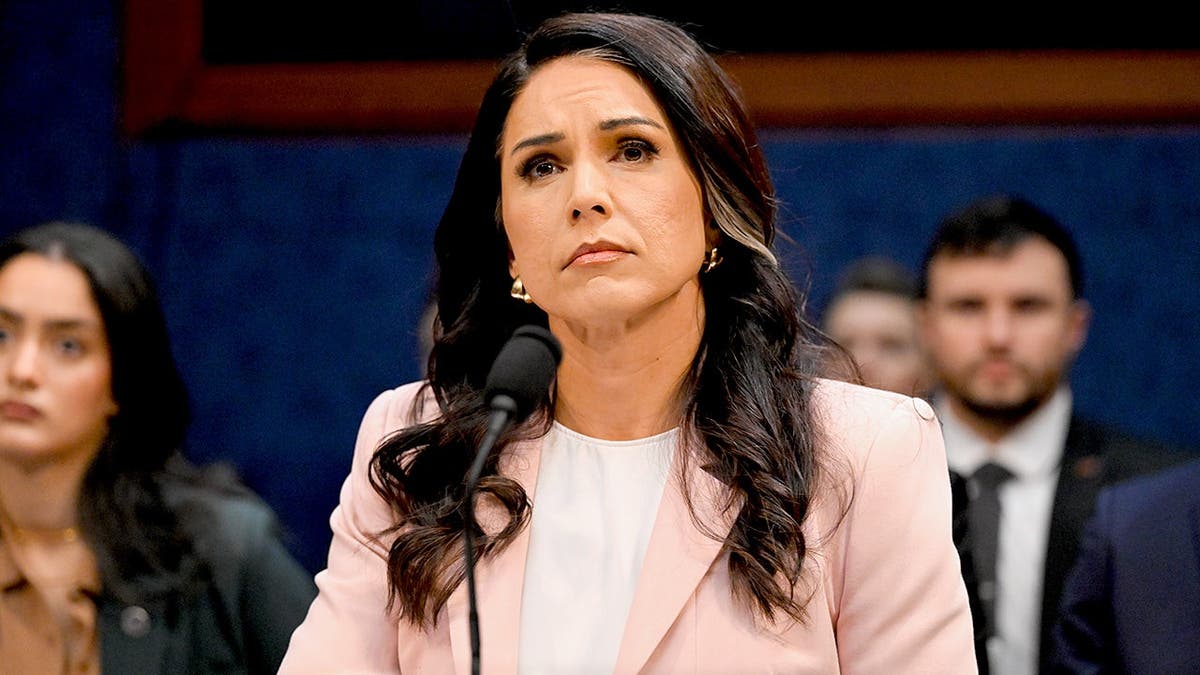
Director of National Intelligence Tulsi Gabbard appeared during a House Intelligence Committee hearing on worldwide threats on March 19, 2026, in Washington, D.C. (Daniel Heuer/Bloomberg via Getty Images)
The White House declined to tell Fox News Digital whether Trump is considering Pulte for the position on a permanent basis. The distinction could prove significant, as acting officials can wield most of the authorities of Senate-confirmed officeholders while serving in a role intended to be temporary.
«Very few Senate-confirmable positions come with statutory eligibility requirements. There are good reasons why the Director of National Intelligence is one of them,» former Senate Republican Leader Mitch McConnell said in a statement.
«Anyone performing this role of such immense public trust must have the extensive national security experience required by statute, and no nominee who falls short of this requirement will earn my vote,» McConnell added.
Senate Intelligence Committee Vice Chairman Mark Warner, D-Va., similarly argued that Pulte lacks the qualifications envisioned for the position.
«The concern is not only that Mr. Pulte lacks the ‘extensive national security experience’ required by statute,» Warner said. «It is that he appears to have been selected precisely because the White House believes he will provide the narrative it wants, not the intelligence we need.»

Senate Intelligence Committee Vice Chairman Mark Warner, D-Va., similarly argued that Pulte lacks the qualifications envisioned for the position. (Tom Williams/CQ-Roll Call, Inc via Getty Images)
Rep. Brian Fitzpatrick, R-Pa., a former FBI agent who now chairs the House Intelligence Committee’s CIA Subcommittee, was similarly blunt.
«He shouldn’t be there,» Fitzpatrick said. «He’s got no background in intelligence.»
Not all intelligence overseers were critical of the appointment, however. House Intelligence Committee Chairman Rick Crawford, R-Ark., defended Trump’s selection and dismissed concerns about Pulte’s résumé.
CLICK HERE TO DOWNLOAD THE FOX NEWS APP
«Maybe you should think about something else,» Crawford said. «This guy, whether anybody knows him or not, at least is not guilty of trying to orchestrate a coup against a sitting president.»
Pulte did not respond to a request for comment.
Earlier in 2026, Pulte said the FHFA had referred alleged Chinese and North Korean nationals to the Justice Department after discovering they had been working at Fannie Mae and Freddie Mac while allegedly posing as other individuals.
devin nunes, fbi, white house, cia, housing

Reforma laboral: qué cambia para los trabajadores con la revisión de más de 100 convenios colectivos vencidos

Nubes y algo de lluvias: así estará el clima en el AMBA durante esta semana de junio

Joseph Pilates, creador del método de entrenamiento: “La buena condición física es el primer requisito para la felicidad”

El Gurú de la City que acertó lo que pasaría con el dólar, ahora lanza predicción clave

Mundial 2026, en VIVO: últimas noticias de hoy, 8 de junio, agenda de amistosos, cambios en las selecciones, y las novedades del día

¡Dramático! Los abuelos de Agostina revelaron que el papá le pegaba a la nena: «Patadas en el piso y trompada en el estómago»

Desde Neuquén, Myriam Bregman pidió “organizar la bronca para terminar con Milei y su legado”

Cuantas reservas internacionales quieren acumular Milei y Caputo para evitar el riesgo K en 2027

Murió el Indio Solari, mítico cantante de Los Redonditos de Ricota

Senado: postergan el proyecto de propiedad privada por dudas de los bloques aliados sobre compras de tierras por extranjeros

 POLITICA2 días ago
Desde Neuquén, Myriam Bregman pidió “organizar la bronca para terminar con Milei y su legado”
- ECONOMIA2 días ago
Cuantas reservas internacionales quieren acumular Milei y Caputo para evitar el riesgo K en 2027
- CHIMENTOS2 días ago
El comunicado oficial de la familia del Indio Solari sobre el velatorio: “Caminaremos y seremos pacientes”