INTERNACIONAL
Zelensky afirmó que la adhesión de Ucrania a la UE es clave para garantizar el futuro de Europa frente a la amenaza rusa

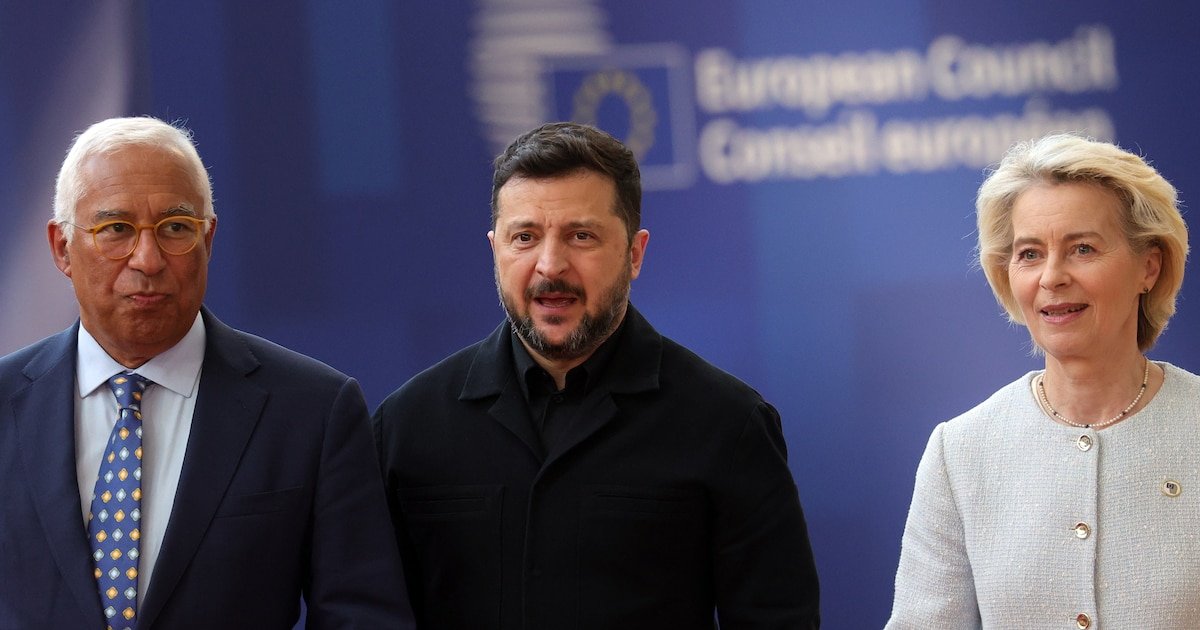
Durante la cumbre entre los líderes de la Unión Europea (UE) del jueves, el presidente de Ucrania, Volodimir Zelensky, afirmó que el futuro del continente está definiéndose a partir de la defensa ucraniana a la invasión rusa y propuso que la mejor garantía de seguridad para el bloque sería otorgar a Kiev una membresía acelerada.
“El futuro de Europa —libre, unida y, por supuesto, en paz— se está decidiendo en nuestra defensa. Eso demuestra lo singular que es nuestra situación”, expresó Zelensky en extractos de su discurso publicados en X.
El mandatario ucraniano comunicó a los Estados miembros que Ucrania busca que la guerra contra Rusia finalice antes del invierno y pidió apoyo para preparar otro periodo frío con misiles de defensa aérea y combustible. “Ucrania se lo merece porque ha pagado más que ningún otro país por su derecho a ser libre, independiente y… europea”, sostuvo.
Durante la misma jornada, ataques aéreos ucranianos alcanzaron objetivos en territorio ruso, incluida una refinería de petróleo en Moscú, en el marco de una campaña de largo alcance que el presidente ucraniano expuso como muestra de la capacidad militar del país durante encuentros con el presidente estadounidense Donald Trump y otros líderes del G7 en Francia.
En su mensaje a los líderes de la UE, Zelensky reconoció que no todos los miembros respaldan una adhesión acelerada. Hungría exigió retirar ese lenguaje de la declaración final del Consejo Europeo tras la cumbre. “El paso más importante en este sentido —sé que no a todos les gusta— podría ser una vía rápida para que Ucrania se adhiera a la UE”, planteó.

Los jefes de Estado y de Gobierno de la UE optaron por moderar las expectativas respecto a una incorporación acelerada de Ucrania al bloque, a pesar del respaldo político y militar reiterado durante la cumbre. En el documento consensuado tras varias horas de debate, los mandatarios señalaron que el proceso de ampliación seguirá sujeto al criterio de méritos concretos y a las reformas implementadas por cada aspirante, lo que aleja la posibilidad de avances inmediatos en la adhesión ucraniana.
El texto final de la cumbre estableció que la continuidad de las negociaciones con Ucrania dependerá del progreso demostrado en las áreas definidas por la Unión Europea y del cumplimiento de reformas verificables, sin fijar un calendario para una eventual aceleración.
Por otra parte, Zelensky insistió, en la cumbre frente a sus pares, en que Ucrania desea terminar la guerra este año y apuesta por una solución diplomática, aunque advirtió sobre las dificultades en la interlocución con Rusia. “Putin es la guerra”, declaró. El presidente ucraniano sostuvo que el país necesitará gas, diésel, equipos energéticos y al menos 300 misiles si el conflicto persiste, y reclamó el desembolso de 6.000 millones de euros del Fondo Europeo para la Paz.

El mandatario pidió a Europa mantenerse firme en las sanciones hacia el Kremlin, avanzar en la confiscación de activos y asegurar la financiación de su país. También alertó a la población ucraniana a prepararse para un posible aumento de ataques rusos. “Por favor, utilicen los refugios, se lo ruego”, solicitó.
Tras un ataque ucraniano con drones a una refinería en Moscú en la mañana del jueves, el ministro de Asuntos Exteriores ruso, Serguéi Lavrov, anunció que Moscú llevará a cabo “ataques masivos y coordinados de forma regular” contra Ucrania.
La presidenta de la Comisión Europea, Ursula von der Leyen, destacó durante la cumbre que las fuerzas ucranianas recuperaron terreno frente a las tropas rusas en varios puntos del frente. Esa dinámica reforzó el respaldo del bloque, pero no modificó la cautela respecto de los tiempos del proceso de adhesión. Zelensky agradeció el apoyo europeo y expresó su deseo de avanzar en la apertura de los capítulos restantes durante el verano, aunque la declaración final no recogió esa urgencia.
(Con información de Reuters)
eu,flags,leaders,summit












INTERNACIONAL
Trump’s $300B Iran investment fund may be ‘close to impossible’ due to IRGC sanctions law, expert warns
NEWYou can now listen to Fox News articles!
A proposed $300 billion investment fund for Iran included in the U.S.–Iran memorandum of understanding may face major legal obstacles under existing U.S. sanctions law, raising questions about whether the plan is workable even if both sides move toward a final agreement.
The memorandum, digitally signed Wednesday by President Donald Trump and Iranian President Masoud Pezeshkian, is aimed at ending the war and restoring traffic through the Strait of Hormuz. As part of the 14-point plan, the U.S. agreed to lift sanctions on Iran, allow Tehran to increase its oil revenue and regain access to parts of the international banking system, among other measures.
But one of the most ambitious parts of the framework — a proposed $300 billion private investment fund for Iran’s reconstruction and development — may collide with a longstanding U.S. determination that Iran’s construction sector is controlled directly or indirectly by the Islamic Revolutionary Guard Corps.
The issue is not just technical. It goes to whether one of the central economic promises of the Trump-Iran framework can realistically be executed under current U.S. law. If the $300 billion fund depends on investment in sectors Washington has already identified as IRGC-controlled, experts say the administration may be forced to rely on temporary waivers or new licenses — a legal structure that could make long-term investors wary and complicate any final deal.
TOP SENATE REPUBLICAN RIPS INTO TRUMP’S IRAN DEAL, SAYS $300 BILLION MAKES OBAMA DEAL LOOK LIKE ‘A PITTANCE’
A proposed $300 billion investment fund for Iran included in the U.S.–Iran memorandum of understanding may face major legal obstacles under existing U.S. sanctions law. (Mandel NGAN / AFP via Getty Images)
The State Department formally determined in 2020, and again in May 2025, that Iran’s construction sector was controlled directly or indirectly by the Islamic Revolutionary Guard Corps. Under the Iran Freedom and Counter-Proliferation Act, known as IFCA, that finding creates sanctions risks for people or companies doing business in the sector.
Miad Maleki, a senior fellow at the Foundation for Defense of Democracies and a former Treasury Office of Foreign Assets Control executive, told Fox News Digital that the legal and sanctions-related problems surrounding the fund are more complicated than simply asking whether Congress would have to approve it.
«I think Congress is unavoidable for a durable version of that investment,» Maleki said. «If we have a final deal and now as part of this commitment, the U.S. government and allies are going to have to go in and help Iran to set up this fund or get access to such a fund.»
Maleki said the president has meaningful unilateral authority to begin easing restrictions. Trump could revoke relevant executive orders, direct the Treasury Department’s Office of Foreign Assets Control to issue general licenses and waive some congressional sanctions laws.
But he said that does not mean the fund would be durable enough to attract serious investors.
«Technically, the fund could be switched on through some kind of an executive action plan alone, but it would be on paper and it would have to be renewed every 180 days,» Maleki said, referring to waivers for mandatory sanctions tied to Iran’s construction sector.
JD VANCE REVEALS DETAILS OF US-IRAN DEAL, ADDRESSES WHETHER TAXPAYER MONEY WILL GO TO TEHRAN
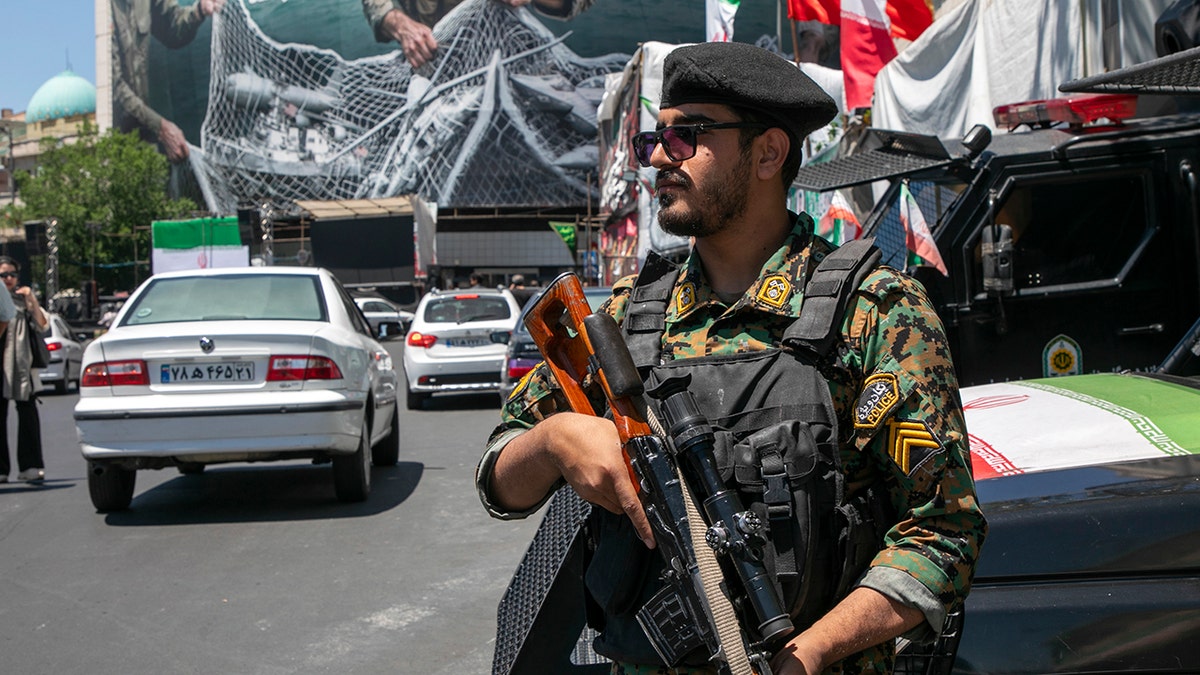
An Iranian police officer stands on patrol near a poster depicting Iranian soldiers holding a net shaped like the Strait of Hormuz with U.S. military aircraft ensnared in Tehran, Iran, on May 9, 2026. (Majid Saeedi/Getty Images)
«If you’re anyone who is in an investment-type business, it’s hard to find someone who would be investing in construction-type projects that take time,» he added. «These projects are not like 180-day projects.»
The concern, Maleki said, is especially acute in Iran, where investors would face sanctions uncertainty, political risk and an unreliable partner.
«It’s hard to find someone who would be investing … based on something that could not just be renewed if Iran, especially in the context of Iran, where you don’t really have a reliable partner, where things can blow up any minute,» he said.
TRUMP’S IRAN DEAL ‘GIVING A LOT MORE TO GET A LOT LESS’ THAN OBAMA’S, SENATOR SAYS
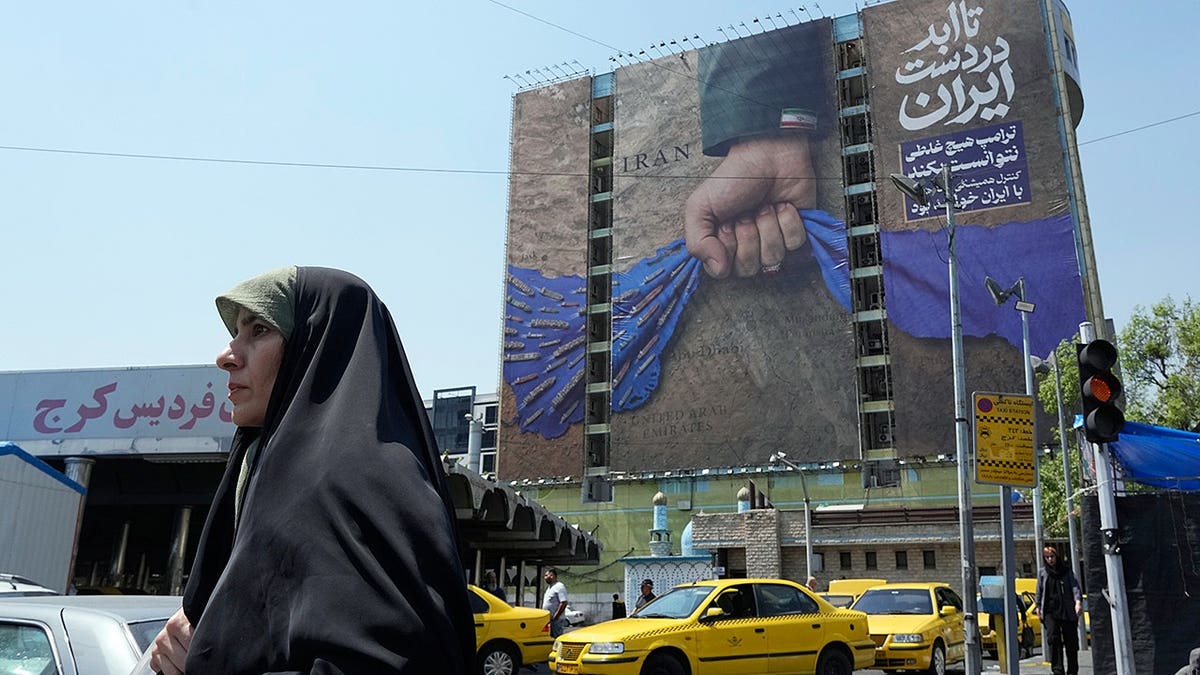
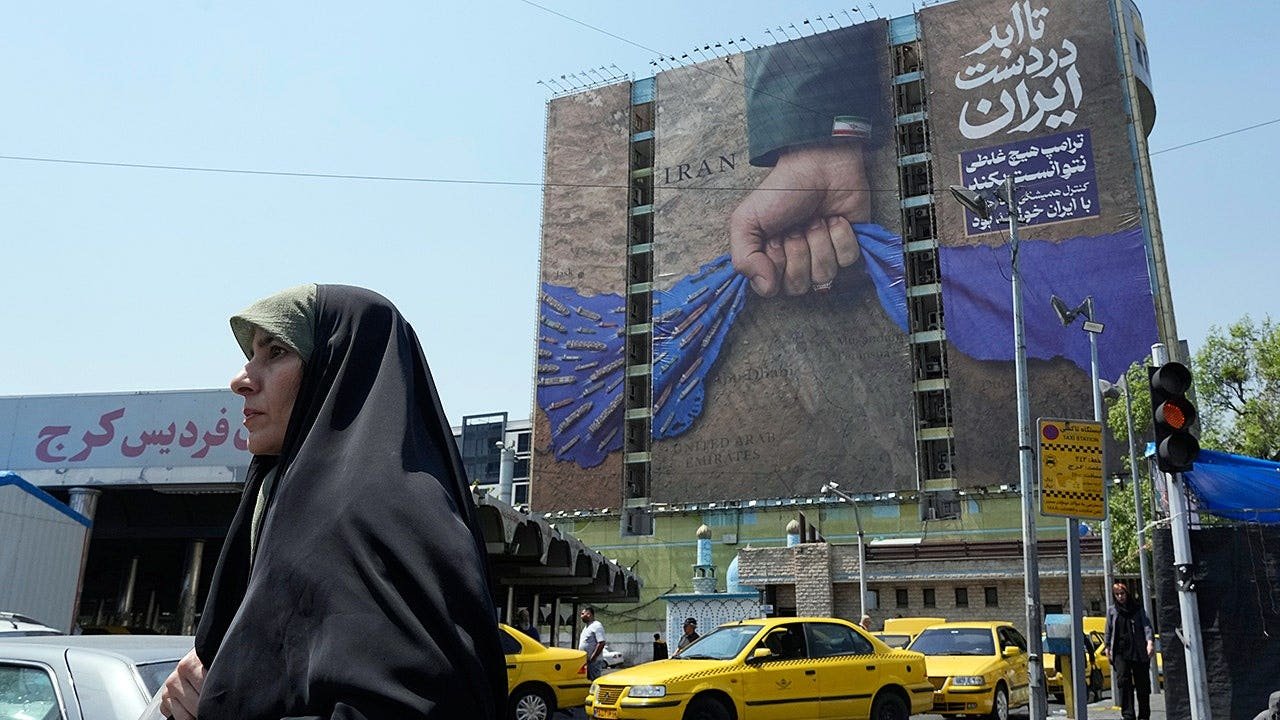
A woman walks past a billboard showing a military hand holding the Strait of Hormuz with Farsi text which reads, «In Iran’s hands forever,» «Trump couldn’t do a damn thing,» «The control of Strait of Hormuz will be Iran’s forever,» in Vanak Square, in northern Tehran, Iran, on April 16, 2026. (Vahid Salemi/AP)
That structure raises a broader question about whether negotiators were truly expecting the memorandum to mature into a final, durable agreement.
«The more I’ve been digging into this memorandum of understanding, sanctions paragraphs of this memorandum, the more I have come to this kind of doubt that the negotiators really were counting on a final deal to be reached,» Maleki said.
«If you do get to a final agreement and you’re looking into actually meeting the commitments that you made, this $300 billion investment fund, it’s not something you can really set up,» he added. «I think it would be almost close to impossible to get something that would materialize.»
READ IT: THE FULL TEXT OF THE US-IRAN MEMORANDUM OF UNDERSTANDING:
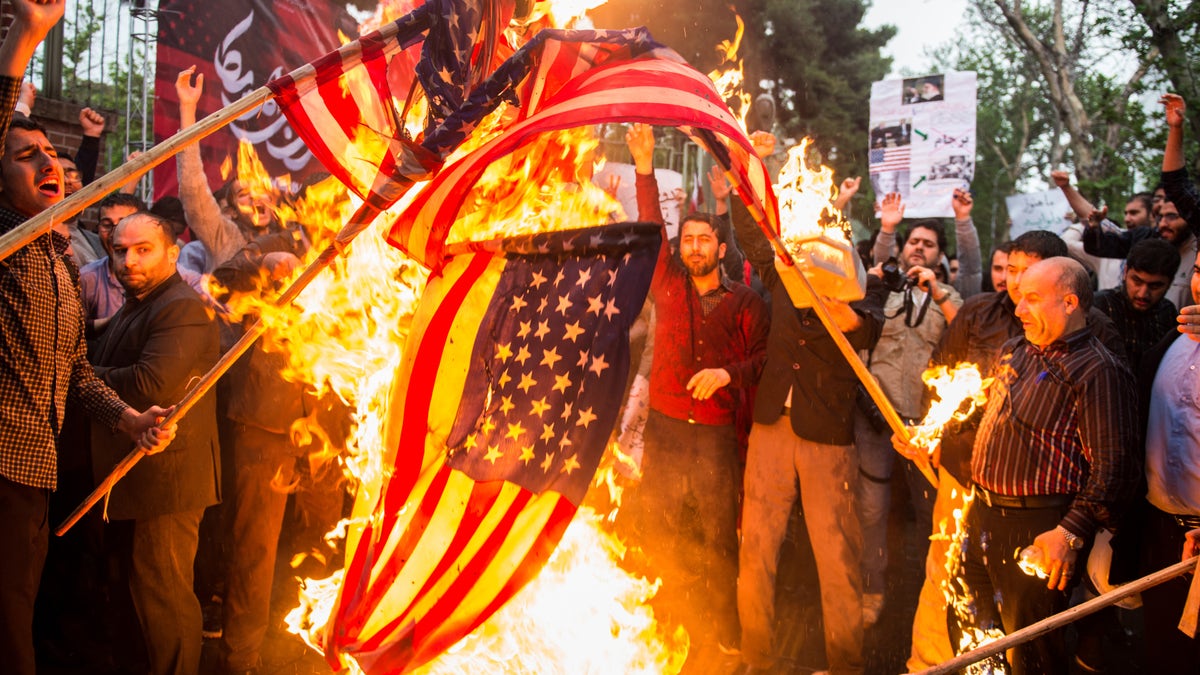
Iranians burn American flags during an anti-U.S. demonstration outside the former U.S. embassy headquarters in Tehran, Iran, on May 9, 2018, after President Donald Trump withdrew from the 2015 Iran nuclear deal. (Photographer: Ali Mohammadi/Bloomberg via Getty Images)
Maleki said one possible explanation is that the U.S. side may view its role as limited to providing sanctions relief, while leaving Iran and potential investors to sort out whether the fund can actually be built.
«We’re going to give them the waivers that they need. If they can’t find investors to invest in this, that’s their problem,» he said, describing one possible view of the negotiators’ approach.
The Treasury Department and the Iranian mission to the U.N. did not immediately respond to Fox News Digital’s request for comment.
The issue could become a congressional flashpoint. Because IFCA waivers are limited to 180 days and require justification to Congress, any long-term investment framework for Iran could force the administration to repeatedly defend why sanctions tied to an IRGC-controlled sector should be suspended.
The legal obstacles also come as critics warn the pact gives Iran major economic benefits while leaving some of the most difficult nuclear and security questions for future negotiations. Maleki said the U.S. had already built significant leverage over Iran through sanctions, military pressure and the blockade, but may now be trading that leverage for the reopening of Hormuz.
«We reached a point that we had leverage that no U.S. president has ever had with Iran,» Maleki said. «Yet we gave that away for this, for the opening of the Strait of Hormuz.»
He argued that Iran is likely to use the process to delay rather than rush toward a final agreement.
«Iran is going to go back to its playbook of dragging, buying time with the sanctions relief-type incentives that I’m seeing in this package,» Maleki said. «I do not think that the Iranian regime is going to rush to get to a deal.»
CLICK HERE TO DOWNLOAD THE FOX NEWS APP
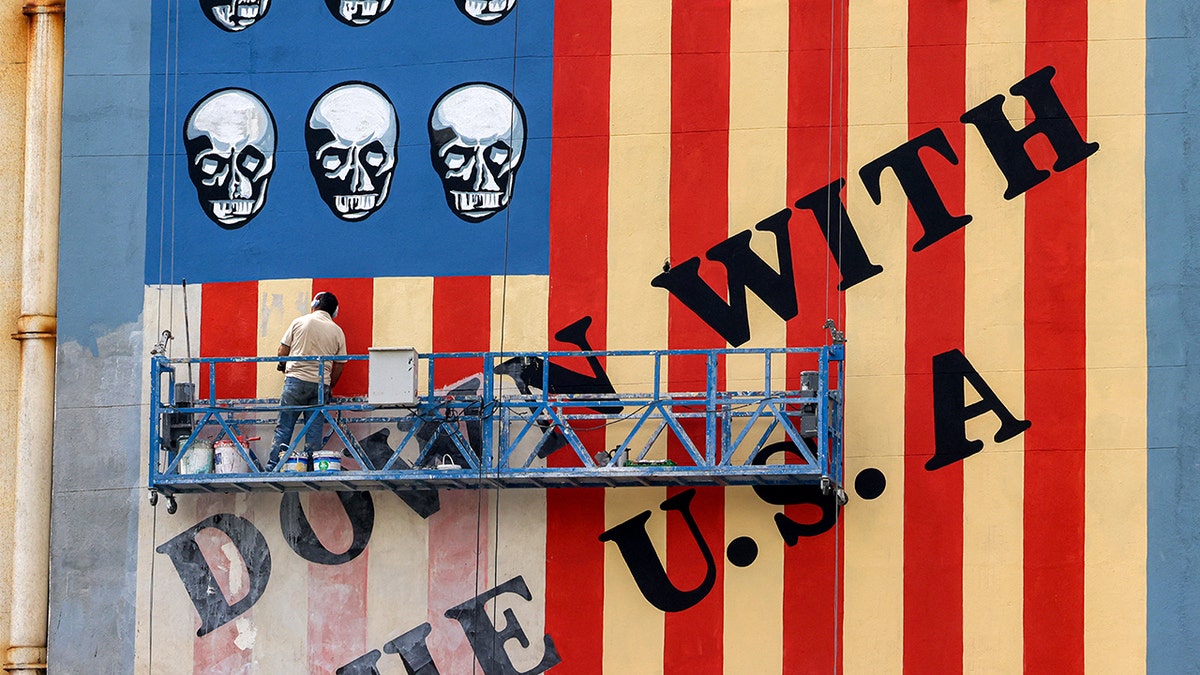
A man applies fresh paint to an anti-U.S. mural on a building wall on Karim Khan Zand Avenue in Tehran on April 8, 2025. The mural features the slogan «Down with the USA» and skulls replacing stars on the U.S. flag. (Atta Kenare/AFP)
John Hannah, a senior fellow at the Jewish Institute for National Security of America and a former national security adviser to Vice President Dick Cheney, warned that any economic windfall from the agreement could help the IRGC rebuild.
«It’s almost certain that the IRGC will use any economic windfall granted by this MOU to reconstitute as much of their conventional military as possible as fast as possible — especially the vast missile and drone arsenal that the IRGC believes proved critical to the strategic successes they achieved during the war,» Hannah told Fox News Digital.
investment, congress, war with iran, iran, sanctions
INTERNACIONAL
Obama center opens after years-long saga as locals warn ‘monstrosity’ could price them out
Obama Presidential Center slammed as ‘architectural abomination’
‘Fox & Friends Weekend’ co-hosts express strong disapproval of the Obama Presidential Center’s design and execution. They label the Chicago-based project an ‘architectural abomination’ and the ‘ugliest monstrosity’ seen, highlighting local residents’ initial opposition.
NEWYou can now listen to Fox News articles!
The Obama Presidential Center is opening to the public on Friday morning following an expensive and controversy-laden construction history.
Former President Barack Obama’s presidential center was initially estimated to cost $350 million; however, after a slate of setbacks and delays, the price of the project has more than doubled to a staggering $850 million. As construction was ongoing in Chicago, the center faced an array of controversies, including opposition from locals, anger over the use of tax dollars to support surrounding infrastructure, critiques of the building’s design, alleged failure to pay contractors and even a lawsuit alleging racial discrimination.
Unlike a traditional presidential library, the Obama Presidential Center is designed as a broader civic campus, with a museum, public plaza, forum, Chicago Public Library branch, recreation space, gardens and community programming.
«It’s a monstrosity. It’s over budget, it’s taking way too long to finish and it’s going to drive up prices and bring headaches and problems for everyone who lives here,» one Chicago resident who grew up in the area near the campus’ location told the Daily Mail. «It feels like a washing away of the neighborhood and culture that used to be here.»
CHICAGO RESIDENTS CALL OBAMA PRESIDENTIAL CENTER A ‘MONSTROSITY,’ FEAR THEY’LL BE DISPLACED: REPORT
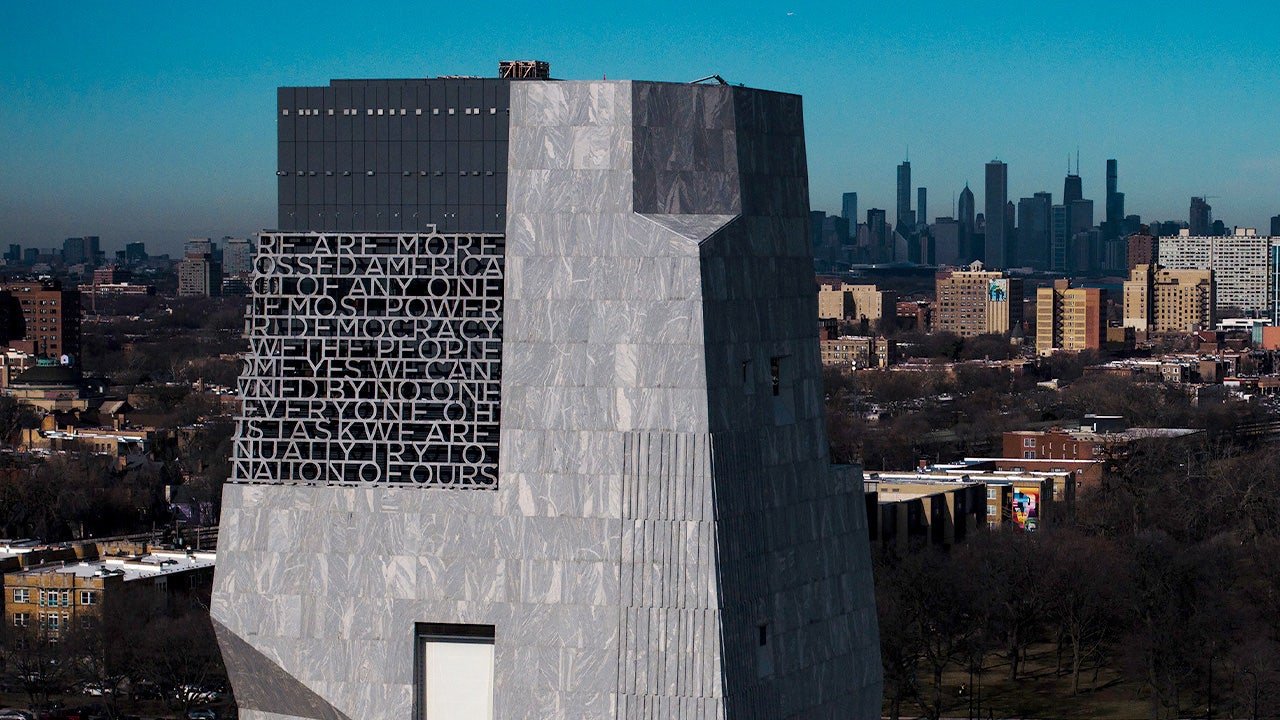
The Obama Presidential Center in Jackson Park on Chicago’s South Side will open this week. (Fox Flight Team)
One of the most prominent lines of criticism levied against the new presidential center was that its construction materially harmed those it was seeking to serve.
Beyond its museum exhibits and planned displays of presidential records and artifacts, the Obama Presidential Center features prominent exhibits on slavery, racism, the civil rights movement and African American history. Additionally, the Obama Foundation wanted the center to be a boon for the local community, billing it as an «economic engine for South Side residents.»
To accomplish this, the center prioritized locals for contracting and staffing while also promising to provide workforce development services to surrounding communities.
These moves, however, were not enough to assuage the concerns of some residents that the racial justice-infused center would ultimately displace many predominantly Black American locals by increasing the value of nearby lots, thereby raising rents and driving up property taxes.
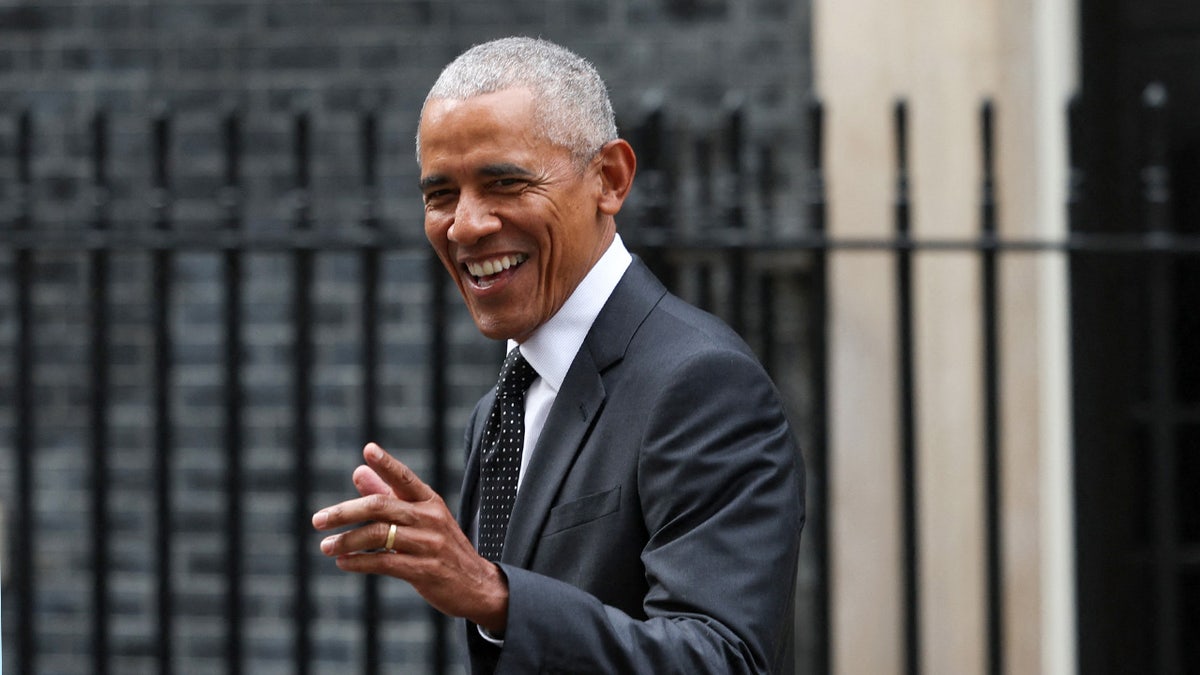
Former President Barack Obama reacts as he leaves 10 Downing Street in London following a meeting with Britain’s Prime Minister Rishi Sunak on March 18, 2024. (Adrian Dennis/Getty Images)
OBAMA’S LEGACY PROJECT OFFERS LITTLE HOPE FOR CHICAGO’S SOUTH SIDE RESIDENTS
«What we got was a lease saying you have to pay $2,450 a month to stay in your home,» a lifelong resident of a neighborhood near the center told the Chicago Sun-Times, recounting how his rent had gone up after construction began. «My home that they had let fall into disrepair, my home that they had decided wasn’t worth caring for. So we had to move … our beautiful Black beach neighborhood was no longer ours to enjoy.»
Numerous residents have shared similar stories with the press, prompting Chicago to set aside $6 million to develop affordable housing in the area and providing residents with property tax relief.
Further complicating the Obama Presidential Center’s mission of racial justice was a lawsuit filed by a local subcontractor against one of the firms managing its construction in early 2025.
OBAMA LIBRARY, BEGUN WITH LOFTY DEI GOALS, NOW PLAGUED BY $40M RACIALLY CHARGED SUIT, BALLOONING COSTS

Former President Barack Obama and former first lady Michelle Obama join Illinois Gov. J.B. Pritzker at the groundbreaking ceremony for the Obama Presidential Center in Chicago on Sept. 28, 2021. (Scott Olson/Getty Images)
One African American-owned concrete and rebar company working on the project alleged that the company overseeing structural engineering and design on the Obama Presidential Center unfairly singled out black-owned firms for errors.
The lawsuit alleged that those in charge of the presidential library’s construction «directly undermined the Obama Foundation’s DEI (diversity, equity and inclusion) goals and commitments and mission to bring transformative change to the construction industry and local community,» a claim that was strongly denied by management.
Management argued that many of the subcontractors were «questionably qualified» and that they regularly underperformed or displayed inexperience, factors that contributed to the presidential library’s ballooning costs. The Obama Foundation emphasized hiring black-owned businesses when seeking out subcontractors for its center.
PROTESTERS RAGED, CRITICS MOCKED — NOW OBAMA SAYS HIS LIBRARY’S ACTUALLY OPENING
An Obama Foundation banner is displayed at the Obama Presidential Center construction site in Jackson Park, Chicago, Illinois, on Oct. 18, 2022.
In yet another snag, many subcontractors who worked on the center are claiming that they have yet to be paid for their work on the Obama Presidential Center.
A Fox News Digital investigation previously identified multiple firms that say they haven’t received payments, with outstanding invoices ranging from hundreds of thousands of dollars to tens of millions.
«I haven’t had eight hours or six hours sleep in over a year,» one African American subcontractor told Fox News Digital. «I’m cooked emotionally. I feel like an aluminum can that’s been thrown in front of a steamroller. We’re crushed. And I have to fight for my company and for my people.»
When pressed by Fox News Digital, the Obama Foundation passed the blame onto Lakeside Alliance, its primary contractor, stating that it was responsible for handling payments to subcontractors. Lakeside Alliance, meanwhile, said projects of this size are complex matters and that it is working to resolve all loose ends.
«That’s a bad signal to put out the fact that seven to eight to maybe 10 of our contractors in our community are going to be eliminated from doing business because of the debt that they incurred on this particular project,» Omar Shareef, the president of the African American Contractors Association, previously told Fox News Digital. «If they would have known it was a Trojan horse or a Pandora’s box, I don’t know if they would have raced as much as they did to be a part of it.»
Fox News Digital could not independently verify claims that firms had been forced to shutter due to their work on the Obama Presidential Center.
OBAMA CENTER TAKES HEAT AS CRITICS CRY FOUL OVER ID RULES FOR FREE ENTRY — WHILE DEMS BLAST VOTER ID LAWS
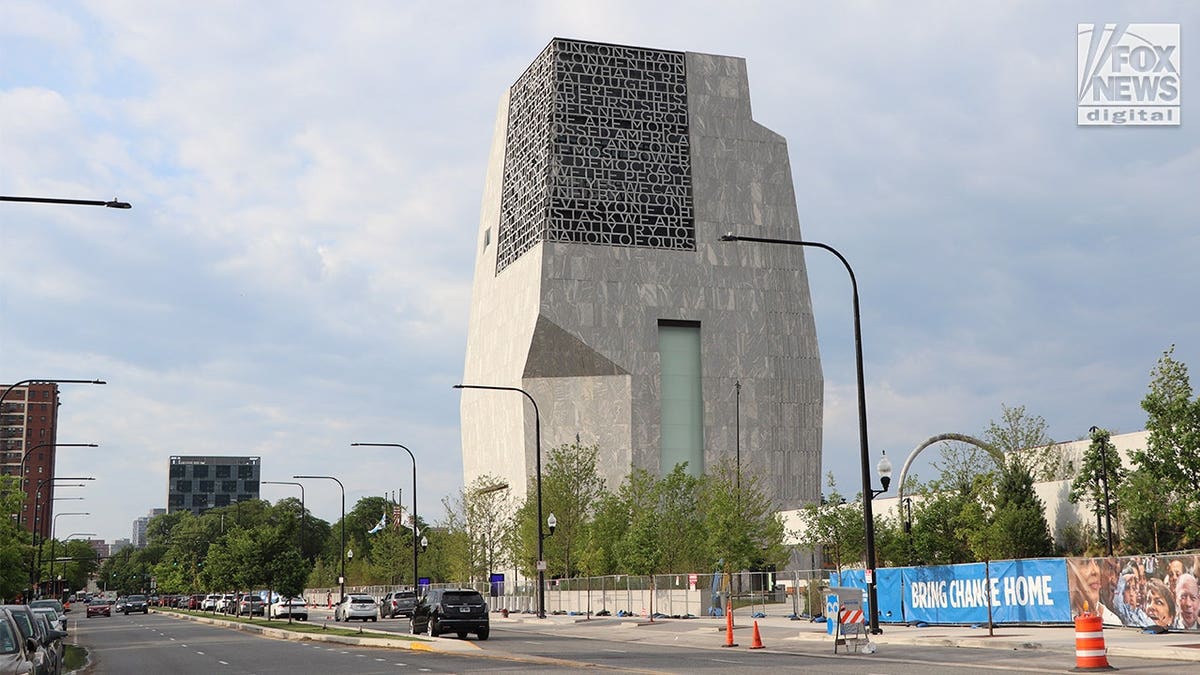
A view of the Obama Presidential Center from a nearby roadway in Chicago. (Michael Dorgan/Fox News Digital)
While most of the Obama Presidential Center’s rocky history was privately funded, taxpayers were on the hook for the infrastructure surrounding it.
Illinois has so far spent over $120 million on infrastructure improvements in South Chicago to accommodate the presidential center, with the total public cost estimated to reach around $200 million.
Even with roughly $1 billion spent on its construction and design, the appearance of the Obama Presidential Center has proven controversial, drawing comparisons to everything from a maximum security prison to a garbage can.
OBAMA DRAGGED FOR ‘HEADACHE’-INDUCING PRESIDENTIAL CENTER UPDATE THAT HAS VISITORS SQUINTING
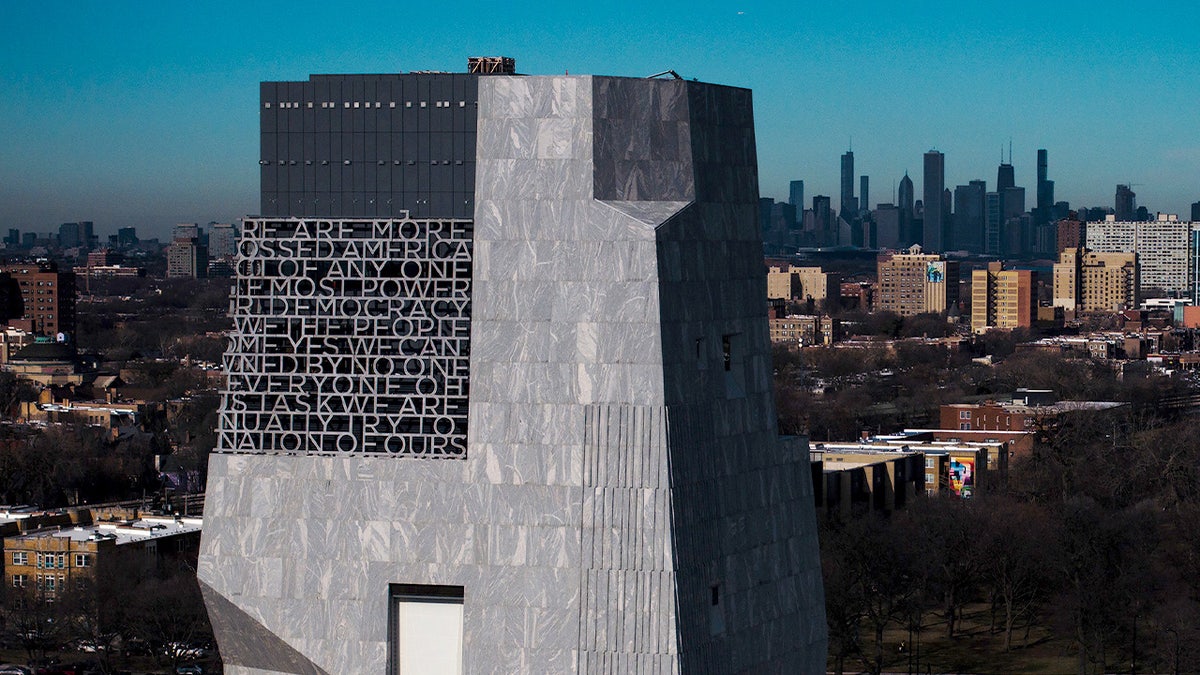
Work continues on the Obama Presidential Center in Chicago on Jan. 13, 2026, featuring former President Obama’s speech marking the 50th anniversary of «Bloody Sunday» inscribed on the building’s side. (E. Jason Wambsgans/Chicago Tribune/Tribune News Service via Getty Images)
«The building has an ominous presence, its mostly windowless heft recalling a menacing sci-fi headquarters,» The Guardian’s architecture critic wrote of the structure.
One person dubbed it the «Obamalisk.»
Some, however, have pushed back on these critiques.
CLICK HERE TO DOWNLOAD THE FOX NEWS APP
«Today’s punchline may become tomorrow’s civic treasure,» Justin Kaufmann, writing for Axios Chicago, said. He pointed to the center’s blending of modern architecture with the design language of classic civic buildings.
The Obama Presidential Center did not respond to a request for comment when reached by Fox News Digital on Thursday.
chicago, barack obama, housing, taxes, illinois


Adiós a los enchufes y cables: la tendencia en 2026 en electrodomésticos de la cocina que empieza a arrasar

Trump’s $300B Iran investment fund may be ‘close to impossible’ due to IRGC sanctions law, expert warns

¿Qué auto conviene comprar hoy?: cuáles son y cuánto cuestan los 0 km más vendidos

El gesto del jugador de Qatar tras la brutal lesión que sufrió Ismaël Koné en el Mundial

Cristina Kirchner volvió a apelar las condiciones de su detención: pidió que le quiten la tobillera y le dejen recibir visitas

La sorpresa que apunta Bielsa para el segundo partido de Uruguay en el Mundial 2026: “Un jugador lleno de condiciones”

Patricia Bullrich: “El Presidente considera que Adorni dio una explicación razonable”

El Gobierno envía señales de que Adorni tiene las horas contadas para evitar que sesione el Senado

La secuencia del golazo de Messi para Argentina ante Argelia en el debut en el Mundial 2026 y los récords que rompió

El Gobierno modificará por decreto el sistema de selección de jueces de la Corte Suprema de Justicia

 POLITICA1 día ago
Patricia Bullrich: “El Presidente considera que Adorni dio una explicación razonable”
- POLITICA2 días ago
El Gobierno envía señales de que Adorni tiene las horas contadas para evitar que sesione el Senado
- DEPORTE2 días ago
La secuencia del golazo de Messi para Argentina ante Argelia en el debut en el Mundial 2026 y los récords que rompió