
INTERNACIONAL
Ceferino Reato presentó “Pax menemista” en la Feria del Libro: “Los indultos los propusieron los Montoneros”

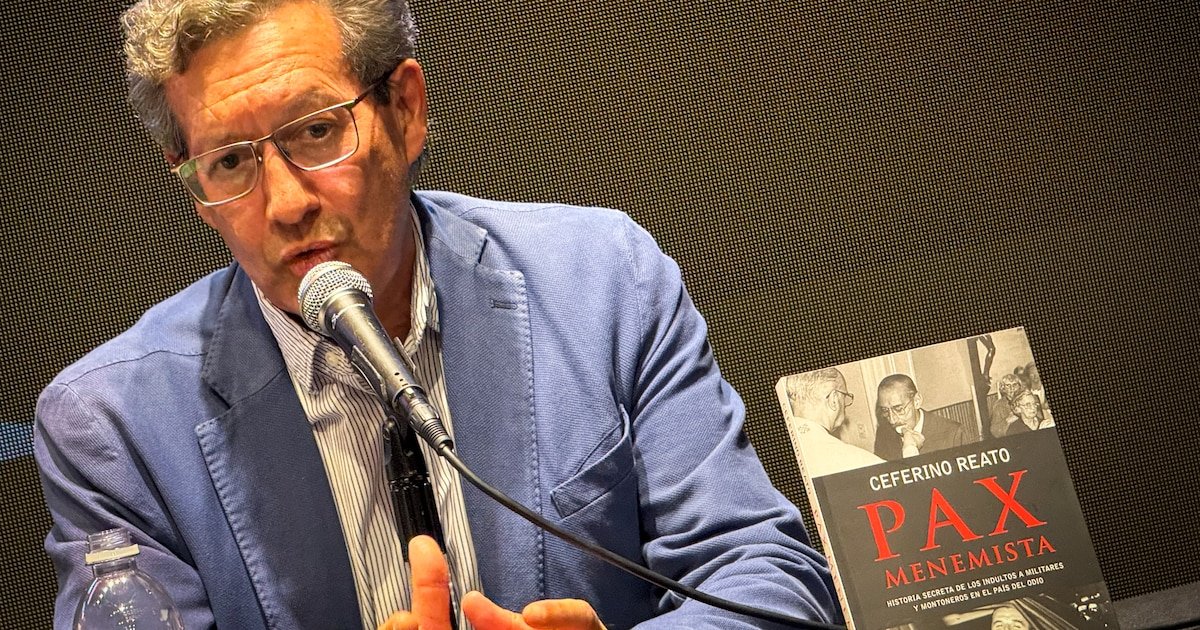
El periodista Ceferino Reato presentó este sábado su libro Pax menemista en la Feria Internacional del Libro de Buenos Aires, en un diálogo con el abogado e historiador Roberto Bosca que recorrió su trayectoria como autor y se concentró en la tesis central de su nuevo trabajo: que los indultos de Carlos Menem fueron un intento, fallido pero genuino, de quebrar lo que el jurista Joaquín V. González llamó en 1910 “la ley del odio” en la política argentina.
Antes de entrar en el nuevo libro, Bosca quiso repasar la obra anterior del autor. Nacido en Entre Ríos, estudió periodismo en la Escuela Superior de Periodismo y luego Ciencia Política en la Universidad del Salvador. Trabajó como periodista, fue agregado de prensa de la Embajada argentina ante el Vaticano entre 1997 y 1999, y vivió cuatro años en San Pablo, donde nació su primera hija.
De su producción anterior, Reato eligió detenerse en Operación Primicia, el trabajo sobre el ataque de Montoneros al Regimiento de Infantería de Monte 29 en Formosa, en octubre de 1975, durante el gobierno constitucional de Isabel Perón. “El que más me gusta es el libro que menos apostaba”, dijo.
El libro, contó, surgió a pedido de la editoral Sudamericana tras el éxito de Operación Traviata, sobre el asesinato del sindicalista José Ignacio Rucci. Ese primer trabajo había desatado polémicas en pleno kirchnerismo, porque interpelaba la romantización de la guerrilla. “Volví de Brasil muy pacífico —recordó Reato—. Decía: ‘¿Cómo se van a pelear por el pasado?’”.

Fue a Formosa y encontró algo que no esperaba: los soldados conscriptos que habían combatido contra Montoneros, jóvenes de 21 años, en su mayoría peronistas y pobres, atacados por militantes de clases medias y medias altas que también se decían peronistas. “Era casi una lucha de clases, pero todo al revés, porque los pobres tendrían que haber sido liberados por los chicos de clase media y fueron muertos, y los otros también murieron a manos de ellos”, señaló.
El combate, contó, duró treinta minutos y dejó veinticuatro muertos: doce montoneros y doce soldados, entre ellos un subteniente de 21 años en su primer destino. Luego, patrullas militares mataron a tres vecinos que no tenían ninguna vinculación con el ataque, entre ellos un adolescente de 15 años con la casaca del colegio secundario. El saldo final fue de 28 muertos.
Uno de los hallazgos más perturbadores del libro -dijo- fue el destino judicial del episodio. Reato contó que había revisado los anexos del Nunca Más y encontró que los guerrilleros muertos en el combate figuraban como víctimas del terrorismo de Estado y que sus familias habían recibido indemnizaciones. “Empezamos con el ataque, terminamos con la indemnización”, resumió el autor. “Esto es una locura.”

Reato también es autor de Disposición Final (2012), construido sobre veinte horas de entrevistas con el dictador Jorge Rafael Videla en Campo de Mayo. En Doce noches (2015) abordó la crisis de 2001; en Salvo que me muera antes (2017), la muerte de Néstor Kirchner y el nacimiento del cristinismo; y en Masacre en el comedor (2022), el atentado contra una dependencia policial perpetrado por Montoneros.
Entonces sí se concentraron en Pax menemista. Bosca introdujo el marco histórico: la referencia al título evoca la Pax Romana, el período de paz que el emperador Augusto decretó al término de las guerras civiles. Menem, señaló, estructuró su política de reconciliación en torno a tres gestos simbólicos: la repatriación de los restos de Juan Manuel de Rosas, el abrazo con el almirante Isaac Rojas y la construcción del monumento a los caídos en Malvinas en el predio de Retiro.
Reato explicó el contexto en que Menem asumió en julio de 1989, cinco meses antes de lo previsto, en medio de hiperinflación y saqueos. El ejército estaba dividido tras tres rebeliones carapintadas. Los exguerrilleros tampoco querían ser juzgados: El jefe montonero Mario Firmenich estaba preso, unos sesenta exmontoneros estaban procesados y varios jefes —entre ellos Roberto Perdía y Rodolfo Galimberti— vivían en el exilio.

Lo que el libro revela, y Reato calificó como “lo curioso”, es que la iniciativa de los indultos no vino de los militares sino de Montoneros. “Hablo con Mario Montoto, que era el negociador de Firmenich con Menem, hoy un empresario próspero en seguridad y defensa. Me cuenta que ellos llevaron la propuesta.» Los documentos internos de la organización concluían que “la guerra civil intermitente que hemos protagonizado no admite soluciones judiciales sino políticas”, lo que abría la puerta a una amnistía o un indulto.
Menem incorporó la propuesta y la articuló con negociaciones paralelas con la Iglesia, los sindicatos, los empresarios y el peronismo. El nombre “reconciliación” lo tomó precisamente de la Iglesia. Hubo diferentes indultos: unos dirigidos a guerrilleros, otros a carapintadas y otros a militares condenados por delitos durante la dictadura.
Los militares, sin embargo, no quedaron conformes. Esperaban algo más que el perdón, dijo Reato. «Videla, por ejemplo, nunca lo aceptó: creía que el indulto borraba la pena pero no el delito». A partir, de ahí, contó: “El sector carapintada referenciado en Aldo Rico derivó hacia la política; el de Mohamed Alí Seineldín no. La última rebelión carapintada ocurrió el 3 de diciembre de ese período. “Nosotros no sabíamos que era la última —recordó Reato—. Mucha gente decía que iba a haber otras. En realidad, no hubo otras.”
Reato planteó una hipótesis que, dijo, sabe que “no tiene prensa”: que entre Raúl Alfonsín y Menem existe una continuidad en la política de desarticulación del poder de tutela militar sobre la democracia. “Alfonsín es el padre de la democracia, pero Menem completa la democracia liberal de partidos, porque esa democracia no podía admitir un ejército con capacidad de tutelar a los partidos.” Citó al historiador Félix Luna y su concepto de continuidades que el periodismo, dijo, no suele ver porque está entrenado para ver fracturas.

Sobre el abrazo entre Menem y el almirante Rojas —figura odiada por el peronismo y venerada por el antiperonismo—, Reato recogió el testimonio de la hija del marino: uno de sus amigos cercanos le recriminó el gesto y Rojas respondió: “A veces hay que hacer cosas por el bien de la patria”. Para Reato, el episodio ilustra algo que el libro quiere documentar: que hubo, en distintos actores, un deseo genuino de acercamiento que la narrativa predominante tendió a ignorar.
El monumento a los caídos en Malvinas en Retiro tuvo una historia propia. Reato contó que en su momento hubo resistencias de todo tipo: quienes creían que era un homenaje a los militares, quienes no querían alterar la barranca, quienes lo veían como un desafío a la Iglesia. Fue posible gracias a civiles de la Sociedad Numismática, “patriotas que no ganaron nada. Al contrario, fueron denunciados penalmente porque supuestamente arruinaban un monumento histórico nacional”. Varios empresarios aportaron dinero de forma anónima.
Al final de la presentación, Bosca pidió a Reato que hablara del “eje del libro”: el odio. Reato recuperó la frase de Joaquín V. González de 1910, publicada en la separata de La Nación titulada El juicio del siglo: “En la Argentina, en la política argentina no basta con ganar, sino que hay que humillar, eliminar a la adversidad”. “Son palabras muy actuales”, dijo Reato.
Identificó tres grandes intentos de reconciliación nacional en la historia argentina: el de Justo José de Urquiza con su consigna “ni vencedores ni vencidos”, el del general Eduardo Lonardi tras el 55 —“y duró tres meses”— y el de Menem, que se extendió doce o trece años antes de que la memoria, la verdad y la justicia volvieran a imponerse como paradigma. Los tres, dijo, fracasaron.

“Yo creo que no es que los políticos que apelan al odio triunfan, es que nosotros premiamos a los políticos que apelan al odio”, afirmó Reato. “Fijate toda la sangre derramada producto del odio. Odio reivindicado. Los veinticuatro o veintiocho jóvenes muertos en Formosa. La cantidad de asesinados y desaparecidos en la dictadura. La cantidad de víctimas de las guerrillas, que fueron muchas también, aunque menos que los otros. No hay que comparar un terrorismo con el otro, pero también fueron víctimas y hay una cantidad de odio presente en todos. Y el odio reivindicado. Y el odio reivindicado con excusas”.
El periodista también pensó la política de Carlos Menem: Menem se veía a sí mismo como el gran perdonador. Decía: “Yo estuve cinco años preso y perdono a todos”. Para Reato, ese fue su error de cálculo: asumir que su experiencia personal representaba el sentir de todos los argentinos. “No era así”, subrayó el autor.
Con todo, Reato distingue entre dos antinomias históricas. La de unitarios y federales, dijo, Menem sí logró cerrarla, y con eso eliminó una de las fuentes más antiguas del odio político argentino. La de peronistas y antiperonistas, en cambio, fue la que se le resistió. “Menem llegó al poder con la ambición de superarla creando un movimiento propio, el menemismo, que trascendiera esa grieta. Hubo intentos concretos, como la convocatoria conocida como ‘la plaza del sí’, pero fracasaron rápidamente. Terminó asentándose en el peronismo, como hacen todos los líderes de ese espacio”.
Esa antinomia no resuelta es, para Reato, la matriz de la que se nutre el odio político argentino.
Y trazó un paralelo con la experiencia española: “Si los países apelaran a la memoria por encima de la historia, los españoles todavía seguirían luchando con la Guerra Civil. Y la han dejado en la historia, que es inofensiva”.

Entrada: La entrada a la Feria del Libro de Buenos Aires costará 8.000 pesos de lunes a jueves y 12.000 los viernes, sábados y domingos.
Con esa entrada, el visitante recibirá un “chequelibro” con el que podrá conseguir descuentos en librerías cuando termine la Feria.
Gratis: de lunes a jueves desde las 20 h,
Fecha: La Feria sigue hasta el 11 de mayo.
Horarios: de lunes a viernes de 14 a 22 h. Sábados, domingos y feriados de 13 a 22 h.
Dónde: En La Rural, Av. Sarmiento 2704, Av. Cerviño 4476 y Av. Santa Fe (Plaza Italia).
(Fotos: Sebastián Freire/ Cortesía FEL)
Ceferino Reato,Pax Menemista,libro,presentación,oratoria,política,Argentina,indultos,periodismo












INTERNACIONAL
Con una fianza de US$ 10.000, liberan a la niñera argentina detenida por agentes migratorios en EE.UU.

La argentina que trabajaba como niñera en Estados Unidos y que había sido arrestada por autoridades de inmigración el mes pasado en el aeropuerto de Filadelfia, consiguió la libertad bajo una fianza de 10.000 dólares en una audiencia este viernes.
La pesadilla para Iliana Lick, de 30 años, comenzó el 11 de julio en el aeropuerto de esa ciudad de Pennsylvania, cuando intentaba pasar la seguridad para abordar un vuelo rumbo a Kansas City, donde la Selección argentina jugaría el partido contra Suiza por los cuartos de final del Mundial.
Pero agentes del servicio de inmigración de Estados Unidos la detuvieron y la llevaron a un centro de inmigrantes en Filadelfia donde permaneció arrestada y luego trasladada a una instalación de detención en New México. Este viernes tuvo una audiencia para tratar su caso.
El novio de Lick, Steven Malchiore, escribió en la página de GoFundMe, el sitio donde buscaban fondos para poder afrontar los costos: “Hoy finalmente recibimos una noticia muy alentadora: a Iliana le concedieron la libertad bajo fianza, fijada en $10.000”, señaló.
“Después de semanas de incertidumbre, demoras y frustración, este es un paso enorme. Sentimos un gran alivio y estamos profundamente agradecidos de que el juez le haya dado a Iliana la posibilidad de recuperar su libertad mientras continúa su proceso migratorio”, agregó.
“Todavía quedan algunos pasos administrativos y logísticos antes de que pueda salir, así que Iliana todavía no está en casa. Estamos haciendo todo lo posible para completar el proceso de la fianza cuanto antes y lograr que vuelva con las personas que la quieren”, dijo.
Agregó que “Iliana se mantuvo esperanzada durante todo este proceso, incluso en los momentos más difíciles” y agradeció a la gente que la había apoyado. Igualmente advirtió: “Esto no significa que el caso migratorio de Iliana haya terminado, pero hoy logramos un avance muy importante”.
El arresto había sido confirmado por las autoridades del Departamento de Homeland Security, el ministerio que rige sobre las actividades de Control de Inmigración y Aduanas (ICE, por sus siglas en inglés).
Sobre los motivos de la detención de Lick un portavoz dijo a Clarín: “Ingresó en Estados Unidos el 17 de marzo de 2023 y se quedó más tiempo de su visado. Lick permanecerá bajo custodia de ICE a la espera del resultado de sus procedimientos migratorios. Para que quede claro, la autorización de trabajo o una solicitud pendiente NO confieren estatus legal en Estados Unidos”.
Según dijo el novio, con el que Lick mantenía una relación de dos años, ella había ingresado legalmente en el país tras obtener una visa. Señaló que ella esperaba conseguir un visado de trabajo y que tenía una solicitud pendiente para quedarse en el país.
“Nunca faltó a una audiencia, nunca cometió ningún delito y nunca dejó de pagar los impuestos correspondientes. Resultó sorprendente que la arrestaran”, señaló Malchiore a CBS.
La abogada de inmigración de Lick, Ana Ferreira, dijo que la detención fue una sorpresa. «Es impactante. Llevo 11 años haciendo esto y nunca nos habíamos encontrado con nada parecido antes», dijo a NBC.
Ferreira dijo que personas en circunstancias similares a la de Lick habían podido viajar anteriormente por el país sin incidentes, pero que recientemente ha visto más detenciones de este tipo. Según Ferreira, Lick «nunca estuvo ni un solo día ilegal» en Estados Unidos. «Estaba haciendo todo lo posible para intentar permanecer legalmente», explicó.
Las autoridades del ICE han extendido sus operativos contra los inmigrantes en los aeropuertos y arrestan a personas que consideran sospechosas. En las últimas semanas se registran entre 20 y 40 detenciones por día. Antes del gobierno de Donald Trump, tener una visa en trámite no era considerado un problema, pero ahora la política se ha endurecido.
Otro argentino detenido en un aeropuerto fue el futbolista Matías Pourrain, que fue arrestado en el aeropuerto de Fort Lauderdale (al norte de Miami) cuando iba a viajar a Los Angeles y ahora está detenido en un centro de Miami. Sus allegados afirman que estaba en EE.UU. con permiso de trabajo y que no hizo nada ilegal.
El mes pasado, ICE detuvo a más de 46.000 personas por supuestas violaciones migratorias como entrar ilegalmente en Estados Unidos o exceder el tiempo de sus visados, según datos del Departamento de Seguridad Nacional.

NEWYou can now listen to Fox News articles!
The estimated 72,000 Moroccan migrants who flooded into the Spanish city of Ceuta within 24 hours is shining the spotlight on Europe’s massive problem of illegal and legal migration and the threat of growing Islamic terrorism.
Mideast and European commentators who closely follow Islamic extremism across the continent say Europe’s political class needs to tackle the origins of radical Islamism to prevent terrorism.
According to a July Europol (formerly known as the European Union Agency for Law Enforcement Cooperation) report, Spain recorded the highest number of arrests (117) for «jihadist terrorism-related offenses» within the European Union during 2025.
CEUTA MIGRANT SURGE EXPOSES SPAIN-MOROCCO TENSIONS AS ISLAMIST GROUPS REPORTEDLY SEEK TO EXPLOIT BORDER CRISIS
Moroccan security forces clash with migrants attempting to cross into Spain’s North African enclave of Ceuta near the town of Fnideq, on the Morocco-Spain border, on July 31, 2026. (Abdel Majid Bziouat / AFP via Getty Images)
Some Spanish outlets claimed that the Spanish Civil Guard and police identified «about a dozen» individuals previously deported from Spain for suspected terror-related offenses among those who entered Ceuta last week. However, Euro News reported that Spain’s interior ministry said it has not confirmed those reports.
Quoting the ministry, it stated that «The Spanish public and the people of Ceuta can be confident that the arrivals on 30 July do not pose a threat to public security.» The report also cited the interior ministry as saying that so far this year 82 people had been arrested for offenses related to jihadist terrorism.
Lorenzo Vidino, Director of the Program on Extremism at The George Washington University, and expert on Islamism in Europe and North America, told Fox News Digital, «This is Europe. This is the way it has been for the last 15 years, with some ebbs and flows.» He said about the new Europol report that «It is more in line with the last 10 years. Europe has sadly learned to live with this reality.»
British political commentator and Mideast expert, Tom Gross, told Fox News Digital: «Europe’s ruling classes need to be honest. It is not racist to point out the obvious: that most terrorism in Western Europe today is being fueled by radical Islamic mosques and teachers.»
GERMAN OFFICIALS WANT TO KNOW WHY BERLIN ATTACK SUSPECT WAS FREE DESPITE ALLEGED ISIS SUPPORT
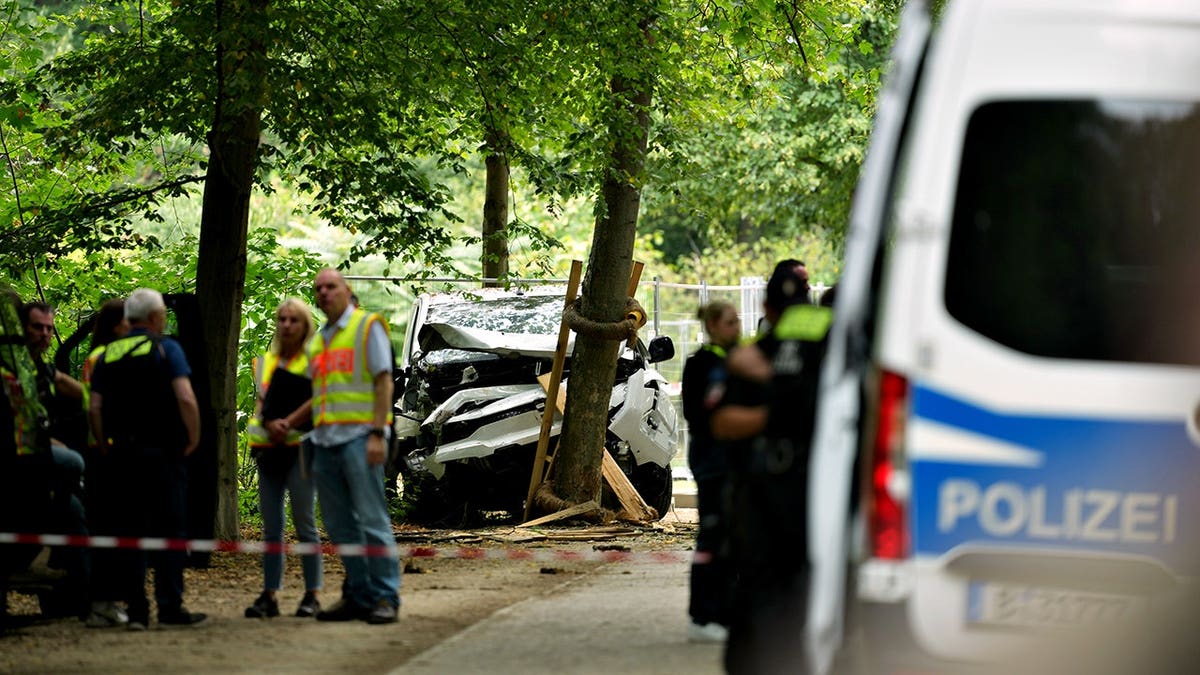
Police officers stand near a vehicle crashed into a tree after driving into a crowd near Berlin’s annual Pride event, in Berlin, Germany, Sunday, July 26, 2026. (AP Photo/Markus Schreiber)
He added, «Leaders in Dubai, Abu Dhabi and Egypt acknowledge this. Why can’t Western leaders?»
Gross said, «Politicians such as new British Prime Minister Andy Burnham, London Mayor Sadiq Khan and Spanish PM Pedro Sanchez, need to stop fueling the propaganda of radical Muslims by implying that there has been some kind of genocide against Muslims in Gaza, when there has been nothing of the sort.»
He continued, «If they really want to help push back radical Islam, European leaders should be assisting, not criticizing, those in Washington and elsewhere calling for the downfall of Iran’s Islamic dictatorship.»
In April, the U.K. raised its national terror threat level to «severe» following an antisemitic attack in London when a Somali immigrant stabbed two men. A «Severe» warning, according to authorities means another terrorist attack is considered «highly likely» in the next six months.
A spokesperson for London’s Mayor Khan told Fox News Digital that «The Mayor has invested £16 million (approxmiately $21.5 million) – more than any other Mayor – to support grassroots community groups to stand up to hate and intolerance. This includes £6 million (approximately $8 million) through his Shared Endeavour Fund to give Londoners the tools and skills to tackle extremism.»
GERMAN OFFICIALS WARN ISLAMIST, FAR-LEFT RHETORIC DRIVING SPIKE IN ANTISEMITIC ATTACKS

Law enforcement patrol immediately following a stabbing attack in Paris on July 27, 2026. (Kenzo Tribouillard/Getty Images)
Late last month, the alleged Islamist State terrorist, the 21-year-old German-Lebanese man, Abdul Ballout, drove a van into the Berlin Pride Parade event, murdering one woman and injuring nearly 30 people. The German authorities had released Ballout despite his recent conviction related to supporting the Islamic State.
German Interior Minister Alexander Dobrindt told public broadcaster ZDF during an interview that in light of the 21-year-old suspect’s conviction and record of backing the Islamic State, it did not make sense that the man was roaming free.
«You can assume that it certainly would have made sense to put this person in custody,» he noted.
Khan’s spokesperson also cited an X Post from the Mayor following the Berlin Pride attack: «My thoughts are with everyone affected by the horrific attack in Berlin and their families. This appalling act of violence has no place in our society. London stands in solidarity with Berlin’s LGBTQ+ community. This is why Pride matters. Those who seek to spread hatred and division will never win.»
SCATHING REPORT CALLS ON US TO LABEL ISLAMIST GROUP INFILTRATING ALL ASPECTS OF AMERICAN LIFE AS TERRORIST ORG
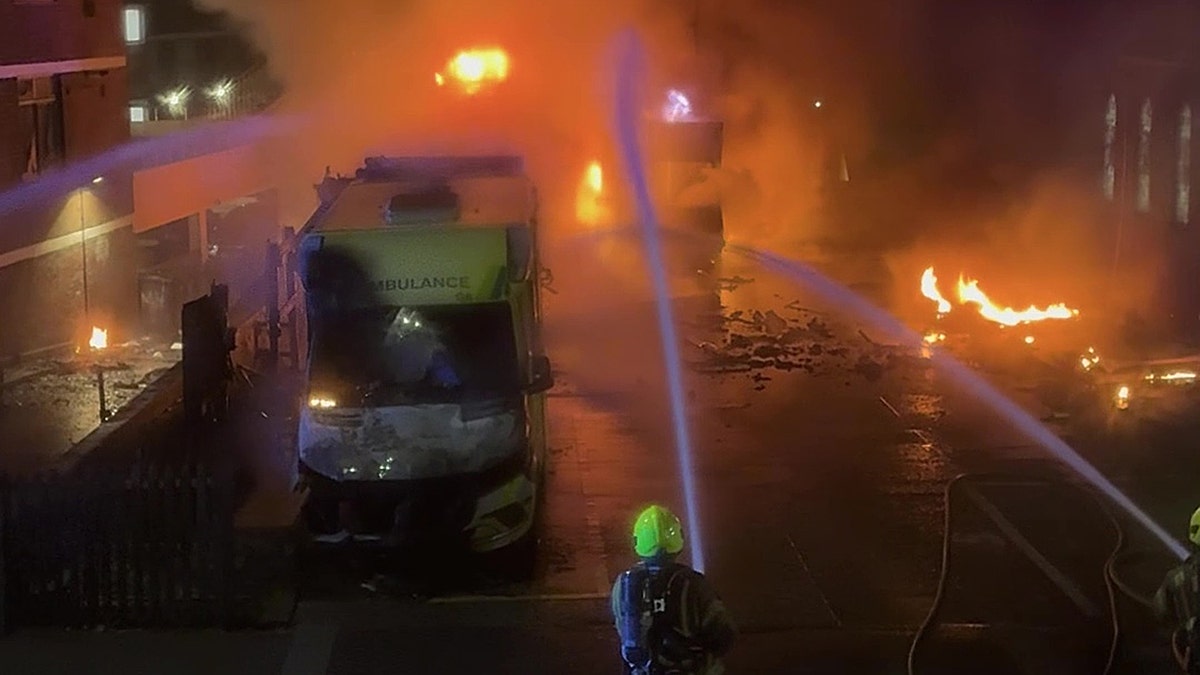
Firefighters are seen tackling a blaze at Highfield Road in the Golders Green neighborhood of London, following an arson attack on four charity ambulances belonging to the Jewish Community volunteer Ambulance Service. (PA/PA Images via Getty Images)
A new report by Germany’s federal intelligence that documents threats to the constitutional order estimates that there are roughly about 28,000 members of Germany’s Islamist scene. Approximately 9,110 are currently assessed to have an «orientation to violence. «The type of violence is defined as jihadi violence.»
Germany’s federal interior ministry, which publishes the annual domestic intelligence threat report, notes that crimes attributed to «religious ideology» have climbed from 134 in 2022 to 998 last year. Radical Islamist crimes are reportedly understood to make up the main portion of the «religious ideology» category.
Germany’s neighbor, France, experienced another stabbing just days after the attack in Germany. A suspect reportedly stabbed three women in Paris and declared as people captured him after the attack, «it is Allah who commanded me.»
Vidino said, «The incident in Paris it seems one of the cases» regarding the how an attack is classified: «Is it terrorism? Is it a crazy guy? Often times, Europeans play down the ideological motive and cite mental health. Some countries tend to do it more than others. Most Europeans go for downplaying of the ideological component.»
AMERICAN ‘JIHAD’ FUELED BY ‘RISKY SOURCE’ INSIDE US BORDERS, WARNS NATIONAL SECURITY EXPERT
Austria’s intelligence agency announced in May on its website that it arrested a group of suspected Islamist terrorists, which included five males aged between 14 and 45 and one 16-year-old female. «The individuals concerned are suspected of having committed offenses related to Islamist extremism and terrorism in Austria, for example through membership of a terrorist organization, incitement to terrorist offenses, dissemination of IS [Islamic State] propaganda, and approval of terrorist offenses,» wrote the Austrian agency.
In June, Swedish authorities arrested a teenage boy who pledged allegiance to the Islamist State and idolized suicide bombers, according to Swedish media. He issued death threats to students at school and showed pictures of beheaded people.
Nervana Mahmoud, a British-Egyptian medical doctor who has written extensively about Islamist terrorism and indoctrination, told Fox News Digital that «The current challenge facing Europe is, in many ways, a battle over Islamist extremism and its place within Western societies. To address the threat at its source, European governments need to focus on preventing radicalization and disrupting foreign funding and ideological networks that fuel extremist movements. Without tackling these root causes, the risk of future terrorist attacks will remain.»
SENATE CLEARS WAY FOR TRUMP’S TOP SPY AS KEY ANTI-TERROR PROGRAM REMAINS IN LIMBO

Map depicting Spain, Morocco, and Spain’s Cueta, which borders Morocco. (2026 EarthStar Geographics, OpenMapTiles, OpenStreetMap contributors)
Mahmoud said, «The United States should learn from Europe’s experience rather than simply criticize it. It has an opportunity to strengthen prevention efforts early by fostering a shared American identity within immigrant communities, disrupting foreign funding that may promote extremist influence through universities and think tanks, and working with Muslim Americans who reject Islamism and uphold democratic values. Long-term success will require not only strong security measures but also sustained efforts to prevent radicalization before it takes hold.»
The United Kingdom’s judicial system recorded a series of convictions of Islamist terrorists in July. Abdullah Bin Yasir was imprisoned for two and a half years after admitting he had bomb-making guides linked to an Islamic State-aligned entity. The construction of bomb material was designed to carry out a terrorist attack.
Late last month, in Wigston, Britain, the authorities arrested a 27-year-old man for supporting the Islamic State.
According to the Crown Prosecution Service, the 31-year-old Mohammad Bashir «pleaded guilty to preparing an act of terrorism» against a British defense target.
A spokesperson for the British Home Office told Fox News Digital, «The United Kingdom has one of the most robust counter-terrorism systems in the world. We remain committed to ensuring our Police and Security Services have the tools and powers they need to prevent the spread of violent ideologies and keep the country safe.»
UK PINS STRING OF ANTISEMITIC ATTACKS ON IRAN-LINKED GROUP, BANS IRGC
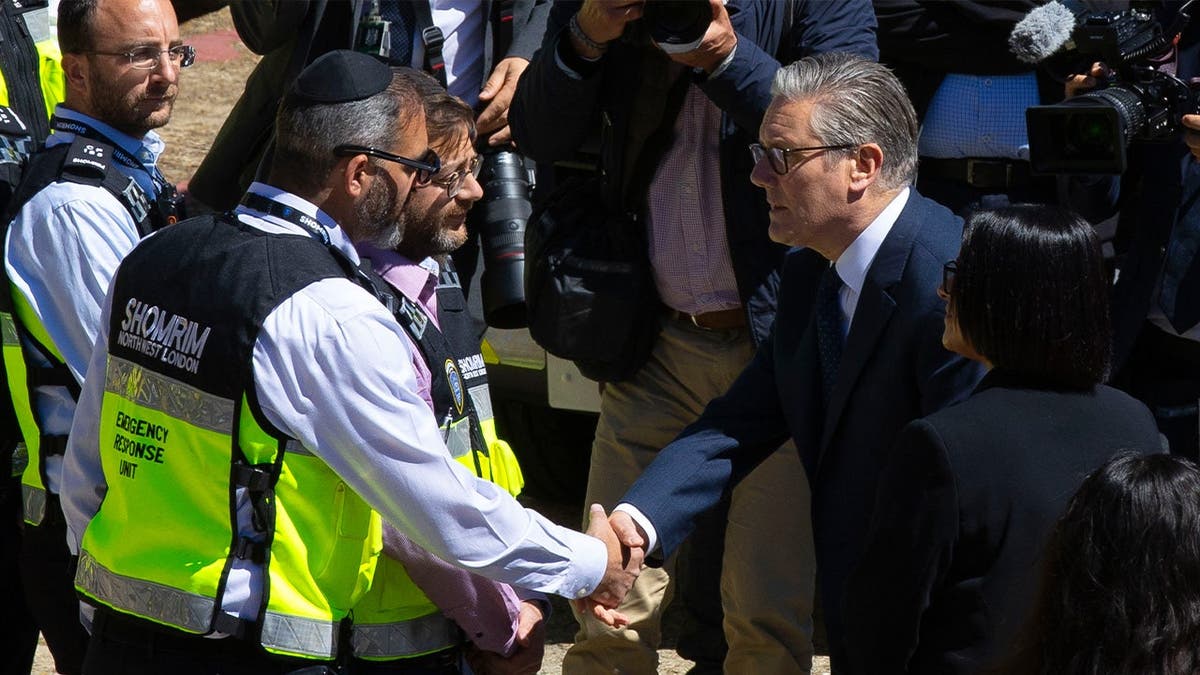
Prime Minister Keir Starmer visits the Hatzola Northwest independent ambulance base after yesterday’s terrorist incident, on April 30, 2026 in Golders Green, England. A 45-year-old British-Somali man was arrested yesterday, after stabbing two Jewish men, Shloime Rand and Moshe Shine, in a terrorist attack in Golders Green. Both victims are in stable condition, and the suspect was caught by police after being tasered. The government has since pledged £25 million to improve security for the Jewish community following the incident. (James Smith/Sam Snap/Getty Images)
The spokesperson added, «This includes a wide range of terrorist offenses and specialized powers designed to risk, support prosecution, and strengthen management of terrorist offenders. Islamist terrorism remains the primary domestic threat to the United Kingdom, accounting for roughly three quarters of the Security Service’s casework.»
Northern continental Europe is also facing a serious Jihadi terrorist threat. According to a late May Danish Security and Intelligence Service statement, the «CTA [Center for Terror Analysis in Denmark] assesses that the terrorist threat from militant Islamists remains at the level of significant.»
Vidino said there has been a silver lining since the outbreak of the Islamic State terrorist attacks in Europe. «I would say I do think most European law enforcement agencies and security forces have gotten better over the years. When the big ISIS radicalization took place, small countries were completely unprepared to deal with it.» He cited Switzerland, Austria and the Scandinavian countries.
«They did not have legal capabilities and mindset. That has changed and it is not perfect.»
Fox News Digital sent multiple press queries to the Spanish government.
terrorism, europe, national security, germany, border security, spain
The AI data center backlash
Paul Gigot, Kim Strassel, Allyssia Finley, and Jason Riley discuss the growing progressive backlash against AI data centers. Citing environmental concerns, increased electricity prices, and potential job displacement, Bernie Sanders and AOC introduced legislation for a nationwide moratorium on new data center construction. The panel explores the economic implications and highlights the lack of clear evidence supporting claims of rising energy costs directly tied to data centers.
NEWYou can now listen to Fox News articles!
Former Democratic Senator Sherrod Brown once praised data center expansion, records show, even as he now runs on a platform opposing their development in a bid to return to the Senate.
In 2015, Brown put out a press release celebrating the construction of a third data center in Central Ohio.
«This new data center is great news for New Albany and central Ohio. Amazon’s growth in central Ohio signals that this region is not only a great place to do business, but a place where people want to live and raise a family,» Brown said.
Now, just over 10 years later, Brown is painting Ohio’s 226 data centers as a drain on the state’s resources — a reversal that demonstrates how many Democrats have aligned themselves on the issue to press the case for affordability.
WATCH: GOP SENATOR UNLOADS ON ‘CREATURE OF WASHINGTON’ CHALLENGER IN CRITICAL SENATE SHOWDOWN
Sen. Sherrod Brown, D-Ohio, is seen during senate votes in the U.S. Capitol on Tuesday, January 23, 2024. (Tom Williams/CQ-Roll Call, Inc via Getty Images)
«Ohio’s electric grid — big corporations treat it like a game,» Brown said in a recent campaign video.
«[They’re] gobbling up energy to feed their data centers no matter how much it raises our prices. It’s the latest way they’ve rigged the system.»
Brown, who was originally elected to the U.S. Senate in 2006, lost re-election in 2024 to Sen. Bernie Moreno, R-Ohio. Now he is waging a comeback bid for Ohio’s other Senate seat against incumbent Sen. Jon Husted.
Husted, who has not yet won a full term in the Senate, was appointed by Ohio Gov. Mike DeWine to fill the seat of now-former Sen. J.D. Vance, R-Ohio, when Trump tapped him to become vice president.
In the 2026 midterms, Democrats have hammered President Donald Trump and what they see as unfulfilled promises to bring down the cost of everyday items like food, fuel and housing.
While slightly removed from those specific items, an increasing number of Democrats, like Brown, have tied data centers to the issue, arguing that they do little to pay for their own costs in terms of water and electrical use. In their view, data centers are being subsidized by the communities where they’re being built.
FOX NEWS POLL: DEMOCRATIC UNITY, REPUBLICAN CROSSOVERS SHAPE OHIO SENATE RACE
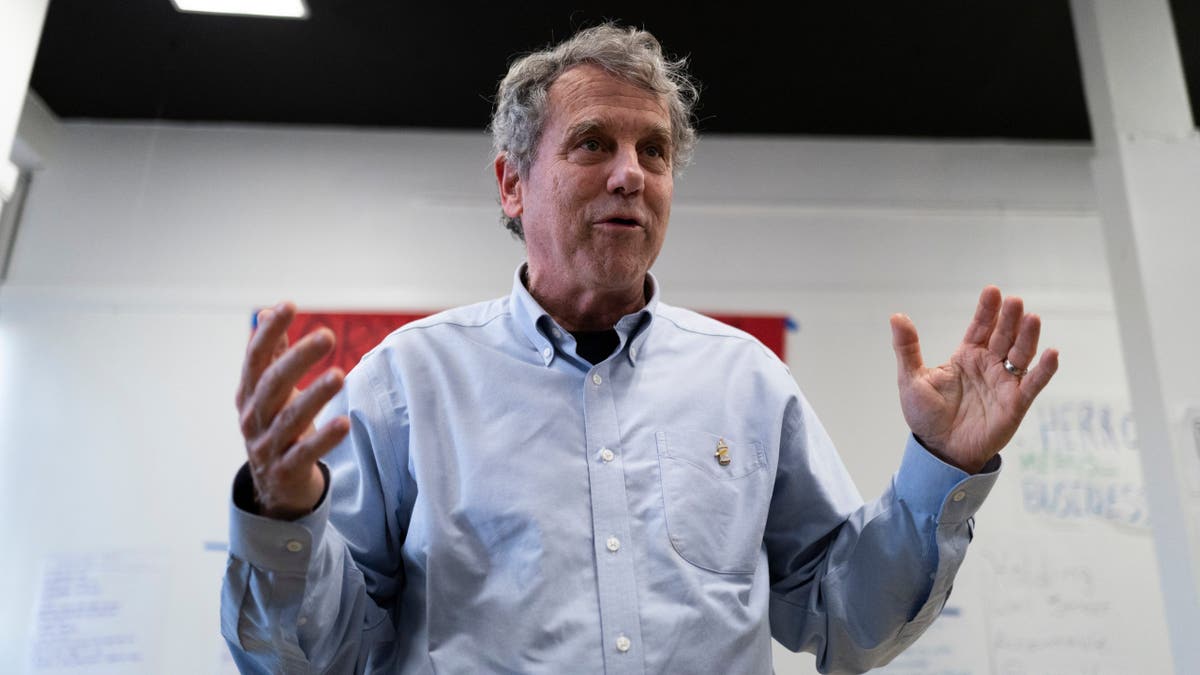
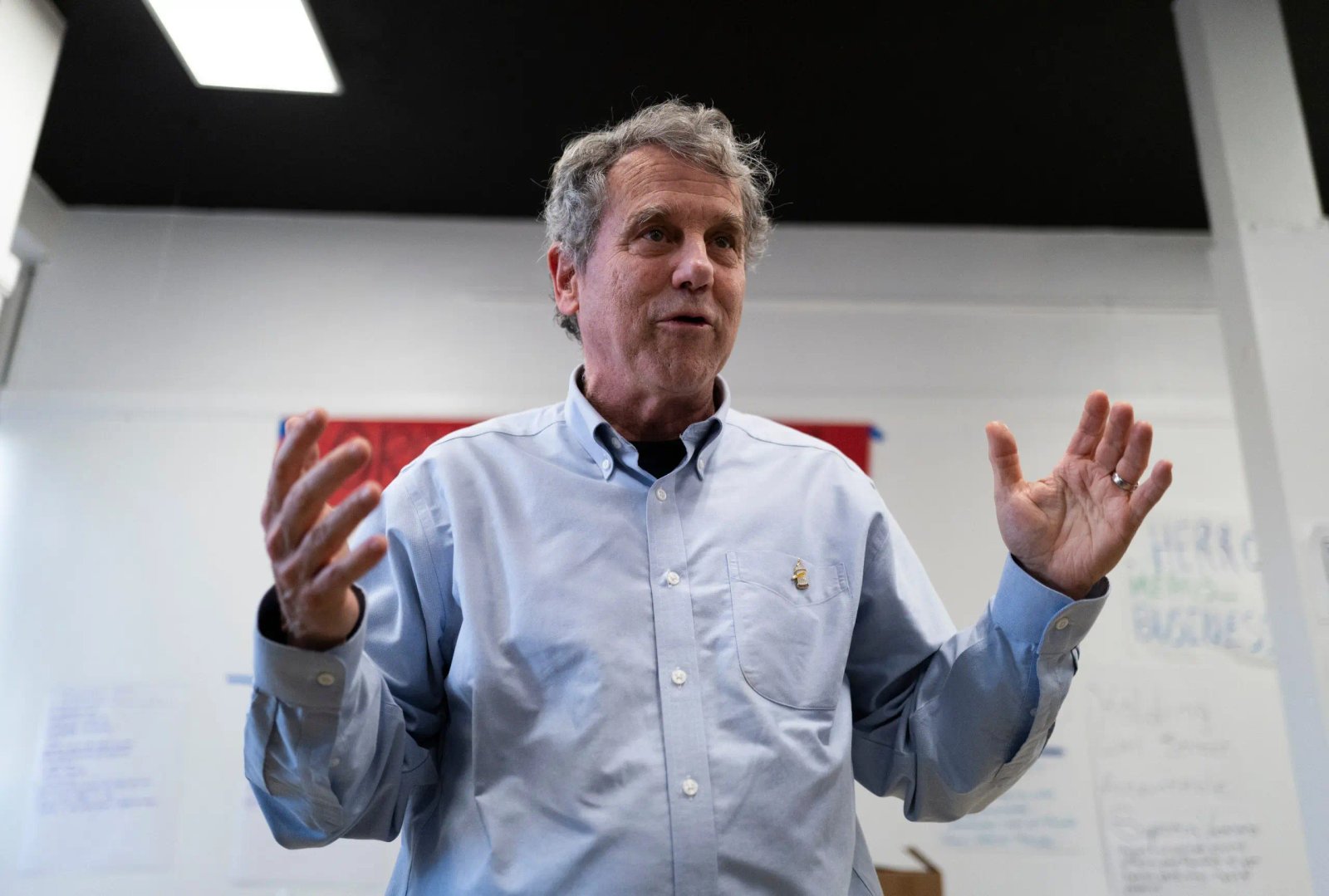
Democratic senate candidate, U.S. Sen. Sherrod Brown, D-Ohio, addresses volunteers at a campaign office on Nov. 4, 2024 in Cleveland Heights, Ohio. (Stephen Maturen/Getty Images)
Debates remain about whether their consumption has meaningfully changed utility rates in local communities and, if so, whether the companies should pay for the costs of their consumption.
Brown said he would support legislation along those lines.
«I’ll require the data centers to pay the full cost of their own electricity — not you,» Brown said.
Ohio, in particular, has become an increasingly important state in the data center conversation as companies like Amazon and Google have sought out state incentives for their construction.
In 2013, the state legislature passed tax exemptions for the «sale, storage, use or other consumption of computer data center equipment.» The law gives the Ohio Tax Credit Authority (TCA) the power to approve tax exemptions for companies that invest more than $100 million over three consecutive years. Not all centers are automatically qualified to participate in the benefit and can receive a partial exemption.
The move has attracted sizeable investment but also cost the state $1.6 billion in forgone revenue in 2025, according to the Ohio 2026-2027 Tax Expenditure Report.
It’s unclear if Brown would support more than just a requirement that data centers pay for their electricity and whether he would consider other legislation to slow their development. In his 2015 press release, Brown noted that the centers had created new job opportunities with their openings.
TOP ENERGY GROUP WARNS WEALTHY FOREIGNERS ARE POTENTIALLY BANKROLLING ANTI-DATA CENTER CAMPAIGNS ACROSS US
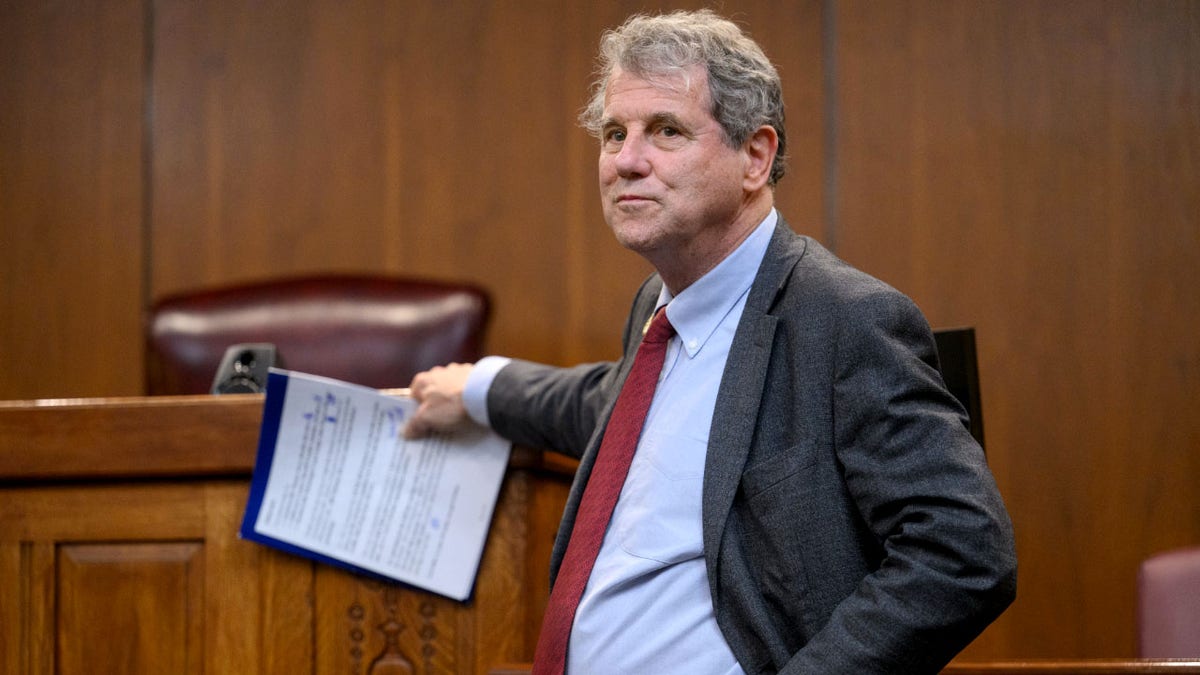
Senator Sherrod Brown, a Democrat from Ohio, during a campaign event at the Steubenville City Building in Steubenville, Ohio, US, on Friday, Oct. 11, 2024. (Justin Merriman/Bloomberg via Getty Images)
«I look forward to working to ensure that our region’s burgeoning logistics hub continues to grow – creating good jobs for Ohioans and helping businesses prosper,» Brown wrote.
His office did not respond to requests for comment from Fox News Digital about the scope of his objections to data center developments in Ohio.
Having secured his party’s nomination for the seat, Brown will face Husted in the state’s Nov. 3 general election.
state and local, ohio, senate

Diego Simeone, sobre la situación de Julián Álvarez: «El club ha tomado una decisión» :: Olé

Con una fianza de US$ 10.000, liberan a la niñera argentina detenida por agentes migratorios en EE.UU.

Hernán Lacunza: “El 2,9% de inflación en CABA es consistente con un 2,2% a nivel nacional”

La felicidad de Daniela Celis por su nuevo desafío: “Voy a estar en el show de mis sueños”

Caballito se prepara para una nueva edición del Campeonato Argentino del Alfajor

El Gobierno ya piensa en 2027: la reelección de Javier Milei se convirtió en la prioridad del oficialismo

La oposición cuestionó a Benegas Lynch por su empresa para vender campos a extranjeros y el senador libertario se defendió

Dólar hoy en vivo: a cuánto se negocian todas las cotizaciones minuto a minuto este miércoles 5 de agosto

Brasil retira a su embajador en la Argentina: qué consecuencias tiene la medida diplomática

Las centrales obreras y los movimientos sociales anunciaron dos días de conflicto callejero
-
 POLITICA2 días ago
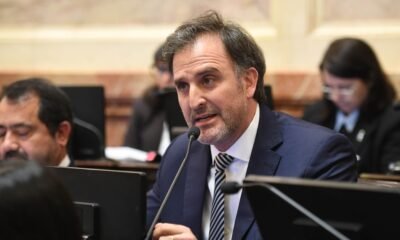
La oposición cuestionó a Benegas Lynch por su empresa para vender campos a extranjeros y el senador libertario se defendió
-
 POLITICA3 días ago
Las centrales obreras y los movimientos sociales anunciaron dos días de conflicto callejero
-

 POLITICA3 días ago
Javier Milei se reunirá con Daniel Noboa en Ecuador y con Abelardo de la Espriella en Colombia