INTERNACIONAL
Justice Neil Gorsuch breaks silence on violent threats against judiciary, Supreme Court leaks

NEWYou can now listen to Fox News articles!
Supreme Court Justice Neil Gorsuch spoke out against rising threats targeting judges, breaking his silence on violence against the judiciary in a sit-down interview with Fox News Digital.
Gorsuch’s remarks come amid heightened security concerns for members of the Supreme Court after the 2022 leak of the court’s decision in Dobbs v. Jackson Women’s Health Organization, which sparked protests outside justices’ homes and intensified fears about their safety, particularly after the attempted assassination of Justice Brett Kavanaugh.
Gorsuch emphasized that the current environment — marked by increasingly heated public discourse and breaches of court confidentiality — poses broader risks to the institution.
«We have to be able to hear one another,» Gorsuch said. «And violence is never the answer.»
JUSTICE GORSUCH HIGHLIGHTS HUMANITY, HISTORY IN CHILDREN’S BOOK CELEBRATING AMERICA’S 250TH ANNIVERSARY
Supreme Court justices pose for their official group portrait at the East Conference Room of the Supreme Court building in Washington, D.C. (Alex Wong/Getty Images)
His remarks come as members of the federal judiciary have faced heightened security risks in recent years, including an assassination attempt targeting Kavanaugh during the lead-up to the Dobbs decision, when the court overturned Roe v. Wade and ended the federal constitutional right to abortion.
On June 8, 2022, Nicholas John Roske, a transgender individual from Simi Valley, California, traveled to Kavanaugh’s Maryland home with a gun and ammunition in a checked suitcase. Authorities later found a gun, tactical knife, zip ties, duct tape, a hammer, crowbar, lock-pick tools and other items in Roske’s belongings, according to the Department of Justice.
After seeing deputy U.S. Marshals outside the home, Roske walked away and called 911, telling a dispatcher about having homicidal and suicidal thoughts and had come from California to kill a Supreme Court justice.
Before the incident, Roske searched online for information about how to harm people — one search read «Does twisting or dragging a knife cause more damage» — and expressed a desire to affect the outcome of the Dobbs decision. Roske was sentenced to eight years in prison and a lifetime of supervised release for the assassination attempt.
Though Gorsuch stopped short of weighing in directly on specific incidents, he stressed to Fox News Digital that maintaining civil discourse and institutional boundaries are critical to preserving the Supreme Court’s role and the independence of the federal judiciary.
«There’s a balance between transparency and [the] confidentiality in our work, right?» Gorsuch said. «I mean, it’s wonderful, I think, that we have the opportunity for people to listen in to our own arguments. You can listen to every word uttered in arguments from the bench today, in real time.
«At the same time, we also have to be able to talk with one another privately and discuss our views candidly around the conference table.»
Gorsuch suggested these breaches of confidentiality — including the high-profile Dobbs leak, and more recent leaks of confidential Supreme Court memos exchanged by justices in 2016 — risk further eroding public trust in the judiciary.
JUSTICE BARRETT TEASES NEW MEMOIR IN ABRUPT CONFERENCE EXIT
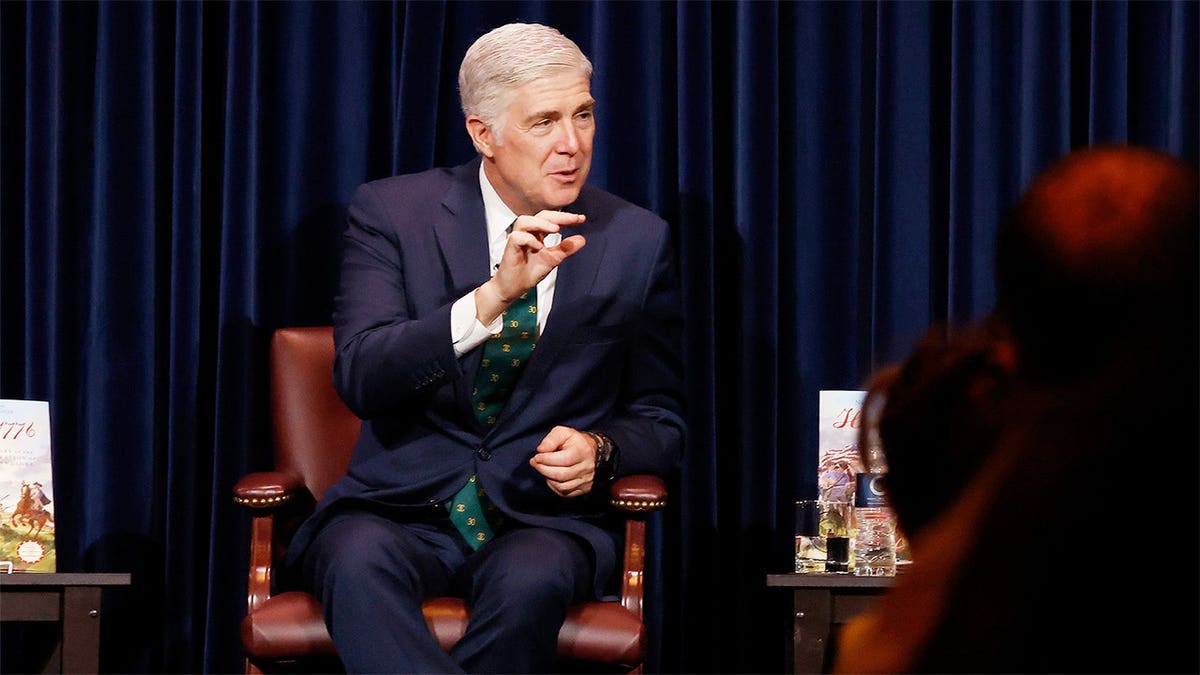
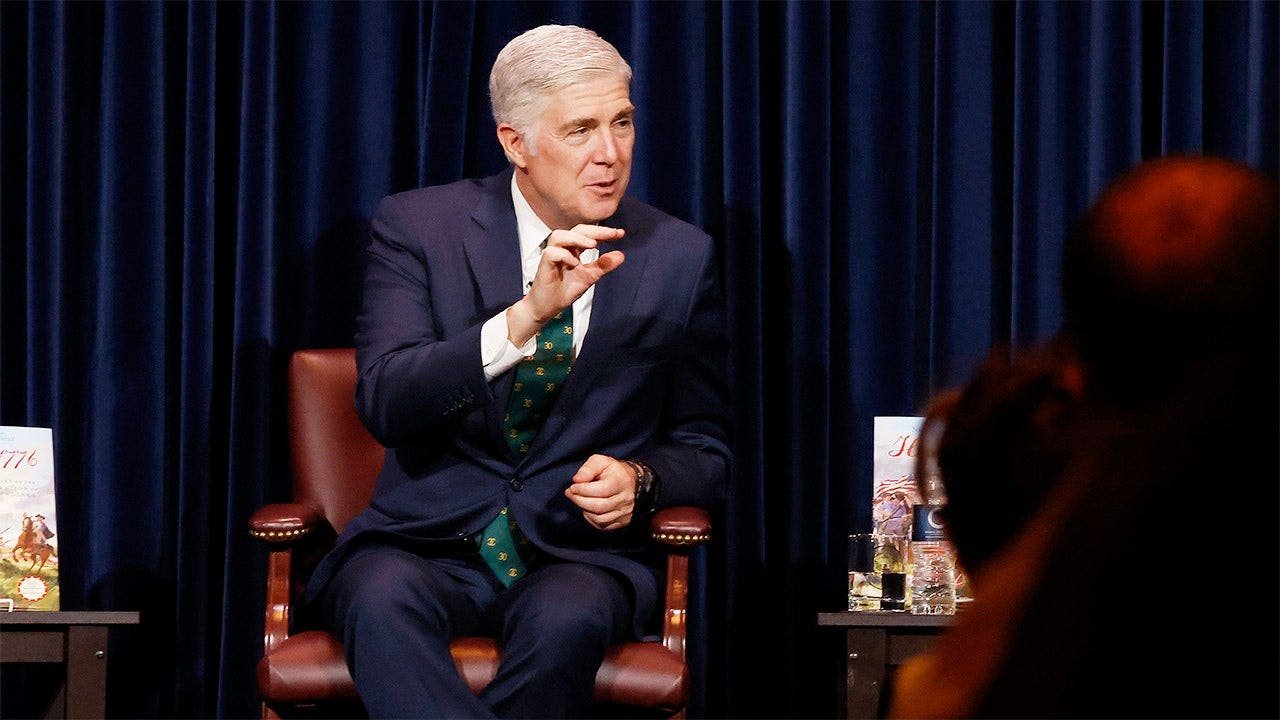
U.S. Supreme Court Justice Neil Gorsuch speaks at the Reagan Library on May 5, 2026, in Simi Valley, Calif. (Getty Images)
«You think about how robust our system is, where everybody, all factions come into making laws,» Gorsuch said. «That makes our decisions wiser than you are ever gonna get in a dictatorship or a monarchy or an oligarchy. They’re much more fragile, aren’t they?»
At the same time, Gorsuch underscored that maintaining boundaries for the court’s internal deliberations is critical, particularly after high-profile leaks.
«There’s a balance between transparency on the one hand … and confidentiality in our deliberations,» he said. «You can read every word I think about a case at the end of the day. … But do we need some confidentiality? Of course.»
He warned that losing that balance could undermine both trust in the court and the ability of justices to engage in candid debate behind closed doors, a practice he noted dates back to the nation’s founding.
«The framers thought it was very important that they lock the doors when they were discussing the Constitution,» Gorsuch said, adding that James Madison later believed there «would have been no Constitution» without that privacy.
Gorsuch tied those concerns to the broader constitutional principle of judicial independence, arguing the judiciary’s role depends on its insulation from political pressure and public backlash.
«Why do we have an independent judiciary?» Gorsuch said. «The framers did not want [judges beholden to political forces]. … They said you have to have independent judges so that when you come to court, no matter how unpopular you are, you’re going to get fair, neutral application of the law.»
JUSTICE BARRETT OPENS UP ABOUT ‘AWKWARD’ START ON SCOTUS, SHADOW DOCKET AND MORE IN FORTHCOMING MEMOIR
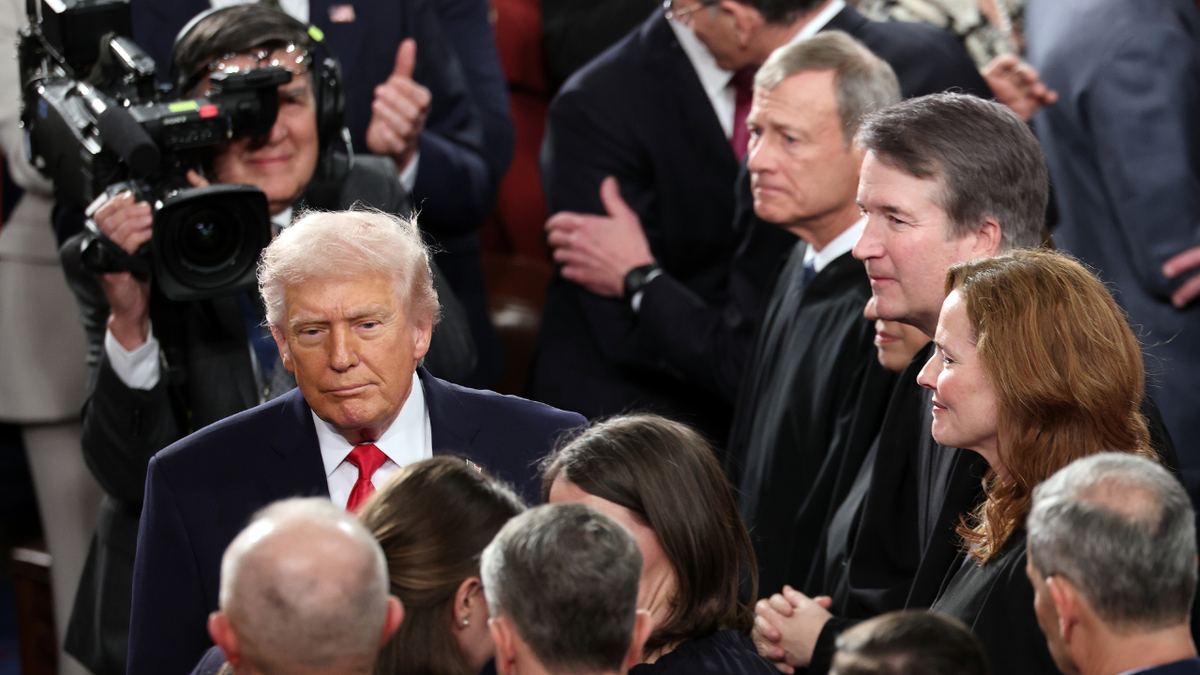
President Donald Trump walks past Supreme Court justices as he arrives at the U.S. Capitol to deliver his 2026 State of the Union address. (Win McNamee/Getty Images)
Despite ideological differences among the justices, Gorsuch said there remains a shared respect for the Constitution, a dynamic he suggested is essential in an era of growing polarization.
«When I sit around the table with my colleagues, and we disagree, the one thing I know is that the person across from me loves this country … as much as I do,» he said.
Still, Gorsuch made clear that the tone of public debate — and the rejection of violence — will ultimately shape whether that system endures.
CLICK HERE TO GET THE FOX NEWS APP
«We can debate, we can disagree,» he said. «But we have to be able to do it in a way that respects one another.»
Ashley Oliver and Jake Gibson contributed to this report.
supreme court, politics, donald trump, judiciary, federal judges, crime










INTERNACIONAL
Supreme Court chief justice pinpoints what Americans misunderstand about he and his colleagues
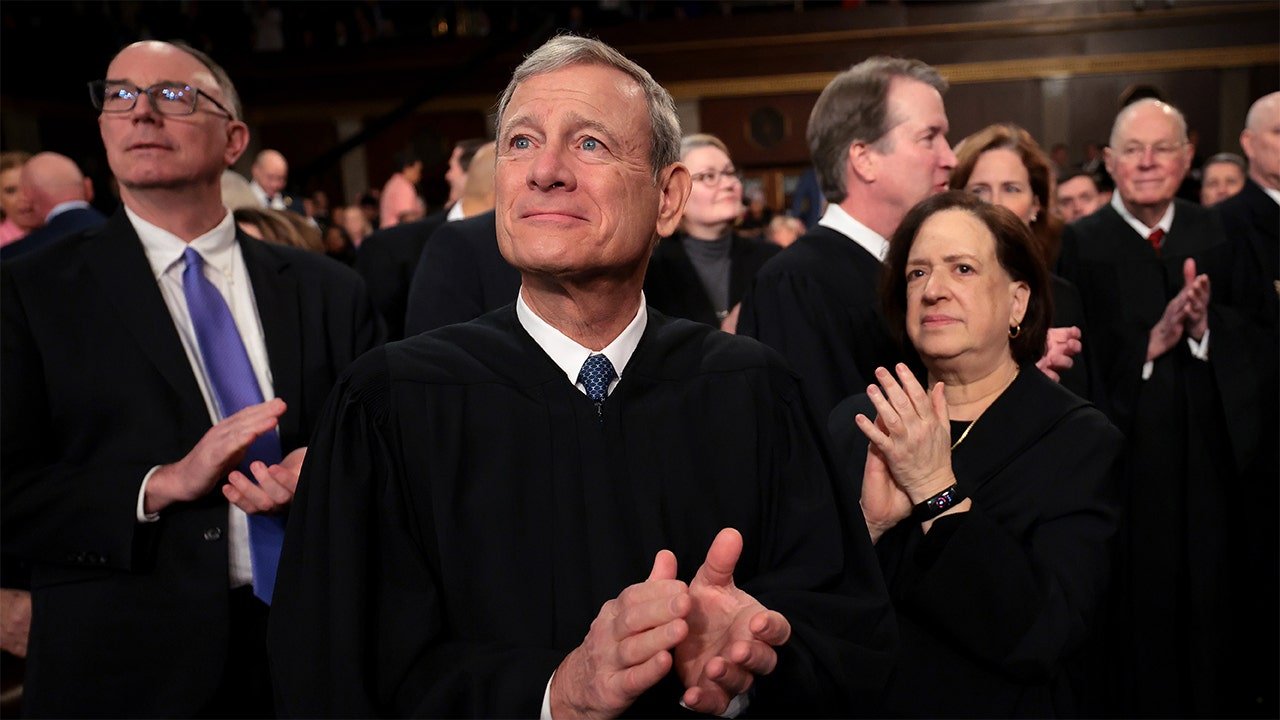
NEWYou can now listen to Fox News articles!
Political critics of Supreme Court decisions fundamentally do not understand the role of the institution, according to Chief Justice John Roberts.
It is to interpret the law, not make it, he told a judicial conference in Hershey, Pennsylvania.
«I think, at a very basic level, people think we’re making policy decisions, we’re saying we think this is how things should be, as opposed to what the law provides,» Roberts said Wednesday night. «I think they view us as purely political actors, which I don’t think is an accurate understanding of what we do.»
The decision reviewing the unconstitutionality of race-based gerrymandering under the Voting Rights Act has resurfaced rebukes of the political ideology of the Court. Three conservative justices, Neil Gorsuch, Brett Kavanaugh and Amy Coney Barrett, were placed on the bench by President Donald Trump during his first term, giving Republican-nominated justices a 6-3 majority.
BARRETT SAYS JUSTICES ‘WEAR BLACK, NOT RED OR BLUE’ IN RESPONSE TO PARTISAN CRITICS IN FOX NEWS INTERVIEW
((Win McNamee/Getty Images))
Justices, however, are making decisions based on the law and contextual readings of the Constitution, not their personal policy preferences, Roberts stressed to the conference of judges and lawyers from the 3rd U.S. Circuit in Pennsylvania.
«I think considered criticism is a very good thing,» Roberts said. «You hope it’s intelligent criticism, but it doesn’t have to be. It’s a free country and I certainly don’t object to it, and I don’t think my colleagues do either.»
FOX NEWS POLL: APPROVAL OF SCOTUS AT 5-YEAR HIGH, REBOUNDING FROM RECORD LOW IN 2024
The Supreme Court has also expanded gun rights and overturned the constitutional right to abortion in recent years. Public confidence in the Supreme Court was at a low of 40% after the 2022 Dobbs v. Jackson Women’s Health Organization abortion ruling, showing the politics of rulings determines perception as the words of the Constitution remain unchanged.
The rulings are «based on our best effort to figure out what the Constitution means and how it applies» to the existing law, Roberts said.
SUPREME COURT’S 2026 RULINGS COULD DEFINE AMERICA FOR DECADES TO COME
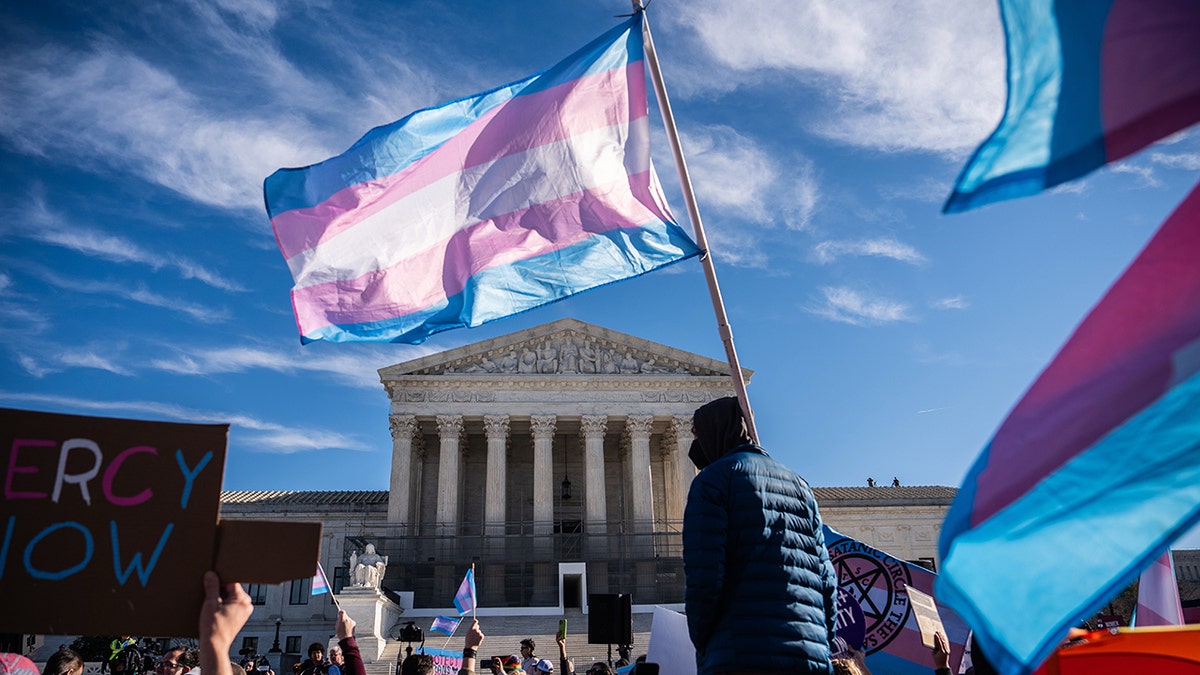
Protesters wave transgender pride flags outside the Supreme Court in Washington as it hears arguments on Jan. 13, 2026, over state laws barring transgender girls and women from school athletic teams. (Julia Demaree Nikhinson/AP)
«We’re not simply part of the political process, and there’s a reason for that, and I’m not sure people grasp that as much as is appropriate,» Roberts said, stressing that «one thing we have to do is make decisions that are unpopular.»
«On the other hand,» Roberts said, «there is a point where it changes from criticism of the opinion to criticism of the judge and it can lead to some very serious problems.»
JUSTICE NEIL GORSUCH BREAKS SILENCE ON VIOLENT THREATS AGAINST JUDICIARY, SUPREME COURT LEAKS
Heated political rhetoric, potentially fueled by violent protest groups, can endanger judges.
In June 2022, an armed suspect was caught outside Kavanaugh’s home. Nicholas John Roske pleaded guilty and was sentenced to 97 months in prison and lifetime supervised release after admitting to the attempted assassination.
«There’s a lot of hostility that’s publicized about judicial decisions and which judge wrote those decisions,» Roberts warned. «I think we have to be a little more careful and make sure people, to the extent you can, are more careful about that.»
TRUMP REVEALS HE HAS MULTI-PICK SCOTUS PLAN READY AS RETIREMENT SPECULATION HEATS UP
Judges bowing to the pressures of political ideology from the American public would have devastating effects, according to Roberts.
«If you do it cavalierly, overrule precedent just because you think it’s wrong, then the whole system begins to suffer,» he said.
CLICK HERE TO DOWNLOAD THE FOX NEWS APP
The advanced ages of Thomas and Alito have raised questions of whether they might consider retirement either before the midterms — which could change Congress’ ability to get through another conservative justice nominee under Trump — or before 2028, where a flip of the White House and/or Congress could shift the court back away from a conservative majority.
The Associated Press contributed to this report.
supreme court, judiciary, law, federal judges, republicans elections
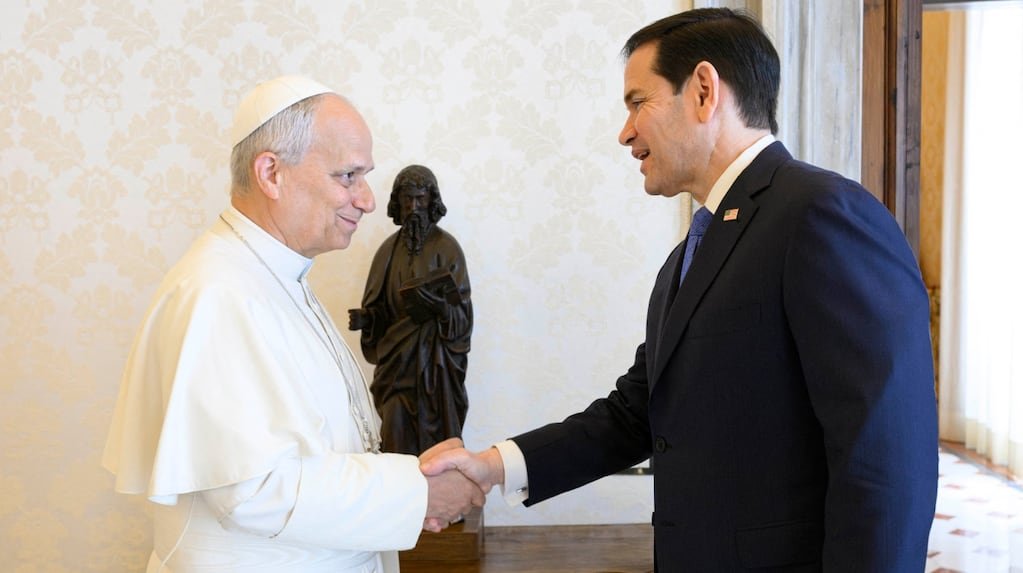
El jefe de la diplomacia estadounidense, Marco Rubio, aterrizó hoy en el Vaticano con una misión delicada: intentar calmar las aguas tras los fuertes cruces entre Donald Trump y el papa León XIV, y al mismo tiempo, defender los intereses de la Casa Blanca.
Rubio, que profesa la fe católica, fue recibido en el palacio apostólico para una audiencia privada con el pontífice, en un contexto de máxima tensión. El encuentro se produjo semanas después de que Trump lanzara duras críticas contra el líder de los 1.400 millones de católicos del mundo, a quien acusó de ser “débil en materia de crimen y terrible para la política exterior”.
El papa León XIV se reúne con el secretario de Estado de EE. UU., Marco Rubio. (Foto: Vatican Media).
El trasfondo de la pelea: guerra en Irán y diferencias sobre la paz
La relación entre Washington y la Santa Sede se deterioró rápidamente tras la elección de León XIV como el primer papa estadounidense de la historia, el pasado 8 de mayo de 2025.
Si bien el gobierno de Trump celebró su llegada al trono de San Pedro, el vínculo se resquebrajó por la postura del papa frente a la guerra lanzada por Estados Unidos e Israel contra Irán.
León XIV pidió públicamente la paz en Oriente Medio y condenó como “realmente inaceptable” la amenaza de Trump de “destruir la civilización” iraní. El papa León XIV se reúne con el secretario de Estado de EE. UU., Marco Rubio. (Foto: Vatican Media).
Las palabras del pontífice desataron la furia del presidente, que volvió a cargar contra él días antes del viaje de Rubio: “León considera que está bien que Irán tenga un arma nuclear. Creo que pone en peligro a muchos católicos y mucha gente”, disparó Trump.
Consultado sobre estas acusaciones, el papa respondió: “La misión de la Iglesia católica es predicar la paz y el Evangelio. Si alguien desea criticarme por proclamar el Evangelio, que lo haga con la verdad”.
Además, recordó que “la Iglesia ha hablado durante años contra todas las armas nucleares, así que no hay duda de eso”.
La agenda de Rubio en Roma: libertad religiosa y América Latina
Antes de la reunión, Rubio intentó bajar el tono a la disputa y aseguró que la visita estaba planeada antes de los últimos dichos de Trump. “ el encuentro ocurre en medio de tensiones entre la Casa Blanca y el Vaticano. (Foto: Vatican Media).
Hay mucho de qué hablar con el Vaticano”, dijo el secretario de Estado, y mencionó la libertad religiosa como uno de los puntos de coincidencia entre ambos Estados.
El encuentro privado con el papa fue seguido por una reunión con el cardenal Pietro Parolin, secretario de Estado del Vaticano y número dos de la Santa Sede. Parolin anticipó que la cita se realizó por iniciativa de Washington y que sería “una conversación sincera”. Marco Rubio también se reunió con el secretario de Estado del Vaticano, el cardenal Pietro Parolin. (Foto: Vatican Media).
“Imagino que hablaremos de todo lo que ha ocurrido en días recientes, no podemos evitar tocar estos asuntos”, señaló Parolin, y agregó que también abordarían temas internacionales como América Latina, Cuba y Líbano.
La Santa Sede jugó un rol activo en la diplomacia sobre Cuba, mientras que Rubio, de origen cubano, lideró los esfuerzos de presión de Washington contra el gobierno comunista de la isla.
León XIV también es un conocedor de América Latina después de pasar dos décadas como misionero en Perú, país del que obtuvo la nacionalidad.
El peso de un papa estadounidense y el futuro de la relación
El hecho de que León XIV sea estadounidense le da un peso especial en Washington, y sus críticas a la política migratoria de Trump no pasaron desapercibidas. Sin embargo, lo que realmente desató la ira del presidente fue la postura del papa frente a la guerra en Irán. El papa León XIV recibió al secretario de Estado de EE. UU., Marco Rubio, en el Vaticano. (Foto: Vatican Media).
El cardenal Parolin consideró “un poco extraño” que se ataque al papa por su mensaje de paz: “El papa está siendo el papa”, resumió.
Rubio ya se había reunido con León XIV el año pasado en el Vaticano, acompañado por el vicepresidente JD Vance, convertido recientemente al catolicismo.
papa León XIV, Marco Rubio, Estados Unidos, Vaticano
INTERNACIONAL
Las placas del artista alemán Gunter Demnig convierten las aceras de Berlín en monumentos del Holocausto
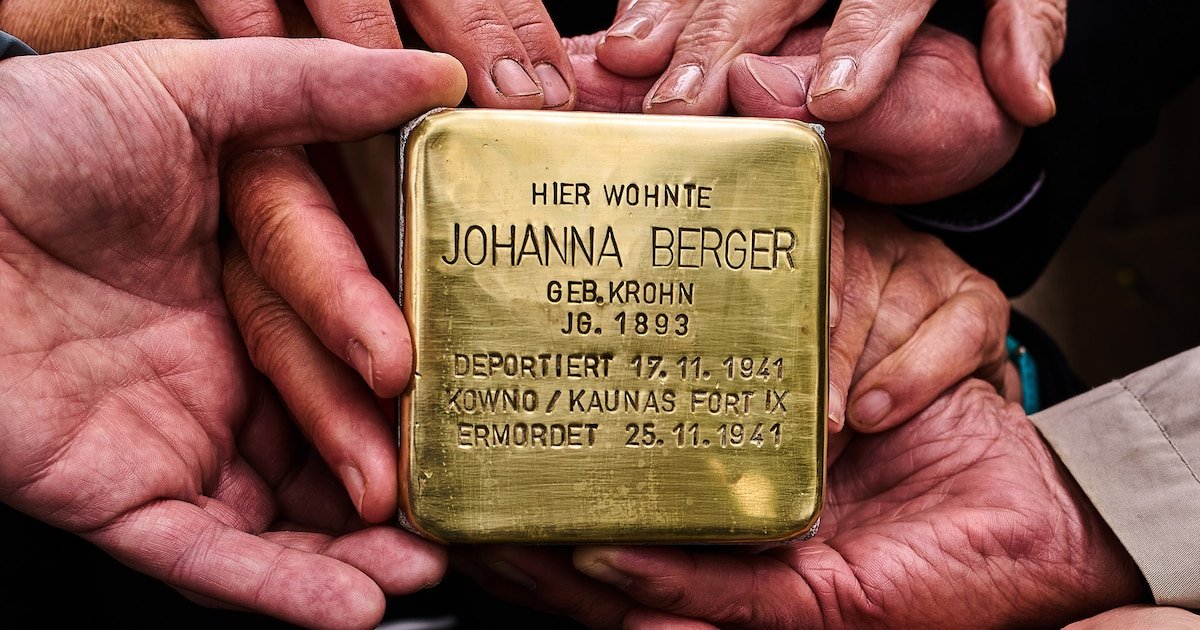
El artista Gunter Demnig colocó con cuidado una placa conmemorativa del Holocausto hecha de latón, del tamaño de la palma de una mano, en la acera de una concurrida esquina de Berlín. Decía: “Johanna Berger, nacida en 1893, vivió aquí; deportada el 17 de noviembre de 1941, asesinada el 25 de noviembre de 1941”.
Después de que Demnig retiró la arena de la piedra conmemorativa de Berger y de las de su esposo y sus dos hijos, una docena de familiares se reunió alrededor de las cuatro placas, que en alemán se llaman Stolpersteine, o “adoquines de tropiezo”. Dejaron rosas blancas y recitaron el Kadish, la oración judía por los muertos, mientras el tráfico rugía en un lluvioso día de primavera.
Demnig instaló la primera placa en la capital alemana hace tres décadas. A estas alturas, se pueden encontrar más de 11.000 de sus adoquines conmemorativos por toda la ciudad. Pero el monumento descentralizado del Holocausto de Demnig va mucho más allá: el artista y sus equipos de simpatizantes han colocado 126.000 placas en Alemania y en otros 31 países europeos. La primera se instaló en 1992 en la ciudad de Colonia, en el oeste de Alemania.
De una manera singular, los brillantes cuadrados de latón incrustados en el pavimento hacen que los transeúntes se detengan e interrumpan por un momento su vida cotidiana al agacharse para leer los nombres de quienes perecieron. A menudo se ve a niños pequeños examinando de cerca los Stolpersteine y exigiendo respuestas a sus padres.

“Mi idea básica detrás de esto era que, en cualquier lugar de Europa donde la Wehrmacht alemana, las SS, la Gestapo y sus colaboradores locales cometieron asesinatos o llevaron a cabo deportaciones, deberían colocarse allí piedras simbólicas”, explicó el artista alemán, de 78 años, en una entrevista con The Associated Press el miércoles.
Con frecuencia, familiares judíos viajan desde todas partes del mundo para asistir a las ceremonias de colocación de las piedras, porque muchas de las víctimas fueron gaseadas en los campos de concentración nazis y estas piedras conmemorativas son lo más parecido a una tumba o un entierro.
“Los Stolpersteine son una especie de sustituto de las lápidas que faltan”, comentó Michael Tischler tras la ceremonia del miércoles. El berlinés de 72 años es sobrino nieto de Berger, quien pereció en el Holocausto, al igual que varios otros miembros de la familia de Tischler.
“Creo que esto lleva la historia familiar a una cierta conclusión, o al menos a una provisional”, expresó Tischler.

Las piedras conmemorativas no solo brindan consuelo a las familias de las víctimas, sino que también han creado una especie de movimiento de base que reúne a iniciativas vecinales, escuelas o comunidades religiosas para investigar la historia de su ciudad.
Juntos, mayores y jóvenes revisan archivos y consultan listas antiguas de residentes para averiguar si algún judío u otras personas perseguidas durante el Tercer Reich —como comunistas, homosexuales o romaníes— solían vivir en las calles o incluso en las viviendas donde hoy viven ellos.
Una vez que pueden confirmar el antiguo lugar de residencia de una víctima, organizan una ceremonia de colocación de la piedra y se aseguran de pulir periódicamente la placa de latón para que no pierda su brillo.
El miércoles, varios estudiantes de 10º grado de la Friedrich-Bergius-Schule asistieron a otra ceremonia de colocación de piedras en Berlín, en la Stierstraße, donde antes vivían muchos judíos. Las tres nuevas piedras de Demnig para la familia Krein —Michael, su esposa Maria y su hija Dalila— elevaron a 62 el número de Stolpersteine en esta calle.

Mientras que Maria y Dalila lograron escapar a Estados Unidos y al territorio palestino controlado por los británicos, respectivamente, Michael, músico, murió en Berlín en 1940 como trabajador forzado bajo el régimen nazi.
La estudiante de secundaria Sibilla Ehrlich, de 16 años, observó cómo un grupo de violinistas interpretaba melodías solemnes y algunos vecinos ancianos hablaban sobre las vidas de los tres judíos bajo la dictadura nazi.
“Es simplemente tan horrible, todo este odio hacia los demás”, dijo. “No dejo de pensar: ¿y si hubiera sido mi familia?”.
Antes del Holocausto, Berlín tenía la mayor comunidad judía de Alemania. En 1933, el año en que los nazis llegaron al poder, alrededor de 160.500 judíos vivían en Berlín. Para cuando terminó la Segunda Guerra Mundial y la Alemania nazi se rindió el 8 de mayo de 1945, su número se había reducido a unos 7.000 debido a la emigración y el exterminio.
En total, alrededor de 6 millones de judíos europeos y otras personas fueron asesinados en el Holocausto.
Mientras Alemania conmemora el viernes la liberación de los nazis por parte de los Aliados hace 81 años, muchas personas en Alemania temen que las lecciones del Holocausto puedan olvidarse, ya que la extrema derecha vuelve a ganar influencia rápidamente en Alemania.
Tischler también se preocupa por el futuro de su país en tiempos de aumento del antisemitismo, pero sostiene que las piedras conmemorativas ofrecen un atisbo de esperanza.
“Espero que estos Stolpersteine todavía hagan que algunas personas se detengan a reflexionar”, dijo.
(con información de AP)
Holocausto,Stolperstein,Johanna Berger,Memoria,Monumento,Conmemoración,Víctimas,Segunda Guerra Mundial,Museo del Holocausto,Kaunas

El mítico bar Esquina Homero Manzi podría cerrar por el millonario juicio laboral de dos bailarines de tango

La interna entre Kicillof y el kirchnerismo impidió activar el Senado bonaerense

Javier Milei negó la salida de Manuel Adorni y aseguró que no prepara cambios en el Gabinete

La mujer que denunció a Fernando Espinoza por abuso sexual pidió que se reabra la causa

Por segundo año consecutivo: PSG venció 1-0 a Bayern y jugará la final de la Champions League

Karina Milei ordenó sostener la eliminación de las PASO y profundiza la distancia con Bullrich

El arquitecto que refaccionó la casa del country declaró que Adorni lo llamó para ofrecerle asesoría legal

¡EXPLOTA LA INTERNA! Patricia Bullrich prepara el portazo: el pacto secreto con Macri para «borrar» a Milei en 2027

La Justicia revisa los gastos de Manuel Adorni y mañana escuchará a otro testigo en la causa

Coscu cruzó a Galperin: “La persona más rica del país riéndose de una jubilada a la que no le alcanza para los remedios”

 POLITICA3 días ago
El arquitecto que refaccionó la casa del country declaró que Adorni lo llamó para ofrecerle asesoría legal
- ECONOMIA3 días ago
Coscu cruzó a Galperin: “La persona más rica del país riéndose de una jubilada a la que no le alcanza para los remedios”
- ECONOMIA2 días ago
“Terminaste imponiendo un corralito”: Milei y Caputo cruzaron a Cavallo por pedir la eliminación del cepo cambiario