
INTERNACIONAL
Escala el conflicto en Medio Oriente y hay incertidumbre por las negociaciones de paz entre EE.UU. e Irán


Escala la tensión en Medio Oriente y hay una fuerte incertidumbre en torno a las negociaciones entre Estados Unidos e Irán para alcanzar un acuerdo de paz.
Tras el fracaso del primer encuentro hace poco menos de 10 días, está previsto que este lunes se lleve adelante la segunda ronda de conversaciones en Pakistán para acercar posiciones en Washington y Teherán. Sin embargo, en las últimas horas, Donald Trump atacó un buque iraní en el Golfo de Omán e Irán amenazó con tomar represalias.
“Hoy, un barco de carga con bandera iraní llamado Touska, de casi 900 pies de largo y que pesa casi tanto como un portaaviones, intentó pasar nuestro bloqueo naval, y no les fue bien”, explicó Trump en un mensaje en redes sociales.
“El Touska está bajo sanciones del Tesoro debido a su historial previo de actividad ilegal. Tenemos la custodia total del buque y estamos investigando su carga”, sumó.
Tras el ataque, el máximo comandante militar conjunto de Irán, Khatam al-Anbiya, acusó a los Estados Unidos de violar el alto el fuego al disparar contra buques mercantes iraníes y cuestionó con dureza su accionar.
Trump anunció que EE.UU. atacó y tomó el control de un barco iraní que intentaba cruzar el Golfo de Omán. (Foto: Reuters / Video: @centcom)
“Advertimos que las fuerzas armadas de la República Islámica de Irán pronto responderán y tomarán represalias contra este acto de piratería armada por parte del ejército estadounidense”, apuntó.
Y sostuvo: “Después del ataque de Estados Unidos, las fuerzas iraníes también atacaron barcos militares estadounidenses con drones”.
En ese contexto, Irán no confirmó su participación en las conversaciones que estaban pautadas para iniciar este lunes en Islamabad.
De hecho, según la emisora estatal iraní, el ministro de Asuntos Exteriores, Abbas Araghchi, le dijo a su homólogo paquistaní en una llamada que las recientes acciones, la retórica y las contradicciones de Estados Unidos eran señales de “malas intenciones y falta de seriedad en la diplomacia”.
Por su parte, Trump confirmó que enviará una delegación encabezada por el vicepresidente JD Vance, que estará acompañado del enviado especial, Steve Witkoff, y de Jared Kushner, yerno del mandatario.
De acuerdo a lo que anticipó, Estados Unidos ofrecerá a Teherán un “acuerdo muy justo y razonable”, pero amenazó con nuevos ataques si las negociaciones no avanzan: “Espero que acepten porque, si no lo hacen, Estados Unidos va a destruir cada planta de energía y cada puente en Irán. ¡Se acabó lo de ser el chico bueno!”.
El primer ministro de Pakistán, Shehbaz Sharif, junto al presidente Parlamento iraní, Mohammad Bagher Ghalibaf, en el marco de las conversaciones de paz entre Estados Unidos e Irán en Islamabad el sábado 11 de abril. (Foto: West Asia News Agency)

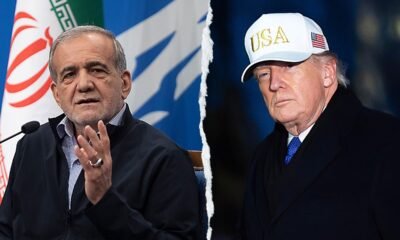
Días atrás, Trump aseguró a la agencia AFP que el acuerdo de paz “está muy cerca” y dijo que Teherán había aceptado entregar su uranio enriquecido. Sin embargo, esto fue desmentido por Masud Pezeshkian, su par iraní: “¿Cómo es posible que el presidente de Estados Unidos afirme que Irán no debe ejercer sus derechos nucleares sin explicar por qué?“.
Sin un progreso en las conversaciones que permitan prolongar el alto al fuego que empezó el 8 de abril, el cese de las hostilidades podría terminar esta semana.
En tanto, la capital paquistaní se encuentra bajo un estricto bloqueo de seguridad y con sus principales hoteles desalojados para recibir a ambas partes.
Los puntos claves de la negociación
El principal punto que aleja hoy a ambas delegaciones de un acuerdo es la cuestión nuclear. Pero las posiciones no son insalvables, según estiman analistas.
De hecho, la postura de la Casa Blanca no es inflexible. Los negociadores no exigen una prohibición total del enriquecimiento de uranio por parte de Irán, sino una moratoria de 20 años de toda actividad nuclear, con varios condicionamientos no detallados. “Esto permitiría a los iraníes alegar que no renunciaron definitivamente a su derecho, en virtud del Tratado de No Proliferación Nuclear, a producir su propio combustible nuclear”, escribió The New York Times.
Leé también: Irán amenazó con volver a cerrar el estrecho de Ormuz si Estados Unidos no levanta el bloqueo naval
El gobierno de los ayatollah dijo que estaban dispuestos a aceptar una moratoria de hasta cinco años.
En la práctica, no es una propuesta muy diferente a la que Irán puso sobre la mesa de negociaciones en Ginebra en febrero pasado, pocos días antes de que estallara la guerra.
De todas formas, el enriquecimiento de uranio no es el único punto que separa a ambas delegaciones. También se deberá llegar a un acuerdo sobre el restablecimiento del libre tránsito por el estrecho de Ormuz.
Su cierre generó una crisis internacional que tuvo profundas consecuencias en el comercio mundial y en el alza del precio del barril de petróleo y de otros insumos. Irán exige el pago de un “peaje” sobre el paso marítimo, algo que Washington y sus aliados occidentales rechazan de plano.
Irán y EE.UU. vuelven a reunirse para avanzar en un acuerdo de paz, en Pakistán. (Foto: Reuters)

Pero además, Trump exige el cese del apoyo iraní a sus grupos proxy como el Hezbollah libanés, el Hamas palestino o los hutíes de Yemen.
En contraste, Irán pide recuperar fondos bloqueados por las sanciones internacionales que ascienden a alrededor de 6000 millones de dólares producto de sus ventas petroleras. El dinero está retenido en Qatar.
Guerra en Medio Oriente, Estados Unidos, Irán











NEWYou can now listen to Fox News articles!
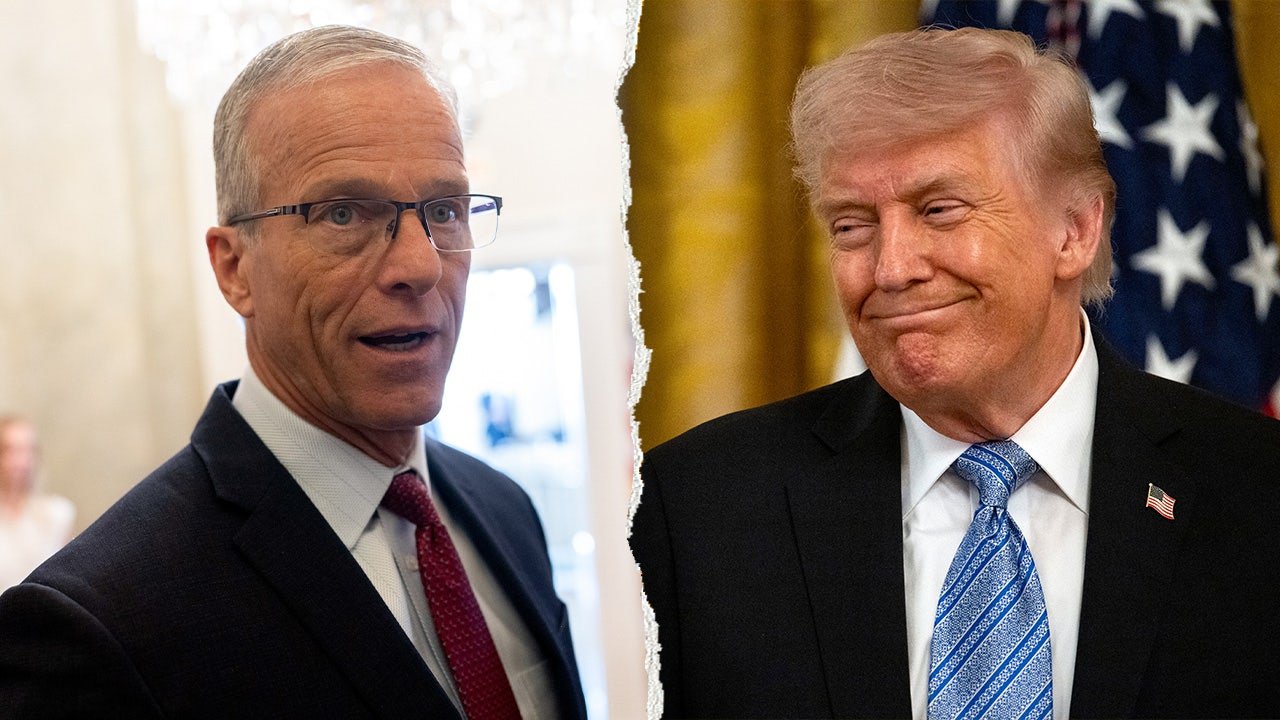
FIRST ON FOX: The reports of President Donald Trump and Senate Majority Leader John Thune’s dead working relationship have been greatly exaggerated, the South Dakota Republican leader told Fox News Digital.
«I’ve heard from him twice this morning already. He called me over the weekend, and so there, you know, we talk, I don’t bother him, I’m not calling him every day,» Thune said in an interview.
Last week, Trump said, «We’re going to find out,» whether Thune was the man for the job to lead Senate Republicans, casting doubt on a critical relationship between him and the Senate’s top Republican.
TRUMP QUESTIONS THUNE’S LEADERSHIP AS SAVE AMERICA ACT STALLS
Reports of Senate Majority Leader John Thune and President Donald Trump’s relationship deteriorating are greatly exaggerated, Thune told Fox News Digital. In fact, they have spoken several times over the last few days since Trump’s «we’ll see» comment about his future as Republican leader. (Aaron Schwartz/Bloomberg via Getty Images 😉
The tension stems from the SAVE America Act floundering in the Senate, and Trump’s desire to see the election integrity package passed by any means necessary.
Thune doesn’t see Trump’s comment as a personal slight, however. Both he and the president «want to get to the same place. We have, sometimes, disagreements about how best to get there.»
«Most of mine are constrained by what’s achievable in an institution like the Senate that has procedural roadblocks to do almost anything,» Thune said.
«We have those candid conversations, but I’m not worried about that relationship,» he continued. «I know he’s going to push as hard as he can. That’s his business model, is to just keep pushing, pushing, pushing to get people to go as far as they can go.»
SENATE FACES ‘COME-TO-JESUS’ MOMENT ON TRUMP’S ELECTION PRIORITY UNDER GOP’S NEW PLAN
There is a voracious appetite among Trump, Senate Republicans and their base to see the SAVE America Act passed. One that Thune hears every day, either online or within his own conference.
It’s dominated the oxygen inside the Capitol and beyond its walls, and the pressure comes as the Senate is sprinting to finish work on key items, like preventing a government shutdown and confirming dozens of Trump’s nominees.
«There are good days and bad days,» Thune said. «And around here, probably lately more bad days than good days, but you know you just kind of, like I said, keep your head down, do the work.»
But passing the SAVE America Act is the most elusive item for Republicans, given the current make up of the Senate.
While there are a cohort of Republicans who are voting against it, Thune made the point that every single Senate Democrat has shut it down each of the five times that it’s been brought to the floor in a variety of configurations.
And Thune is one of the Republicans that wants the bill passed — he’s an original co-sponsor of the SAVE Act, the precursor to the current version of the SAVE America Act. The avenue of cutting Democrats out of the equation and ramming through aspects of the bill through budget reconciliation exists, which Thune is interested in pursuing.
But then comes the problem of generating 50 votes to support that, and keeping those votes together to shut down «crazy democratic amendments.»
GOP RIFT GROWS AS THUNE HITS BRAKES ON TRUMP’S ELECTION BILL TO AVERT SHUTDOWN
Thune’s job helming the Senate majority is to do the math on what can be accomplished in an institution that’s «designed» to be difficult. And the votes still aren’t adding up.
«I keep asking the question, am I the only one in this town that can count to 50? Because it seems like these questions recur and there are a lot of people out there who haven’t seemed to internalize the fact that there aren’t Democrats that are going to flip and vote for this,» Thune said.
«And there aren’t 50 Republicans that are going to vote to nuke the filibuster. Those are two facts that are indisputable and unchangeable.»
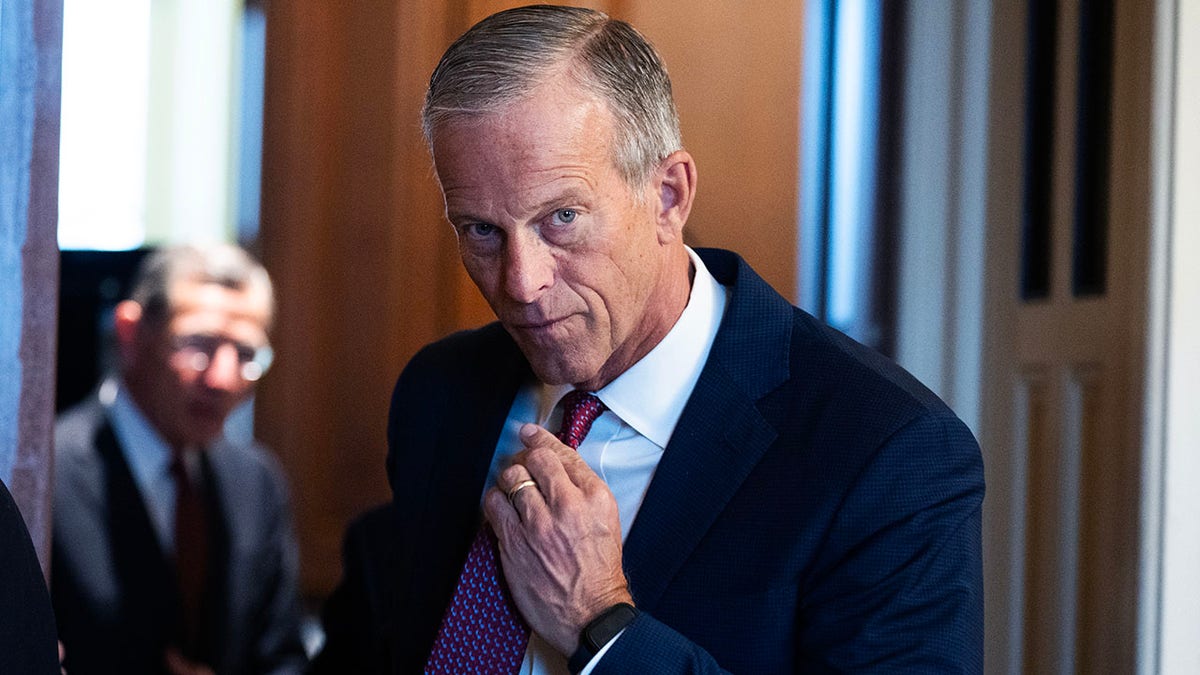
Senate Majority Leader John Thune, R-S.D., argued that Democrats were continuing their push to keep DHS closed because it was «politically advantageous.» (Tom Williams/CQ-Roll Call, Inc via Getty Images)
Thune’s position is, by extension, an embodiment of the Senate in many ways.
Unlike the House, legislation and agendas can’t be rammed through without a bipartisan agreement to blast through the filibuster. And senators’ concerns and desires encompass an entire state, not just a sliver of a state’s population.
Through several interviews with Fox News Digital, he’s instilled that part of his job is to listen and take consensus on what does and doesn’t work, deliberating on the best path for a deliverable outcome.
«This place was supposed to be difficult, so that no dictator could master it, and I think that’s kind of the role of the Senate in our system and our democracy,» Thune said.
«It’s important to keep that in perspective, but it’s frustrating as heck when you’re somebody who likes to get things done, likes to get results, and you’ve got procedural roadblocks holding things up as we try to wind down and get some things done,» he continued.
politics, john thune, donald trump, senate, republicans elections

Como consecuencia del Brexit, miles de enfermeras filipinas, camilleros, ambulancieros y médicos partieron a sus países de origen para no regresar porque no consiguieron ser residentes tras la salida de Gran Bretaña de la Unión Europea. El servicio de salud británico tuvo un serio déficit de personal, especialmente en el Covid. Debió reclutar en otros países, incluidos los africanos y asiáticos. Hoy se enfrenta con el racismo de sus pacientes frente a los que los cuidan, los curan y los atienden.
Pacientes británicos se niegan a ser atendidos “por personal no blanco “mientras el NHS informa de “un aumento alarmante del racismo”.
Paul Awah, técnico en radiodiagnóstico de Bedfordshire y originario de Nigeria, declaró: «Definitivamente ha empeorado; la gente se expresa más abiertamente».
Una encuesta ha revelado que miembros del personal del NHS han sido llamados «extranjeros sucios» y «monos» , en medio de un aumento «notable» e «inaceptable» de actitudes racistas por parte de los pacientes.
La Sociedad de Radiólogos (SoR) afirmó que esta tendencia, observada en los últimos 18 meses, refleja negativamente a la sociedad y calificó dicho comportamiento de «inadmisible».
Un sondeo realizado entre sus miembros reveló que algunos pacientes incluso se han negado a ser atendidos «por personal no blanco”.
Una ecografista de origen asiático, que trabaja en la región de las Midlands, relató que varios pacientes le han dicho: «Este país ya no es el mismo con toda esa gente que viene aquí y nos quita el trabajo».
Señaló que estos incidentes se han vuelto «más frecuentes» . Atribuyó la situación a «los medios de comunicación y a ciertos partidos políticos», donde la gente «expresa abiertamente» tales opiniones.
Paul Awah, dijo: «Lo que antes era algo que la gente no decía… ahora el discurso ha cambiado».
Awah también afirmó haber tenido pacientes que le decían que no podían entenderle, a pesar de que el inglés es el único idioma que habla.
Otros incidentes mencionados en la encuesta de la SoR (Society of Radiographers) incluyen:
– «Algunos pacientes siempre se quejan del color de piel de las personas que los atienden«, dijo un trabajador.
-Un técnico en radiodiagnóstico habló de «pacientes que describían al personal sanitario como extranjeros sucios».
-Otro comentó: «He sido testigo de cómo un paciente llamaba ‘mono’ a un compañero».
-Un hombre blanco supuestamente se negó a permitir que un ecografista examinara a su esposa embarazada, diciendo al personal: «No quiero que nadie de ningún origen étnico toque a mi mujer».
-Y otro paciente se negó a dejar que un técnico en radiodiagnóstico negro le hiciera una radiografía de tórax, alegando que «la gente negra me da miedo».
Estas conclusiones se producen después de que la última encuesta al personal del NHS mostrara que el porcentaje de empleados que han sufrido algún tipo de discriminación en los últimos 12 meses ha alcanzado su nivel más alto en cinco años.
El informe, publicado en marzo, reveló que el 9,26% de los trabajadores había sufrido discriminación personalmente en 2025.
Thomas Simons, director de recursos humanos y desarrollo organizativo del NHS de Inglaterra, declaró: «Los abusos racistas contra el personal del NHS son totalmente inaceptables y no tienen cabida en nuestro servicio de salud». «Nuestras nuevas normas nacionales para el personal dejan claro que las organizaciones del NHS deben tomar medidas significativas para prevenir el racismo y responder ante él, apoyar al personal afectado y garantizar que existan consecuencias claras para los pacientes que profieran insultos racistas o discriminen al personal del NHS, incluida la opción de denegar la atención en situaciones que no sean de emergencia.
Los medios Sky News, The Independent y The Guardian denunciaron unánimemente el racismo en el servicio de salud británico.
Diversos expertos, incluida la Society of Radiographers (SoR), han informado de un aumento «notable» en los comentarios xenófobos y racistas dirigidos al personal del NHS durante los últimos 18 meses.
Una encuesta realizada a los miembros de la SoR reveló que algunos empleados se sienten obligados a tolerar comentarios racistas, lo que ha llevado a la organización a exigir un mejor registro y seguimiento de estos incidentes.
La última encuesta al personal del NHS refleja “el nivel más alto de discriminación por parte de los pacientes en los últimos cinco años”, ya que el 9,26% de los trabajadores notificó haber sufrido incidentes de este tipo en los últimos 12 meses.
El NHS de Inglaterra ha condenado estos abusos . Ha declarado que las organizaciones deben tomar medidas para prevenir el racismo y responder ante él, incluida la posibilidad de denegar la atención a pacientes que incurran en conductas abusivas en situaciones que no sean de emergencia.
INTERNACIONAL
Buses Alegres: estas son algunas de las opciones que ofrece El Salvador para hacer turismo en estas vacaciones de agosto

Durante las vacaciones de agosto, el Instituto Salvadoreño de Turismo (ISTU) ha puesto en marcha una serie de opciones para quienes buscan destinos turísticos accesibles desde San Salvador.
A través del programa de Buses Alegres ofrece viajes organizados hacia algunos de los parques y sitios recreativos más visitados del país, con salidas programadas y tarifas asequibles para todos los interesados.
El programa Buses Alegres está diseñado para facilitar la visita a diferentes parques administrados por el ISTU, permitiendo a las familias y visitantes disfrutar de recorridos seguros y coordinados durante el periodo vacacional.
La oferta incluye destinos variados y precios que oscilan entre los seis y los diez dólares, cubriendo únicamente el transporte de ida y vuelta, según información difundida por la institución en su sitio web.
La agenda de agosto contempla salidas diarias a partir desde el 2 hasta el 9, con destinos que incluyen parques acuáticos, playas y rutas de montaña.
Para este día, el destino fue la Playa Los Almendros con un precio de 10 dólares. Para mañana, 5 de agosto los Buses Alegres irán al Parque Recreativo Apulo por un costo de 6 dólares.

Las siguientes fechas abarcan otras atracciones gestionadas por el ISTU. El 6 de agosto los buses parten hacia Cerro Verde con un costo de 8 dólares, el 7 de agosto la excursión será a Ichanmichen por 6 dólares, mientras que el 8 de agosto el destino será fuera del circuito administrado por la institución, específicamente hacia la Ruta de Las Flores, con un costo de 8 dólares, y el 9 de agosto el viaje será hacia la Costa del Sol también por un monto de 8 dólares.
Estas tarifas incluyen el traslado de ida y regreso, aunque el precio no contempla la entrada a los parques, la cual debe ser pagada por separado al llegar.
El punto de partida para todas las excursiones está ubicado en el parqueo del Parque Infantil de Diversiones, con acceso vehicular en la intersección de Alameda Juan Pablo II y Diagonal Universitaria. La hora de salida está fijada a las 6:30 de la mañana, permitiendo aprovechar al máximo el día en el destino turístico elegido.
El parqueo tiene un costo adicional de un dólar por vehículo, facilitando la llegada de quienes utilizan transporte propio antes de abordar los buses.
El programa de Buses Alegres establece que los viajes están sujetos a posibles cambios, recomendando a los interesados reservar su asiento con antelación.
Las reservaciones pueden realizarse a través del número telefónico 7517-9169 en horario de lunes a viernes, de 7:30 de la mañana a 3:30 de la tarde. Esta medida busca garantizar la disponibilidad de cupos y evitar contratiempos el día del viaje.

Los parques recreativos forman parte de la red de espacios que administra el ISTU, institución encargada de promover el turismo interno y el acceso a zonas naturales y de esparcimiento. Entre ellos destacan destinos como Amapulapa, conocido por sus piscinas y áreas verdes; y Walter Thilo Deininger, que ofrecen senderos y contacto directo con la naturaleza.
Otros destinos incluidos en los recorridos, como Cerro Verde, permiten el contacto con zonas de montaña y vistas panorámicas de la región occidental del país. Por su parte, la Ruta de Las Flores representa una alternativa para quienes se interesan en el turismo cultural y gastronómico, recorriendo pueblos emblemáticos de la zona. Ichanmichen y Apulo complementan la oferta con infraestructuras para el descanso y actividades acuáticas.
El Instituto Salvadoreño de Turismo mantiene de este modo su apuesta por acercar a la población a los principales atractivos turísticos del país, facilitando la movilidad y promoviendo el disfrute de las vacaciones de agosto en familia o con amigos. Para quienes buscan opciones accesibles y organizadas, los Buses Alegres representan una alternativa consolidada dentro del calendario turístico salvadoreño.
corresponsal:Desde San Salvador, El Salvador

El Banco Central volvió a comprar dólares y las reservas alcanzaron su mayor nivel en casi siete años

Sofía Clerici pidió ser sobreseída porque el peritaje probó que no recibió dinero de Martín Insaurralde

La Libertad Avanza quiere cerrar el Senado provincial si gana las elecciones en Buenos Aires

Trump keeps calling Thune despite public fight over SAVE America Act

Bastoni-Romero: de competir por ser el complemento de Cubarsí a poder compartir defensa en el Inter

denuncian un «alarmante» aumento del racismo en los hospitales de Gran Bretaña

“Vamos a acelerar con todo”: el objetivo del Gobierno por las reformas y la agenda electoral de cara al 2027

Reelecciones indefinidas: el oficialismo bonaerense niega que busque ampliar la Legislatura como parte de una reforma política para beneficiar a los intendentes

Javier Milei cruzó a Victoria Villarruel y elevó la tensión: “Es una opositora, replica los argumentos kirchneristas”

¡Chau Luck Ra! La salida de soltera de La Joaqui, muy bien acompañada, a días de su separación
-
 POLITICA2 días ago
“Vamos a acelerar con todo”: el objetivo del Gobierno por las reformas y la agenda electoral de cara al 2027
-
 POLITICA2 días ago
Reelecciones indefinidas: el oficialismo bonaerense niega que busque ampliar la Legislatura como parte de una reforma política para beneficiar a los intendentes
-
 POLITICA22 horas ago
Javier Milei cruzó a Victoria Villarruel y elevó la tensión: “Es una opositora, replica los argumentos kirchneristas”